Loading...
Back to Articles
Commercial Sod Installation in Jacksonville: What Businesses Need to Know
Sod Installation January 27, 2026 14 min read
For current costs, compare the exact product or written project scope. See what to include in a sod estimate; this guide does not establish a current price, saving or resale return.
Set irrigation from site conditions and the current rules for your property and water source. For new sod, use the dated care planner; a fixed schedule in an older guide is not permission to water.
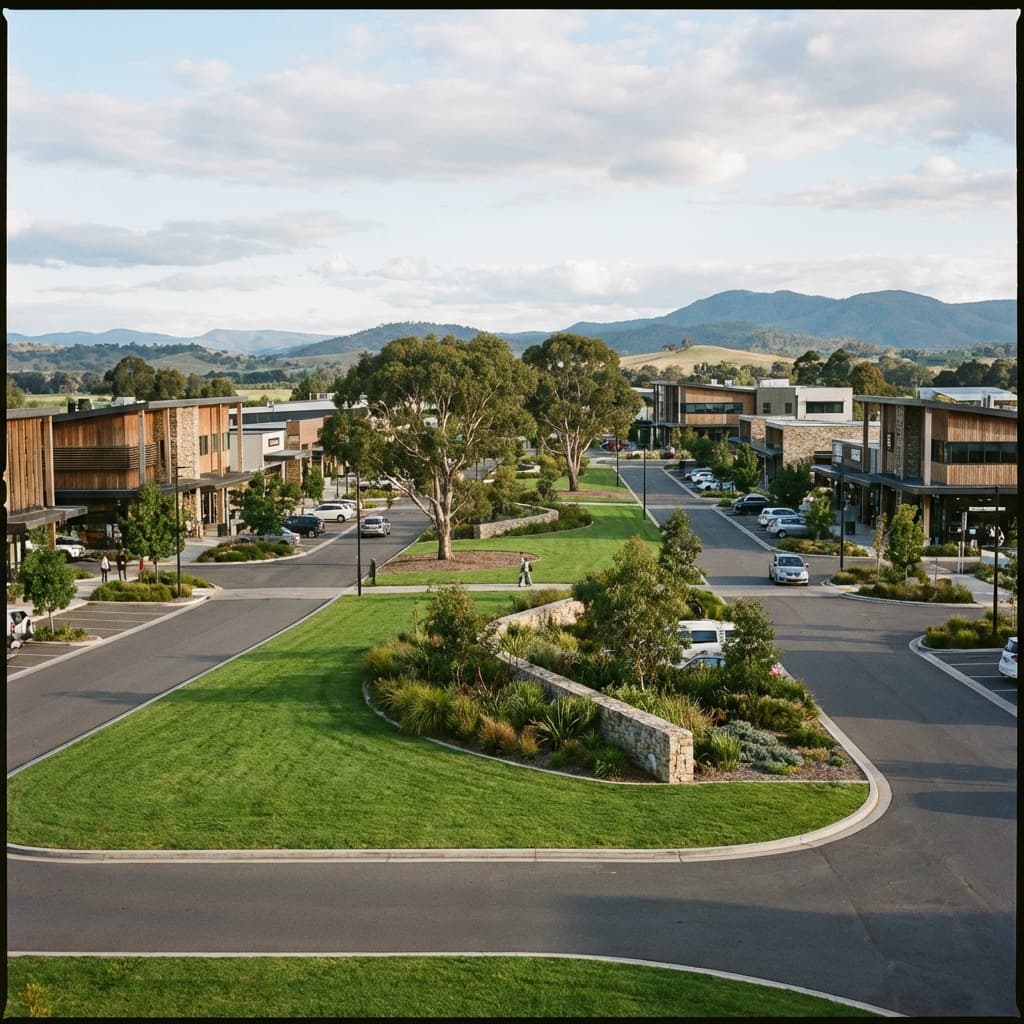
The front lawn of your Jacksonville office building, the common areas of your HOA community, or the grounds surrounding your retail center create critical first impressions. Unlike residential lawns where a homeowner can gradually address problems, commercial properties need instant, professional results that hold up under heavy use and high visibility.
Jax Sod provides commercial sod installation in Northeast Florida. Each property needs its own assessment of the area, access, required work and working irrigation.
This guide covers everything Jacksonville businesses need to know about commercial sod installation: how commercial projects differ from residential work, common project types we handle, why Bermuda grass dominates commercial settings, irrigation and maintenance considerations, compliance issues, and realistic cost expectations for large-scale installations.
Commercial vs Residential: Key Differences
While the fundamentals of sod installation remain the same whether we're working on a Riverside home or a Baymeadows office complex, commercial projects operate on a completely different level in several critical areas.
Scale changes everything. Residential installations typically range from 1,000 to 10,000 square feet. Commercial projects start at 10,000 square feet and commonly exceed 100,000 square feet or multiple acres. This scale requires different equipment, larger crews, careful logistics coordination, and relationships with sod farms that can provide consistent supply over multiple days or weeks.
Discuss deadlines during the estimate. Tell the installer about opening dates and access restrictions. Weather, sod availability and the agreed scope affect scheduling.
Grass variety selection focuses on durability over aesthetics. While residential customers often choose St. Augustine varieties like Floratam or Palmetto for lush appearance, commercial properties typically prioritize wear tolerance and recovery. This drives most Jacksonville commercial installations toward Bermuda grass varieties that withstand foot traffic, recover quickly from damage, and maintain appearance under demanding conditions.
Plan ongoing maintenance separately. Commercial properties often use a maintenance provider for mowing, fertilization, pest control and irrigation. Confirm who will handle establishment care before installation.
Budgets work differently. Residential customers typically pay for installation upfront and handle ongoing maintenance costs separately. Commercial projects often involve capital improvement budgets, monthly maintenance contracts, multi-year landscape plans, and different approval processes involving property owners, managers, HOA boards, or corporate decision-makers.
Jacksonville Pro Tip: Schedule commercial installations during your property's slowest season when tenant or customer disruption is minimal. For retail centers, avoid holiday seasons. For apartments, avoid summer move-in periods. For office buildings, consider winter when parking and access disruptions cause less inconvenience.
Common Commercial Sod Projects
Commercial properties vary in layout, usage and access. Common project types include the following.
Office parks and corporate campuses typically need 20,000 to 200,000 square feet of sod covering entrances, parking islands, courtyards, and perimeter areas. These projects emphasize curb appeal since the landscape directly impacts tenant acquisition and retention. Professional appearance matters more than recreation durability. We often use premium Bermuda varieties that stay green longer into winter and green up earlier in spring, minimizing the dormant period when Jacksonville temperatures dip.
HOA common areas and master-planned communities represent our largest projects, sometimes exceeding multiple acres. Nocatee, Town Center, and St. Johns County developments include extensive common areas, amenity centers, and entrance features requiring commercial-grade installation. These projects must balance appearance with budget constraints since HOA dues fund the work. Phasing installations over multiple years often makes financial sense, tackling high-visibility areas first while scheduling lower-priority spaces for future budget cycles.
Apartment complexes and multifamily properties need durable grass that withstands resident activity while maintaining appearance for prospective tenant tours. Common areas around pools, clubhouses, and playgrounds see heavy use. We typically recommend TifTuf or Celebration Bermuda for these high-traffic zones, with the option for St. Augustine in low-use areas where appearance takes priority over durability.
Retail centers and shopping plazas require installations that complete quickly to minimize business disruption and focus on entrance areas and parking lot islands where customer perception matters most. These properties often have challenging soil conditions—compacted earth, construction debris, and poor drainage from surrounding pavement. Successful installations require extensive soil remediation before sod installation.
Sports fields and recreational areas demand specific grass varieties bred for athletic use. Tifway 419 Bermuda remains the standard for Florida sports fields due to its density, recovery rate, and tolerance for low mowing heights. Schools, churches, and sports complexes throughout Jacksonville use this variety for everything from youth soccer to high school football. These installations require laser grading for proper drainage and professional maintenance to keep fields safe and playable.
Healthcare facilities and senior living communities need a lawn plan that accounts for access, maintenance and reliable watering. Confirm irrigation repairs or system design with a qualified provider before sod installation.
Bermuda Grass Dominance in Commercial Settings
Drive through any Jacksonville office park, retail center, or sports complex and you'll notice a pattern: Bermuda grass everywhere. While St. Augustine remains the residential favorite, commercial properties overwhelmingly choose Bermuda varieties for compelling practical reasons.
Wear tolerance is Bermuda's most important commercial advantage. St. Augustine grass doesn't recover well from heavy foot traffic, vehicle encroachment, or equipment use. A riding mower turning repeatedly in the same spot will damage St. Augustine, but Bermuda recovers within days. Commercial properties with maintenance crews, delivery trucks, event setups, and general activity need grass that bounces back. TifTuf and Celebration Bermuda varieties developed specifically for commercial and athletic use provide exceptional wear tolerance.
Lower mowing height gives commercial properties the manicured appearance clients and tenants expect. Bermuda thrives at 0.5 to 2 inches, creating dense, golf-course-like appearance. St. Augustine requires 3.5 to 4-inch mowing heights, giving a taller, less refined look that doesn't meet commercial aesthetic standards. Jacksonville businesses want their lawns to look professionally maintained, and shorter mowing heights achieve that.
Faster establishment and recovery means commercial properties get usable lawns sooner and can repair damage quicker. Bermuda grass roots firmly in Jacksonville's growing season within 10-14 days compared to 14-21 days for St. Augustine. If irrigation failures, disease, or traffic damage areas of a commercial lawn, Bermuda fills in faster, reducing the period where bare spots hurt appearance.
Heat and drought tolerance reduces irrigation costs and improves reliability during Jacksonville's summer stress periods. While commercial properties have irrigation systems, water usage affects operating costs. Bermuda requires less water than St. Augustine while maintaining acceptable appearance. During Northeast Florida droughts or when irrigation system problems develop, Bermuda survives stress periods that would devastate St. Augustine.
Disease resistance in commercial varieties has improved dramatically. Older Bermuda varieties struggled with dollar spot and spring dead spot, but modern varieties like TifTuf show excellent disease resistance. Jacksonville's humid summers favor fungal diseases, and commercial properties can't shut down for fungicide applications. Disease-resistant varieties reduce maintenance costs and appearance problems.
The tradeoff is winter dormancy. Bermuda turns tan from December through February when Jacksonville temperatures drop below 50°F consistently. This bothers some commercial clients, particularly luxury properties where year-round green appearance matters. Solutions include overseeding with ryegrass for winter color (adds cost and maintenance) or choosing cold-tolerant varieties like Latitude 36 that stay green longer. Most commercial properties accept dormancy as worthwhile for Bermuda's warm-season advantages.
Irrigation Requirements for Commercial Properties
Unlike residential properties where homeowners can drag hoses around, commercial installations require permanent irrigation systems designed for reliable, efficient operation. Jacksonville's watering restrictions and commercial properties' appearance requirements make irrigation design critical.
Commercial properties need working irrigation before sod installation. Have coverage, pressure, controls and any repairs assessed by a qualified irrigation provider.
Coverage uniformity prevents the striping and dry spots that plague poorly designed systems. Commercial properties can't have lush green areas next to brown patches—the entire lawn must maintain consistent appearance. Proper head spacing, pressure regulation, and nozzle selection ensure each area receives appropriate water. For large Jacksonville commercial properties, this often requires multiple irrigation zones controlled by commercial-grade controllers that can run complex schedules.
St. Johns River Water Management District regulations apply to commercial properties just like residential, but the stakes are higher. Watering is permitted only on designated days (odd addresses Wednesday and Saturday, even addresses Thursday and Sunday) and prohibited between 10:00 AM and 4:00 PM. Commercial properties must program controllers accordingly and use rain sensors that shut off irrigation when sufficient rainfall occurs. Violations can result in fines and in extreme cases, mandatory connection to reclaimed water systems.
Reclaimed water systems are increasingly common for large Jacksonville commercial properties, particularly in newer developments. JEA's reclaimed water program provides treated wastewater at lower cost than potable water for irrigation. While the infrastructure investment is significant, large commercial properties with multiple acres of turf see substantial long-term savings. Design requirements differ from potable systems—backflow prevention, signage requirements, and purple pipe identification are mandatory.
Maintenance and monitoring separate successful commercial irrigation from systems that waste water or leave lawns struggling. Commercial controllers should include flow monitoring to detect broken pipes or heads, weather-based ET (evapotranspiration) controllers that adjust watering based on conditions, and remote access so managers can adjust schedules without site visits. At Jax Sod, we recommend quarterly irrigation audits checking for coverage problems, damaged heads, pressure issues, and controller programming.
Cost considerations for commercial irrigation vary dramatically based on property size and complexity. Using existing systems requires evaluation—many properties have inadequate irrigation from previous installations. Installing beautiful sod on a property with insufficient irrigation creates frustration and eventual failure.
ADA Compliance and Walkway Considerations
Commercial properties face regulatory requirements that don't apply to residential lawns. Americans with Disabilities Act compliance and Florida building codes affect how we install sod around walkways, entrances, and accessible routes.
Walkway grades and transitions should be evaluated for safe access before changing the landscape. Any corrective grading or accessibility work needs its own confirmed scope and appropriate professional review.
Accessible routes should remain clear of landscaping and construction activity. Check applicable accessibility requirements with a qualified professional when planning changes.
Root barriers and tree protection may require specialist advice. Identify trees, exposed roots and existing pavement problems before work begins, and agree on any separate corrective work.
Drainage and standing water should be assessed before installing sod around walkways. Discuss drainage concerns with the property’s qualified design or maintenance professionals.
Permitting requirements depend on the work and location. Confirm required approvals with the local authority and identify who is responsible for plans, permits and inspections.
Florida Commercial Landscaping Regulations
Beyond ADA requirements, commercial properties in Jacksonville must comply with various state and local regulations affecting sod installation and landscape design.
Florida-Friendly Landscaping principles increasingly influence commercial requirements, particularly in St. Johns County where developments must demonstrate water conservation and environmental protection. These principles include right plant in right place, efficient irrigation, appropriate fertilizer use, and stormwater management. While not always legally mandated, following FFL guidelines improves property sustainability and can affect permitting approval.
Fertilizer ordinances throughout Northeast Florida restrict nutrient application to protect waterways. Duval County's fertilizer ordinance, along with similar rules in St. Johns and Clay counties, prohibits phosphorus fertilizer on established lawns, restricts nitrogen application rates and timing, requires fertilizer-free zones near water bodies, and mandates training for commercial applicators. Commercial properties with maintenance contracts must ensure their landscape companies comply or face fines.
Stormwater requirements may affect landscape work around retention ponds, swales and drainage areas. Consult the property’s approved plans and relevant authority before making changes.
County landscape ordinances in some Jacksonville-area jurisdictions require minimum landscape coverage for commercial properties. For example, some counties require parking lots to include landscaped islands covering a percentage of paved area. When properties don't meet current standards, renovations or expansions may trigger requirements to bring landscaping into compliance, often involving significant sod installation in previously unpaved areas.
HOA and deed restrictions may control landscape changes. Obtain the applicable requirements and any approval before scheduling work.
Maintenance Contract Considerations
Commercial sod installations almost always involve ongoing maintenance contracts. Unlike homeowners who mow their own lawns, commercial properties need professional maintenance to protect their investment and maintain appearance standards.
Arrange establishment care before installation. Confirm who will follow the sod care instructions and monitor working irrigation. Ongoing maintenance is separate from the installation scope.
Regular maintenance contracts typically include weekly or biweekly mowing, trimming, edging, seasonal fertilization (3-6 times per year), pre-emergent weed control, post-emergent weed treatment as needed, pest and disease monitoring, irrigation system checks, and seasonal cleanup.
Performance standards should be written into maintenance contracts. What does "acceptable appearance" mean? How quickly must the contractor respond to problems? What happens if the grass declines due to inadequate maintenance? Clear standards prevent disputes. We've seen commercial properties where beautiful new sod installations deteriorate within a year because maintenance contractors cut costs by skipping fertilization or ignoring irrigation problems.
Communication protocols matter for larger properties with property managers, on-site maintenance staff, and contracted landscape companies. Who does the landscape contractor contact when issues develop? How are service requests submitted and tracked? What approval is needed for additional services beyond the base contract? Establishing these protocols before installation prevents the confusion that leads to neglected lawns.
Seasonal adjustments keep Jacksonville commercial lawns looking their best. Bermuda grass needs different care in spring green-up versus summer heat versus fall transition versus winter dormancy. Contracts should address increased mowing frequency during peak growth, reduced service during dormancy, overseeding if winter color is desired, and seasonal treatments like pre-emergent application in February-March before annual weeds germinate.
Emergency response provisions protect properties when irrigation failures, disease outbreaks, or pest infestations threaten the lawn. Maintenance contracts should specify how quickly the contractor will respond to urgent problems and whether emergency service incurs additional charges. Commercial properties can't wait a week for a response when chinch bugs are destroying Bermuda or irrigation breaks leave areas dying.
Jacksonville Pro Tip: Consider splitting maintenance contracts between routine service (mowing, trimming) and technical service (fertilization, pest control, disease management). Some companies excel at weekly mowing but lack expertise in agronomics. Using specialists for technical aspects often improves results.
Timeline and Phasing for Large Projects
Commercial installations in Jacksonville often involve thousands or tens of thousands of square feet. Projects this size require careful planning and phasing to manage costs, minimize disruption, and ensure success.
Site assessment and planning should identify access, existing turf and any visible drainage or preparation issues. Agree on the installation scope and any separately arranged testing or corrective work before accepting the job.
Permitting and approval timelines vary by jurisdiction and project scope. Simple sod replacement on existing turf areas typically requires no permits. Major grading changes, new irrigation systems, or work near wetlands or stormwater features may require permits from Jacksonville or county authorities and SJRWMD approval. Permit review can take 2-8 weeks. HOA architectural review adds another 2-4 weeks. Starting this process early prevents delays when you're ready to install.
Phased installation makes sense for many large Jacksonville commercial properties. Rather than installing 50,000 square feet simultaneously, we might tackle high-visibility entrance areas first (10,000 square feet), then parking lot islands and courtyards (20,000 square feet), then lower-priority perimeter areas (20,000 square feet). Phasing spreads costs across multiple budget cycles, allows learning from early phases to improve later phases, reduces disruption by limiting affected areas, and ensures adequate irrigation and maintenance capacity for each phase.
Seasonal timing dramatically affects success for commercial installations in Northeast Florida. Spring (March-May) and fall (September-November) provide ideal conditions with moderate temperatures and adequate rainfall reducing irrigation demands. Summer installations (June-August) face heat stress and require intensive watering during establishment. Winter installations (December-February) work for warm-season grass but require understanding that Bermuda will go dormant immediately, providing no visual benefit until spring green-up.
Installation duration depends on the area, access, required work, weather and sod availability. Jax Sod confirms timing for the specific job after the site assessment.
Establishment period timeline before properties can resume normal use varies by season and grass variety. Bermuda installed in Jacksonville's growing season (April-September) typically establishes enough for light traffic in 14-21 days and full use in 30-45 days. St. Augustine takes slightly longer, 21-30 days for light traffic and 45-60 days for full use. Cool-season installations take longer to establish, sometimes 60-90 days before the lawn can handle regular commercial activity.
Cost Factors at Scale
Commercial sod installation costs work differently than residential pricing.
Volume pricing on sod reduces per-square-foot costs on large projects. Sod farms offer better pricing for pallets ordered in bulk, and delivery fees spread across large orders reduce per-unit costs.
Site preparation costs often exceed residential norms because commercial properties tend to have worse starting conditions. Compacted soil from construction, construction debris buried on site, inadequate grading, and poor drainage frequently require extensive remediation. We've handled commercial projects where site prep exceeded sod costs.
Irrigation system costs represent major expenses for commercial properties without existing systems. These costs often exceed the sod installation budget.
Labor costs reflect commercial project complexity. While large open areas install efficiently, commercial properties often include extensive trimming around buildings, parking islands, tree wells, and landscape beds. Crew accessibility matters—properties where we can drive equipment directly to all areas install faster than properties requiring long carries from parking areas. Coordination with other trades (electricians installing light fixtures, concrete contractors pouring curbs) adds scheduling complexity and potential delays affecting costs.
Scheduling restrictions should be discussed during the estimate. The team confirms which dates and working arrangements are available for the project.
Summer installations in Jacksonville require intensive watering that adds to costs.
Total project costs for commercial installations in Jacksonville typically break down as follows for a mid-sized office park (30,000 square feet):
These ranges reflect the reality that commercial projects vary enormously based on starting conditions, grass variety, irrigation requirements, and timeline constraints.
Jacksonville Pro Tip: Request detailed proposals breaking costs into line items (site prep, materials, installation, irrigation, maintenance) rather than single lump-sum bids. Itemized proposals let you understand cost drivers, make informed decisions about where to adjust scope, and compare proposals from different contractors accurately.
What Jax Sod Provides for Commercial Projects
Request an on-site estimate to discuss a commercial lawn installation. The owner assesses the property and follows up by text.
Project details: Share the property contact, areas needing sod, site access and any work restrictions during the estimate.
Scheduling: Discuss requested dates and any access restrictions with the team. Confirm the installation window before the job begins.
Quoted work: The removal process includes spraying weeds, using a sod cutter to remove old grass and weeds, hauling the removed material to the dump, and installing sod. Confirm any additional work separately.
Included price: The job-specific quote includes sod, labor, dump fees, taxes and delivery. Grass selection and quantities are assessed for the property.
Before accepting: Review the work, price, schedule, irrigation readiness and aftercare responsibilities with the team.
Sod warranty policy: Jax Sod does not offer a sod warranty, including for commercial installations. Discuss the project scope and aftercare responsibilities during the on-site estimate. Contact the team with questions about your installed sod.
Conclusion
Commercial sod installation in Jacksonville requires expertise beyond typical residential work. The scale of projects, non-negotiable timelines, variety selection for durability, irrigation requirements, compliance issues, and maintenance considerations create complexity that separates successful installations from disappointing failures.
Understanding these differences helps Jacksonville business owners, property managers, and HOA boards make informed decisions. Choosing Bermuda grass varieties like TifTuf or Celebration for high-traffic commercial applications, investing in proper irrigation design before installation, budgeting for comprehensive site preparation, planning maintenance from day one, and working with experienced commercial contractors determines whether your property investment delivers lasting results.
Our experience handling complex commercial projects, relationships with commercial property managers throughout Jacksonville, and commitment to delivering on schedule and on budget make us the first call for businesses needing reliable commercial sod installation.
Ready to install or renovate commercial turf at your Jacksonville property? We'll assess your property, discuss grass varieties and phasing options, provide detailed proposals, and develop timelines that work for your business needs.
Need Professional Sod Installation?
Jax Sod provides sod installation, sod replacement, and new lawn installation across Jacksonville and Northeast Florida. Free quotes!
Related Articles
DIY vs Professional Sod Installation in Jacksonville: What You Need to Know
Weighing DIY sod installation against hiring a professional in Jacksonville? Get an honest cost comparison, common mistakes to avoid, and expert tips for Northeast Florida's unique soil and climate challenges.
Commercial vs. Residential Sod Installation: Understanding the Differences
Is a commercial sod project just a big residential one? Not quite. Explore the unique challenges of commercial landscaping, from heavy-duty equipment to strict compliance standards.
10 Sod Installation Mistakes to Avoid in Jacksonville
10 Sod Installation Mistakes to Avoid in Jacksonville. Review the site, scope and current written quote before deciding.
Let’s talk about your lawn
Ask our AI assistant a lawn question, or send the team a free installation estimate request.