Loading...
For current costs, compare the exact product or written project scope. See what to include in a sod estimate; this guide does not establish a current price, saving or resale return.
You can do everything else right—fertilize on schedule, water properly, apply the right pre-emergents—but if you're mowing at the wrong height, your Jacksonville lawn will struggle. The same mowing mistake shows up across Northeast Florida: homeowners scalping their St. Augustine to golf course height or letting their Bermuda grow into a shaggy mess. Neither approach works in our climate.
Mowing height isn't just about aesthetics. It directly affects your lawn's health, drought tolerance, weed resistance, and ability to withstand Jacksonville's brutal summer heat. Cut too short, and you'll expose the soil to weeds and stress the grass. Cut too tall, and you'll invite thatch buildup and fungal diseases that thrive in our humid conditions.
In this guide, we're breaking down exactly how high to mow every grass type common to the Jacksonville area, why those heights matter, and how to adjust your approach throughout the year.
Mowing Height Chart for Jacksonville Grass Types
Mowing height depends on the actual grass cultivar. Check its recommended range before setting your mower:
| Grass Type | Recommended Mowing Height | Tolerance for Variation |
|---|---|---|
| St. Augustine (Floratam, Palmetto, CitraBlue, ProVista) | 3.5-4 inches | Low—mow too short and you'll scalp it |
| Bermuda (TifTuf, Celebration, Tifway 419) | 0.5-1.5 inches | High—can tolerate frequent low cuts |
| Zoysia (Empire, Zeon, Palisades) | 1-2 inches | Moderate—forgiving but needs consistency |
| Bahia (Argentine, Pensacola) | 3-4 inches | High—tough grass, handles variation well |
These ranges aren't arbitrary. They're based on how each grass naturally grows, how it responds to Jacksonville's heat and humidity, and how it recovers from mowing stress.
St. Augustine has a broader leaf blade and grows horizontally through stolons. Cut it below 3 inches, and you're removing too much photosynthetic tissue—the grass can't produce enough energy to support itself. You'll also expose the stolons to sun damage, which opens the door for weeds like dollarweed and spurge that thrive in bare spots.
Bermuda is the opposite. It's an aggressive, low-growing grass that actually performs better when mowed frequently at low heights. Golf courses and athletic fields use Bermuda precisely because it tolerates tight mowing. In your Jacksonville yard, keeping Bermuda at 1.5 inches or less encourages dense growth and discourages weeds.
Zoysia sits in the middle—it's a fine-textured grass that can handle moderate mowing heights. We typically recommend 1.5-2 inches for most Jacksonville lawns, though some homeowners who maintain their Zoysia meticulously go as low as 1 inch.
Bahia is Jacksonville's utility grass—low maintenance, drought-tolerant, and forgiving. Mow it at 3-4 inches and it'll thrive even with neglect. Mow it too short, and it'll survive but look rough.
Jacksonville Pro Tip: Most people mow their St. Augustine too short. If you're unsure, err on the higher side—4 inches is better than 3 inches in our climate.
The One-Third Rule: Why It Matters in Florida
You've probably heard the "never remove more than one-third of the grass blade" rule. It's not just lawn care folklore—it's based on plant physiology, and it's especially important in Jacksonville's stressful growing conditions.
When you remove more than one-third of the blade height in a single mowing, you shock the grass. The plant has to divert energy from root growth to regenerating leaf tissue. In June when it's 93°F with 85% humidity, that stress can push your lawn over the edge.
Here's what the one-third rule looks like in practice:
- St. Augustine at 4 inches: Mow when grass reaches 6 inches (not hard during spring growth surge)
- Bermuda at 1.5 inches: Mow when grass reaches 2.25 inches (you'll be mowing 2-3x per week in peak season)
- Zoysia at 2 inches: Mow when grass reaches 3 inches
- Bahia at 3.5 inches: Mow when grass reaches 5.25 inches
Following this rule means you'll mow more frequently during Jacksonville's spring and summer growth spurts—sometimes twice a week for Bermuda or fast-growing St. Augustine varieties like Floratam. That might sound like a lot, but it's far better than letting the grass get away from you and then scalping it back down.
Seasonal Height Adjustments for Jacksonville Lawns
Our Jacksonville growing season doesn't follow neat quarterly divisions. We have a spring explosion (March through May), a summer grind (June through September), a pleasant fall (October and November), and a mild winter dormancy (December through February). Your mowing height should adjust accordingly.
Spring: Stick to Standard Heights
When grass breaks dormancy in late February and early March, resist the urge to scalp it down. Yes, some lawn services recommend spring scalping for Bermuda—removing the dead material and forcing fresh growth. If you have Bermuda, that can work. But never scalp St. Augustine, Zoysia, or Bahia. You'll damage the crowns and create openings for weeds.
Start the season at your standard heights (St. Augustine 3.5-4", Bermuda 1.5", etc.) and maintain them through the spring growth surge. You'll be mowing frequently, but that's the price of a healthy lawn in Northeast Florida.
Summer: Raise Your Blade Slightly
Here's where Jacksonville's climate demands an adjustment. June through August, we're looking at daytime highs in the low-90s, nighttime lows barely dropping below 75°F, and humidity you could swim through. Your grass is under constant heat stress.
Raising your mowing height by half an inch provides several benefits:
- Shade for roots: Taller grass blades shade the soil, keeping root zones cooler and reducing moisture evaporation
- Deeper roots: Grass that's not constantly stressed by close mowing develops deeper root systems, improving drought tolerance
- Slower growth: Taller grass doesn't grow quite as aggressively, meaning you can sometimes stretch an extra day between mowings
For St. Augustine, consider going to a full 4 inches (or even 4.5 inches if you can tolerate the look). For Bermuda, bump up to 2 inches. Zoysia can go to 2.5 inches, and Bahia to 4 inches.
This is especially important in Southside, Baymeadows, and other neighborhoods with full-sun exposure and sandy, fast-draining soil.
Fall: Return to Standard Heights
October and November are Jacksonville's best lawn months—warm days, cooler nights, decreasing humidity. Your grass is still actively growing, but it's not under the same heat pressure. Return to your standard mowing heights and enjoy the easiest maintenance season of the year.
Winter: Minimal Mowing, Same Heights
Most Jacksonville lawns slow dramatically in December through February. St. Augustine and Zoysia will go semi-dormant (still green, but barely growing). Bermuda will go fully dormant and brown out unless you overseed with ryegrass. Bahia keeps chugging along, just slowly.
You might mow once every two to three weeks—or not at all—but when you do mow, maintain your standard heights. Don't be tempted to cut shorter just because growth is slow.
Problems Caused by Mowing Too Short
Scalping is the most common mowing mistake we see in Jacksonville. Homeowners think a tight, manicured cut looks professional. It doesn't—it looks stressed and patchy within a week.
Immediate problems:
- Scalp wounds: When you cut into the crown or stolons, you create openings for disease. Brown patch and gray leaf spot love stressed grass.
- Weed invasion: Short grass means more sunlight hitting the soil, which is exactly what weed seeds need to germinate. You'll see spurge, dollarweed, and crabgrass move in fast.
- Soil compaction exposure: Jacksonville's sandy soil crusts when exposed to sun and rain. Compacted soil means poor water infiltration and weak root growth.
Long-term problems:
- Shallow root systems: Grass that's constantly cut too short never develops deep roots. The first dry spell, you'll have brown patches.
- Thinning turf: Over months and years, repeated scalping thins your lawn. Eventually, you're looking at a renovation or full replacement.
- Increased maintenance: Ironically, mowing too short increases your workload. You'll be spot-treating weeds, dealing with fungus, and watering more frequently.
A lawn that is mowed too short can fail even when the sod was installed correctly.
Problems Caused by Mowing Too Tall
On the flip side, letting your grass grow too tall creates its own set of issues—particularly in Northeast Florida's humid climate.
Thatch buildup: Thatch is the layer of dead and living organic matter between the grass blades and the soil. A thin layer (less than half an inch) is fine. More than that, and you've got problems. Grass that's consistently mowed too tall or too infrequently produces excess thatch, which becomes a breeding ground for fungal diseases and blocks water infiltration.
Fungal disease: Brown patch, gray leaf spot, and take-all root rot all thrive in thick, humid grass canopies. When your St. Augustine is mowed at 5 inches instead of 4 inches, you're creating a microclimate that stays damp all day—perfect for fungus.
Floppy, weak growth: Grass that's too tall gets floppy, especially after rain or heavy dew (which is most mornings in Jacksonville). That matted-down grass doesn't photosynthesize well, and it creates dead spots underneath.
Mowing shock when you finally cut: If you let your grass get away from you—say, you miss two weeks in May—you'll violate the one-third rule when you finally mow. The grass will go into shock, turn brown at the tips, and look terrible for a week.
The sweet spot is mowing frequently at the recommended height. Not too short, not too tall—right in the middle.
Blade Sharpness: The Most Overlooked Factor
You can mow at the perfect height, but if your mower blade is dull, you're still damaging your grass. A dull blade doesn't cut—it tears and shreds. The result is ragged blade tips that turn brown, increased water loss through torn tissue, and entry points for disease.
In Jacksonville's humid conditions, those torn blade tips are open invitations for fungal pathogens. You'll see brown patch symptoms appear faster, and your grass will look dull and brownish instead of that deep green you want.
How often to sharpen: We recommend sharpening your mower blade every 8-10 hours of mowing. For most homeowners, that's once a month during the growing season, or roughly every 3-4 mows. If you're mowing an acre or hitting sandy patches (common in Fleming Island, Fruit Cove, and Middleburg), sharpen more frequently.
Professional mowing services should be sharpening daily or after every few lawns. Ask your lawn service when they last sharpened their blades. If they can't tell you, that's a red flag.
Sharpening a mower blade is a 15-minute job with a bench grinder or file. It's one of the highest-return maintenance tasks you can do for your lawn.
Mowing Frequency by Season
How often you mow depends on grass type, season, recent rainfall, and fertilization. Here's a realistic Jacksonville schedule:
Spring (March-May):
- St. Augustine: Every 5-7 days
- Bermuda: Every 3-4 days
- Zoysia: Every 5-7 days
- Bahia: Every 7-10 days
Summer (June-September):
- St. Augustine: Every 7-10 days (slows in peak heat)
- Bermuda: Every 4-5 days
- Zoysia: Every 7-10 days
- Bahia: Every 10-14 days
Fall (October-November):
- St. Augustine: Every 7-10 days
- Bermuda: Every 5-7 days (or none if dormant)
- Zoysia: Every 10-14 days
- Bahia: Every 10-14 days
Winter (December-February):
- St. Augustine: Every 14-21 days (or none)
- Bermuda: None (dormant) or weekly if overseeded
- Zoysia: Every 14-21 days (or none)
- Bahia: Every 14-21 days
Adjust these schedules based on rainfall. A wet May means you're mowing more often. A dry June means you can stretch an extra day or two.
Mulching vs. Bagging in Jacksonville
Should you bag your clippings or leave them on the lawn? In Northeast Florida, we generally recommend mulching unless you've violated the one-third rule or you're dealing with disease.
Benefits of mulching:
- Faster mowing—no stopping to empty bags
- Helps retain soil moisture
When to bag:
- You let the grass get too tall (clumps of clippings will smother the grass underneath)
- You're actively treating a fungal disease like brown patch (don't spread spores)
- You've recently applied herbicide and don't want to spread treated clippings to ornamental beds
- Seed heads are present (common with Bahia—those tall seed stalks should be bagged)
Most Jacksonville lawns do fine with year-round mulching as long as you're mowing frequently enough that clippings are short and disperse easily.
Mowing Wet Grass: Just Don't
We get it—Jacksonville gets afternoon thunderstorms from June through September, and sometimes your grass needs cutting but it's been raining for three days straight. Resist the urge.
Problems with mowing wet grass:
- Clumping: Wet clippings stick together and mat down, smothering the grass underneath
- Rut damage: Mower wheels create ruts in soft, saturated soil (especially in San Marco, Riverside, and other areas with clay-mix soil)
- Disease spread: Mower blades spread fungal spores more effectively when grass is wet
- Uneven cut: Wet grass blades bend under the mower deck instead of standing upright for a clean cut
- Clogged mower deck: You'll spend more time scraping wet grass out of your mower than you save by mowing in the wet
Wait until grass is dry—typically a few hours after rain stops, or mid-morning after dew dries. Your lawn will thank you.
Professional Mowing Patterns
This isn't just about aesthetics—changing your mowing pattern prevents soil compaction and ruts from repeated wheel traffic in the same spots.
Pattern rotation: Alternate your mowing direction each time you cut. If you mowed north-to-south last time, mow east-to-west this time. If you mowed in horizontal stripes, do diagonal next time.
Why it matters: Grass blades grow perpendicular to the direction you mow. If you always mow the same direction, blades lean permanently one way, creating an uneven appearance. Worse, you'll develop wear patterns and compaction lines where the mower wheels always travel.
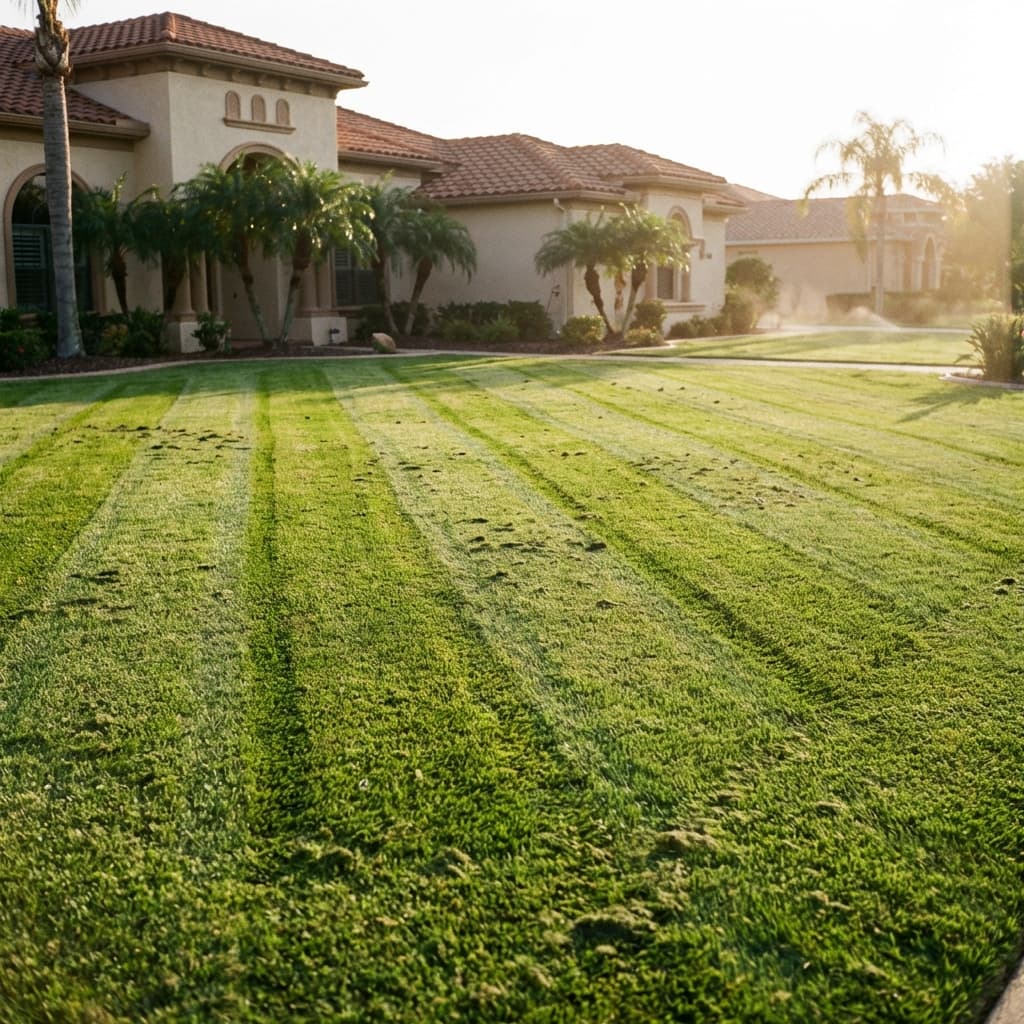
Professional look: If you want those alternating light-and-dark stripes you see on baseball fields, you need a mower with a roller attachment (or just a heavy deck) and you need to mow in straight, opposite directions. The stripes are created by grass blades being bent in opposite directions, reflecting light differently. Works best on dense grasses like Zoysia and Bermuda—St. Augustine is too coarse to stripe effectively.
In our experience, most Jacksonville homeowners care more about lawn health than stripes. Focus on height and frequency first, aesthetics second.
Cost of Professional Mowing in Jacksonville
Most services offer discounted rates if you sign up for weekly or bi-weekly service on an annual contract. Expect to pay 10-20% less per cut with a contract versus one-off mowing.
What to look for in a mowing service:
- Sharp blades (ask how often they sharpen)
- Proper height settings for your grass type
- String trimming and edging included
- Clipping management (mulch or bag based on conditions)
- Consistent schedule (not showing up randomly)
At Jax Sod, we focus on installation and delivery rather than ongoing maintenance, but we're happy to recommend reputable mowing services in Duval, Clay, St. Johns, and Nassau counties.
Common Mowing Mistakes Jacksonville Homeowners Make
After years of local lawn work, we've seen these mistakes repeatedly:
- Mowing the same height year-round: Your grass needs seasonal adjustments, especially taller in summer.
- Cutting too short to "save time between mowings": This backfires. You'll mow less often but fight weeds and thin turf constantly.
- Mowing on a set calendar schedule regardless of growth: Mow based on grass height, not what day it is.
- Using a dull blade all season: Sharpen monthly, minimum.
- Bagging everything: Mulch your clippings unless you have a specific reason not to.
- Mowing in the heat of the day: Early morning (after dew dries) or evening is better for you and the grass.
- Ignoring the one-third rule: Going on vacation for two weeks doesn't give you a pass—you'll still need to gradually cut back down.
The most expensive mistake is mowing St. Augustine at 2-2.5 inches thinking it'll look like a golf course. It'll look like a patchy mess within a month, and you'll be calling us to replace it.
When to Call the Professionals
Most Jacksonville homeowners can handle their own mowing with the right equipment and knowledge. But there are times when professional help makes sense:
- You're installing new sod: The first few mows after installation are critical. Mow too soon or too short, and you'll damage the developing root system.
- Your lawn is in decline: If you've been mowing wrong for months or years, bringing in a professional lawn service (or starting fresh with new sod) might be the reset you need.
- You don't have time: There's no shame in outsourcing. A well-maintained lawn is worth the investment.
- Your equipment isn't up to the task: A cheap push mower with a dull blade and no height adjustment won't cut it (literally) on a half-acre St. Augustine lawn.
At Jax Sod, maintenance expectations are part of the sod conversation. One of the first questions we ask new customers is, "How are you planning to maintain it?" Because perfect installation doesn't matter if you scalp it down to nothing two weeks later.
Conclusion: Height Matters More Than You Think
Proper mowing height isn't complicated, but it's also not optional. In Jacksonville's heat, humidity, and sandy soil, your grass needs every advantage it can get. Mowing at the right height—3.5-4 inches for St. Augustine, 0.5-1.5 inches for Bermuda, 1-2 inches for Zoysia, 3-4 inches for Bahia—is one of the simplest, most effective things you can do to keep your lawn healthy.
Combine that with following the one-third rule, adjusting slightly higher in summer, keeping your blade sharp, and mowing at the right frequency, and you'll have the best-looking lawn in Mandarin, Ponte Vedra, Orange Park, or wherever you call home in Northeast Florida.
Mowing height is foundational. Get it right, and everything else—fertilization, irrigation, pest control—becomes easier. Get it wrong, and you're fighting an uphill battle all season long.
Ready to start fresh with premium sod mowed at the perfect height from day one? We've been serving Jacksonville and Northeast Florida for years, and we'll help you choose the right grass and set you up for long-term success.
Need Professional Sod Installation?
Jax Sod provides sod installation, sod replacement, and new lawn installation across Jacksonville and Northeast Florida. Free quotes!
Related Articles
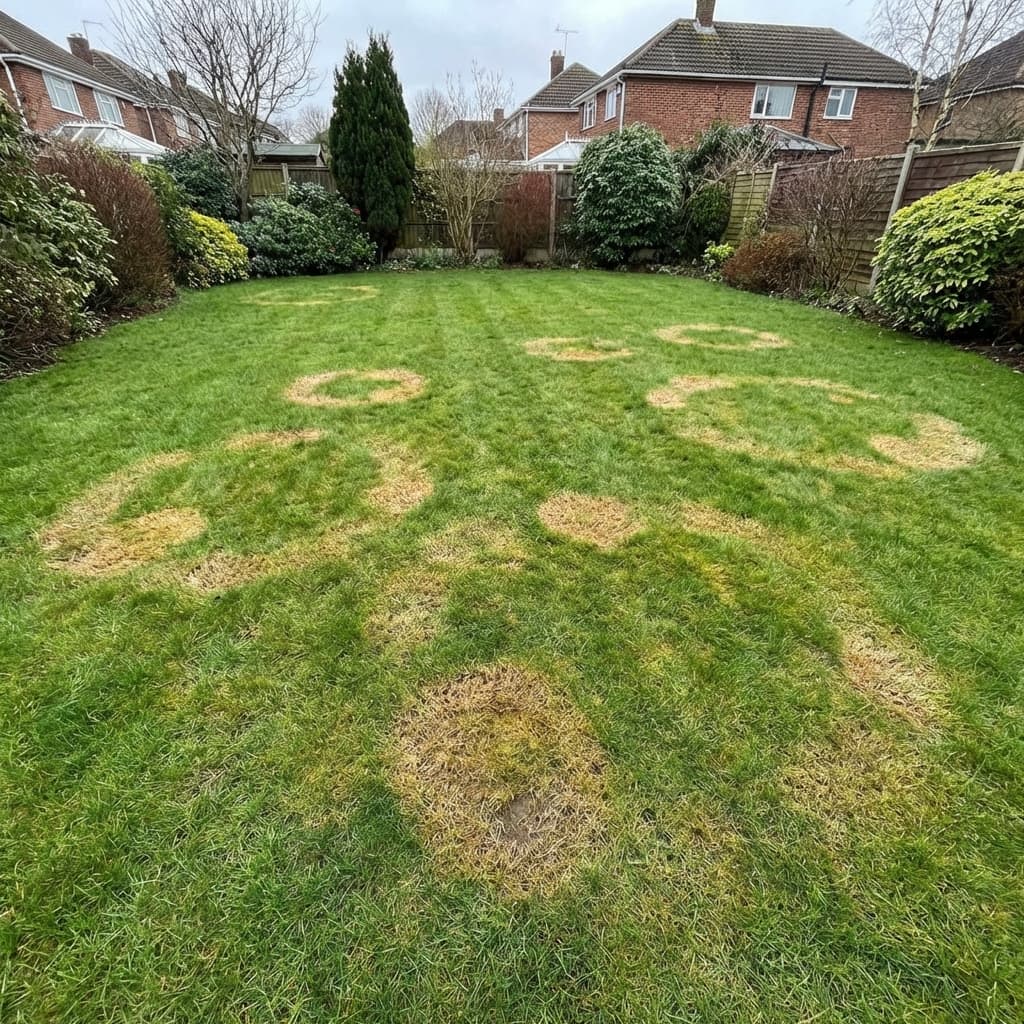
Armyworm Damage in Jacksonville Lawns: Detection and Control
Armyworm damage Jacksonville lawn problems peak August-November. Learn to detect fall armyworms, conduct soap flush tests, and apply effective treatments fast.
Dollar Spot Fungus in Jacksonville Lawns: Identification and Treatment
Dollar Spot Fungus in Jacksonville Lawns: Identification and Treatment. Review the site, scope and current written quote before deciding.
Fire Ant Control for Jacksonville Lawns
Fire Ant Control for Jacksonville Lawns. Review the site, scope and current written quote before deciding.
Let’s talk about your lawn
Ask our AI assistant a lawn question, or send the team a free installation estimate request.