Loading...
Back to Articles
Lawn Striping Patterns: Making Your Jacksonville Lawn Stand Out
Lawn Care January 27, 2026 16 min read
For current costs, compare the exact product or written project scope. See what to include in a sod estimate; this guide does not establish a current price, saving or resale return.
Set irrigation from site conditions and the current rules for your property and water source. For new sod, use the dated care planner; a fixed schedule in an older guide is not permission to water.
You've seen those professional lawns with perfectly straight alternating light and dark stripes, checkerboard patterns, or elegant diamonds that look like they belong at a major league ballpark. It looks complicated, maybe even requiring special grass or expensive equipment. The truth is simpler: lawn striping is achievable for any Jacksonville homeowner with the right technique, and it's about how you mow, not what you grow.
Lawn striping creates visual patterns by bending grass blades in different directions. Grass bent toward you appears darker because you're seeing blade tips and shadows. Grass bent away appears lighter because you're seeing the reflective underside of blades catching sunlight. This play of light and shadow creates the striping effect you admire on professional sports fields, golf courses, and showcase residential lawns.
At Jax Sod, we've spent years helping Jacksonville homeowners create beautiful lawns. While we focus primarily on sod installation and establishment, we're frequently asked about lawn striping techniques. The good news is that striping isn't just cosmetic—the practice of changing mowing direction regularly is actually healthier for your grass, preventing grain, reducing compaction, and promoting upright growth.
In this guide, we'll explain how lawn striping works, which Jacksonville grasses stripe best, what equipment creates the most dramatic patterns, basic and advanced striping patterns, mowing techniques for clean lines, and Jacksonville-specific tips for success. Whether you're maintaining a Bermuda lawn in Ponte Vedra, Zoysia in Nocatee, or St. Augustine in Riverside, you can create attractive patterns that make your property stand out in the neighborhood.
What Lawn Striping Is
Lawn striping is purely an optical illusion created by bending grass blades in different directions. There's no paint, no chemical treatment, no special grass variety required—just physics and mowing technique.
When you mow across your lawn, grass blades bend in the direction the mower travels. Walk-behind and riding mowers naturally bend grass somewhat, but the effect is subtle. To create dramatic, visible striping, you need to bend grass more aggressively using a striping kit, roller, or weighted attachment behind your mower.
The science: Light reflects differently off grass depending on blade angle. Grass blades bent toward your viewing position appear dark because:
- You see the blade tips and edges, which absorb more light
- Shadows form between bent blades
- Less reflective surface area faces you
Grass blades bent away from your viewing position appear light because:
- You see the broad, flat underside of blades, which reflects more light
- Blades catch sunlight at optimal angles for reflection
- The appearance is similar to grain direction in carpet or fabric
From different viewing angles, the pattern reverses—what looked dark becomes light and vice versa. This is why striping photographs differently depending on camera position and why patterns appear different from your front window versus the street.
The effect is entirely temporary. As grass blades return to vertical position (usually within a few days), the pattern fades. This is why athletic fields and golf courses are mowed daily or every other day—to maintain crisp patterns. Home lawns mowed weekly will show visible patterns for 3-5 days, fading as blades straighten.
Which Jacksonville Grasses Stripe Best
Not all grasses create equal striping effects. Jacksonville's common warm-season grasses vary dramatically in their striping potential.
Bermuda Grass: Excellent Striping
Varieties: TifTuf, Celebration, Latitude 36, Tifway 419, Bimini
Bermuda grass produces the most dramatic, professional-quality striping of any grass commonly grown in Jacksonville. The fine-textured blades, dense growth habit, and upright growth pattern bend cleanly and uniformly under striping equipment.
Hybrid Bermuda varieties like TifTuf and Celebration, popular in Ponte Vedra, Jacksonville Beach, and Nocatee for their superior drought tolerance and color, stripe beautifully. The rich, dark green color provides excellent contrast between light and dark stripes.
Bermuda's low mowing height (1-2 inches) shows striping patterns more clearly than taller grass. The short, dense canopy creates clean, sharp pattern edges. This is why professional sports fields, golf fairways, and high-end commercial properties almost exclusively use Bermuda when dramatic striping is desired.
Jacksonville homeowners maintaining Bermuda lawns already have ideal striping potential. Investment in a simple striping kit transforms your lawn from nice to spectacular.
Zoysia Grass: Excellent Striping
Varieties: Empire, Zeon, Icon, Palisades
Zoysia rivals Bermuda for striping quality. The dense, upright growth habit and medium-fine texture bend beautifully and hold patterns well. Zoysia's dark blue-green color creates particularly dramatic contrast.
Zoysia typically mows at 1-2.5 inches in Jacksonville, slightly taller than Bermuda but still short enough for excellent pattern visibility. The slower growth rate (compared to Bermuda) means Zoysia lawns maintain striping patterns slightly longer between mowings—4-6 days versus 3-4 for Bermuda.
For homeowners in Mandarin, San Marco, or other Jacksonville neighborhoods with Zoysia lawns, striping is absolutely achievable and highly effective. Zeon Zoysia in particular, with its extremely fine texture and dark color, produces professional-quality patterns.
St. Augustine Grass: Moderate Striping
Varieties: Floratam, Palmetto, CitraBlue, ProVista, Seville, Sapphire
St. Augustine, Jacksonville's most popular residential grass, produces visible striping but less dramatic than Bermuda or Zoysia. The coarser blade texture, wider blades, and less dense growth habit create softer, less defined patterns.
St. Augustine's typical mowing height of 3.5-4 inches also reduces striping visibility. Taller grass doesn't show patterns as crisply as short grass. The blades tend to return to vertical position faster than fine-textured grasses, causing patterns to fade within 2-3 days.
That said, St. Augustine striping is still worthwhile. While you won't achieve baseball-field perfection, you'll create attractive patterns that enhance lawn appearance and differentiate your property from neighbors. Dwarf varieties like Seville or Sapphire, which mow shorter (3 inches), stripe better than standard Floratam or Palmetto.
St. Augustine lawns in Riverside, Avondale, Orange Park, and throughout residential Jacksonville can absolutely be striped. Manage expectations—it won't match Bermuda or Zoysia, but it will look professional and attractive.
Bahia Grass: Poor Striping
Varieties: Argentine, Pensacola
Bahia grass, with its coarse texture, tall seed heads, and open, clumpy growth habit, does not stripe well. The widely spaced grass blades don't create the uniform surface needed for clean patterns. The thick, stiff blades resist bending and return to vertical quickly.
Bahia's primary benefits are low maintenance, drought tolerance, and pest resistance—not aesthetics. If you maintain Bahia and want striping, consider overseeding with Bermuda or replacing with a more suitable grass. Striping equipment won't overcome Bahia's fundamental growth characteristics.
Equipment for Lawn Striping
Creating visible striping patterns requires equipment that bends grass more aggressively than standard mowing. You have several options at different price points.
Striping Kit Attachments
Striping kits are accessories that attach to the rear of walk-behind or riding mowers. They consist of a weighted roller, brush, or combination that drags behind the mower deck, bending grass in the mowing direction.
Install takes 15-30 minutes with basic tools. The kit attaches to the mower handle or deck and suspends a roller or brush just behind the cutting blade.
These are larger, heavier units that create more dramatic striping. Brands like Toro, John Deere, and Cub Cadet offer OEM striping kits designed specifically for their mower models.
Quality varies—cheaper kits use plastic rollers or lightweight brushes that create subtle patterns. Better kits use metal rollers or weighted assemblies.
For Jacksonville homeowners serious about lawn striping, a quality striping kit is the best investment. It attaches permanently, requires no additional effort beyond normal mowing, and produces consistent results.
Lawn Rollers
Standard lawn rollers (used for leveling and firming soil) can create striping when pulled behind a mower or separately after mowing. Fill the roller partially with water for weight—full weight creates excessive soil compaction.
Disadvantages: More cumbersome than dedicated striping kits, requires separate pass after mowing if not towed during mowing, risk of soil compaction if too heavy, especially on Jacksonville's sandy soils.
Lawn rollers work best as a secondary striping tool for special occasions (parties, events, photos) rather than weekly use. The compaction risk and extra time required make dedicated striping kits more practical for regular patterns.
DIY PVC Roller
Creative Jacksonville homeowners build DIY striping rollers using 4-6 inch diameter PVC pipe, end caps, rope or chain for attachment, and water or sand for weight.
Construction: Cut PVC pipe to match mower deck width, attach end caps, drill holes for fill and attachment points, partially fill with sand or water for weight, attach to mower with rope or chain.
This is an excellent budget option for homeowners who want to experiment with striping before investing in commercial equipment. Performance matches entry-level commercial kits. Many Jacksonville DIYers successfully stripe beautiful patterns with homemade rollers.
Mower Weight and Deck Design
Even without striping equipment, mower characteristics affect pattern visibility. Heavier mowers naturally bend grass more than lightweight models. Rear-engine riders and zero-turn mowers create more noticeable patterns than push mowers due to weight and ground pressure.
Some commercial mowers feature full-width rear rollers integrated into the deck design specifically for striping. For homeowners replacing mowing equipment, consider models with built-in striping capability.
Basic Striping Patterns
Start with simple patterns before attempting complex designs. Master these fundamentals, then progress to advanced techniques.
Straight Lines
The classic striping pattern is simple alternating straight lines. Mow in one direction across the lawn, turn, mow the adjacent strip in the opposite direction. Repeat across the entire lawn.
Technique:
- Choose a fixed point for alignment (tree, post, corner of house) at the far end of your lawn.
- Mow the perimeter of your lawn first, creating a border.
- Start your first stripe, aiming directly at your alignment point for straight travel.
- At the end of the pass, turn and mow the adjacent strip in the opposite direction.
- Continue alternating direction with each pass.
- Overlap previous pass by 2-3 inches to avoid uncut strips.
Jacksonville tip: For front lawns facing east-west streets, mow north-south stripes. This creates the most dramatic viewing effect from the street, as sunlight angles throughout the day enhance contrast.
Checkerboard
Checkerboard patterns create a dramatic two-dimensional effect by mowing straight stripes in one direction, then mowing perpendicular stripes over the same area.
Technique:
- Mow straight stripes in one direction (example: north-south).
- Without changing striping equipment settings, mow perpendicular stripes (east-west) over the same area.
- Where stripes cross in opposite directions, grass bends twice, creating the darker "squares."
- Where stripes cross in the same direction, grass bends uniformly, creating lighter "squares."
Checkerboard requires 2x the mowing time (you mow the entire lawn twice) but creates spectacular visual impact. Reserve this pattern for special occasions or when you want maximum effect for photos or events.
For Jacksonville lawns, checkerboard works best on Bermuda and Zoysia. St. Augustine checkerboards are visible but less dramatic due to coarser texture.
Diamond Pattern
Diamond patterns create diagonal lines at 45-degree angles to the lawn edges. This is visually interesting and works well for square or rectangular Jacksonville lawns.
Technique:
- Identify the center point of your lawn.
- Begin at one corner, mowing diagonally toward the opposite corner.
- Make parallel passes, maintaining the 45-degree angle.
- After completing all stripes in one direction, mow perpendicular diagonal stripes to create diamond intersections (similar to checkerboard).
Diamonds are more challenging because maintaining straight 45-degree angles without fixed edge alignment is difficult. Practice on less-visible areas first.
Alternating Direction (Basic Healthy Practice)
If patterns aren't your goal but you want lawn health benefits, simply alternate mowing direction each week without concern for patterns. Mow north-south one week, east-west the next, diagonal the third week.
This prevents grain (grass growing in one direction), reduces compaction in wheel tracks, and promotes upright growth. The pattern may not be deliberate or dramatic, but it's visible and healthier than mowing the same direction repeatedly.
Advanced Striping Patterns
Once you've mastered basics, try these complex patterns for special occasions.
Spiral
Starting at the perimeter and mowing in progressively smaller rectangles creates an inward spiral pattern. This works well for small to medium Jacksonville lawns (under 5,000 sq ft) where the full pattern is visible from second-story windows or aerial views.
Spirals don't create dramatic contrast from ground level but look interesting and demonstrate clear variation from standard patterns.
Wave or Curve Patterns
Mowing in gentle curves rather than straight lines creates flowing wave patterns. This requires significant skill to maintain consistent curves and even stripe width.
Mark curves with landscape paint, string lines, or flags before mowing to guide your path. Waves work best on larger, open Jacksonville lawns in Nocatee, Ponte Vedra, or acreage properties where you have room for gentle arcs.
Combination Patterns
Professional groundskeepers combine multiple techniques: straight stripes in the main lawn area, checkerboard in feature areas near the house, and diamonds in corner sections. This requires careful planning and precise execution but creates stunning results.
For Jacksonville homeowners preparing for weddings, parties, or photographs, combination patterns make your lawn a showcase feature.
Mowing Technique for Clean Stripes
Equipment matters, but technique makes the difference between mediocre and professional results.
Direction Changes Prevent Ruts
While striping involves repeating patterns, never mow the exact same lines week after week. Vary your pattern direction every 2-3 weeks to prevent compaction ruts, wheel tracks, and grain.
Rotate between north-south stripes, east-west stripes, and diagonal patterns throughout the season. This maintains soil health while still creating attractive temporary patterns each mowing.
Mow When Grass is Dry
Wet grass doesn't stripe well. Moisture weighs blades down, preventing the clean bending that creates crisp patterns. Wet grass also clumps in the mower deck, creating uneven cutting and pattern disruption.
In Jacksonville, avoid mowing early morning when dew is heavy. Wait until mid-morning (9-10 AM) after sun has dried grass. In summer, this means mowing before heat peaks (before 11 AM) but after dew evaporates—a narrow window.
Sharp Blade is Essential
Dull mower blades tear grass rather than cutting cleanly. Torn grass appears ragged, brown-tipped, and doesn't stripe well because damaged blades don't reflect light uniformly.
Sharpen mower blades every 20-25 hours of operation, approximately every 4-6 weeks during Jacksonville's growing season.
Sharp blades also reduce disease risk by creating clean cuts that heal quickly rather than ragged wounds that invite fungal infection.
Consistent Speed
Uneven mower speed creates inconsistent striping. Faster travel bends grass less; slower travel bends more. Variations in speed create irregular patterns and uneven stripe width.
Maintain steady walking speed on walk-behind mowers or consistent throttle on riding mowers. Use cruise control if your zero-turn mower has the feature.
Overlap Slightly
Overlap each pass by 2-3 inches to ensure no uncut strips between stripes. Uncut grass ruins pattern appearance and creates additional work correcting missed areas.
Most mowers have deck markings or edge guides to help maintain consistent overlap. Watch the edge of your previous pass and keep it aligned with your mower deck edge.
Turn Technique
At the end of each stripe, turn smoothly and position for the next pass. Zero-turn mowers allow tight turns. Walk-behind and traditional riding mowers require more space.
The turn area is visible, so sloppy turns create messy pattern ends. Mow a perimeter border first, creating clean turn space. Make controlled turns rather than sharp pivots that tear turf.
Why Striping is More Than Cosmetic
Beyond aesthetics, regular pattern mowing with direction changes benefits Jacksonville lawn health.
Prevents Grain
Grass mowed in the same direction repeatedly develops grain—blades lean permanently in that direction and resist standing upright. Grain creates an uneven surface, poor ball roll, and one-directional appearance.
Alternating mow direction weekly prevents grain, keeping grass upright and uniform. This is standard practice on golf greens and professional sports fields for both aesthetics and playability.
Reduces Compaction
Mowing the same path weekly compacts soil in wheel tracks, reducing air and water infiltration and restricting root growth. This is particularly problematic in Jacksonville's sandy soils, which compact easily despite good drainage.
Changing direction spreads traffic across the lawn, minimizing repetitive compaction in the same locations.
Promotes Upright Growth
Bending grass blades in different directions stimulates more upright, vertical growth. Grass naturally grows toward light; bending it forces stems to adjust and stand more vertically.
Upright growth creates denser turf, better light interception, and improved photosynthesis. This translates to healthier, more resilient grass better able to handle Jacksonville's summer heat stress.
Improved Air Circulation
Changing mowing direction ensures grass doesn't lay flat in one direction, which can trap moisture at the soil surface and reduce air movement. Better air circulation reduces fungal disease risk—critical in Jacksonville's humid summers when gray leaf spot, large patch, and dollar spot threaten lawns.
The health benefits of alternating direction mean even homeowners who don't care about visual patterns should vary their mowing direction regularly.
Best Mowing Height for Visible Stripes
Shorter grass shows striping patterns more clearly than tall grass. This creates a conflict with Jacksonville best practices, which recommend higher mowing for heat and drought tolerance.
Finding the Balance
Bermuda grass: Mow at 1-1.5 inches for maximum striping visibility. This is within Bermuda's acceptable range and won't cause stress if properly maintained.
Zoysia grass: Mow at 1.5-2 inches for good striping while maintaining adequate blade surface for photosynthesis and stress tolerance.
St. Augustine grass: Mow at 3.5 inches (lower end of acceptable range) for improved striping compared to the 4-inch height often recommended for maximum drought tolerance. This compromise provides visible patterns without sacrificing too much stress tolerance.
During Jacksonville's most stressful periods (July-August heat), consider raising mowing height 0.5 inches to support grass health, accepting reduced striping visibility. Lower height again in spring and fall when temperatures moderate.
Consistent Height
Maintain the same mowing height throughout the lawn. Variations in cutting height create uneven appearance and disrupt patterns. Set mower deck to desired height and verify before each mowing—deck settings can shift during mower transport or storage.
Use a ruler to measure from ground to deck blade when mower is on flat surface to verify actual cutting height matches desired height.
Jacksonville Lawn Striping Tips
Northeast Florida's climate and grass conditions create specific considerations for successful striping.
Summer Heat Considerations
Jacksonville's July-August heat is brutal on lawns. During this period, pattern quality becomes secondary to grass health. If your lawn shows heat stress (wilting, browning, thinning), raise mowing height, reduce striping roller weight, and focus on basic health rather than complex patterns.
Resume aggressive striping in September when temperatures moderate and grass recovers.
Fungal Disease Impact
Fungal diseases common in Jacksonville (gray leaf spot on St. Augustine, large patch on all species) create irregular brown patches that disrupt patterns. Maintain fungicide programs during high-risk periods (June-September) to keep grass uniformly healthy for best striping appearance.
A lawn with scattered brown fungal patches won't stripe well regardless of technique.
Irrigation Management
Over-irrigated lawns develop soft, spongy growth that doesn't stripe crisply.
Properly irrigated grass has firm, upright growth that bends cleanly and holds patterns better.
Showcase Your Striped Lawn
Jacksonville's flat terrain and front-yard-facing home orientation in most neighborhoods makes lawn striping visible and appreciated. Properties in Ponte Vedra, Nocatee, and other communities with active HOAs and high aesthetic standards particularly benefit from professional-looking striped lawns.
Post photos on neighborhood social media, enter local lawn contests (JEA and local garden centers occasionally sponsor competitions), or simply enjoy the satisfaction of having the best-looking lawn on the block.
Seasonal Timing
Spring (April-May) and fall (September-October) produce the most dramatic, long-lasting striping in Jacksonville. Grass grows vigorously, recovers quickly from mowing stress, and holds patterns well.
Summer patterns fade faster due to heat stress and rapid growth. Winter patterns (when warm-season grasses slow) last longer but color is less vibrant.
Plan special patterns (checkerboard, diamonds) for spring and fall when results will be most impressive.
Maintenance Between Mowings
Keep your striped lawn looking great between mowings with these simple practices.
Minimize Traffic
Foot traffic, pets, and equipment crossing the lawn disrupts patterns. Limit non-essential traffic, especially immediately after mowing when patterns are freshest.
For Jacksonville families with children and pets, this isn't always practical. Accept that high-use lawns won't maintain pattern perfection and touch up high-traffic areas with additional passes if needed.
Avoid Lawn Treatments on Pattern Days
Don't apply fertilizer, herbicides, or other treatments on the same day you create special patterns. The additional foot traffic and equipment disperses materials and disrupts freshly created stripes.
Treat the day before or after pattern mowing, not the same day.
Photograph Patterns
Patterns look different from various angles and times of day. Photograph your work from multiple perspectives. Early morning or late afternoon sidelight creates the most dramatic shadows and contrast.
Aerial photos from second-story windows, drones, or stepladders show full patterns that aren't visible from ground level.
Share photos online, use them for landscape planning, or simply document your improving technique over time.
Striping and Property Value
Well-maintained, professionally striped lawns enhance property appearance and potentially increase home values. Jacksonville real estate markets value curb appeal heavily.
Properties in competitive markets like Ponte Vedra, Nocatee, San Marco, and Riverside benefit from every aesthetic advantage. A striped lawn signals meticulous maintenance and pride of ownership—attractive to buyers.
Professional photos for real estate listings benefit tremendously from freshly striped lawns. Coordinate with your realtor to mow complex patterns the day before listing photos for maximum impact.
Conclusion
Lawn striping transforms ordinary Jacksonville lawns into showcase properties using technique and equipment, not special grass or expensive professional services. The alternating light and dark patterns result from bending grass blades in different directions, creating optical effects visible for 3-5 days after mowing.
Bermuda and Zoysia grasses stripe excellently, creating professional-quality patterns with minimal effort. St. Augustine produces moderate, attractive striping despite coarser texture. Bahia doesn't stripe well and isn't recommended for pattern-focused homeowners.
Basic straight-line patterns take no extra skill beyond normal mowing, while advanced checkerboard and diamond patterns require practice and precision.
Beyond aesthetics, alternating mowing direction prevents grain, reduces compaction, promotes upright growth, and improves turf health—making striping a functional practice even for homeowners unconcerned with appearance.
Mow when dry, maintain sharp blades, keep consistent speed, and overlap passes slightly for best results. Choose appropriate mowing heights for your grass type (lower for Bermuda and Zoysia, moderate for St. Augustine) to maximize pattern visibility while maintaining grass health.
Jacksonville's spring and fall seasons produce the most dramatic patterns as grass grows vigorously and temperatures moderate. Summer heat and winter dormancy reduce pattern quality but don't eliminate striping potential.
Ready to create the best-looking lawn in your Jacksonville neighborhood? With years serving Northeast Florida, we'll help you establish and maintain turf that performs beautifully under any management approach—including professional striping.
Need Professional Sod Installation?
Jax Sod provides sod installation, sod replacement, and new lawn installation across Jacksonville and Northeast Florida. Free quotes!
Related Articles
Complete Lawn Renovation in Jacksonville, FL: When to Rip It Out and Start Over
Is your Jacksonville lawn beyond saving? This complete lawn renovation guide covers when to replace vs. repair, how to remove old turf, soil prep, choosing new sod, and the full renovation timeline for Northeast Florida homeowners.
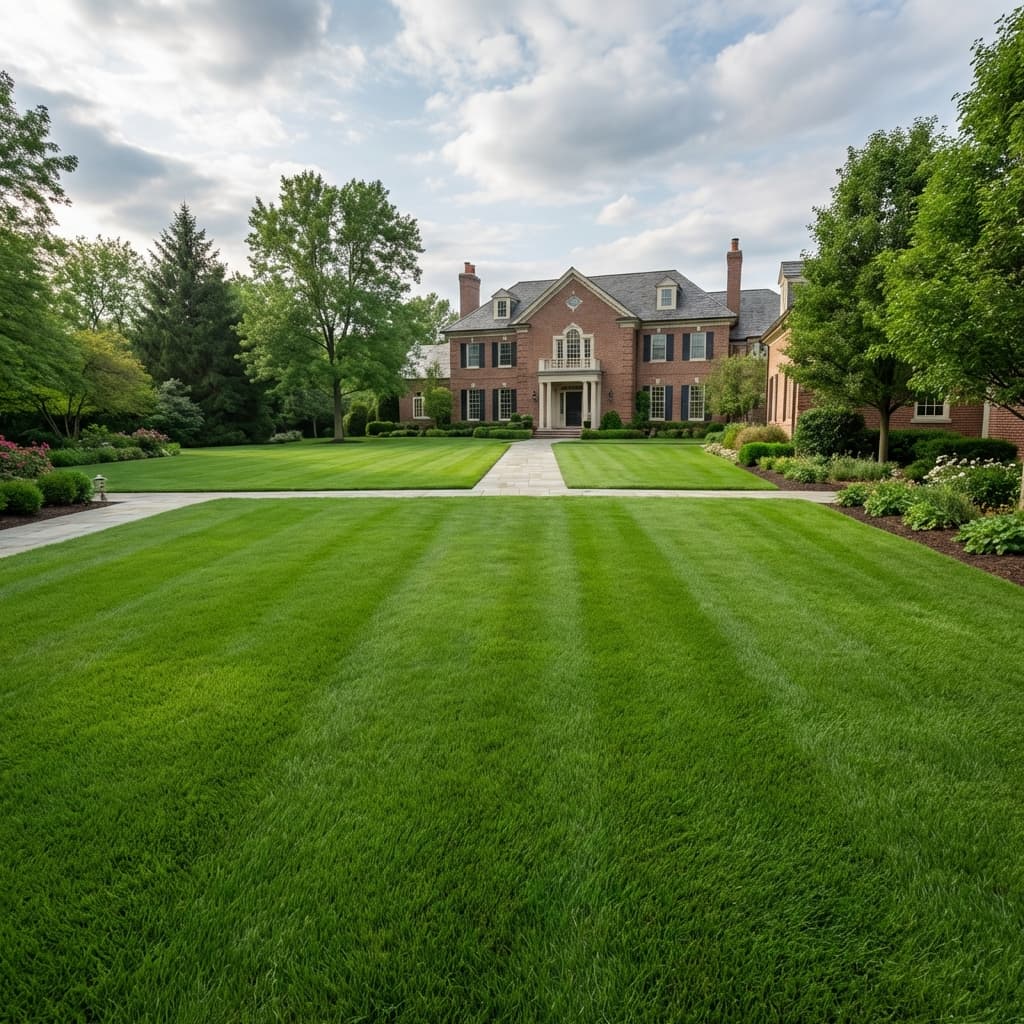
5 Signs Your Lawn Needs to Be Replaced (Not Just Repaired)
Is your lawn beyond saving? Learn when it makes more sense to start fresh with new sod instead of fighting a losing battle with repairs.
Arlington Jacksonville Lawn Care
Arlington Jacksonville Lawn Care. Review the site, scope and current written quote before deciding.
Let’s talk about your lawn
Ask our AI assistant a lawn question, or send the team a free installation estimate request.