Loading...
Back to Articles
ProVista St. Augustine: The Low-Mow Option for Jacksonville
Grass Types January 27, 2026 10 min read
For current costs, compare the exact product or written project scope. See what to include in a sod estimate; this guide does not establish a current price, saving or resale return.
ProVista is different from traditional St. Augustine varieties in one major way: it's genetically modified to grow 30-40% slower vertically. This isn't just marketing hype. Through years in the sod business, we've seen plenty of "low maintenance" grass claims, but ProVista actually delivers on the reduced mowing promise. The genetic modification also makes it tolerant to glyphosate (Roundup), which opens up weed control options that aren't available with conventional St. Augustine.
In this article, we'll cover everything Jacksonville homeowners need to know about ProVista: what makes it different, how much maintenance time and money you'll actually save, the controversy around GMO turfgrass, how it compares to Floratam and Palmetto, what it costs locally, and whether it's the right choice for your property.
What Is ProVista St. Augustine?
ProVista is a genetically modified variety of St. Augustine grass (Stenotaphrum secundatum) developed through biotechnology rather than traditional breeding. The modification involves inserting a gene that makes the grass tolerant to glyphosate herbicide—the same trait that's been used in crops like Roundup Ready soybeans and corn for decades.
The result is twofold. First, ProVista grows 30-40% slower in the vertical direction compared to conventional St. Augustine varieties. The grass still spreads laterally through stolons at a normal rate, so it fills in bare spots and recovers from damage just fine. It just doesn't shoot upward as aggressively, which means fewer mowing cycles throughout the growing season.
Second, because ProVista is glyphosate-tolerant, you can spray Roundup directly on it to control weeds without harming the grass. This is a significant advantage in Jacksonville, where broadleaf weeds like dollarweed, spurge, and matchweed thrive in our humid climate. With conventional St. Augustine, you're limited to selective herbicides that target specific weed types, and some weeds require multiple treatments or hand-pulling. With ProVista, a non-selective herbicide like glyphosate becomes a viable option for tough-to-control weeds.
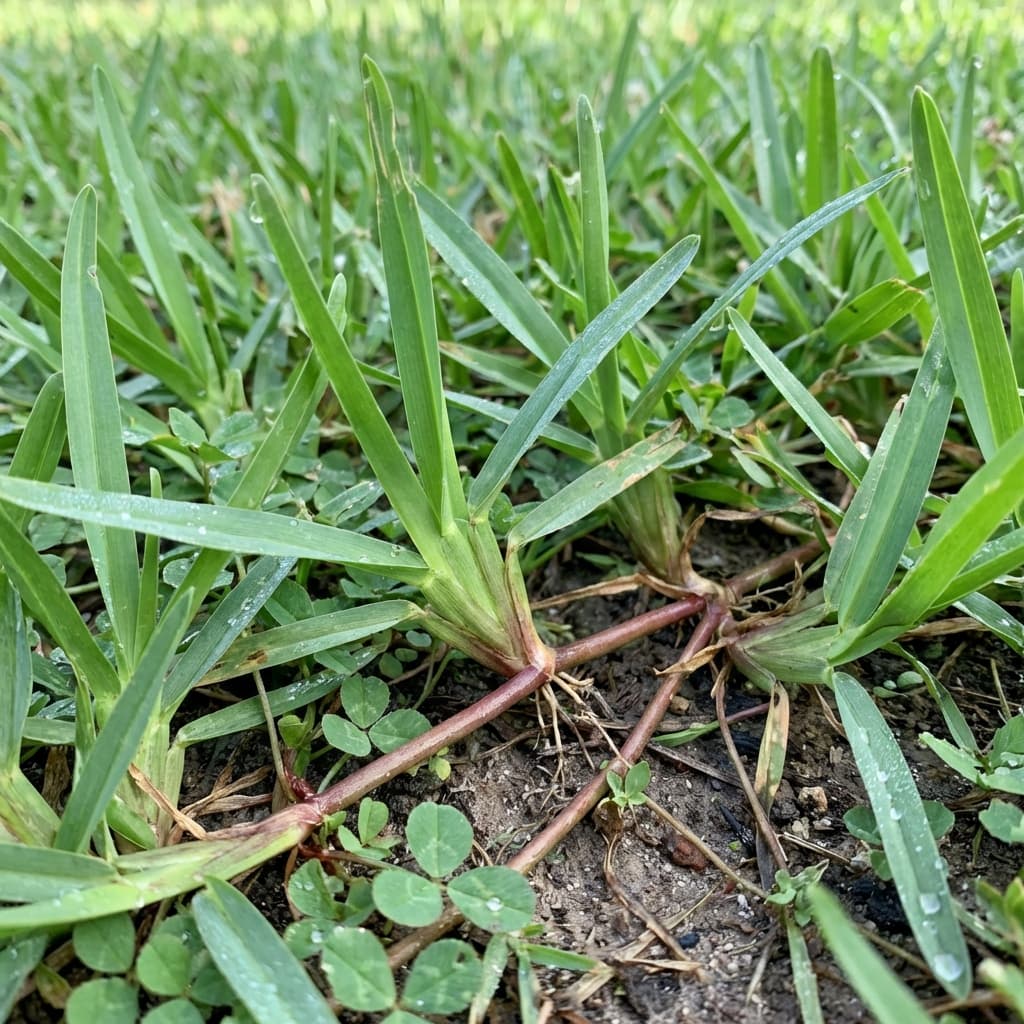
It's important to understand that ProVista isn't a different species—it's still St. Augustine grass with the same basic characteristics: shade tolerance, salt tolerance, texture, and water requirements. The genetic modification affects growth rate and herbicide tolerance, but the grass itself behaves like St. Augustine in every other respect.
Reduced Mowing Needs: The Real Numbers
Let's talk about what 30-40% less vertical growth actually means for Jacksonville homeowners. During peak growing season—typically May through September here in Northeast Florida—most St. Augustine lawns need mowing once a week to maintain a tidy appearance. If you let it go two weeks, you're cutting off 4-5 inches of growth, which stresses the grass and leaves piles of clippings.
With ProVista, that weekly mowing schedule stretches to every 10-12 days during peak season. In practical terms, that's 18-20 mowings per year instead of 26-30. If you're paying a lawn service, that's 8-12 fewer visits annually.
If you mow your own lawn, the savings are in time rather than money. Eight hours per year back in your schedule might not sound like much, but it adds up. More importantly, the reduced mowing frequency means you're not scrambling to cut the grass every Saturday morning to keep it from looking overgrown.
One thing we've noticed with ProVista installations in San Marco and Riverside: homeowners appreciate the consistent growth rate. Conventional St. Augustine has pronounced growth spurts when conditions are ideal (warm temperatures, adequate rainfall), and it slows down when stressed. ProVista's growth is more predictable throughout the season, which makes it easier to plan your mowing schedule.
Jacksonville Pro Tip: Even with ProVista's slower growth, you'll still need to mow weekly during peak summer months if you prefer a manicured appearance. The 10-12 day schedule works well for most homeowners, but if you're particular about lawn aesthetics, plan on weekly mowing in July and August.
Weed Control Advantage
The glyphosate tolerance is ProVista's other major selling point, and it's particularly valuable in Jacksonville's challenging weed environment. Our sandy soil, high humidity, and long growing season create ideal conditions for persistent weeds like dollarweed, which is notoriously difficult to control in St. Augustine lawns.
With conventional St. Augustine, dollarweed requires targeted herbicides like Atrazine or 2,4-D, often applied multiple times per season. These products work, but they have limitations. Atrazine can't be used near waterways (a concern for properties along the St. Johns River or local creeks), and 2,4-D requires careful timing and application rates to avoid damaging the grass.
With ProVista, you can spot-treat troublesome weeds with glyphosate, which is faster-acting and effective on a broader range of weeds. We've had homeowners in Mandarin and Baymeadows report success controlling dollarweed, spurge, and even torpedo grass (a tough grassy weed that often requires professional intervention) by spot-spraying Roundup on their ProVista lawns.
The caveat is that you need to use the right formulation and concentration. Full-strength glyphosate applied over the entire lawn will still stress ProVista, even though it won't kill it. For spot treatment of individual weeds, a standard Roundup concentration works fine.
It's also worth noting that glyphosate tolerance doesn't make ProVista immune to all herbicides. Pre-emergent herbicides for crabgrass control, post-emergent products for nutsedge, and selective broadleaf herbicides all work the same way on ProVista as they do on conventional St. Augustine. The glyphosate tolerance is specific to that one chemistry.
Appearance and Texture
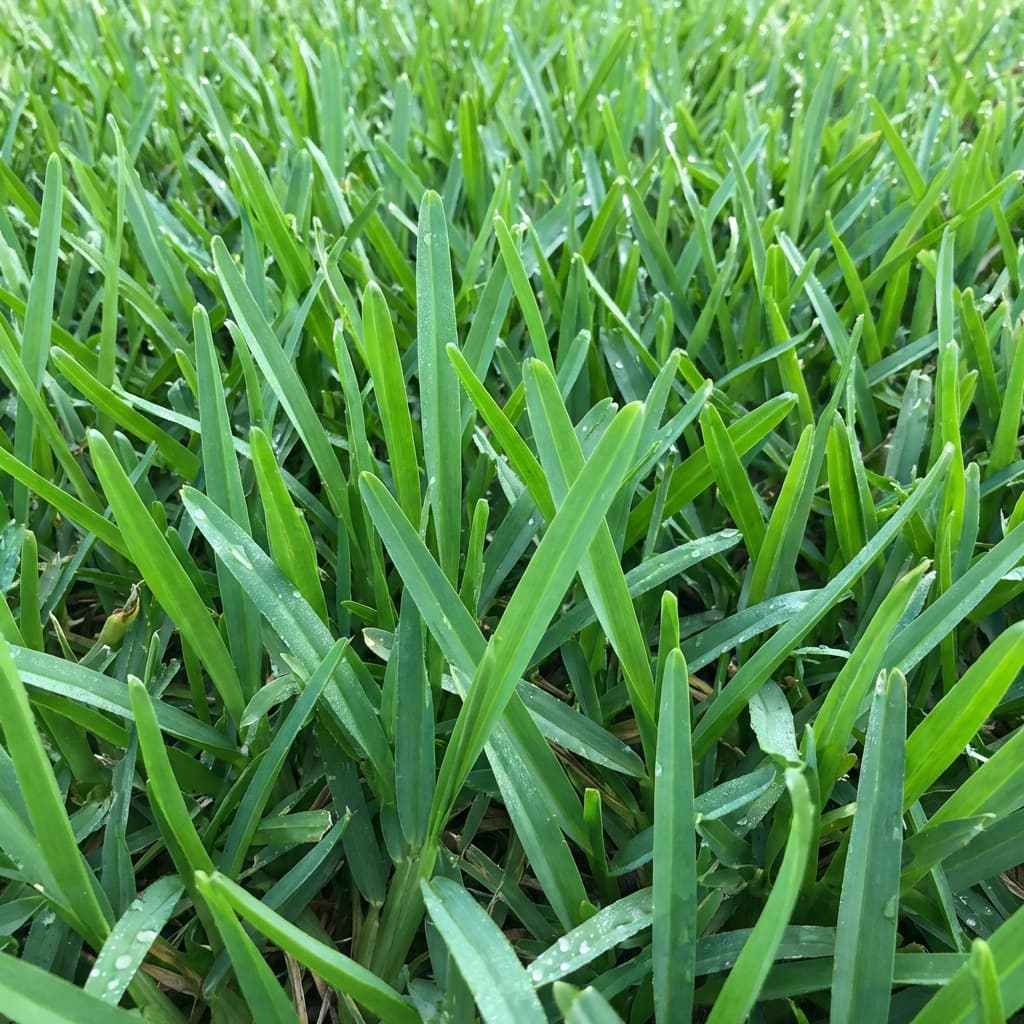
ProVista looks like St. Augustine because it is St. Augustine. The blade width, color, and texture are essentially identical to Floratam, which is the benchmark St. Augustine variety in Northeast Florida. If you lined up ProVista next to Floratam without labels, you'd have trouble telling them apart.
The color is a medium to dark green, consistent throughout the growing season. In winter, ProVista goes dormant like all St. Augustine varieties when nighttime temperatures drop below 55°F consistently. Here in Jacksonville, that typically happens in December or January, and the grass browns off until spring. If you want year-round green, you'd need to overseed with ryegrass, just like any other St. Augustine lawn.
The texture is coarser than Zoysia but finer than Bahia. It has that classic St. Augustine feel underfoot—soft, dense, and comfortable for barefoot walking. Families with kids and pets appreciate this characteristic, especially in backyards used for play areas.
One difference we've observed between ProVista and Floratam: ProVista tends to maintain a slightly more uniform appearance because the slower growth rate means less variation in blade height between mowing cycles. This is purely aesthetic and matters most to homeowners who are particular about lawn appearance.
Shade Tolerance
ProVista's shade tolerance is excellent, which is one of the main reasons St. Augustine grass is popular in Jacksonville in the first place. Our mature neighborhoods—particularly San Marco, Riverside, and Avondale—have extensive tree canopy from live oaks, magnolias, and pecans. Bermuda grass and Bahia struggle in shade, but St. Augustine thrives.
The one consideration with shaded ProVista lawns: mowing frequency matters even more. When St. Augustine is mowed too short in shade, it thins out and becomes susceptible to disease. The recommended mowing height for shaded St. Augustine is 4 inches, compared to 3.5 inches in full sun. With ProVista's slower growth, you might be tempted to let it go longer between mowings in shade, but resist that urge. Consistent mowing at the proper height keeps the grass dense and healthy.
Maintenance Savings Calculation
Let's break down the actual cost savings for a typical Jacksonville homeowner with a 5,000 square foot lawn:
Mowing Costs:
Herbicide Costs:
If you're installing new sod anyway, ProVista pays for its higher upfront cost through maintenance savings over time.
These numbers assume professional lawn service. If you mow your own lawn, the savings are in time and equipment wear rather than direct costs, but the value is still significant—about 8-10 hours per year back in your schedule.
The GMO Controversy
ProVista is the first genetically modified turfgrass approved for commercial use in the United States, and that makes some homeowners uncomfortable. At Jax Sod, we get questions about this regularly, so let's address the concerns directly.
The genetic modification in ProVista involves inserting a gene that produces an enzyme called CP4 EPSPS, which allows the grass to tolerate glyphosate. This is the same modification used in Roundup Ready crops like soybeans, corn, and cotton, which have been grown commercially since the 1990s. The safety profile is well-established: the modified grass is safe for people, pets, and wildlife, and the trait doesn't spread to other plants because St. Augustine reproduces vegetatively (through stolons) rather than by seed in landscape settings.
Some environmental concerns are worth considering. Glyphosate tolerance could encourage overuse of herbicides, which has environmental implications. However, in practice, ProVista homeowners in Jacksonville tend to use less herbicide overall because the glyphosate option is more effective than multiple applications of selective products.
The genetic modification doesn't affect the grass's basic biology. ProVista still needs the same fertility, irrigation, and pest management as conventional St. Augustine. It's not immune to chinch bugs, gray leaf spot, or brown patch. The modification is narrow and specific to one trait.
If you're philosophically opposed to GMO organisms, ProVista isn't for you—and that's fine. Floratam, Palmetto, and CitraBlue are excellent conventional alternatives. But if you're open to the technology and want the maintenance benefits, the safety concerns have been thoroughly addressed.
Availability and Cost in Jacksonville
ProVista is widely available from sod farms serving Jacksonville, including our farm in Green Cove Springs. It's not as common as Floratam or Palmetto, but availability has increased significantly over the past few years as demand has grown.
The higher upfront cost is offset by long-term maintenance savings, as outlined above. If you plan to stay in your home for 5+ years, ProVista typically pays for itself through reduced mowing and herbicide costs.
One availability note: ProVista is produced under license, so not all sod farms carry it. When you're getting quotes from sod suppliers in Northeast Florida, specifically ask about ProVista availability and lead times.
Comparison to Floratam and Palmetto
Here's how ProVista stacks up against the two most popular St. Augustine varieties in Jacksonville:
| Characteristic | ProVista | Floratam | Palmetto |
|---|---|---|---|
| Mowing frequency | Every 10-12 days | Every 7 days | Every 7-8 days |
| Shade tolerance | Excellent | Excellent | Excellent |
| Cold tolerance | Good | Good | Very good |
| Drought tolerance | Good | Fair | Good |
| Texture | Medium | Medium-coarse | Medium |
| Glyphosate tolerance | Yes | No | No |
| Cost (per sq ft) | Current quote needed | Current quote needed | Current quote needed |
| Chinch bug resistance | Moderate | Poor | Good |
Floratam is the workhorse St. Augustine variety in Florida—it's widely available, affordable, and performs well in full sun. Its main weaknesses are poor cold tolerance (can winterkill in North Florida during hard freezes) and susceptibility to chinch bugs. For full-sun lawns where maintenance time isn't a primary concern, Floratam is an excellent value.
Palmetto offers better cold tolerance than Floratam, making it a safer choice for inland Jacksonville areas where winterkill is a concern. It also has moderate chinch bug resistance, which is valuable in Jacksonville's humid climate. Palmetto's texture is slightly finer than Floratam, and it's more drought-tolerant. The tradeoff is higher cost and slightly faster growth in shade, which can require more frequent mowing under trees.
ProVista is the choice for homeowners who prioritize low maintenance. The reduced mowing frequency is its primary selling point, backed up by the glyphosate tolerance for simplified weed control. It costs more upfront than Floratam but less than some premium varieties like CitraBlue or Sapphire. Cold tolerance is comparable to Floratam, which means it can brown off or experience minor winterkill during unusually cold winters in Nassau County or northern Clay County.
Best Homeowner Profile for ProVista
ProVista makes the most sense for these situations:
Larger properties: The maintenance savings scale with lawn size. On a 10,000 square foot lawn, the mowing frequency reduction saves 16-20 hours per year—enough to justify the upfront cost premium.
Homeowners with persistent weed problems: If you've fought dollarweed, torpedo grass, or spurge year after year with limited success, ProVista's glyphosate tolerance offers a new tool for control.
Environmentally conscious homeowners: This might seem counterintuitive, but reduced mowing means less fuel consumption, fewer emissions, and less noise pollution. If you're trying to reduce your environmental footprint, less frequent mowing matters.
Situations where ProVista might not be the best choice:
- If you're philosophically opposed to GMO products
- If you already have an effective weed control program with conventional St. Augustine
- If you're installing sod in a rental property or home you plan to sell within 2-3 years (won't see the long-term maintenance savings)
Ready to Switch to Low-Maintenance St. Augustine?
ProVista St. Augustine represents a genuine innovation in turfgrass: a variety that delivers measurable maintenance savings without compromising appearance or performance. For Jacksonville homeowners looking to reduce lawn care time and costs, it's worth serious consideration.
The genetic modification aspect requires personal evaluation—some homeowners are comfortable with the technology, others prefer conventional varieties. Both positions are reasonable. What matters is making an informed choice based on your priorities, budget, and lawn care philosophy.
At Jax Sod, we compare ProVista against other St. Augustine options for Northeast Florida yards. The maintenance savings are real, the glyphosate tolerance is valuable for weed control, and the grass performs well in Jacksonville's climate.
If you're considering new sod installation or replacing an existing lawn, ProVista deserves a spot on your shortlist. We're happy to walk your property, discuss your maintenance goals, and provide a detailed quote comparing ProVista to conventional St. Augustine options.
Ready to reduce your mowing time? Our team has been installing sod across Jacksonville for years, and we'll help you choose the right variety for your property and lifestyle.
Need Professional Sod Installation?
Jax Sod provides sod installation, sod replacement, and new lawn installation across Jacksonville and Northeast Florida. Free quotes!
Related Articles
CitraBlue St. Augustine Grass: Is It Right for Jacksonville?
CitraBlue St. Augustine Grass: Is It Right for Jacksonville. Review the site, scope and current written quote before deciding.
St. Augustine vs Bermuda Grass: Which Is Best for Jacksonville Lawns?
Comparing St. Augustine and Bermuda grass for Jacksonville, FL lawns. Learn which sod type handles our sandy soil, shade, salt air, and humidity best — plus cost, maintenance, and neighborhood recommendations.
St. Augustine vs Zoysia: Best Sod for Jacksonville
St. Augustine vs Zoysia: Best Sod for Jacksonville. Review the site, scope and current written quote before deciding.
Let’s talk about your lawn
Ask our AI assistant a lawn question, or send the team a free installation estimate request.