Loading...
Back to Articles
Flower Bed Design Ideas for Jacksonville Homes
Lawn Care January 27, 2026 16 min read
For current costs, compare the exact product or written project scope. See what to include in a sod estimate; this guide does not establish a current price, saving or resale return.
Set irrigation from site conditions and the current rules for your property and water source. For new sod, use the dated care planner; a fixed schedule in an older guide is not permission to water.
Jacksonville's climate offers a remarkable advantage for flower bed design: with our mild winters and long growing season, you can maintain continuous color nearly year-round. But creating beautiful, thriving flower beds in Northeast Florida requires more than just planting whatever catches your eye at the garden center. After years serving Jacksonville homeowners at Jax Sod, we've seen the difference between flower beds that flourish and those that struggle—and it comes down to understanding our unique conditions.
Jacksonville's sandy soil, intense summer heat, Zone 9a-9b temperatures, and wet-dry rainfall cycles require specific design strategies. The flower beds that look magazine-perfect in Atlanta or Charleston might fail here within months. Conversely, species that barely survive elsewhere thrive in our coastal climate when properly selected and positioned. Whether you're designing a small entry bed in San Marco or a sweeping perennial border in Ponte Vedra, success starts with designs tailored to Jacksonville's environment.
This guide covers everything from site preparation and bed shapes to seasonal plant selection and maintenance schedules. We'll show you how to create flower beds that deliver continuous color, handle our summer heat, attract pollinators, and integrate beautifully with your lawn and landscape. Let's design flower beds that actually thrive in Northeast Florida.
Designing Flower Beds for Jacksonville's Climate
Jacksonville sits at the intersection of temperate and subtropical climates, which creates both opportunities and challenges for flower bed design. Understanding our conditions is the foundation of successful planting.
Heat and humidity: Summer temperatures regularly reach 90-95°F with humidity levels above 70%. Many traditional perennials that thrive in Northern gardens wilt here. Focus on heat-tolerant species like pentas, lantana, and salvia that evolved in tropical or subtropical regions.
Sandy soil: Jacksonville's native soil is almost pure sand with minimal organic matter. It drains quickly—great for preventing root rot but terrible for holding nutrients and moisture. Every successful flower bed in Duval County starts with serious soil amendment.
Rainfall patterns: We receive 52 inches of rain annually, but it's concentrated in summer months (June through September). Spring and fall can bring extended dry periods requiring supplemental irrigation. Design irrigation systems that deliver water efficiently without overwatering during rainy periods.
Winter considerations: While Jacksonville rarely freezes, occasional cold snaps (every 3-5 years) can dip into the mid-20s. Choose primarily Zone 9-hardy perennials and be prepared to protect tender tropicals during rare hard freezes.
Sun exposure intensity: Our intense summer sun can scorch plants that prefer "full sun" in northern climates. East-facing beds that receive morning sun and afternoon shade often outperform full-sun locations for many species. Reserve true full-sun exposure for the most heat-tolerant plants.
Flower bed design should begin with the site’s actual light, space and soil conditions. Match plants to the location rather than forcing unsuitable species into it.
Bed Shapes and Edging Options
Flower bed shape influences maintenance requirements, visual impact, and how effectively it integrates with your lawn and hardscape features.
Bed Shapes
Island beds: Freestanding beds surrounded by lawn create focal points in larger yards. Island beds work beautifully in Mandarin and Fruit Cove properties with expansive lawns. Design them with flowing, natural curves rather than geometric shapes for contemporary appeal.
Border beds: Traditional beds along property lines, fences, or structures provide depth and soften architectural lines. Border beds are ideal for smaller yards in Riverside, Avondale, and San Marco where space is limited. These beds typically feature taller plants in back transitioning to shorter plants in front.
Foundation beds: Plantings around house foundations soften the transition between architecture and landscape. Foundation beds require careful plant selection to avoid species that grow too large and eventually obscure windows or crowd structures.
Curved vs. straight edges: Curves create natural, flowing designs that work with most architectural styles. Straight edges provide formal definition suited to traditional architecture. In contemporary Jacksonville homes at Nocatee or Town Center, combining straight structural edges with loose, naturalistic plantings creates attractive contrast.
Jacksonville Pro Tip: Use a garden hose to lay out curved bed edges before digging. Walk around it from multiple angles to ensure the curves are smooth and proportional to the space.
Edging Options
Proper edging defines bed lines, prevents grass encroachment, and reduces maintenance.
Steel edging: Durable, nearly invisible when installed properly, and creates the cleanest lines. It's our top recommendation for contemporary designs and properties with professional landscape maintenance.
Aluminum edging: Similar appearance to steel but lighter weight and easier for DIY installation. Slightly less durable in Jacksonville's climate.
Plastic edging works for temporary beds or budget projects but requires replacement every 4-6 years.
Brick or paver edging: Traditional, attractive, and provides a mowing strip that reduces trimming needs. Brick edging works beautifully in historic Jacksonville neighborhoods like Riverside and Ortega.
Natural edge: Simply cutting a clean line between bed and turf creates definition without added materials. Requires monthly re-edging during growing season to maintain appearance. Works for naturalistic designs where crisp definition isn't necessary.
For most Jacksonville installations, we recommend steel or aluminum edging for permanent beds, with brick or paver edging in high-visibility areas where the edging itself becomes a design element.
Soil Preparation for Jacksonville's Sandy Soil
This is where most Jacksonville flower beds succeed or fail. Our native sand cannot support healthy flower beds without significant amendment.
The Amendment Process
Step 1: Remove existing vegetation. Strip sod or weeds from the bed area. At Jax Sod, we can handle sod removal as part of comprehensive landscape installations.
Step 2: Test soil depth. Dig down 12 inches. If you hit hard clay or limestone (common in parts of Orange Park and Clay County), you may need to improve drainage before proceeding.
Step 3: Add organic matter. This is critical. Spread 3-4 inches of compost, aged manure, or mushroom compost over the entire bed area. For a 100-square-foot bed, that's roughly 1 cubic yard of amendment material.
Step 4: Till and incorporate. Use a tiller or turn by hand to incorporate amendments to a depth of 8-10 inches. The goal is a thorough blend of sand and organic matter, not layers.
Step 5: Add additional amendments as needed. If soil pH is above 7.0 (common in coastal areas), add sulfur to lower pH to 6.0-6.5, ideal for most flowering plants. If drainage remains poor, incorporate perlite or coarse sand.
Step 6: Allow to settle. Let the prepared bed settle for 1-2 weeks before planting. Water thoroughly and add more soil mix to any settled areas.
Ongoing Soil Maintenance
Jacksonville's heat and rain break down organic matter rapidly. Replenish annually by top-dressing beds with 1-2 inches of compost each spring. Work it into the top few inches without disturbing plant roots. This continuous amendment program maintains soil structure, provides slow-release nutrients, and improves water retention throughout the growing season.
Layering: Creating Depth and Visual Interest
Professional flower bed design uses vertical layering to create depth, ensure all plants receive adequate light, and maximize visual impact from viewing angles.
The Three-Layer System
Back layer (tall plants, 3-6 feet): These provide structure and backdrop for the entire bed. In border beds along fences or property lines, tall plants screen unsightly views and create privacy. Choose plants like hibiscus, firespike, Mexican sage, or ornamental grasses.
Middle layer (medium plants, 1.5-3 feet): This is your main color mass. Medium-height plants should be planted in groups or drifts for impact rather than single specimens. Use pentas, salvia, plumbago, lantana, and ixora.
Front layer (short plants, 6-18 inches): Edge plantings soften the transition to lawn and provide interest at close range. Choose compact plants like petunias, dianthus, ornamental peppers, or dwarf pentas.
Spacing within layers: Plant closer than you think—flower beds look sparse when newly planted but fill in within 8-12 weeks in Jacksonville's growing season. Aim for plants to touch at mature size but not overlap excessively.
Design Principles for Layering
Odd numbers: Plant in groups of 3, 5, 7, or 9 rather than even numbers. Odd groupings create more natural, appealing compositions.
Repetition: Repeat key plants throughout the bed to create unity. Use the same species or color at multiple points along the bed length rather than a different plant every few feet.
Texture variation: Combine fine-textured foliage (ornamental grasses, asparagus fern) with bold foliage (coleus, caladiums) for visual interest even when blooms are limited.
Focal points: Include occasional specimen plants that draw the eye—a striking variegated ginger, a perfectly formed dwarf yaupon holly, or a colorful croton. But use these sparingly; too many focal points create chaos.
In Jacksonville installations from Baymeadows to Fleming Island, we've found that disciplined layering with appropriate repetition creates beds that look professionally designed rather than randomly planted.
Year-Round Color Calendar for Jacksonville
One of Jacksonville's greatest advantages is our extended growing season. Strategic plant selection delivers continuous color from January through December.
Spring Color (March-May)
Spring in Jacksonville means warming temperatures, moderate rainfall, and exploding growth. This is prime planting season for warm-season flowers.
Top spring performers:
- Pentas (Pentas lanceolata): Available in red, pink, white, and lavender. Pentas attract butterflies and hummingbirds relentlessly. Plant in full to partial sun.
- Salvia (Salvia spp.): Blue salvia, Mexican bush salvia, and tropical sage all thrive in Jacksonville springs. Drought-tolerant once established.
- Lantana (Lantana camara): Nearly indestructible in Jacksonville. Available in yellow, orange, red, pink, and bicolors. Tolerates heat, drought, and poor soil.
- Marigolds (Tagetes): Reliable spring-to-fall color in full sun. French marigolds perform better than African varieties in Jacksonville's humidity.
- Zinnia (Zinnia elegans): Easy from seed, rapid growth, continuous blooms. Choose mildew-resistant varieties like 'Profusion' series.
Plant these in March for peak performance through spring and early summer. Most will continue flowering into fall if deadheaded regularly and given adequate water.
Summer Color (June-September)
Jacksonville summers are brutal for plants and humans alike. Successful summer flower beds feature heat-adapted species that shrug off 95°F temperatures and afternoon thunderstorms.
Top summer performers:
- Hibiscus (Hibiscus rosa-sinensis): Tropical hibiscus delivers massive blooms in every color imaginable. Requires regular watering and fertilization but worth the effort.
- Plumbago (Plumbago auriculata): Sky-blue flowers smother the plant from May through October. Tolerates heat and partial shade. One of our favorite Jacksonville performers.
- Ixora (Ixora coccinea): Clusters of red, orange, yellow, or pink flowers. Prefers slightly acidic soil and regular moisture. Works beautifully in foundation beds.
- Purslane (Portulaca oleracea): Succulent foliage and vibrant flowers in full sun. Extremely drought-tolerant once established. Perfect for neglect-proof summer color.
- Angelonia (Angelonia angustifolia): Upright spikes of purple, white, or pink flowers. Tolerates heat better than snapdragons and provides similar vertical interest.
Summer maintenance focuses on irrigation and mulching. Most Jacksonville neighborhoods face watering restrictions (odd addresses Wednesday/Saturday, even addresses Thursday/Sunday), so design irrigation systems that deliver adequate water within these limitations.
Fall Color (October-November)
Fall is Jacksonville's second spring—comfortable temperatures, reduced humidity, and renewed plant vigor. Many summer bloomers continue performing while cool-season options begin establishing.
Top fall performers:
- Firespike (Odontonema strictum): Brilliant red flower spikes attract hummingbirds migrating through Jacksonville in fall. Partial shade to full sun.
- Mexican sage (Salvia leucantha): Purple and white flower spikes from September through frost. Drought-tolerant and deer-resistant.
- Ornamental peppers: Colorful fruits in purple, orange, red, and yellow. Provide fall interest lasting into winter.
- Copper plant (Acalypha wilkesiana): Grown primarily for colorful foliage in shades of copper, burgundy, and pink. Excellent fall texture.
- Begonias: Wax begonias and dragon wing begonias thrive in Jacksonville's fall weather. Plant in September for continuous bloom through winter.
October and November are ideal months for refreshing beds with cool-season additions while leaving successful summer performers in place. This transitional approach maintains continuous color through seasonal changes.
Winter Color (December-February)
While many parts of the country experience dormant winters, Jacksonville flower beds can deliver impressive color even in January and February.
Top winter performers:
- Petunias (Petunia x hybrida): Plant in October for peak winter bloom. Modern varieties like 'Wave' and 'Supertunia' handle Jacksonville's occasional freezes. Choose multi-floras rather than grandifloras for better disease resistance.
- Snapdragons (Antirrhinum majus): Classic winter annual with vertical flower spikes. Plant in October for December through March bloom.
- Dianthus (Dianthus chinensis): Compact mounds covered in pink, red, white, or bicolor flowers. Fragrant and cold-hardy. Ideal for front-edge positions.
- Pansies and violas: Traditional winter color that performs well in Jacksonville's mild winters. Replace with warm-season color in March as temperatures rise.
- Ornamental kale and cabbage: Provide winter structure and color in shades of purple, pink, and white. Peak visual interest during cold periods.
Plant cool-season annuals in October to allow establishment before winter. In Jacksonville, these plants often survive through April before heat stress forces replacement with summer-adapted species.
Perennials vs. Annuals Strategy
Successful Jacksonville flower beds balance perennials (plants returning year after year) with annuals (plants completing their lifecycle in one season) to achieve continuous color with manageable maintenance.
Perennials for Jacksonville
Perennials provide reliable structure and reduce replanting chores. In our Zone 9 climate, many plants considered annuals elsewhere function as perennials.
Best Jacksonville perennials:
- Pentas (often survives winters and returns each spring)
- Lantana (root-hardy even if top freezes)
- Plumbago (dies back in winter, returns vigorously in spring)
- Firespike (evergreen in mild winters, root-hardy if frozen)
- Salvia (many varieties are reliably perennial in Jacksonville)
- Ornamental grasses (muhly grass, fountain grass)
- Ginger lily
- Society garlic
Plant perennials as your bed's backbone—they provide structure and require minimal attention once established. In Jacksonville installations, we typically recommend 60-70% perennials with 30-40% annuals for seasonal color changes.
Annuals for Seasonal Rotation
Annuals allow you to change color schemes seasonally and provide intense bloom power that many perennials can't match.
Spring/summer annuals: Marigolds, zinnias, vinca, purslane, angelonia, celosia, torenia
Fall/winter annuals: Petunias, snapdragons, dianthus, pansies, violas, alyssum, ornamental kale
Plan for two major refreshes annually—one in March (installing summer annuals) and one in October (installing winter annuals). This twice-yearly rotation keeps beds looking fresh and allows you to experiment with different color schemes and plant combinations.
Pollinator-Friendly Flower Bed Design
Jacksonville's position along the Atlantic Flyway migration route makes pollinator gardening particularly impactful. Flower beds designed for pollinators support butterflies, bees, and hummingbirds while providing equal or better aesthetic value than traditional designs.
Key Pollinator Plants for Jacksonville
Butterfly magnets: Pentas (the single best butterfly plant for Jacksonville), lantana, salvia, Mexican sunflower, milkweed (essential for monarch butterflies), porterweed, firebush
Bee favorites: Salvia, African blue basil, sunflowers, coneflowers, black-eyed Susans, blanket flower
Hummingbird attractors: Firespike, salvia, pentas, shrimp plant, coral honeysuckle, cardinal flower, cigar plant
Design Strategies
Plant in masses: Pollinators respond to large color blocks more effectively than scattered individual plants. Instead of one pentas, plant five. Instead of three salvias, plant nine.
Provide continuous bloom: Ensure something is flowering throughout the growing season to maintain pollinator populations year-round.
Include host plants: Butterflies need specific plants for laying eggs and feeding caterpillars. Include milkweed for monarchs, parsley for swallowtails, and passionvine for gulf fritillaries.
Avoid pesticides: Obviously. Insecticides kill beneficial pollinators along with pests. In Jacksonville's ecosystem, healthy pollinator populations actually reduce pest issues by supporting predatory insects.
Add water features: A simple birdbath with stones for landing provides essential water for butterflies and bees, particularly during dry springs and falls.
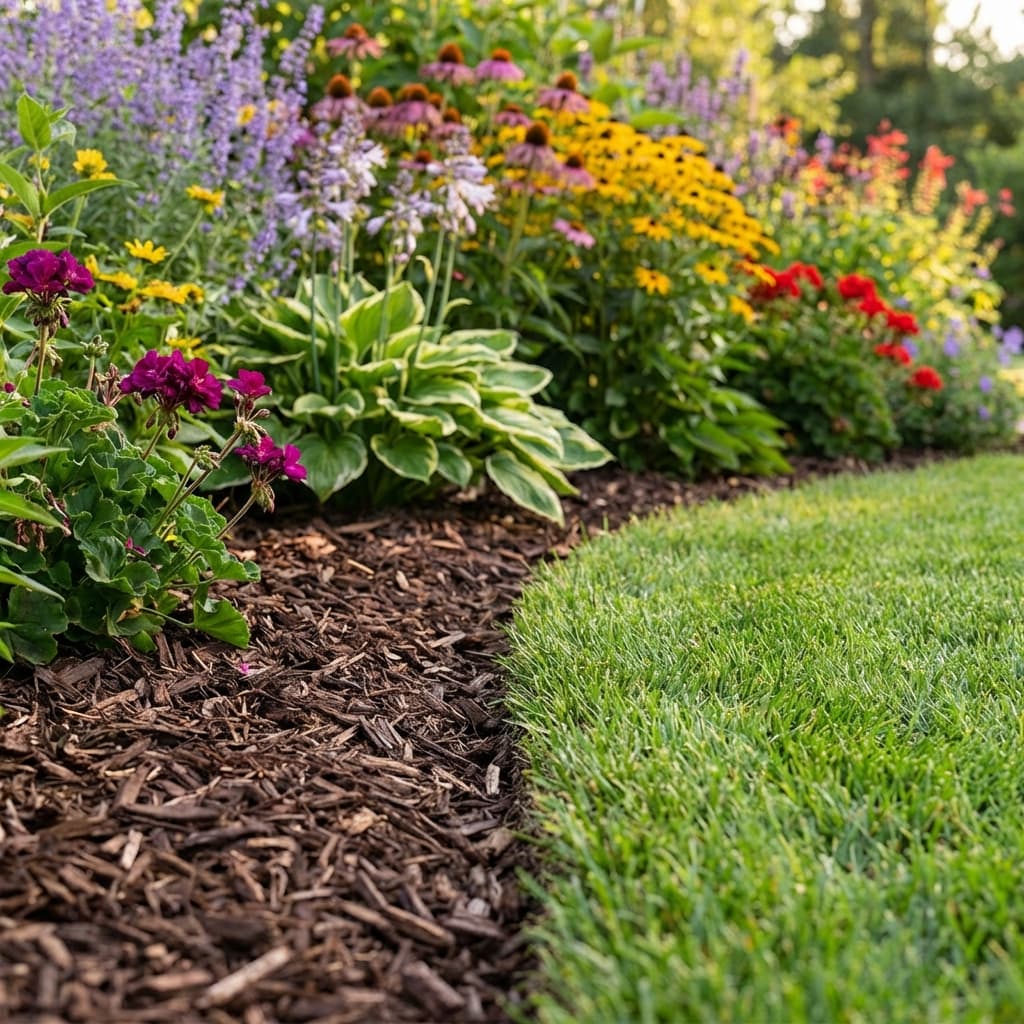
Mulching Flower Beds
Proper mulching is non-negotiable for Jacksonville flower beds. Mulch conserves moisture, suppresses weeds, moderates soil temperature, and improves appearance.
Mulch Selection
Pine bark mini-nuggets: Our top recommendation for Jacksonville flower beds. Attractive, moderate longevity (2-3 years), doesn't float away during heavy rains.
Cypress mulch: Long-lasting (3-4 years), attractive reddish-brown color. Avoid cheap "cypress blend" products that contain dyed wood waste.
Pine straw: Traditional Southern mulch that works well in naturalistic designs. Excellent for acid-loving plants.
Hardwood mulch: Attractive dark brown color but breaks down quickly in Jacksonville's heat and humidity. Replenish 2-3 times per year. Better for Northern climates than Northeast Florida.
Avoid: Rubber mulch (too hot for plant roots in Florida), dyed mulches (contain questionable chemicals), and large bark nuggets (float away during heavy rains).
Application Guidelines
Depth: Apply 2-3 inches of mulch throughout the bed. Deeper mulch smothers plant crowns and creates anaerobic conditions. Thinner mulch doesn't suppress weeds effectively.
Keep away from stems: Pull mulch back 2-3 inches from plant stems and tree trunks. Mulch piled against stems holds moisture and encourages rot and pest issues.
Replenish regularly: In Jacksonville's climate, organic mulches break down within 1-2 years. Top-dress beds with fresh mulch annually each spring. You don't need to remove old mulch unless it's severely decomposed—simply add new mulch on top.
Edge first: Install bed edging before mulching to prevent mulch from washing into turf areas. Edging also reduces maintenance by preventing grass encroachment.
Properly mulched flower beds require 60% less watering and 80% less weeding than unmulched beds—critical advantages in Jacksonville's growing season.
Irrigation for Flower Beds vs. Lawns
Flower beds require different irrigation strategies than lawns. Most lawn irrigation systems apply too little water too frequently for successful flower bed establishment.
Irrigation System Design
Separate zones: Never put flower beds on the same irrigation zone as turf. Beds require less frequent but deeper watering than lawns.
Drip irrigation: The most efficient option for flower beds. Drip emitters or soaker hoses deliver water directly to root zones, minimizing evaporation and preventing foliar diseases.
Micro-spray: Small spray heads covering 3-6 foot diameter areas work well for mixed flower beds. More visible than drip but easier to adjust.
Hand watering: Acceptable for small beds but impractical for properties with multiple or large beds. Most Jacksonville homeowners underestimate water needs when hand-watering.
Watering Schedule
Check soil moisture 4 inches deep to verify adequate penetration.
Deep, infrequent watering encourages deep rooting and plant resilience.
Design systems that provide adequate water within these restrictions rather than trying to work around them.
Adjust for rainfall: Jacksonville receives heavy summer rainfall, making irrigation unnecessary during June-September most years. Install rain sensors that shut down irrigation systems when adequate rainfall occurs. This saves water and prevents overwatering diseases.
Color Theory and Combinations
Understanding basic color principles elevates flower beds from random plantings to cohesive designs.
Classic Color Schemes
Monochromatic: Single color in various shades and tints. A white garden with white petunias, white impatiens, white caladiums creates sophisticated elegance. Works beautifully in formal Jacksonville properties.
Analogous: Colors adjacent on the color wheel—yellow, orange, and red or blue, purple, and pink. Analogous schemes create harmony and visual comfort. Popular throughout San Marco and Riverside historic districts.
Complementary: Opposite colors on the wheel—purple and yellow, blue and orange. Complementary schemes provide vibrant contrast and maximum visual impact. Works well in contemporary designs.
Triadic: Three colors equally spaced on the color wheel—red, yellow, and blue. Triadic schemes deliver variety with built-in balance. Requires careful proportions to avoid chaos.
Jacksonville-Specific Color Strategies
Summer heat colors: Hot pink, bright orange, deep purple, and brilliant yellow read well against intense sunlight and deep green foliage. Pastel colors often disappear in summer's intensity.
Winter and spring softer colors: Pastels like lavender, soft pink, pale yellow, and white show beautifully in our mild winter light and spring conditions.
Foundation bed colors: Match flower colors to house trim or door colors for coordinated appearance. White houses handle any flower color. Tan or beige houses look best with warm colors (yellows, oranges, reds). Gray houses complement cool colors (blues, purples, pinks).
Foliage as color: Don't overlook colorful foliage plants like coleus, caladiums, crotons, and ornamental sweet potato vine. These provide season-long color without depending on continuous blooms.
Maintenance Schedule for Jacksonville Flower Beds
Consistent maintenance keeps flower beds looking their best year-round. Here's what Jacksonville flower beds need and when.
Monthly Tasks
Year-round:
- Remove spent blooms (deadheading) to encourage continued flowering
- Pull any weeds before they establish or set seed
- Check irrigation system function and adjust as needed
- Monitor for pest issues (aphids, caterpillars, fungal diseases)
Seasonal Tasks
March: Install summer annuals. Fertilize all beds. Refresh mulch. Cut back dead winter foliage.
June: Deadhead heavily. Increase irrigation frequency as temperatures rise. Replace any plants that failed in late spring.
September: Begin transitioning to fall color. Reduce fertilization frequency.
October: Install winter annuals. Cut back summer perennials. Final fertilization before winter.
December-February: Minimal maintenance period. Remove any freeze-damaged foliage. Plan spring changes.
Fertilization Schedule
Spring and summer: Apply balanced slow-release fertilizer (15-15-15) monthly or controlled-release fertilizer (Osmocote or similar) every 3 months. Jacksonville's sandy soil requires regular fertilization to maintain vigorous growth and continuous blooms.
Fall and winter: Reduce fertilization frequency to every 6-8 weeks. Cool-season annuals require less feeding than summer heat-lovers.
Avoid: Over-fertilization creates lush growth susceptible to pests and diseases. Follow package directions and err on the side of less rather than more.
Jacksonville flower beds maintained on this schedule consistently outperform neglected beds and require less crisis intervention throughout the year.
Common Flower Bed Mistakes in Jacksonville
After decades installing and maintaining flower beds throughout Northeast Florida, we've seen the same mistakes repeatedly. Avoid these for better results.
Insufficient soil preparation: Planting directly into Jacksonville's native sand without amendment guarantees disappointment. Always amend beds thoroughly before planting.
Wrong plant selection: Trying to grow hydrangeas in full sun or impatiens in dry shade sets plants up for failure. Match plants to actual site conditions, not wishful thinking.
Poor spacing: Planting too far apart creates sparse, unfinished appearance. Planting too close creates overcrowding and increased disease pressure. Follow spacing recommendations specific to Jacksonville's fast growth rates.
Inadequate irrigation during establishment: New plantings die from drought stress more than any other cause in Jacksonville. Commit to consistent watering for the first 8 weeks minimum.
Neglecting seasonal refreshes: Flower beds that aren't refreshed with new annuals twice yearly look tired and dated. Plan for spring and fall color rotations.
Using turf fertilizer on beds: Lawn fertilizers are too high in nitrogen for flower beds, producing excessive foliage and reduced blooming. Use fertilizers formulated for flowering plants.
Planting too late in spring: Waiting until May or June to install summer color means plants enter their first Jacksonville summer without established root systems. Plant in March for best results.
Transform Your Jacksonville Property with Professional Flower Bed Design
Beautiful flower beds transform Jacksonville properties by adding color, texture, and seasonal interest while complementing your lawn and landscape. Whether you're creating a small entry garden in Riverside or designing extensive perennial borders in Nocatee, success comes from understanding our climate, preparing soil properly, selecting appropriate plants, and maintaining consistently.
Jacksonville's year-round growing season means your flower beds can deliver continuous color 365 days a year with strategic plant selection and seasonal rotations. The investment in proper design and installation pays dividends in increased curb appeal, personal enjoyment, and property value for decades.
Use these ideas to discuss the site, plant selection and maintenance with a suitable landscape designer or planting contractor.
Need Professional Sod Installation?
Jax Sod provides sod installation, sod replacement, and new lawn installation across Jacksonville and Northeast Florida. Free quotes!
Related Articles
Concrete Edging vs. Natural Borders — Best Lawn Edging for Jacksonville Homes
Compare lawn edging options for Jacksonville homes including concrete, natural borders, metal, stone and plastic. Find the best edging for Florida's climate with cost analysis and installation tips.
5 Signs Your Lawn Needs to Be Replaced (Not Just Repaired)
Is your lawn beyond saving? Learn when it makes more sense to start fresh with new sod instead of fighting a losing battle with repairs.
Arlington Jacksonville Lawn Care
Arlington Jacksonville Lawn Care. Review the site, scope and current written quote before deciding.
Let’s talk about your lawn
Ask our AI assistant a lawn question, or send the team a free installation estimate request.