Loading...
Back to Articles
Soil Amendment Guide for Jacksonville, FL
Soil & Fertilization January 27, 2026 17 min read
For current costs, compare the exact product or written project scope. See what to include in a sod estimate; this guide does not establish a current price, saving or resale return.
For sod, do not apply fertilizer before planting or as an early establishment shortcut. Follow the reviewed new-sod guidance.
Walk into any garden center in Jacksonville and you'll find an overwhelming array of soil amendments—bags of compost, peat moss, gypsum, lime, sulfur, expanded clay, and more. For homeowners trying to improve their lawns, the options are confusing. Which amendments does your yard actually need? When should you apply them? How much is enough? At Jax Sod, we've spent years working with Northeast Florida's challenging sandy soil, and we've learned that successful amendment strategies start with understanding what you're trying to fix.
Jacksonville's native soil is fundamentally different from the rich loam you might find in the Midwest or the clay-based soils common in many other regions. Our soil is predominantly sand—fine particles that drain incredibly fast, hold almost no nutrients, and provide minimal organic matter for beneficial microorganisms. This isn't bad soil that needs to be replaced; it's soil that needs strategic improvement. The right amendments transform sandy soil into a medium that supports healthy, resilient lawns capable of handling our hot summers, occasional droughts, and the diseases that thrive in humid Florida conditions.
The key to effective soil amendment in Jacksonville is matching the solution to the specific problem. Compost addresses organic matter deficiency. Gypsum improves structure without changing pH. Iron supplements green up grass without nitrogen surge. Lime raises pH for acid-loving plants, while sulfur lowers it for blueberries. Each amendment serves a specific purpose, and using the right ones at the right rates makes all the difference between marginal results and dramatic improvement.
Why Jacksonville Soil Needs Help
Northeast Florida sits on ancient Atlantic Coastal Plain deposits—primarily sand with occasional clay lenses deeper down. The sand that makes up most Jacksonville residential topsoil has particle sizes between 0.05mm and 2mm, creating enormous spaces between particles compared to clay or silt. When you water, gravity pulls moisture straight down through these spaces, and it drains so fast that plants struggle to access it. Nutrients wash through just as quickly, which is why lawns on pure sand need frequent fertilization but still look nutrient-deficient.
The organic matter content in undisturbed Jacksonville soil typically runs 1-2%, compared to healthy garden soil that contains 5-8% organic matter. Organic matter is the component that holds moisture and nutrients in the root zone, feeds beneficial microorganisms, and creates soil structure. Without adequate organic matter, sand is just... sand. It holds almost nothing, feeds nothing, and supports plant growth only when you constantly add water and fertilizer from external sources. That's expensive and inefficient.
Jacksonville's soil pH naturally runs slightly acidic, typically 5.5-6.5, which works reasonably well for our common warm-season grasses like St. Augustine, Bermuda, and Zoysia. However, new construction often strips away topsoil entirely, leaving subsoil exposed. This deeper material may have different pH, higher clay content in some locations, or compaction issues from heavy equipment traffic. Understanding your specific soil conditions—not just assumptions based on regional averages—is the critical first step before amending anything.
Nutrient retention is the final major issue. When you apply fertilizer to pure sand, the nutrients dissolve in irrigation water and wash through within days. Nitrogen leaches particularly fast, which is why lawns on pure sand show yellow-green color even with regular fertilization. Phosphorus binds slightly better but still moves through sandy soil far faster than it would in loam. Potassium leaches readily. The solution isn't applying more fertilizer—it's improving the soil's ability to hold nutrients in the root zone where grass can actually use them.
Understanding Your Soil: Get a Test First
Before purchasing any amendments, get a professional soil test through the UF/IFAS Extension Soil Testing Laboratory. The test measures pH, major nutrients (nitrogen, phosphorus, potassium), micronutrients, and organic matter content. You'll receive specific recommendations for amendment types and application rates based on your actual soil composition and what you're trying to grow.
Collecting a soil sample is straightforward. Use a soil probe or clean trowel to collect 10-15 samples from different spots across your lawn, mixing them together in a clean plastic bucket. Sample to a depth of 3-4 inches for lawns, which is the primary root zone for most turf grasses. Avoid sampling right after fertilization or lime application—wait at least 6-8 weeks for accurate results. Don't sample when soil is saturated or bone-dry; slightly moist soil gives the most representative results.
The UF/IFAS Extension office for Duval County is located at 1010 N McDuff Avenue in Jacksonville. You can drop off samples directly, or mail them following the instructions on their website. Turnaround time is typically 7-10 business days. For lawns with specific problems, you can request additional tests for micronutrients like iron, manganese, or sulfur for a small additional fee.
Understanding your test results is crucial for effective amendment. A pH of 5.2 means your lawn would benefit from lime to raise pH toward the 6.0-6.5 range ideal for St. Augustine and Zoysia. An organic matter reading of 0.8% means compost should be your priority—you need to build soil structure before worrying about micronutrients. A high phosphorus reading means you should use fertilizers without phosphorus to avoid runoff issues. The test removes guesswork and ensures you're addressing actual problems rather than assumed ones.
Compost: Building Organic Matter
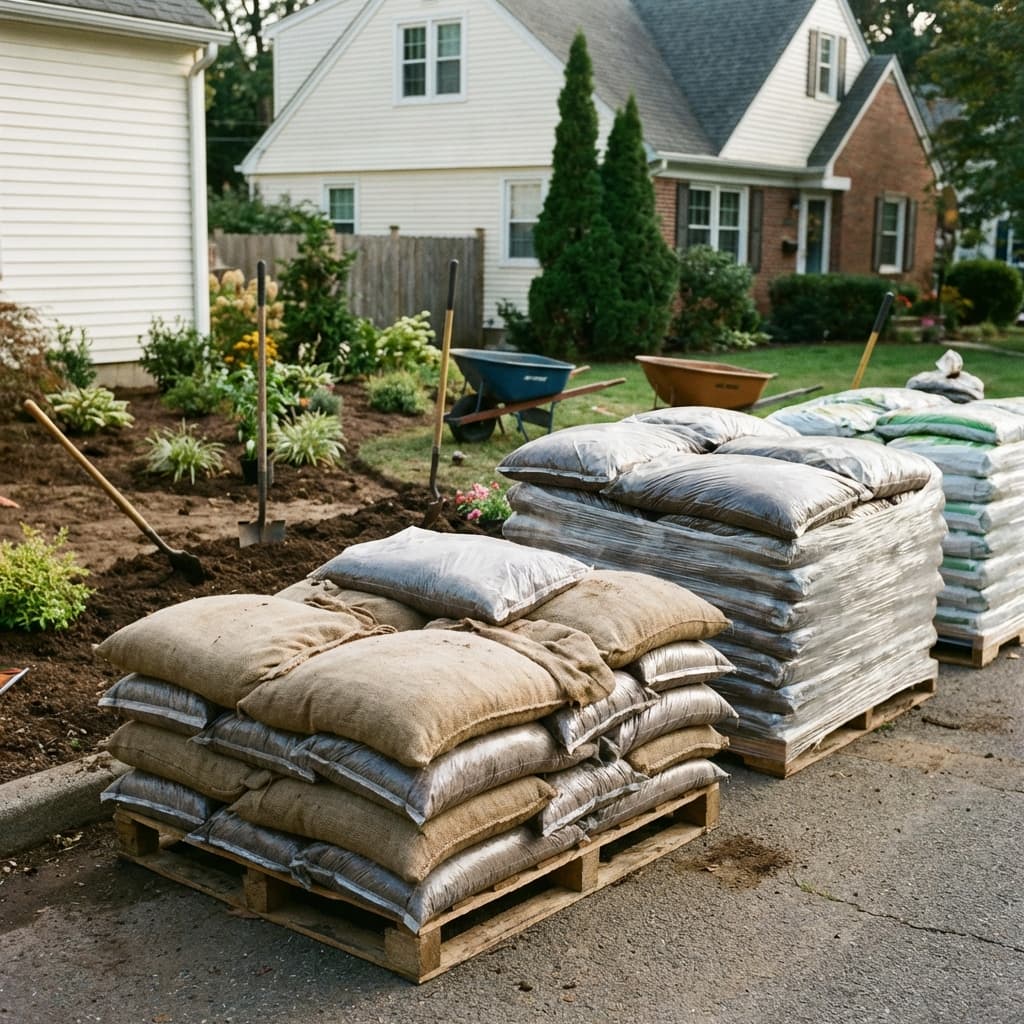
Compost is the single most important amendment for Jacksonville lawns. It addresses the fundamental problem with our sandy soil—lack of organic matter that holds water and nutrients. When you incorporate compost into sand, you're creating thousands of tiny sponges throughout the soil profile that absorb and hold moisture and nutrients in the root zone. This doesn't stop drainage entirely (you don't want that in Florida's rainfall), but it slows moisture movement enough that grass roots can actually access it.
Quality compost for Jacksonville lawns should be fully decomposed, dark brown to black, earthy-smelling, and free from partially-decomposed wood chunks. Mushroom compost, composted cow manure, and commercially-produced yard waste compost all work well. Avoid fresh manure or incompletely composted material, which can burn grass roots or introduce weed seeds. The particle size should be relatively fine—compost that's mostly coarse chunks doesn't distribute evenly or make good soil contact.
Application rates for compost depend on whether you're preparing for new sod installation or improving an existing lawn. For new sod areas, we recommend incorporating 2-3 inches of quality compost into the top 6 inches of existing sandy soil. This creates a blended root zone with dramatically improved moisture and nutrient retention. You'll use roughly 0.6-0.9 cubic yards of compost per 100 square feet at this rate. For a typical 5,000 square foot Jacksonville lawn, that's 30-45 cubic yards of compost—a significant investment, but one that creates the foundation for long-term lawn success.
For established lawns, you can't dig compost in without destroying the grass, so you topdress instead. Apply 1/4 to 1/2 inch of fine-textured compost across the lawn in early spring or early fall, spreading it evenly and then lightly raking or dragging to work it down into the grass canopy. The grass blades will grow through the compost layer within 7-14 days. This approach builds organic matter gradually over multiple years. Annual topdressing with 1/4 inch of compost can increase organic matter from 1% to 3-4% over 3-5 years, creating measurable improvements in drought tolerance and fertilizer efficiency.
Peat Moss: Moisture Retention and pH Adjustment
Peat moss serves dual purposes in Jacksonville landscapes—it improves moisture retention and lowers pH. Peat moss can hold 10-20 times its weight in water, making it an extremely effective moisture retention amendment in sandy soil. When blended with sand, peat creates a root zone that holds irrigation water significantly longer, reducing watering frequency and improving drought stress tolerance during our hot summer months.
The pH-lowering effect of peat moss makes it particularly valuable for acid-loving plants. While most Jacksonville lawns don't need lower pH (our natural soil is already slightly acidic), landscape beds with azaleas, camellias, gardenias, and blueberries benefit significantly from peat moss incorporation. Peat moss has a pH of 3.5-4.5, and when blended into neutral or alkaline soils, it gradually acidifies the root zone. For these acid-loving ornamentals, we typically incorporate 2-3 inches of peat moss into planting beds before installation.
For lawn use, peat moss is less commonly used than compost because it breaks down more slowly and doesn't provide the nutrient benefits that compost offers. However, for new sod installation where moisture retention is the primary goal, peat moss blended with compost creates an excellent root zone. A typical blend might be 60% existing sand, 30% compost, and 10% peat moss, incorporated together in the top 6 inches before sodding. This combination provides moisture retention, organic matter, nutrient-holding capacity, and good drainage.
Cost is a consideration with peat moss. For large lawn areas, compost is more economical per cubic yard and provides broader benefits. Peat moss makes the most sense in Jacksonville for specific applications—acid-loving plant beds, moisture-critical areas like parkways or slopes that dry out quickly, or as a component in custom soil blends for premium sod installation where budget allows for maximum amendment.
Expanded Clay and Other Moisture-Retention Products
Expanded clay products like PermaTill, Profile, and Turface are manufactured soil amendments designed specifically to improve moisture and nutrient retention in sandy soils. These products are fired clay particles that create permanent pore space in soil—unlike organic amendments that decompose over time, expanded clay lasts indefinitely. Each particle is porous, absorbing water and nutrients and releasing them gradually to plant roots.
The advantage of expanded clay products in Jacksonville is permanence. When you incorporate compost or peat moss, those organic materials decompose over 3-7 years and need replenishing. Expanded clay doesn't break down, so a single application provides long-term improvement. For high-value landscape beds or athletic turf where consistent moisture is critical, expanded clay offers benefits that justify the higher cost compared to compost.
Application rates for expanded clay products vary by brand, but typically range from 10-30% by volume blended into the top 6-12 inches of soil. For a new planting bed, you might incorporate 2-3 inches of expanded clay along with 2-3 inches of compost into the top 8 inches of native sand, creating a modified root zone that combines the permanent structure of clay particles with the organic benefits of compost.
For Jacksonville lawns, expanded clay products are rarely cost-effective for whole-yard application. These products shine in high-value applications: athletic fields, golf greens, high-visibility landscape beds, or problem areas where conventional amendments haven't solved persistent drainage or moisture issues.
Gypsum: Improving Soil Structure Without Changing pH
Gypsum (calcium sulfate) improves soil structure while maintaining existing pH—a unique characteristic that makes it valuable in specific Jacksonville situations. Gypsum provides calcium and sulfur, both beneficial nutrients, but its real value is flocculation. Gypsum causes fine clay particles to aggregate into larger crumbles, improving drainage and reducing compaction. In Jacksonville's predominantly sandy soil, gypsum is less commonly needed than in clay-soil regions, but it has specific applications where it performs well.
New construction sites in Jacksonville occasionally have clay subsoil exposed after topsoil stripping. In areas like Nocatee, Town Center, and other recently-developed neighborhoods, you might find yards with heavy clay subsoil that drains poorly and compacts readily. Gypsum applied to these clay-soil areas at 40-50 pounds per 1,000 square feet can improve structure significantly over 6-12 months. The calcium in gypsum displaces sodium that causes clay to compact, encouraging better aggregation and drainage.
For existing lawns on typical Jacksonville sandy soil, gypsum provides calcium and sulfur nutrition without raising pH the way lime does. If your soil test shows adequate pH (6.0-6.5) but low calcium, gypsum supplies calcium without pushing pH higher. Similarly, if sulfur is deficient but pH is already low, gypsum provides sulfur without the pH-lowering effect of elemental sulfur. These are fairly specific scenarios, which is why soil testing is essential—gypsum isn't a universal amendment, but it's valuable when conditions call for it.
Application is straightforward. Gypsum comes in granular form that spreads with a broadcast spreader, similar to fertilizer. Apply it any time during the growing season, water it in thoroughly, and it will gradually dissolve and move into the soil over subsequent weeks and months. Unlike lime, which can take 3-6 months to significantly affect pH, gypsum's structural improvements become noticeable within 2-3 months as it works into the soil profile.
Lime and Sulfur: Adjusting pH
Lime raises soil pH, which is occasionally needed in Jacksonville but less common than in regions with naturally acidic soil. Most Northeast Florida lawns have pH in the 5.5-6.5 range, which works fine for St. Augustine, Bermuda, Zoysia, and Bahia. However, lawns that have received heavy fertilization for many years or areas with high pine needle accumulation may become more acidic over time, dropping below 5.5. At this pH, nutrient availability decreases and aluminum can become toxic to grass roots.
When soil testing shows pH below 5.5, lime application makes sense. Dolomitic lime is most common in Jacksonville—it provides both calcium and magnesium while raising pH. Calcitic lime provides calcium only. For most Northeast Florida soils, dolomitic lime is the better choice since our sandy soils often run low in magnesium as well as calcium. Lime comes in granular form for easy spreading or pelletized form that's less dusty and slightly easier to handle.
Application rates depend on current pH, target pH, and soil type. Sandy soils like ours require less lime to change pH than clay soils. A typical application for Jacksonville lawns might be 25-50 pounds of lime per 1,000 square feet to raise pH from 5.2 to 6.0. The soil test results you receive from UF/IFAS Extension will specify exactly how much lime your specific soil needs. Apply lime in fall or early winter, water it in, and retest soil pH 6 months later to verify the adjustment was adequate.
Sulfur lowers soil pH, which is rarely needed for Jacksonville lawns but important for specific landscape plants. Blueberries, azaleas, and gardenias prefer pH in the 4.5-5.5 range—more acidic than typical lawn areas. If you're creating planting beds for these acid-loving plants, elemental sulfur or soil acidifier products lower pH effectively. Apply sulfur at 1-2 pounds per 100 square feet, incorporate it into the top 6 inches, and retest after 2-3 months. Sulfur works more slowly than lime, and overdoing it can create excessively acidic conditions that damage plants.
Iron Supplements: Greening Without Nitrogen Surge
Iron supplements green up Jacksonville lawns quickly without the nitrogen surge that promotes excessive growth and disease. Many homeowners apply extra nitrogen fertilizer when their St. Augustine grass looks yellowish, but often the actual problem is iron deficiency, not nitrogen deficiency. Iron chlorosis shows up as yellowing grass with green veins—the opposite pattern of nitrogen deficiency, which causes uniform yellowing. Jacksonville's sandy, slightly acidic soil typically contains adequate total iron, but in alkaline pockets or during cool wet periods, iron becomes unavailable to plants even though it's present in the soil.
Iron sulfate and chelated iron products provide immediately-available iron that grass can absorb through roots or leaves. Foliar iron applications green up grass within 3-5 days as the iron moves into leaf tissue and restores chlorophyll production. This quick response is dramatically faster than nitrogen fertilizer, which takes 7-14 days to show results. The deep green color from iron application looks healthier and more natural than the surge-growth color from excess nitrogen.
Application timing for iron supplements in Jacksonville typically focuses on spring and fall. Apply iron sulfate at 2-5 pounds per 1,000 square feet in granular form, or use chelated iron in liquid form at label rates. Water it in immediately after application to prevent staining of concrete driveways and walkways—iron products can leave rust stains on hardscaping if left dry. For foliar application, spray liquid iron products directly on grass blades in early morning, giving leaves time to absorb the iron before afternoon heat.
This is roughly the same cost as quality fertilizer, but iron provides color without promoting the excessive top growth that increases mowing frequency, disease pressure, and thatch accumulation. Many Jacksonville lawn professionals use iron 4-6 times per year for color management while reducing nitrogen application frequency to just 3-4 times per year. This approach maintains excellent color while creating denser, healthier turf that resists pests and diseases better than nitrogen-pushed grass.
Milorganite and Organic Slow-Release Amendments
Milorganite is heat-dried microbes from Milwaukee's wastewater treatment, creating an organic slow-release fertilizer that also acts as a soil amendment. It contains 6% nitrogen, 4% iron, and 2.5% phosphorus, plus beneficial organic matter. Unlike synthetic fertilizers that release nutrients in days, Milorganite releases gradually over 8-10 weeks as soil microorganisms break it down. This slow release is ideal for Jacksonville's sandy soil, where fast-release synthetic fertilizers wash through quickly.
The organic matter in Milorganite provides modest but cumulative soil-building benefits. Each application adds a small amount of organic material that feeds beneficial soil microorganisms and gradually builds soil structure. Jacksonville homeowners who use Milorganite exclusively for 3-5 years typically see measurable increases in organic matter content and improvements in moisture retention. It's not as dramatic as incorporating compost before sod installation, but it's a gentler approach that improves soil while fertilizing.
Application rates for Milorganite on Jacksonville lawns run higher than synthetic fertilizers because the nutrient percentages are lower. Apply 32 pounds per 1,000 square feet (providing roughly 2 pounds of actual nitrogen per 1,000 square feet) every 8-10 weeks during the growing season.
Other organic slow-release products include corn gluten meal (10% nitrogen plus pre-emergent weed control), composted chicken manure (3-2-2 analysis plus organic matter), and various blended organic fertilizers. These products share Milorganite's benefits—slow nutrient release that matches Jacksonville's high-leaching soil, organic matter addition that builds soil over time, and feeding of beneficial soil microorganisms. The tradeoff is higher cost per pound of actual nutrients compared to synthetic fertilizers, but many Jacksonville homeowners consider that worthwhile for the soil-building and environmental benefits.
Application Rates and Timing
Proper application rates prevent waste and avoid overwhelming plants with excessive amendments. For compost, 2-3 inches incorporated before sod installation is optimal—less than 2 inches doesn't provide enough improvement in sandy soil, while more than 3 inches can create an abrupt transition between amended and native soil that disrupts drainage. For topdressing established lawns, 1/4 to 1/2 inch per application is the maximum grass can grow through comfortably without smothering.
Timing matters significantly in Jacksonville. The best time to amend soil is before sod installation, when you can incorporate materials deeply and blend them thoroughly with native sand. If you're planning a lawn renovation project, the soil preparation phase is when amendment delivers maximum value. For established lawns, apply topdressing compost in early spring (March-April) or early fall (September-October) when grass is actively growing and will quickly grow through the amendment layer.
Lime and sulfur applications time best in late fall or early winter in Jacksonville. These amendments work slowly, taking 3-6 months to significantly change pH. Applying in November or December gives them time to react over the cool season, and by the time active growth resumes in spring, pH has shifted to the target range.
Iron supplements apply best during active growth periods when grass can quickly absorb and use the iron. In Jacksonville, this means March through October for warm-season grasses. Avoid iron application during winter dormancy when grass isn't actively photosynthesizing—the iron just sits on leaf surfaces and washes off with rain without being absorbed. For maximum benefit, apply iron in the morning and water lightly to wash it off leaves into the soil, or use foliar formulations specifically designed for leaf absorption.
When to Amend: Before Sod Installation vs Existing Lawns
The absolute best time to amend Jacksonville soil is before sod installation. When preparing a new sod bed, you have the opportunity to incorporate amendments deeply, blend them thoroughly, and create an ideal root zone before grass ever goes down. At Jax Sod, we always recommend a minimum of 2-3 inches of quality compost incorporated into the top 6 inches of native sand before laying sod. This one-time investment creates conditions where grass establishes faster, roots deeper, requires less frequent irrigation, and shows better stress tolerance throughout its lifetime.
The preparation process for new sod areas in Jacksonville typically follows this sequence: remove existing vegetation and debris, rototill or turn soil to 6-8 inches depth, spread 2-3 inches of compost (and other amendments if soil testing indicates they're needed), blend amendments into tilled soil thoroughly, grade to proper slope, and roll lightly to firm the seedbed. This creates a modified root zone that combines Jacksonville's natural drainage (preventing standing water issues common in other climates) with improved moisture and nutrient retention that supports healthy turf.
For existing established lawns, you can't incorporate amendments deeply without destroying the grass, so improvement strategies are different. Annual topdressing with 1/4 inch of fine compost builds organic matter gradually. Core aeration followed by topdressing allows amendment to reach slightly deeper into the soil profile. Liquid amendments and iron supplements address specific deficiencies without requiring incorporation. The improvements come more slowly than pre-installation amendment, but consistent annual topdressing for 3-5 years creates measurable soil improvement.
The one consideration is whether your existing lawn is struggling badly enough to justify complete renovation. If grass is thin, weedy, and unhealthy despite reasonable care, total renovation with proper soil preparation may make more sense than trying to gradually improve poor soil under struggling turf. Strip the old grass, amend the soil properly, and install new sod over an improved root zone. This approach costs more upfront but creates conditions where the new lawn actually thrives instead of just surviving on heavily-amended sandy soil.
Cost Comparison and Sourcing in Jacksonville
Compost costs in Jacksonville vary significantly based on source and quality. For large lawn projects, bulk delivery is far more economical.
Peat moss is sold by compressed bale, typically 2.2 or 3.8 cubic feet compressed. For the 30-40 cubic yards needed to amend a typical Jacksonville lawn, peat moss isn't economical as the primary amendment—it works best as a component in blended preparations or for specific high-value areas like planting beds.
Lime, gypsum, and sulfur are sold in 25-50 pound bags. These amendments cover roughly 1,000 square feet per bag at typical application rates, making them relatively inexpensive for most Jacksonville residential lawns.
Local sources for amendments in Jacksonville include landscape supply yards like Atlantic Mulch, Bagged Landscape Products, and Jacksonville Wood Recycling. These suppliers offer bulk compost delivery, saving significantly compared to bagged products. For smaller quantities, garden centers like Ace Hardware, Home Depot, and Lowe's stock bagged compost, peat moss, lime, gypsum, and iron products. The UF/IFAS Extension office provides soil testing and can recommend suppliers for specialty amendments based on your specific soil test results.
Ready to Improve Your Jacksonville Soil?
Soil amendment isn't just one more lawn care task—it's the foundation that determines whether your grass merely survives or actually thrives. Jacksonville's sandy soil can support beautiful, healthy lawns, but it needs strategic improvement to hold the moisture and nutrients that grass requires. The investment in proper amendment before sod installation pays dividends for years through reduced watering needs, lower fertilizer requirements, better stress tolerance, and overall healthier, more resilient turf.
Whether you're planning new sod installation and want to prepare the soil correctly from the start, or you're working to improve an existing lawn that's struggling on pure sand, the principles are the same: test first to understand what you're working with, amend strategically based on actual conditions rather than assumptions, and use quality materials at appropriate rates. The difference between adequate results and truly excellent lawns often comes down to soil preparation.
Ready to install new sod over properly-amended Jacksonville soil? We can help you develop a soil preparation plan based on your specific property conditions, recommend amendment types and rates, and install premium sod over a root zone that's ready to support healthy grass for years to come.
Need Professional Sod Installation?
Jax Sod provides sod installation, sod replacement, and new lawn installation across Jacksonville and Northeast Florida. Free quotes!
Related Articles
How to Prepare Soil for New Sod in Jacksonville, FL: Complete Guide
Learn the essential steps to prepare your Jacksonville soil for new sod installation. Expert tips on sandy soil amendments, pH testing, and local conditions for a thriving lawn.
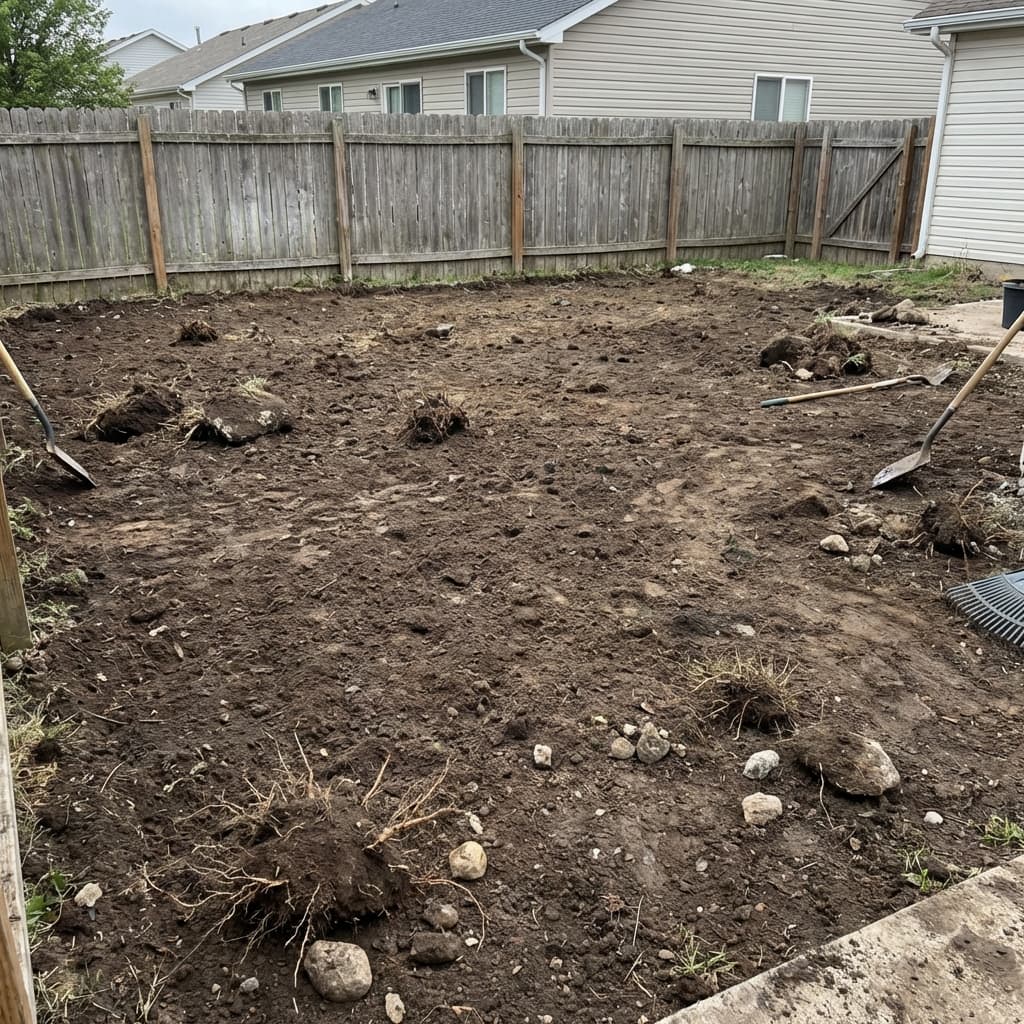
How to Read a Soil Test Jacksonville
Learn how to interpret soil test results for Jacksonville lawns and gardens. Understand pH, nutrients, and amendments needed for Zone 9a/9b sandy and clay soils.
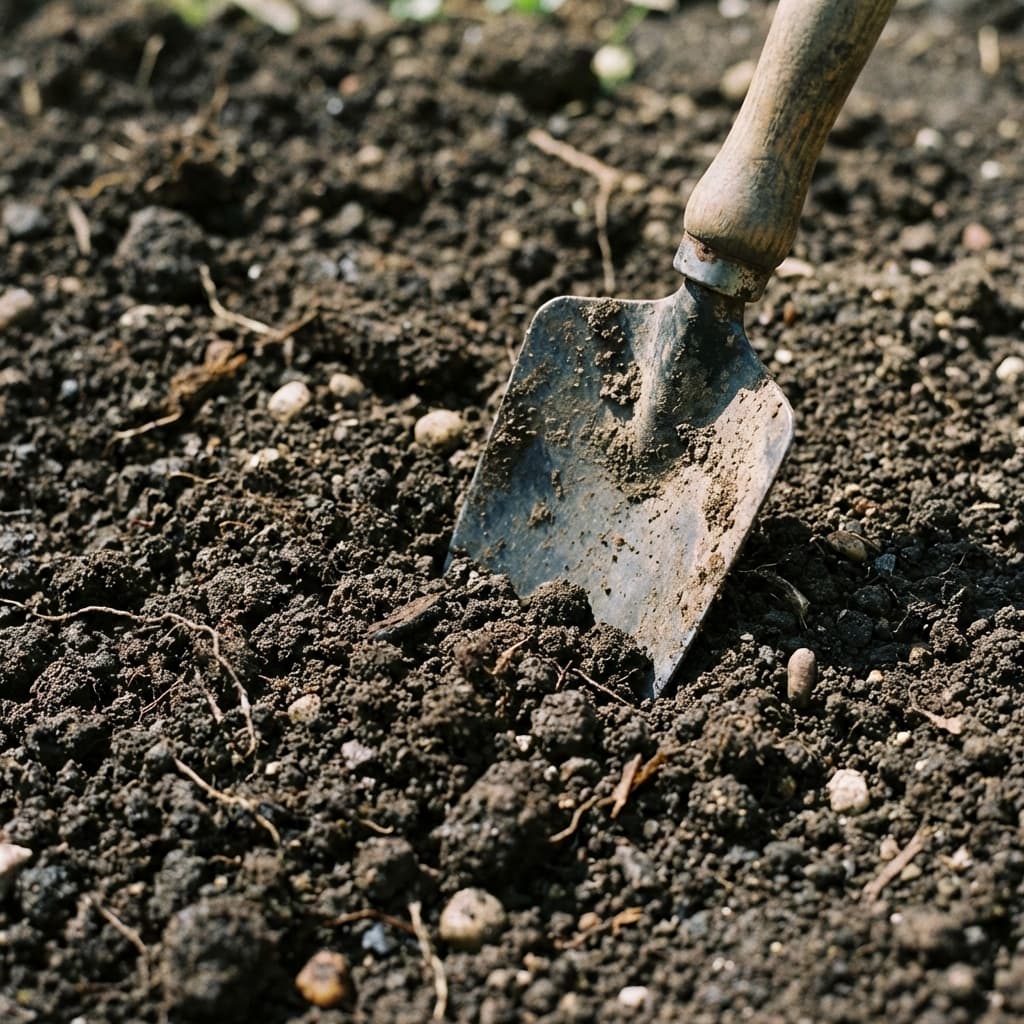
Jacksonville Soil Guide — Understanding Your Lawn's Foundation
Master Jacksonville's sandy soil challenges for better sod growth. Learn soil testing, amendments, pH management, and solutions for Northeast Florida lawns.
Let’s talk about your lawn
Ask our AI assistant a lawn question, or send the team a free installation estimate request.