Loading...
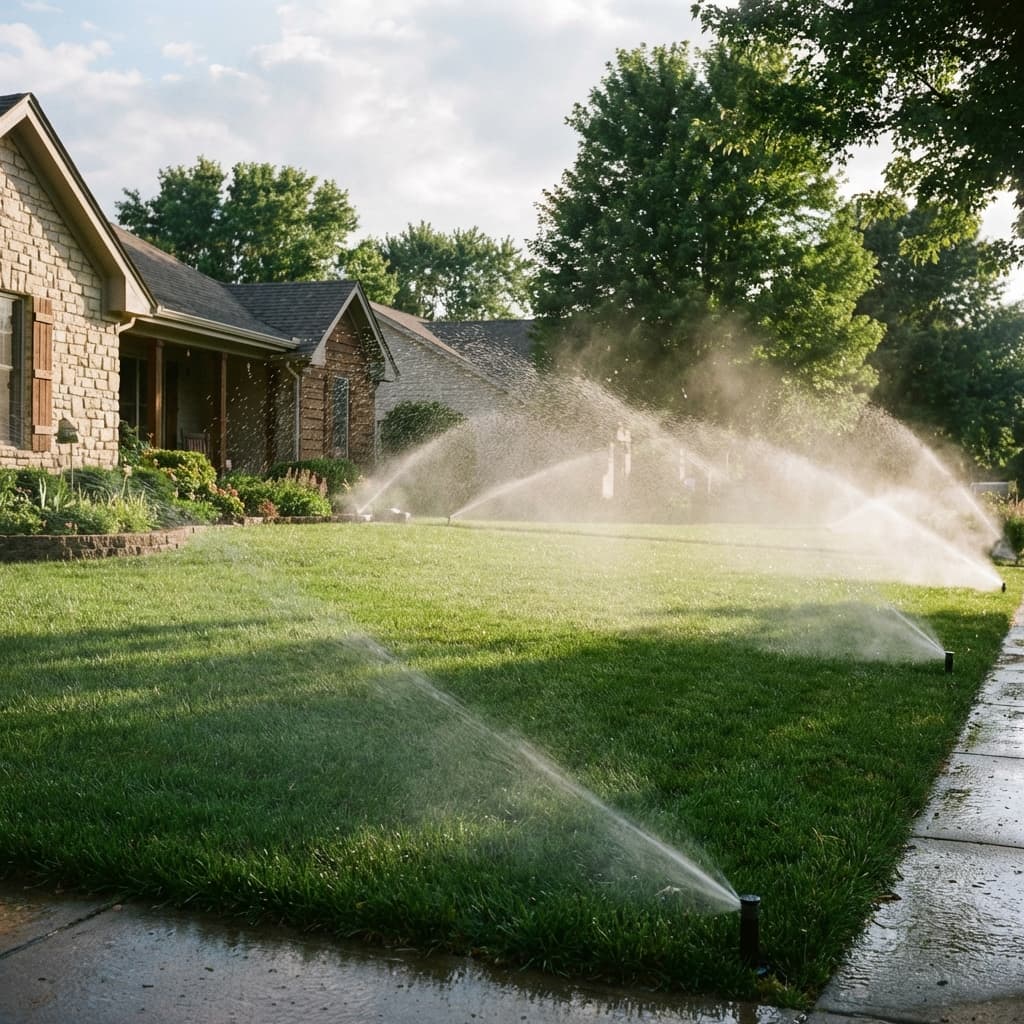
Back to Articles
Overwatering vs Underwatering: Signs in Jacksonville Lawns
Irrigation & Drainage January 27, 2026 19 min read
For current costs, compare the exact product or written project scope. See what to include in a sod estimate; this guide does not establish a current price, saving or resale return.
Set irrigation from site conditions and the current rules for your property and water source. For new sod, use the dated care planner; a fixed schedule in an older guide is not permission to water.
Your Jacksonville lawn looks unhealthy. Grass is discolored, patches are dying, and despite your efforts, nothing seems to help. You're watering regularly, but is it too much or too little? Ironically, overwatered and underwatered lawns often look similar to untrained eyes, both displaying brown patches, yellowing, and stress. Yet the solutions are opposites, and applying the wrong fix makes problems worse.
Northeast Florida irrigation problems often look similar on the surface even when the cause is different. The challenge Jacksonville homeowners face is unique: our sandy soil drains rapidly (reducing overwatering risk but increasing underwatering risk), our hot humid summers stress grass in ways that look like water problems, and SJRWMD restrictions limit when you can adjust watering. The result is constant confusion about whether grass needs more water or less.
In this comprehensive guide, you'll learn to distinguish overwatering from underwatering through visual symptoms, understand why Jacksonville homeowners tend toward one extreme, master the "Goldilocks zone" of proper watering for each grass type, and adjust your irrigation system to deliver exactly what your lawn needs throughout the year.
Visual Comparison: Overwatered Versus Underwatered Symptoms
The fastest way to diagnose watering problems is recognizing visual symptoms. While some overlap exists, key differences help you identify the specific issue.
Overwatering Symptom Checklist
Overwatered Jacksonville lawns display these characteristic signs:
Yellow or pale grass: Rather than healthy deep green, overwatered grass turns yellow-green or pale. This differs from nitrogen deficiency yellow, which appears as irregular patches. Overwatering yellow is more uniform across the lawn.
Soft, squishy soil: Walk across your lawn. If your feet sink into mushy soil and the lawn feels spongy like a wet sponge, you're overwatering. Properly watered sandy Jacksonville soil should feel firm with slight give.
Mushrooms and fungus: Mushrooms popping up after rain, particularly in shaded areas under trees in neighborhoods like Riverside or San Marco, indicate excessive moisture. White, tan, or brown mushrooms clustered in rings or scattered across the lawn are a telltale overwatering sign.
Thatch buildup: Check the layer between grass blades and soil by pulling up a small section. If you find a thick (1/2 inch or more), spongy brown layer of dead plant material, that's thatch. While some thatch is normal, thick accumulation indicates overwatering because waterlogged conditions slow decomposition.
Fungal disease: Brown patch fungus (circular brown patches 6-24 inches across with yellow "smoke rings" at edges) and gray leaf spot (oval brown spots on grass blades) are common in Jacksonville's humidity. They're dramatically amplified by overwatering.
Weeds: Nutsedge (also called nutgrass), a water-loving sedge that grows faster than grass and has triangular stems, invades overwatered lawns. If you're constantly battling nutsedge in summer when Jacksonville is already wet, overwatering is likely contributing.
Shallow roots: Dig up a small plug of grass. Overwatered grass develops shallow root systems (1-3 inches deep) because roots don't need to search deep for moisture. Shallow roots make grass vulnerable to heat stress and drought.
Underwatering Symptom Checklist
Underwatered lawns show different patterns:
Blue-gray or purple tint: Before grass turns brown, it takes on a blue-gray or purple hue. This is the early warning sign of drought stress, visible before permanent damage occurs.
Footprint test failure: Walk across your lawn and look back at your footprints. Healthy grass springs back within minutes, erasing footprints. Underwatered grass stays compressed, leaving visible footprints for 10+ minutes.
Curled or folded blades: Look closely at individual grass blades. Drought-stressed grass curls or folds lengthwise, creating a narrow tube shape to reduce surface area and conserve moisture.
Brown patches in specific patterns: Underwatered grass browns first in high-traffic areas (where compaction prevents water penetration), full-sun spots (south and west-facing sections), and areas with shallow soil. These "hot spots" brown while the rest of the lawn stays green.
Dry, hard soil: Probe soil with a screwdriver or long nail. In properly watered soil, you can easily push the tool 4-6 inches deep. In dry soil, it stops at 1-2 inches.
Wilting at midday: During afternoon heat (2:00-5:00 PM), grass blades droop or flatten. Some temporary wilting is normal during Jacksonville's 95°F summer days, but if grass doesn't perk up by evening, it's underwatered.
Cracks in soil: While less common in sandy Jacksonville soil than in clay areas, severe drought can create small cracks or gaps between sod pieces as grass shrinks from moisture loss.
The Overlap Zone
Some symptoms appear in both overwatered and underwatered lawns, creating diagnostic confusion:
Brown patches: Both conditions can create brown areas. The key difference is pattern and texture. Overwatered brown patches often have fuzzy fungal growth, are irregular in shape, and appear in shady or low-lying areas. Underwatered brown patches are dry and crispy, appear first in full sun, and lack fungal growth.
Yellowing: Both overwatering and underwatering can cause yellowing, but timing and pattern differ. Overwatered yellow is pale and uniform. Underwatered yellow has a blue-gray tone and appears before turning brown. Neither should be confused with nitrogen deficiency, which creates irregular yellow patches while surrounding grass stays green.
Stress during heat: Both extremes stress grass during Jacksonville's summer heat, creating afternoon wilting. The difference is recovery: properly watered grass that wilts midday recovers by evening; truly underwatered grass stays stressed all day and night.
When symptoms overlap, use the other diagnostic tools we'll cover: the soil moisture test, tug test, and root examination.
Why Jacksonville Homeowners Tend to Overwater
You might assume Jacksonville's hot climate leads to underwatering problems, but we actually see more overwatering cases, particularly among newer homeowners and those transitioning from northern states.
The Psychology of Overwatering
Several factors drive Jacksonville homeowners to overwater:
Fear of brown grass: Homeowners see brown patches and immediately assume the lawn needs more water. They increase irrigation without diagnosing the cause, often worsening fungal problems or other non-water-related issues.
Northern transplant habits: Many Jacksonville residents come from states with clay soil, cool-season grass, and regular rainfall. They bring watering habits from different climates and soil types, not realizing Jacksonville's sandy soil and warm-season grass need different approaches.
Set-and-forget irrigation controllers: Irrigation systems programmed once and never adjusted run the same schedule year-round, watering as much in January as July. This results in massive overwatering during Jacksonville's mild, rainy winter.
Misunderstanding rain sensors: Many homeowners don't know they have a rain sensor or don't realize it's broken. Their system waters right after heavy rain because the sensor isn't preventing the cycle.
Well water users: Homeowners with wells don't pay for water, removing the financial incentive to conserve. Without metered water bills showing excessive use, overwatering goes unnoticed until lawn problems develop.
Jacksonville's Unique Drainage Context
Here's the paradox: Jacksonville's sandy soil drains so quickly that serious waterlogging is rare. In northern states with clay soil, overwatering creates standing water, compaction, and severe root problems. In Jacksonville, our sandy soil drains within 30-60 minutes, meaning you have to work hard to truly overwater in the traditional sense.
However, you can still overwater in the sense of frequency: watering too often, even if each session doesn't create standing water, keeps soil constantly moist. This perpetual moisture promotes fungus, shallow roots, and thatch buildup even though water itself drains away.
Properties in areas like Nocatee, Bartram Park, and other newer developments often have amended soil (topsoil over sand) that holds moisture slightly longer, increasing overwatering risk compared to properties with pure sand common in older neighborhoods like Riverside or Springfield.
Jacksonville Pro Tip: Coastal properties in Beaches communities (Jacksonville Beach, Atlantic Beach, Neptune Beach, Ponte Vedra) have even sandier soil with higher drainage rates than inland areas. These properties face higher underwatering risk and lower overwatering risk than typical Jacksonville lawns.
The "Goldilocks Zone": Proper Watering for Each Grass Type
Each grass variety popular in Jacksonville has specific water needs. Understanding these allows you to dial in the perfect watering schedule.
St. Augustine Grass Water Needs
St. Augustine dominates Jacksonville lawns, including popular varieties like Floratam, Palmetto, CitraBlue, ProVista, Seville, and Sapphire. All have similar water requirements with slight variations.
Established St. Augustine needs:
- Weekly total: 3/4 to 1 inch of water per week, including rainfall
- Frequency: Twice weekly during growing season (April-October), once weekly or less in winter (November-March)
- Session duration: 20-40 minutes per zone, depending on sprinkler output (use the tuna can test to calibrate)
- Drought tolerance: Moderate. St. Augustine survives short dry periods (1-2 weeks) but shows stress (blue-gray color, folded blades) quickly
Variety-specific notes:
- Floratam: Most common but least drought-tolerant St. Augustine. Needs consistent moisture.
- Palmetto: Slightly more drought-tolerant and shade-tolerant than Floratam. Can tolerate longer intervals between watering.
- CitraBlue: Good drought tolerance for St. Augustine. Can stretch watering intervals during cooler months.
Bermuda Grass Water Needs
Bermuda grass (TifTuf, Celebration, Tifway 419, Bimini, Latitude 36) is popular in full-sun Jacksonville yards, sports fields, and high-traffic areas. It's the most drought-tolerant grass we install.
Established Bermuda needs:
- Weekly total: 1/2 to 1 inch per week during active growth (April-October)
- Frequency: Two to three times weekly. Bermuda prefers more frequent, lighter watering than St. Augustine
- Session duration: 15-30 minutes per zone for lighter, more frequent sessions
- Drought tolerance: Excellent. Bermuda survives extended drought by going dormant (brown) and greens up quickly when water returns
Key Bermuda watering considerations:
- Summer growth: Bermuda grows aggressively in Jacksonville's hot summers and needs maximum water June-September
- Winter dormancy: Bermuda goes fully dormant (completely brown) November-March. It needs almost no water during dormancy. Don't try to keep dormant Bermuda green with heavy watering; you'll just promote weeds and disease
- Quick recovery: If Bermuda browns from underwatering, it typically recovers within 7-10 days of resumed watering
Zoysia Grass Water Needs
Zoysia (Empire, Zeon, Icon, Palisades) is the premium choice for Jacksonville lawns, offering excellent drought tolerance, shade tolerance, and low maintenance.
Established Zoysia needs:
- Weekly total: 1/2 to 3/4 inch per week during active growth (April-October)
- Frequency: Once or twice weekly. Zoysia has excellent drought tolerance and doesn't need frequent watering
- Session duration: 30-45 minutes per zone for deep, infrequent watering that encourages deep roots
- Drought tolerance: Excellent. Zoysia is the most drought-tolerant grass we install for Jacksonville lawns
Key Zoysia watering considerations:
- Deep root system: Zoysia develops the deepest roots of any warm-season grass, reaching 8-12 inches in Jacksonville's sandy soil if watered properly. Deep roots make it highly drought-resistant
- Winter dormancy: Like Bermuda, Zoysia goes dormant (tan/brown) in winter and needs minimal water
- Slow recovery: If Zoysia is severely stressed, it recovers more slowly than Bermuda (2-3 weeks versus 7-10 days), so prevention is important
Bahia Grass Water Needs
Bahia (Argentine, Pensacola) is the budget-friendly, low-maintenance option common in rural Clay County properties, large estates, and yards where appearance is secondary to function.
Established Bahia needs:
- Weekly total: 1/2 inch per week or less
- Frequency: Once weekly maximum, often less. Bahia survives on rainfall alone in many Jacksonville locations
- Session duration: 20-30 minutes per zone
- Drought tolerance: Exceptional. Bahia survives extended drought better than any grass we install
Key Bahia watering considerations:
- Overwatering risk: Bahia actually performs poorly with frequent watering, developing disease and weed problems. It's nearly impossible to underwater Bahia in Jacksonville
- Deep roots: Bahia's extensive, deep root system accesses moisture unavailable to other grasses
- Minimal winter watering: Bahia stays green year-round in Jacksonville but grows minimally in winter and needs almost no supplemental water November-March
Seasonal Water Needs Chart for Jacksonville
Water needs change dramatically throughout the year. This chart provides month-by-month guidance for typical Jacksonville conditions:
| Month | Temperature | Rainfall | St. Augustine | Bermuda | Zoysia | Bahia |
|---|---|---|---|---|---|---|
| January | Cool (60s) | Low (2-3") | 1/4" weekly | Dormant (none) | Dormant (none) | 1/4" biweekly |
| February | Cool (60s-70s) | Low (2-3") | 1/4" weekly | Dormant (none) | Dormant (none) | 1/4" biweekly |
| March | Mild (70s) | Moderate (3-4") | 1/2" weekly | 1/4" weekly | 1/4" weekly | 1/4" weekly |
| April | Warm (70s-80s) | Moderate (3-4") | 3/4" weekly | 1/2" weekly | 1/2" weekly | 1/4" weekly |
| May | Warm (80s) | Moderate (3-4") | 3/4" weekly | 3/4" weekly | 1/2" weekly | 1/4" weekly |
| June | Hot (90s) | High (6-7") | 1" weekly | 1" weekly | 3/4" weekly | 1/2" weekly |
| July | Hot (90s) | High (6-7") | 1" weekly | 1" weekly | 3/4" weekly | 1/2" weekly |
| August | Hot (90s) | High (6-7") | 1" weekly | 1" weekly | 3/4" weekly | 1/2" weekly |
| September | Hot (80s-90s) | High (6-7") | 1" weekly | 1" weekly | 3/4" weekly | 1/2" weekly |
| October | Warm (80s) | Moderate (3-4") | 3/4" weekly | 3/4" weekly | 1/2" weekly | 1/4" weekly |
| November | Mild (70s) | Low (2-3") | 1/2" weekly | Transition | Transition | 1/4" biweekly |
| December | Cool (60s) | Low (2-3") | 1/4" weekly | Dormant (none) | Dormant (none) | 1/4" biweekly |
Notes:
- Water amounts include rainfall. If Jacksonville receives 2 inches of rain in a week, reduce or skip irrigation that week
- "Dormant" means grass is brown and barely growing. Water only if extended dry periods (3-4 weeks without rain) occur
- "Transition" means grass is entering or exiting dormancy. Reduce watering as grass browns in November; resume as grass greens in March
- These are averages for healthy, established grass in typical sandy Jacksonville soil. Adjust for your specific conditions
How to Adjust Irrigation Controllers
Most Jacksonville irrigation problems stem from controllers set once and never adjusted. Proper controller management eliminates most overwatering and underwatering issues.
Basic Controller Settings Review
Your irrigation controller has three critical settings:
Watering days: Set to your SJRWMD-allowed days (odd addresses: Wednesday/Saturday; even addresses: Thursday/Sunday). Don't water more frequently unless you have a new sod exemption.
Start times: Set for early morning (4:00-6:00 AM) to minimize evaporation and allow grass to dry before nightfall.
Run times per zone: This is where most homeowners go wrong. Default settings (often 15 minutes per zone) rarely match actual needs. You must calibrate each zone using the tuna can test.
The Tuna Can Test for Calibration
This simple test determines exactly how long to run each zone:
- Place 4-6 empty tuna cans (or straight-sided containers about 1 inch tall) around the zone you're testing
- Run the zone for 15 minutes
- Measure the water depth in each can with a ruler
- Average the measurements (add them up and divide by number of cans)
- Calculate your zone's application rate and adjust run time accordingly
For example, if cans contain an average of 1/4 inch after 15 minutes, your zone applies 1 inch per hour. To deliver 3/4 inch (typical weekly need for St. Augustine), run it 45 minutes per week (split across two watering days = 20-25 minutes per session).
Perform this test for each zone. Zones with rotary heads (large sprinklers that rotate) apply water slower than spray head zones (small fixed sprinklers), often requiring 2-3 times longer run times.
Jacksonville Pro Tip: Test on a calm morning. Jacksonville's afternoon breezes, especially near the coast, blow sprinkler spray and create inaccurate results.
Seasonal Adjustment Schedule
Adjust your controller at least four times yearly:
Late March (spring increase):
- Increase run times by 50% from winter settings
- Confirm system is running twice weekly on SJRWMD days
- Check for broken heads or coverage gaps after winter
Early June (summer increase):
- Increase run times to maximum seasonal levels (typically 25-40 minutes per zone, twice weekly)
- Verify rain sensor is working properly (critical for wet season)
- Check for areas with drainage issues or standing water
Early November (fall reduction):
- Consider reducing to once weekly if grass type allows
- Prepare for winter shutdown
Early December (winter reduction):
- Consider turning system off entirely if Jacksonville receives normal winter rainfall
- For Bermuda and Zoysia, system can be off December-February
Set phone calendar reminders for these dates so adjustments become routine.
Zone-Specific Adjustments
Different areas of your yard need different watering:
Grass under trees (common in mature neighborhoods like Riverside, Avondale, or Mandarin) needs significantly less water than full-sun areas.
Grass type variations: If you have multiple grass types (St. Augustine in backyard, Bermuda in side yard), program different schedules. Bermuda zones should run more frequently but for shorter durations than St. Augustine zones.
Soil depth variations: Areas with shallow soil over sand (common in newer construction) need more frequent watering than areas with deeper topsoil.
Slope considerations: Slopes need shorter, more frequent watering to prevent runoff. Instead of one 30-minute session, try three 10-minute cycles with an hour break between cycles to allow water to soak in.
Most modern controllers allow different schedules for each zone, making these adjustments possible.
Rain Sensor Importance in Jacksonville
Rain sensors are mandatory in Florida and one of the most effective tools to prevent overwatering, yet many Jacksonville systems have broken or missing sensors.
Why Rain Sensors Matter
Jacksonville receives 52 inches of annual rainfall, concentrated June-September when lawns need maximum water. Summer afternoon thunderstorms can deliver 1-2 inches in an hour, completely satisfying weekly water needs in a single event.
Without a functioning rain sensor, your irrigation system runs on schedule regardless of rainfall. It's common to see sprinklers running during or immediately after storms, wasting hundreds of gallons and overwatering grass.
Rain sensors automatically skip scheduled irrigation cycles when adequate rainfall has occurred. They reset after 2-3 days of no rain, allowing the system to resume if dry conditions return.
Testing Your Rain Sensor
Many rain sensors fail over time but homeowners don't notice because the system keeps running (just without the sensor's input).
Test your sensor twice yearly:
- Locate your rain sensor (usually mounted on a downspout, fence post, or side of house)
- Manually fill the sensor cup with water until you hear a click
- Try to manually run an irrigation zone from your controller
- If the zone doesn't activate, your sensor is working correctly
- If the zone runs despite the filled sensor, your sensor is broken or disconnected
Clean your sensor annually by removing the cap and rinsing out debris, insect nests (wasps love building nests in sensors), and sediment. Replace sensors every 5-7 years as internal mechanisms wear out.
Smart Rain Sensors
Advanced rain sensors connect to weather stations and use local rainfall data and forecasts to make watering decisions. These "smart rain sensors" are more accurate than mechanical rain sensors because they know rainfall amounts precisely rather than just detecting rain occurred.
Rachio and other smart controller systems include virtual rain sensors based on weather station data, eliminating the need for mechanical sensors entirely.
Soil Type Impact: Jacksonville's Sandy Soil Challenge
Jacksonville's sandy soil creates unique watering dynamics different from clay soils common in northern states or heavier Florida soils in central and southern regions.
Sandy Soil Drainage Characteristics
Duval, Clay, St. Johns, and Nassau counties have predominantly sandy soil with:
Fast drainage: Water drains through sand within 30-60 minutes. This is beneficial (hard to create standing water and root rot) but challenging (easy to underwater because soil doesn't hold moisture).
Low water-holding capacity: Sandy soil holds 1-2 inches of water per foot of depth, compared to 4-6 inches for clay soils. This means Jacksonville lawns need more frequent watering than lawns in clay-soil regions.
Rapid drying: Surface soil dries completely within 24-48 hours after watering in summer heat, even though deeper layers may still be moist.
Deep percolation: Water moves downward quickly through sand. If you apply water too fast or for too long, it drains below the root zone (typically 4-8 inches deep), wasting water without benefiting grass.
Watering Strategy for Sandy Soil
Jacksonville's sandy soil requires specific watering approaches:
This encourages deep root growth as roots follow water downward.
Roots stay shallow, making grass vulnerable to heat stress and drought.
Soak and cycle: For thick or amended soil that doesn't absorb water quickly, use cycle-and-soak: water for 10 minutes, wait 30-60 minutes for it to soak in, then water another 10 minutes. This prevents runoff while achieving deep penetration.
Organic matter benefits: Amending sandy soil with compost or peat moss increases water-holding capacity. Yards with 2-3 inches of topsoil over sand (common in newer construction) hold moisture slightly longer than pure sand.
Coastal Versus Inland Soil Differences
Properties in Beaches communities (Jacksonville Beach, Atlantic Beach, Neptune Beach, Ponte Vedra) have even sandier soil with higher salinity than inland properties. This soil:
- Drains faster than typical Jacksonville sand
- Holds less moisture and nutrients
- Requires more frequent watering during hot weather
- Benefits significantly from organic matter amendments
Inland properties in western Duval County and Clay County have slightly heavier soil with more clay/silt mixed with sand. This soil:
- Drains slower than coastal pure sand
- Holds moisture longer between watering cycles
- Has slightly higher overwatering risk (though still low compared to true clay soils)
Adjust your watering strategy based on your specific location. Coastal properties typically need more frequent but still deep watering, while inland properties can stretch intervals longer.
Signs Your Irrigation System Needs Professional Service
Even with proper controller settings, irrigation system problems can cause overwatering or underwatering in specific zones.
Common System Problems
Watch for these issues that require professional repair:
Broken or stuck sprinkler heads: Heads that won't pop up, won't retract, or spray in wrong directions create over- or underwatered areas. This is especially common after lawn mowing or landscape maintenance if equipment hits heads.
Clogged nozzles: Jacksonville's well water often has mineral deposits that clog sprinkler nozzles, reducing output and creating underwatered areas. City water can also carry sediment that clogs heads.
Leaking valves: Valves that don't fully close cause constant water seepage, creating overwatered zones and wasting water. You'll notice perpetually soggy areas near valve boxes.
Low pressure zones: If an entire zone has weak spray or heads don't fully pop up, you have pressure problems (often from leaks elsewhere in the system or too many heads on one valve).
Uneven coverage: Brown and green stripes indicate gaps in coverage where some areas receive sufficient water while others receive little or none.
When to Call Jacksonville Irrigation Professionals
Consider professional service if:
- You've adjusted your controller but still see persistent over- or underwatered areas
- You notice different zones have dramatically different water output
- You find persistent soggy spots that don't dry even after you reduce watering
- Your water bill increased unexpectedly (suggests leaks)
- Zones don't run at all or run continuously
Jacksonville has numerous irrigation service companies specializing in residential systems. Spring check-ups (March-April) and fall winterization (November-December) are common service times.
At Jax Sod, while we focus on sod installation and lawn establishment, we work with trusted irrigation partners throughout Northeast Florida and can recommend qualified professionals for irrigation service.
Practical Tips for Finding Your Lawn's Perfect Balance
Beyond the technical details, finding the Goldilocks zone for your specific Jacksonville lawn requires observation and adjustment.
The Weekly Check System
Implement a simple weekly check routine:
Monday morning: Walk your entire lawn and observe color, texture, and moisture. Look for areas that are browner, greener, softer, or drier than others.
Check rain gauge: Note how much rainfall occurred during the past week. Jacksonville summer storms are highly localized; what your neighbor received may differ significantly from your property.
Screwdriver test: Push a screwdriver or long nail into soil in several locations. It should penetrate 4-6 inches relatively easily in properly watered soil.
Adjust controller if needed: Based on observations, slightly increase or decrease run times. Make small adjustments (5-10% changes) rather than dramatic swings.
Record results: Keep a simple log (even just notes in your phone) of adjustments and results. Over time, you'll learn your lawn's patterns and perfect schedule.
This 10-minute weekly routine prevents both overwatering and underwatering by catching problems early before they become severe.
Trusting Your Grass
Learn to read your grass's signals:
Healthy color: Deep green (St. Augustine) or blue-green (Bermuda, Zoysia) indicates proper watering.
Spring-back test: Walk across the lawn. If footprints disappear within 1-2 minutes, moisture is adequate.
Blade texture: Upright, flat blades indicate good hydration. Curled or folded blades signal drought stress.
Growth rate: Healthy grass requires weekly mowing during growing season. If growth slows or stops (outside of winter dormancy), check watering.
Your grass communicates constantly. Learn its language, and you'll know immediately when water adjustments are needed.
Conclusion
Distinguishing overwatering from underwatering is essential for Jacksonville lawn health, and the visual symptoms, while sometimes overlapping, provide clear diagnostic clues when you know what to look for. Overwatered lawns display mushrooms, fungus, yellow grass, soft soil, and thatch buildup. Underwatered lawns show blue-gray color, curled blades, crispy brown patches, and failed footprint tests.
Jacksonville's unique challenge is sandy soil that drains rapidly, creating higher underwatering risk than clay-soil regions while still allowing overwatering through excessive frequency. Most Jacksonville homeowners err toward overwatering due to fear of brown grass, set-and-forget controllers, and well water that doesn't provide cost feedback.
The solution is understanding each grass type's specific needs, adjusting irrigation controllers seasonally (at minimum four times yearly), maintaining functional rain sensors, and performing weekly checks to catch problems early. St. Augustine needs 3/4 to 1 inch weekly, Bermuda needs 1/2 to 1 inch with more frequent cycles, Zoysia needs 1/2 to 3/4 inch with deep infrequent watering, and Bahia needs 1/2 inch or less, often surviving on rainfall alone.
Master the Goldilocks zone for your specific grass type, location, soil, and season, and your Jacksonville lawn will develop deep roots, resist disease, tolerate drought, and thrive with minimal intervention. Get watering wrong, and you'll battle constant problems regardless of fertilization, mowing, or other care practices.
Ready to optimize your Jacksonville lawn's watering schedule or diagnose persistent irrigation problems? Our team has years of experience with Northeast Florida lawns and can help you perfect your irrigation strategy for healthy grass, lower water bills, and beautiful results year-round.
Need Professional Sod Installation?
Jax Sod provides sod installation, sod replacement, and new lawn installation across Jacksonville and Northeast Florida. Free quotes!
Related Articles
Smart Irrigation Systems for Jacksonville Lawns
Smart Irrigation Systems for Jacksonville Lawns. Review the site, scope and current written quote before deciding.
Well Water vs City Water: Impact on Jacksonville Lawns
Well Water vs City Water: Impact on Jacksonville Lawns. Review the site, scope and current written quote before deciding.
Best Time to Water Your Lawn in Jacksonville
Best Time to Water Your Lawn in Jacksonville. Review the site, scope and current written quote before deciding.
Let’s talk about your lawn
Ask our AI assistant a lawn question, or send the team a free installation estimate request.