Loading...
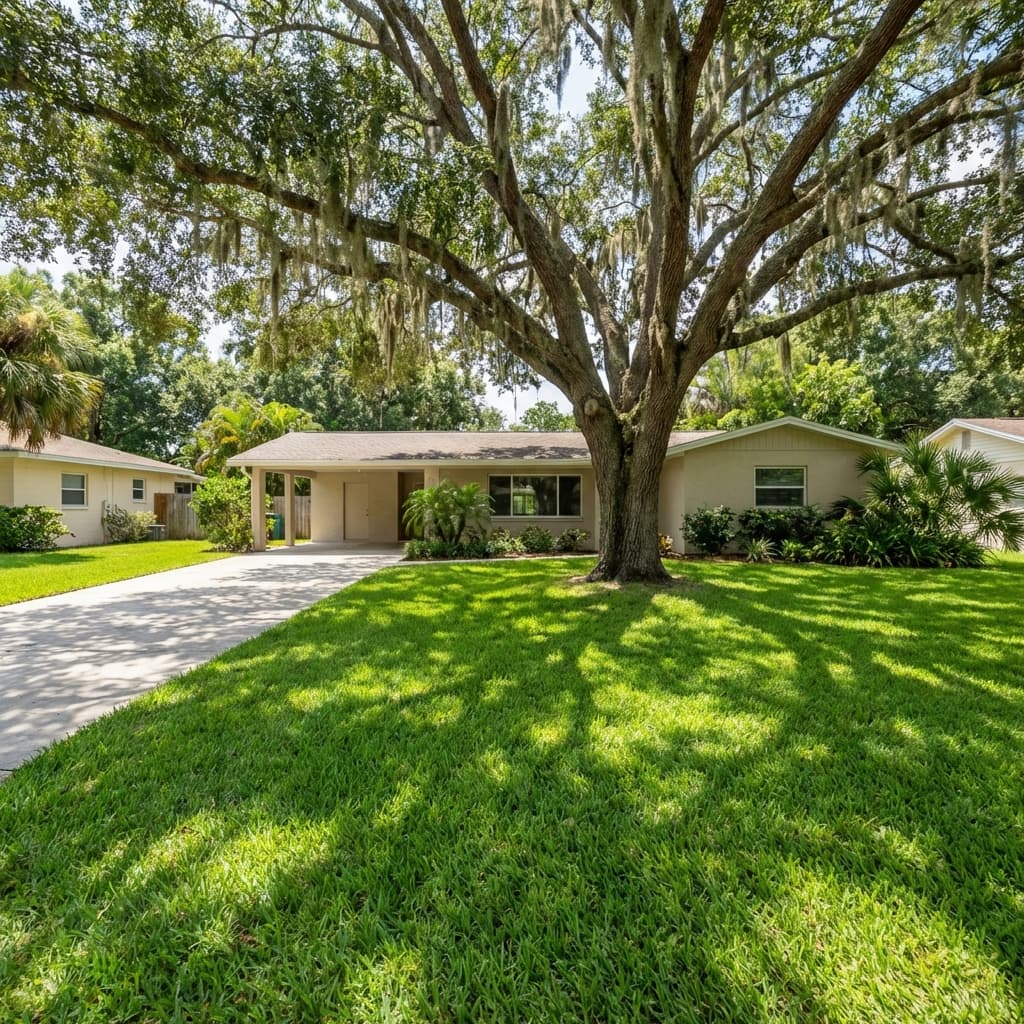
Back to Articles
Heat Stress on Jacksonville Lawns: Summer Survival Guide
Lawn Care January 27, 2026 19 min read
Set irrigation from site conditions and the current rules for your property and water source. For new sod, use the dated care planner; a fixed schedule in an older guide is not permission to water.
Jacksonville summers test even the toughest warm-season grasses. When afternoon temperatures push into the mid-90s day after day, humidity hovers near 80%, and soil surface temperatures can reach 130°F or higher, your lawn enters survival mode. After years of installing and maintaining sod across Northeast Florida, we've learned that recognizing early signs of heat stress and implementing the right response strategies can mean the difference between a lawn that bounces back quickly and one that suffers lasting damage requiring expensive repairs or complete replacement.
Heat stress doesn't just happen on the hottest day of the year. It's a cumulative effect of high temperatures, intense sun exposure, inadequate water availability, and soil conditions that prevent roots from functioning efficiently. A lawn that looks perfect in May can deteriorate rapidly in July and August if you don't adjust your care practices to match Jacksonville's summer extremes. The good news is that with proper grass selection, strategic watering, adjusted mowing practices, and avoidance of common mistakes, your Jacksonville lawn can survive and even thrive through our brutal summer months.
What Heat Stress Looks Like on Your Jacksonville Lawn
Recognizing heat stress early allows you to take corrective action before minor stress becomes severe damage. Heat stress symptoms appear differently than disease, insect damage, or nutrient deficiencies, and distinguishing between these issues guides your response.
Wilting is the earliest and most obvious sign. Heat-stressed grass can't take up water fast enough to replace what's lost through transpiration. Grass blades fold lengthwise to reduce surface area exposed to sun, giving the lawn a thin, needle-like appearance. In severe cases, blades curl completely. Wilting is most noticeable during the hottest part of the day, typically 2 PM to 5 PM. If grass recovers overnight and looks better in early morning, you're seeing heat stress rather than permanent damage.
Gray-blue color replaces healthy green as stress intensifies. St. Augustine, normally a rich blue-green, takes on a dull grayish cast. Bermuda loses its vibrant green and appears faded. This color change results from reduced chlorophyll production as grass conserves energy for basic survival rather than active growth. The color change is usually uniform across affected areas rather than appearing in irregular patches, which would suggest disease or insect problems.
Footprints stay visible long after you walk across heat-stressed grass. Healthy grass blades spring back immediately when compressed. Stressed grass lacks the water pressure inside cells to bounce back, so footprints, mower tracks, and other compression marks remain visible for hours. This is one of the clearest indicators that your lawn needs more water or relief from heat stress.
Brown patches appear when stress crosses from temporary to permanent damage. Small dead areas develop, usually in the hottest, driest parts of the lawn like south-facing slopes, areas near reflective surfaces like driveways and house foundations, or spots with compacted soil or poor drainage. These brown patches won't recover without intervention and may require sodding if damage is severe.
Slow growth indicates chronic heat stress even before visible symptoms appear. If you're mowing much less frequently in summer than spring, or if grass isn't filling in bare spots despite adequate fertilizer and water, heat stress is limiting growth. Healthy warm-season grass should grow vigorously through summer. Stunted growth suggests roots can't function properly in hot soil.
Heat stress symptoms often appear first in specific areas rather than affecting the entire lawn uniformly. Watch for stress along driveways and sidewalks, where heat radiates from pavement. South and west-facing slopes receive maximum sun exposure and stress first. Compacted areas from heavy foot traffic or vehicle parking stress before surrounding lawn. Identifying these hot spots helps you target interventions where they're needed most.
Jacksonville's Summer Extremes: Understanding the Challenge
Jacksonville's summer climate pushes warm-season grasses to their limits. Understanding exactly what your lawn faces helps you appreciate why summer lawn care requires different strategies than spring and fall.
Air temperatures from June through September average 91°F for daily highs, with frequent spikes to 95-98°F during heat waves. These air temperatures are challenging enough, but they're only part of the story. Overnight lows only drop into the mid-70s, meaning grass gets minimal relief. Plants need cooler night temperatures to recover from daytime stress, and Jacksonville's warm nights limit this recovery window.
Soil surface temperatures are where the real danger lies. Dark green grass absorbs solar radiation, and soil surfaces in full sun can reach 120-130°F by mid-afternoon. At these temperatures, grass roots near the surface shut down completely. They stop taking up water and nutrients, entering pure survival mode. This is why symptoms often appear in the hottest part of the afternoon even if you watered earlier in the day. Roots simply can't function at these extreme temperatures.
Humidity averages 75-85% throughout Jacksonville summers, which seems like it should help grass retain moisture. In reality, high humidity creates additional stress by promoting fungal diseases that exploit heat-weakened grass. The combination of heat and humidity creates perfect conditions for brown patch, gray leaf spot, and other diseases that can compound heat stress damage.
Rainfall patterns are both blessing and curse. Jacksonville receives roughly 52 inches of annual rainfall, with about half falling during the June-September wet season. Afternoon thunderstorms are common, providing periodic irrigation. However, these storms are unpredictable. You might go a week with no rain despite daily forecasts predicting storms, then receive 3 inches in an hour. This variability makes irrigation management challenging. You can't count on rainfall, but you also need to avoid overwatering if storms arrive.
Sun intensity peaks in June and July. Jacksonville sits at 30°N latitude, far enough north that winter sun angles are low, but our summer sun is nearly overhead. This intense, direct sunlight combines with long days (14+ hours of daylight in June) to deliver maximum solar radiation. Grass is exposed to intense light for extended periods, increasing water demands and heat stress.
Drought periods occur despite overall summer rainfall. Jacksonville often experiences two-week periods with minimal rain even during the wet season. When high temperatures combine with no rain, even well-established lawns suffer quickly. Sandy Northeast Florida soil drains rapidly, holding minimal moisture. During drought periods, lawns can go from healthy to severely stressed in just a few days without supplemental irrigation.
Why Heat Stress Happens: The Science Behind Suffering Grass
Understanding the physiological reasons for heat stress helps you implement effective solutions rather than just treating symptoms.
Water uptake limitation is the core problem. Grass needs to pull water from soil, transport it through roots and stems to leaves, then release it through tiny pores called stomata in a process called transpiration. This transpiration cools the plant, similar to how sweating cools your body. On hot Jacksonville summer days, grass may need to transpire several times its total water content just to stay cool.
The problem arises when roots can't extract water from soil fast enough to replace what leaves are losing. This happens for several reasons. Soil may be too dry, with insufficient moisture available. Soil temperature may be so hot that roots shut down. Roots may be damaged, diseased, or simply insufficient in number to meet demand. Or water may be available but moving too slowly through sandy soil to reach all root zones.
Stomatal closure is grass's emergency response. When water stress becomes severe, grass closes the stomata to prevent further water loss. This stops transpiration, preventing the plant from desiccating completely. However, closed stomata also stop photosynthesis because the plant can't take in carbon dioxide. Growth halts, and the grass enters survival mode. Extended periods with closed stomata lead to starvation as the plant can't produce energy, resulting in browning and death.
Root zone heat directly damages root function. Roots contain enzymes and cellular structures that denature (break down) at high temperatures. When soil surface temperatures exceed 120°F, roots within the top 2 inches of soil suffer damage. Deep roots in cooler soil may remain functional, but shallow roots that normally provide most water and nutrient uptake stop working. This is why grass can suddenly wilt even if you watered yesterday. The water is in the soil, but roots can't access it.
Respiration exceeds photosynthesis when heat becomes extreme. All plants respire continuously, breaking down stored carbohydrates to fuel cellular processes. This respiration increases with temperature. Simultaneously, high heat stress reduces photosynthesis. When respiration burns energy faster than photosynthesis creates it, the plant operates at an energy deficit. Extended deficits result in declining health, brown patches, and eventual death if conditions don't improve.
Competition for resources intensifies under stress. Grass faces competition from weeds, tree roots, and other plants for limited water and nutrients. Stressed grass is a poor competitor. Weeds adapted to heat stress, like spurge, crabgrass, and sandspur, often thrive in conditions that stress desirable grass, leading to rapid weed invasion in heat-stressed lawns.
Which Jacksonville Grasses Handle Summer Heat Best
Not all warm-season grasses tolerate Jacksonville's summer extremes equally. Choosing the right variety for your conditions provides the foundation for a heat-resistant lawn.
Bermuda grass is the undisputed champion of heat tolerance among Jacksonville grasses. Varieties like TifTuf, Celebration, Latitude 36, and Tifway 419 evolved in hot, dry climates and thrive in conditions that stress other grasses. Bermuda roots deeply, accessing moisture lower in the soil profile. It has fine leaves with low water content per blade, reducing overall water demand. And Bermuda recovers quickly from heat stress, often showing new growth within days of relief.
TifTuf Bermuda in particular demonstrates exceptional drought and heat tolerance. Developed specifically for water conservation, TifTuf maintains color and growth with significantly less water than other varieties. For Jacksonville homeowners in full sun locations, particularly in Southside, Town Center, or newer subdivisions in St. Johns County where irrigation may be limited, TifTuf Bermuda offers maximum heat resistance.
The tradeoff with Bermuda is aggressive growth requiring frequent mowing and poor shade tolerance. Bermuda struggles under trees or in areas receiving less than 6-8 hours of direct sun. But in full sun, Bermuda is nearly bulletproof through Jacksonville summers.
Bahia grass ranks second in heat and drought tolerance. Argentine and Pensacola Bahia are workhorses that handle neglect better than any other Jacksonville grass. Bahia roots incredibly deeply, sometimes reaching 6 feet down, allowing access to moisture long after surface soil dries completely. Bahia maintains acceptable color through droughts that would devastate St. Augustine or Zoysia.
Bahia works well for large properties, acreage in Clay County or Nassau County, and budget-conscious homeowners willing to accept a coarser appearance. Bahia tolerates poor soil, minimal fertilization, and infrequent irrigation. If you travel extensively in summer or have difficulty maintaining regular irrigation, Bahia makes excellent sense.
St. Augustine grass offers moderate heat tolerance, adequate for Jacksonville but requiring more attention than Bermuda or Bahia. Floratam St. Augustine, Jacksonville's most popular variety, handles heat reasonably well in full sun but struggles in extreme droughts. Palmetto St. Augustine demonstrates better heat and drought tolerance than Floratam, making it a smarter choice for zone 9a inland locations. CitraBlue and ProVista also offer improved stress tolerance over standard Floratam.
St. Augustine's appeal is its shade tolerance, allowing it to thrive where Bermuda would fail. If you have mature trees and need grass that handles both shade and summer heat, cold-hardy St. Augustine varieties like Palmetto or Sapphire are your best bet. Expect to irrigate more consistently than you would with Bermuda, and monitor closely during drought periods for early signs of stress.
Zoysia grass provides moderate heat tolerance, slightly better than St. Augustine but not matching Bermuda or Bahia. Zoysia varieties like Empire, Zeon, and Palisades handle Jacksonville summers adequately with proper irrigation. Zoysia roots moderately deeply and has relatively low water requirements compared to St. Augustine, though more than Bermuda.
Zoysia's strength is wear tolerance and moderate shade tolerance, making it suitable for active families with partially shaded yards. Zoysia maintains better appearance than Bermuda through Jacksonville summers while requiring less water than St. Augustine, though it's more expensive to install. For properties in Ponte Vedra, Nocatee, or upscale developments in Mandarin where appearance matters and irrigation is available, Zoysia offers an excellent balance of heat tolerance and aesthetics.
Mowing Higher in Summer Creates Shade for Roots
Adjusting mowing height seasonally is one of the simplest and most effective heat stress prevention strategies, yet many Jacksonville homeowners maintain the same height year-round to their lawn's detriment.
Taller grass provides several heat stress benefits. Longer blades create shade on the soil surface, significantly reducing soil temperature. Studies show soil under grass mowed at 3 inches stays 10-15°F cooler than soil under grass mowed at 1.5 inches. This temperature reduction keeps roots functional through the hottest afternoon hours, allowing continued water uptake when grass needs it most.
Taller grass also develops deeper roots. The relationship between shoot height and root depth is well-established. Grass mowed short develops shallow roots, while grass mowed taller develops extensive deep roots. During summer stress, deep roots access moisture in lower soil layers after surface soil dries, providing drought insurance.
Additionally, taller grass blades have more surface area for photosynthesis, allowing the plant to produce more energy despite heat stress limiting overall metabolism. More energy means better stress tolerance and faster recovery when conditions improve.
Bermuda grass should be mowed at 1.5-2 inches during spring and fall but raised to 2-2.5 inches for summer. This higher cut maintains Bermuda's fine texture while providing critical shade and deeper roots. Don't let Bermuda get too tall (over 3 inches) as it will thin and develop thatch problems, but summer height should be noticeably higher than spring height.
St. Augustine grass should be maintained at 3.5-4 inches through Jacksonville summers, up from the 3-3.5 inch height appropriate in spring. St. Augustine has broad leaves that create excellent shade when mowed higher. Never scalp St. Augustine below 3 inches, even in spring, but allowing it to reach 4 inches in July and August provides significant heat stress protection.
Zoysia grass performs best at 2-2.5 inches in summer, up from 1.5-2 inches in spring. Zoysia tolerates fairly close mowing but benefits from additional height during heat stress periods.
Bahia grass should be maintained at 3-4 inches year-round. Bahia produces seed heads that grow tall rapidly, but mowing too short creates thin turf and allows weed invasion. Maintain Bahia at the higher end of its range through summer for maximum stress resistance.
Adjust mowing frequency as needed to avoid removing more than one-third of blade height in a single mowing. During drought stress when growth slows, once weekly or even less may be adequate. Never scalp heat-stressed grass trying to return to normal height after a period of slow mowing. Gradually reduce height over several mowings as conditions improve.
Jacksonville Pro Tip: Sharpen mower blades frequently during summer. Dull blades tear grass rather than cutting cleanly, leaving ragged tips that brown quickly and increase water loss. Sharp blades produce clean cuts that seal quickly, reducing stress.
Watering Deeply but Infrequently: The Golden Rule
Irrigation strategy has more impact on heat stress tolerance than any other management practice. Jacksonville homeowners often water too frequently and too shallowly, creating weak, shallow-rooted grass that can't handle summer stress.
Deep watering encourages deep roots. When you apply water deeply, soaking the soil 6-8 inches down, roots follow moisture downward, developing the extensive root system necessary for drought tolerance. Deep roots access moisture in lower soil layers long after surface soil dries, providing insurance during heat waves or drought periods between irrigations.
Infrequent watering forces grass to develop stress tolerance. They remain shallow because moisture is always available near the surface. Grass becomes dependent on frequent irrigation and suffers immediately when you miss a watering or when temperatures spike. Infrequent watering creates mild stress that toughens grass, encouraging deeper rooting and more efficient water use.
Apply enough water to penetrate 6-8 inches deep in sandy soil. This typically requires 0.5-0.75 inches of water per application. You can measure this by placing tuna cans or straight-sided containers around your irrigation zones to gauge output.
These restrictions align well with best practices. Water in early morning, ideally 4 AM to 8 AM, when evaporation is minimal, wind is calm, and water pressure is highest. Morning watering also allows grass to dry before evening, reducing fungal disease risk.
Signs you need to water include wilting that persists in early morning, gray-blue color, and footprints remaining visible. Don't water on a schedule regardless of conditions. Check your lawn before each scheduled irrigation. If recent rain provided adequate moisture, skip the watering. If a heat wave creates additional stress, you may need to add a cycle. Let grass tell you what it needs rather than blindly following a timer.
Cycle and soak improves water penetration in sandy Jacksonville soil. Rather than running sprinklers continuously for 30-40 minutes, run them for 10 minutes, stop for 20-30 minutes to allow water to soak in, then run another 10 minutes. This prevents runoff and improves water penetration, especially on slopes or compacted areas.
Newly installed sod requires completely different irrigation. Gradually transition to normal watering over weeks 3-4 as roots grow into soil. Don't follow the deep-and-infrequent rule until sod is fully established.
What NOT to Do During Heat Stress
Well-intentioned actions often worsen heat stress or prevent recovery. Avoiding these common mistakes improves your success rate.
Don't fertilize during heat stress. Fertilizer stimulates growth, and heat-stressed grass can't support new growth. Applying nitrogen during extreme heat forces grass to allocate limited resources to producing new leaves rather than maintaining existing tissue and deepening roots. This weakens the plant and can push moderate stress into severe damage. Your last summer fertilizer application should be in late May or early June. Don't fertilize again until temperatures moderate in September.
Don't apply herbicides during extreme heat. Herbicides stress plants, and heat-stressed grass has minimal ability to tolerate additional stress. Applying weed killers when temperatures exceed 90°F can severely damage or kill grass along with weeds. Tackle summer weed problems with spot treatments on cooler days (below 85°F) in early morning, or wait until fall when temperatures moderate. Broadleaf weeds are harder to control in summer anyway, so your efforts will be more effective in fall.
Don't scalp heat-stressed grass. If your grass gets too tall during a period of slow mowing, reduce height gradually over multiple mowings rather than cutting back to normal height all at once. Scalping removes most leaf area, eliminating the grass's ability to photosynthesize and produce energy. Scalped grass browns quickly in summer heat and may not recover.
Don't overwater trying to compensate for stress. More water isn't always better. Overwatering creates waterlogged soil that suffocates roots, promotes fungal diseases, and wastes water. Follow the deep-and-infrequent rule even during extreme heat. If grass shows stress despite proper watering, the problem may be damaged roots, disease, or soil issues that more water won't fix.
Don't ignore disease symptoms. Heat stress and fungal disease often occur together, and symptoms can overlap. Brown patch causes irregular brown patches with darker borders. Gray leaf spot produces small tan spots on leaves. Large patch creates circular dead areas. If browning doesn't match typical heat stress patterns, consult a professional. Fungicide applications may be necessary, but fungicides work best when applied preventively or at first symptoms, not after disease is well-established.
Don't stop watering when grass browns. If grass enters dormancy or suffers heat damage, it still needs some moisture to keep roots alive. Completely abandoning irrigation can kill dormant grass that would otherwise recover. Reduce watering frequency but provide enough moisture to keep soil from becoming dust-dry.
The Role of Thatch in Heat Protection and Problems
Thatch, the layer of dead grass stems and roots between living grass and soil, plays a complex role in heat stress. A thin thatch layer provides benefits, but excessive thatch creates significant problems.
Beneficial thatch (0.5 inch or less) insulates soil, moderating temperature swings and keeping roots cooler during peak afternoon heat. Thin thatch also cushions grass, reduces soil compaction from foot traffic, and holds some moisture. St. Augustine naturally develops more thatch than Bermuda or Bahia due to its growth habit.
Excessive thatch (over 0.5-0.75 inch) prevents water penetration, blocking irrigation from reaching roots. Water runs off thick thatch or pools on the surface rather than soaking into soil. This creates the paradox of grass showing drought stress despite adequate irrigation. Thick thatch also harbors insects and disease organisms and prevents grass roots from reaching soil.
Managing thatch requires dethatching or core aeration. Dethatching removes thatch mechanically with a vertical mower or dethatcher. This is aggressive and best done in spring when grass can recover quickly. Core aeration pulls plugs of soil, penetrating thatch and improving water infiltration while stimulating new root growth. Aeration is less aggressive than dethatching and can be done in summer if needed, though spring or fall are ideal.
Check thatch depth by cutting a small wedge out of your lawn and examining the cross-section. If thatch exceeds 0.75 inch, plan to dethatch or aerate. If water runs off your lawn rather than soaking in despite your irrigation system working properly, excessive thatch is likely the culprit.
For St. Augustine lawns in established neighborhoods in Riverside, Avondale, or San Marco, thatch management every few years maintains healthy soil-to-grass interface and improves heat stress tolerance.
When Grass is Dormant vs. Dead: Critical Differences
Distinguishing between summer dormancy and heat damage death prevents unnecessary repairs while ensuring you take action when truly needed.
Summer dormancy is rare in Jacksonville but can occur during severe droughts. Bermuda and Bahia are most likely to go dormant in summer if deprived of water for extended periods. Dormant grass turns brown uniformly across large areas, maintains its structure with blades intact, and doesn't pull up easily when tugged. Grass crowns and roots remain alive underground, and the lawn greens up quickly when water returns.
Heat damage death shows different characteristics. Browning is often patchy rather than uniform. Grass has a water-soaked or mushy appearance shortly after damage, then dries to a brown, brittle texture. Dead grass pulls up easily because roots and crowns are dead. Dead areas don't green up when watered but may be invaded by weeds.
Testing viability helps determine whether brown grass is dormant or dead. Water brown areas consistently for a week. Dormant grass shows green shoots within days of adequate moisture. Dead grass shows no response. Try gently pulling up grass. Dormant grass resists pulling with firm roots. Dead grass lifts easily.
Recovery timing differs dramatically. Dormant grass greens up within 1-2 weeks of resumed watering. Dead grass never recovers and requires replacement. If you've watered brown areas consistently for two weeks with no green-up, assume the grass is dead and plan repairs.
Most summer browning in Jacksonville with basic irrigation is temporary stress rather than permanent death, especially with hardy varieties like Bermuda and Bahia. St. Augustine is more prone to permanent damage from severe heat stress, particularly older Floratam plantings in full sun without adequate irrigation.
Recovery Strategies for Heat-Damaged Lawns
When grass crosses from stress to damage, specific recovery strategies help minimize long-term harm and accelerate regrowth.
Resume watering on a proper schedule if irrigation lapsed during damage. Damaged grass has reduced root function and can't tolerate wet soil, so avoid overwatering which invites fungal disease.
Light fertilization in early September supports recovery once temperatures moderate below 90°F consistently. Use a balanced fertilizer with moderate nitrogen (15-0-15 or similar) to encourage new growth without overwhelming stressed grass. Avoid high-nitrogen fertilizers until grass shows strong recovery.
Overseed or patch small damaged areas once fall arrives. For Bermuda lawns, spreading Bermuda seed over thin areas in September encourages fill-in. For St. Augustine, Zoysia, or Bahia, patch small dead spots with matching sod. Don't attempt repairs in late summer (August) when heat stress risk remains high.
Core aeration in September or October improves root development and water penetration, supporting recovery. Aeration is especially beneficial if compaction or thatch contributed to heat stress damage.
Weed control prevents opportunistic weeds from invading damaged areas. Spot-treat weeds carefully, avoiding herbicides that will further stress recovering grass. Fall pre-emergent applications prevent winter weeds from establishing in thin areas.
Full replacement may be necessary for extensively damaged lawns or if you're replacing a heat-sensitive variety with a more tolerant option. Fall (September through November) is ideal for sod installation in Jacksonville, allowing establishment before winter and a full season of root development before the next summer stress period.
Installing Sod in Jacksonville Summer: Special Considerations
Sometimes sod installation can't wait for ideal spring or fall windows. Summer installation is possible but requires extra care to prevent heat stress on vulnerable new sod.
Early morning installation is critical. Start installations as early as possible, ideally at first light. Sod sitting on pallets in summer heat deteriorates rapidly. Every hour between harvest and installation increases stress.
Keep sod moist from delivery through installation. If installation takes several hours, periodically mist sod still on pallets to prevent drying. New sod has no root system to access soil moisture and depends entirely on frequent surface watering until roots establish.
Shade cloth benefits new sod in the hottest locations. Temporarily erecting shade cloth over newly installed sod in south-facing slopes or areas near reflective surfaces reduces heat stress during the critical first week. Remove shade cloth gradually to acclimate grass to full sun.
Avoid July and August installations if possible. Late May through June allows some establishment before peak heat. September is far better, offering warm soil for rapid rooting without extreme heat stress. If you must install in July or August, prioritize irrigation vigilance and expect slower establishment.
Choose heat-tolerant varieties for summer installation. Bermuda establishes most reliably in summer heat. Zoysia and Bahia are reasonable summer choices. St. Augustine struggles with summer installation, particularly Floratam. If installing St. Augustine in summer, choose heat-tolerant varieties like Palmetto and understand that establishment will be slower and more difficult than fall installation.
Conclusion
Heat stress is Jacksonville's greatest summer lawn challenge, but it's a challenge you can win with the right strategies. Understanding how heat stress appears, why it happens, and which grasses resist it best provides the foundation. Bermuda leads in heat tolerance, followed by Bahia, with St. Augustine and Zoysia requiring more careful management. Selecting grass matched to your specific conditions, sun exposure, and irrigation capabilities sets you up for success.
Summer lawn care requires adjusted practices. Mow higher to shade roots and encourage deeper rooting. Water deeply but infrequently to develop drought-tolerant grass. Avoid fertilization and herbicide applications during extreme heat. Monitor for early stress signs and respond quickly with appropriate irrigation adjustments. Distinguish between temporary stress and permanent damage, avoiding unnecessary panic while taking action when truly needed.
Jacksonville's summer will always test your lawn, but grass naturally adapted to heat and humidity can thrive with proper care. When heat damage does occur, recovery is usually possible with patient care and appropriate intervention. Learn from each summer, noting which areas of your property stress first and adjusting care to address those vulnerable spots. Over time, you'll develop an intuitive understanding of your lawn's specific needs and maintain healthy grass even through the most brutal Northeast Florida summers.
Ready to install heat-tolerant sod that thrives through Jacksonville summers? With years of experience selecting and installing grass varieties across all microclimates in Northeast Florida, we'll help you choose sod perfectly matched to your property's sun exposure, soil conditions, and irrigation capabilities, ensuring a beautiful lawn that handles whatever Jacksonville summers deliver.
Need Professional Sod Installation?
Jax Sod provides sod installation, sod replacement, and new lawn installation across Jacksonville and Northeast Florida. Free quotes!
Related Articles
Summer Drought Lawn Survival Tips for Jacksonville
Expert tips for summer drought lawn survival in Jacksonville. Learn watering strategies, grass selection, and maintenance during dry periods.
June Lawn Care Jacksonville FL: Surviving Peak Summer Heat
Essential June lawn care strategies for Jacksonville's brutal heat and humidity. Keep your lawn healthy through Zone 9a/9b summer stress.
Summer Lawn Care Tips for Jacksonville, FL
Summer Lawn Care Tips for Jacksonville, FL. Review the site, scope and current written quote before deciding.
Let’s talk about your lawn
Ask our AI assistant a lawn question, or send the team a free installation estimate request.