Loading...
Back to Articles
Pre-Emergent Herbicide Schedule for Jacksonville Lawns
Lawn Care January 27, 2026 15 min read
Set irrigation from site conditions and the current rules for your property and water source. For new sod, use the dated care planner; a fixed schedule in an older guide is not permission to water.
Jacksonville homeowners know the frustration of watching crabgrass, spurge, and other weeds invade what should be a pristine lawn. You fertilize, you mow, you water correctly, and yet every spring and fall, the weeds seem to win. The problem isn't what you're doing when weeds appear. It's what you didn't do months earlier.
At Jax Sod, we've spent years helping Northeast Florida homeowners maintain healthy, weed-free lawns. The single most effective strategy we recommend is a properly timed pre-emergent herbicide program. These products don't kill existing weeds. Instead, they create an invisible chemical barrier in your soil that prevents weed seeds from germinating in the first place. Miss the application window by even a few weeks, and those weeds will have already sprouted, making your pre-emergent useless for that season.
In this guide, we'll walk you through the exact pre-emergent herbicide schedule for Jacksonville lawns, explain how these products work, and help you choose the right application methods and products for your specific grass type. Whether you maintain St. Augustine, Bermuda, Zoysia, or Bahia, this schedule will transform your weed control strategy from reactive to preventive.
Understanding How Pre-Emergent Herbicides Work
Pre-emergent herbicides are fundamentally different from the post-emergent products most homeowners are familiar with. When you spray a visible weed with a post-emergent herbicide like 2,4-D or glyphosate, you see results within days. Pre-emergents work on an entirely different timeline and mechanism.
These products form a chemical barrier in the top layer of your soil. When a weed seed begins to germinate and the tiny root emerges, it absorbs the pre-emergent chemical and dies before the seedling can establish. The adult weed never appears. From your perspective, it looks like the weeds simply chose not to grow in your yard, but in reality, hundreds or thousands of weed seeds attempted germination and failed.
The critical factor is timing. Pre-emergents must be applied and activated (usually by watering or rain) before weed seeds germinate. Apply too early, and the chemical barrier may degrade before germination occurs. Apply too late, and the weeds have already emerged. For Jacksonville homeowners, this means following soil temperature guidelines rather than calendar dates, though we've developed a reliable calendar-based schedule that works for our region's climate patterns.
Most pre-emergent products remain effective for 8-12 weeks, which is why Jacksonville lawns need multiple applications throughout the year. A single spring application won't protect you through summer and fall. Similarly, a fall application won't carry you through the following spring.
Jacksonville Pro Tip: Pre-emergents won't kill existing weeds. If you already see crabgrass or spurge in your lawn, you need a post-emergent herbicide first. Wait two weeks after treating existing weeds before applying a pre-emergent to prevent the next generation.
The Jacksonville Pre-Emergent Schedule: Three Critical Applications
Jacksonville's warm, humid climate with mild winters means we face two distinct weed seasons: warm-season weeds that germinate in spring and summer, and cool-season weeds that emerge in fall and winter. This requires a three-application schedule that most northern states don't need.
Round 1: Mid-February (Summer Weed Prevention)
Your first application should occur in mid-February, typically around Valentine's Day weekend. This timing coincides with soil temperatures reaching 55-60°F consistently, which triggers germination of summer annual weeds. In Jacksonville, this includes:
- Crabgrass (both smooth and large crabgrass)
- Goosegrass (also called silver crabgrass)
- Spurge (spotted spurge and prostrate spurge)
- Sandbur
- Dallisgrass
These weeds will plague your lawn from April through October if you miss this application. By mid-February, your St. Augustine, Bermuda, and Zoysia grasses are still dormant or just beginning to green up, making this an ideal time for treatment. Bahia grass, being tougher and earlier to green, is usually showing color by this point but tolerates pre-emergents well.
We've seen homeowners in coastal areas like Jacksonville Beach and Atlantic Beach delay this application until early March, assuming their milder microclimate allows more time. This is a mistake. Coastal areas actually warm faster than inland Jacksonville, Arlington, or Orange Park, meaning weed seeds germinate earlier near the beaches.
Round 2: Late April (Second Barrier)
Your second application extends the protective barrier through summer. Most pre-emergent products lose effectiveness after 8-10 weeks in Jacksonville's warm, humid conditions. Rainfall, irrigation, soil temperature, and microbial activity all contribute to product breakdown.
Apply your second round in late April, typically around April 20-30. This application protects against late-germinating crabgrass and the summer wave of spurge. It also catches any weeds that managed to slip through your first application.
Some homeowners ask whether they can skip this application if they didn't see weeds after Round 1. The answer is no. You didn't see weeds precisely because the barrier was working. Remove that barrier in May, and by June you'll have a lawn full of crabgrass and spurge just as summer heat peaks.
Round 3: Early October (Winter Weed Prevention)
Jacksonville's mild winters allow cool-season weeds to thrive while your warm-season grasses slow down. Your third application should occur in early October, ideally the first or second week. This prevents:
- Annual bluegrass (Poa annua)
- Henbit
- Chickweed (both common and mouseear)
- Shepherd's purse
- Annual ryegrass (from overseeding neighbors' lawns)
These weeds germinate when soil temperatures drop to 50-70°F, typically in October and November in Northeast Florida. They'll dominate your lawn from December through March if you skip this application. While they may die back when summer heat returns, they'll have already gone to seed, ensuring an even worse infestation the following winter.
St. Augustine lawns in neighborhoods like Mandarin, Ponte Vedra, and Nocatee are particularly susceptible to annual bluegrass, which creates unsightly light-green patches throughout winter. Once established, it's difficult to remove without damaging your turf.
Choosing the Right Pre-Emergent Products
Not all pre-emergent herbicides work equally well on all grass types or against all weeds. Jacksonville homeowners need to match their product selection to both their turf and their specific weed pressure.
Active Ingredients to Know
Prodiamine (found in Barricade, ProdiaMate): Our most recommended active ingredient for Jacksonville lawns. Effective against both grassy and broadleaf weeds, safe for all warm-season grasses, and provides 3-5 months of control per application. Excellent for St. Augustine, Bermuda, Zoysia, and Bahia.
Dithiopyr (found in Dimension): Unique among pre-emergents because it offers limited post-emergent control of very young crabgrass (up to the 3-4 leaf stage). Ideal if you're applying slightly late or had some early germination. Safe for all warm-season turf.
Pendimethalin (found in Pendulum, Scotts Halts): Economical option with good grassy weed control. Slightly less effective on broadleaf weeds than prodiamine. Safe for established St. Augustine and other warm-season grasses but can cause yellowing if over-applied.
Benefin + Trifluralin (found in Team, Preen): Combination product offering broader weed spectrum control. Particularly effective against spurge and oxalis. Safe for all Jacksonville grass types when applied at labeled rates.
Products by Grass Type
St. Augustine Lawns (Floratam, Palmetto, CitraBlue): Use prodiamine-based products for Rounds 1 and 2, and consider a benefin + trifluralin combination for Round 3 if you have winter broadleaf weed pressure. St. Augustine is sensitive to atrazine-based products, so always verify your product is labeled safe for St. Augustine.
Bermuda Lawns (TifTuf, Celebration, Latitude 36): Bermuda tolerates virtually all pre-emergent herbicides. Prodiamine works well for all three applications. If you overseed with ryegrass in fall, skip the Round 3 application entirely or use siduron, which allows cool-season grass germination while preventing weeds.
Zoysia Lawns (Empire, Zeon, Icon): Similar to Bermuda in herbicide tolerance. Prodiamine or dithiopyr for all applications. Zoysia's density naturally suppresses weeds better than other grasses, so consistent pre-emergent use combined with proper mowing height creates an nearly impenetrable weed barrier.
Bahia Lawns (Argentine, Pensacola): Bahia is tough and forgiving. Prodiamine or pendimethalin work well. Many Bahia lawns can get away with just two applications (Rounds 1 and 3) if maintained properly, though we still recommend all three for properties in high-weed-pressure areas like along wooded edges or near unmaintained lots.
Combination Products: Fertilizer + Pre-Emergent
Many big-box stores sell combination fertilizer and pre-emergent products. These can be convenient but come with tradeoffs. Your fertilizer timing and pre-emergent timing don't always align perfectly. In Jacksonville, we typically fertilize in March, May, July, and September. Your pre-emergent schedule is mid-February, late April, and early October.
If you use combination products, you may be applying fertilizer at suboptimal times just to get your pre-emergent down, or vice versa. That said, for homeowners who struggle with consistency, a combo product applied on schedule is better than separate products applied incorrectly or not at all.
When using combo products, ensure the nitrogen content isn't excessive. A 0.5-1 lb nitrogen per 1,000 square feet application is appropriate for Jacksonville lawns. Heavier rates can cause surge growth, increase disease pressure, and exceed St. Johns River Water Management District recommendations for nutrient management.
Application Methods: Granular vs Liquid
Pre-emergent herbicides come in both granular and liquid formulations. Each has advantages depending on your property size, equipment, and preference.
Granular Application
Granular products are the most popular choice for residential Jacksonville lawns. They're easy to apply with a broadcast spreader, require no mixing, and are widely available at local garden centers and home improvement stores.
Application steps:
- Calibrate your spreader according to the product label. Each product has specific settings for common spreader brands (Scotts, Earthway, etc.).
- Apply when grass is dry but soil is slightly moist, ideally after a light rain or irrigation.
- Walk at a steady pace, slightly overlapping your passes to avoid striping.
- Apply to the entire lawn, including edges along beds, driveways, and sidewalks where weeds often start.
- Water in thoroughly within 24 hours with at least 0.25-0.5 inches of water.
The main challenge with granular products is achieving even coverage. Areas with heavy overlap get excess chemical, while missed strips become weed highways. Use a quality spreader and maintain consistent walking speed. We recommend the EarthWay 2150 or Scotts Elite for Jacksonville homeowners with 5,000+ square foot lawns.
Liquid Application
Liquid pre-emergents require a pump sprayer or hose-end sprayer. Professional lawn services almost exclusively use liquid formulations because they provide more precise control and faster absorption. For homeowners, liquids offer better coverage around obstacles like trees, flower beds, and hardscapes.
Application steps:
- Mix product according to label directions. Most concentrate products use 0.5-1 oz per gallon of water for typical application rates.
- Spray evenly across the lawn, using a fan tip for uniform coverage.
- Mark your progress to avoid missing sections or over-applying.
- Refill as needed and continue until the entire lawn is treated.
- Water in within 24 hours with 0.25-0.5 inches of irrigation.
Liquid applications work better in properties with irregular shapes, heavy landscaping, or areas where granular products tend to bounce onto hardscapes and wash away. They're also ideal for spot-treating high-pressure areas like along fence lines or adjacent to unmaintained properties without treating the entire lawn.
For Jacksonville homeowners with St. Augustine lawns in neighborhoods like San Marco or Riverside with mature trees and extensive landscaping, liquid applications often provide better results despite the extra effort.
Watering In: The Critical Final Step
Pre-emergent herbicides must be watered into the soil to create that protective barrier. Leaving granules sitting on grass blades or liquid drying on the surface accomplishes nothing. The product needs to reach the top 1-2 inches of soil where weed seeds germinate.
Apply 0.25-0.5 inches of water within 24 hours of application. In Jacksonville, this is approximately 15-20 minutes of irrigation with standard pop-up spray heads, or 30-40 minutes with rotary nozzles. You can use rainfall if forecast predicts at least 0.25 inches, but don't rely on brief afternoon thunderstorms, which may be too localized or too intense, causing runoff rather than infiltration.
If you're subject to St. Johns River Water Management District watering restrictions (odd addresses Wednesday and Saturday, even addresses Thursday and Sunday), plan your application for the day before your watering day. Apply granules or liquid on Tuesday evening if you can water Wednesday morning.
Jacksonville Pro Tip: Jacksonville's sandy soil drains quickly. After watering in your pre-emergent, avoid heavy irrigation for 7-10 days. You want the chemical barrier to remain in the upper soil layer where seeds germinate, not leach down into the root zone where it's ineffective.
What NOT to Do: Common Pre-Emergent Mistakes
Over years serving Jacksonville homeowners, we've seen these mistakes repeatedly. Avoid them and you'll have much better results.
Don't Apply to New Sod
New sod needs to root into your soil. Pre-emergents can interfere with this rooting process, essentially treating your sod like a weed seed and preventing establishment. Wait at least 4-6 weeks after sod installation before applying any pre-emergent. For spring installations in Jacksonville (March-May), this may mean skipping your Round 2 application entirely and accepting some weed pressure in exchange for proper sod establishment.
Once your sod has rooted (you can verify by trying to lift a corner—it should resist), you can resume normal pre-emergent schedules.
Don't Apply If You're Overseeding
Pre-emergents prevent all seed germination, including desired grass seed. If you're overseeding Bermuda with perennial ryegrass for winter color, or filling in thin St. Augustine areas with plugs, avoid pre-emergents. There are two solutions:
- Skip the pre-emergent in areas you'll overseed, accepting increased weed pressure in exchange for grass establishment.
- Use siduron (Tupersan), a selective pre-emergent that allows cool-season grass germination while preventing weeds. This only works for certain grass types and has a narrower weed spectrum, but it's effective for Bermuda overseeding situations.
Most Jacksonville homeowners don't overseed, as our warm-season grasses remain green most of the year. But Bermuda lawns in Ponte Vedra, Nocatee, or Jacksonville Beach where aesthetics are critical sometimes overseed for guaranteed winter green.
Don't Apply During Drought Stress
Pre-emergents must be watered in, and your lawn must be actively growing to tolerate the chemical stress. Don't apply during severe drought when your grass is dormant or severely stressed. Wait until you can resume normal irrigation and the turf has recovered.
Jacksonville's driest months are typically April and May, right when Round 2 applications are scheduled. If we're in a drought pattern and watering restrictions have been escalated, consider delaying your application until conditions normalize. A late application is better than one that can't be properly watered in or that damages already-stressed turf.
Don't Over-Apply
More is not better. Applying pre-emergents at higher-than-labeled rates doesn't improve weed control and can damage your turf. We've seen cases where homeowners accidentally double-applied (applying granules and liquid, or misreading application rates) and killed sections of their St. Augustine lawns.
Always calibrate your spreader or sprayer, measure your lawn accurately, and follow label directions exactly. Pre-emergent chemistry is precisely formulated. Amateur adjustments don't improve performance.
Interactions with Other Lawn Products
Pre-emergents don't exist in isolation. Jacksonville homeowners are also applying fertilizers, fungicides, insecticides, and post-emergent herbicides throughout the year. Understanding how these interact prevents problems.
Fertilizer + Pre-Emergent
As mentioned earlier, combination products exist but timing isn't always ideal. If applying separately, you can apply fertilizer and pre-emergent on the same day with no issues. Apply the pre-emergent first, then the fertilizer, then water everything in together. This is efficient and effective.
However, don't feel obligated to fertilize just because you're applying pre-emergent. Follow your normal fertilization schedule based on grass type and growth stage. Jacksonville St. Augustine lawns typically want fertilizer in March, May, July, and September. Your February pre-emergent application doesn't need fertilizer—the grass is barely active. Your April application could be combined with your May fertilization by applying a week or two early with no harm.
Fungicides
Jacksonville's summer humidity creates intense fungal pressure, particularly for St. Augustine lawns fighting large patch and gray leaf spot. You can apply fungicides and pre-emergents at the same time with no interaction issues. Both can be watered in together.
Time your applications to minimize trips across the lawn. If you know you'll need a preventive fungicide treatment in late April (prime time for gray leaf spot as temperatures climb), combine it with your Round 2 pre-emergent application.
Insecticides
Chinch bugs, sod webworms, and armyworms are common Jacksonville lawn pests. Pre-emergents don't affect insects, and insecticides don't affect pre-emergent performance. You can apply both simultaneously.
Most insecticides also require watering in, making combination applications efficient. However, be mindful of over-watering. If you're applying both, a single 0.5-inch irrigation event activates both products.
Post-Emergent Herbicides
If you're treating existing weeds with post-emergent herbicides (2,4-D, dicamba, MSMA for dallisgrass, etc.), wait 7-10 days before applying a pre-emergent. Post-emergents stress the turf, and immediately following with a pre-emergent compounds that stress.
Ideally, clean up existing weeds in January, wait two weeks, then apply your Round 1 pre-emergent in mid-February. This spacing gives your grass time to recover and ensures both products work optimally.
Special Situations: When Standard Schedules Need Adjustment
While the three-application schedule works for most Jacksonville lawns, certain situations require modifications.
New Construction with Fill Dirt
New construction in developments like Nocatee, Town Center, or any Clay County subdivision often involves importing fill dirt. This dirt can be loaded with weed seeds—particularly nutsedge, Carolina geranium, and various broadleaf weeds not common in established Jacksonville neighborhoods.
For the first year, consider adding a fourth application in early June. This mid-summer treatment catches the surge of weeds germinating from disturbed soil. After the first year, return to the standard three-application schedule.
Properties Adjacent to Wooded Areas
Properties backing up to woods in areas like Mandarin, Fruit Cove, or Middleburg face constant weed seed pressure from unmaintained natural areas. Increase your application frequency along these edges. Some homeowners apply pre-emergent to a 10-15 foot border zone four times per year while treating the main lawn three times.
High-Traffic Areas
Areas around mailboxes, along driveways, and in play areas where traffic thins the turf become weed entry points. Spot-treat these areas between scheduled applications if weeds break through. A small hand-held spreader or spray bottle with mixed liquid pre-emergent lets you touch up problem areas without treating the entire lawn.
Rental Properties and Vacation Homes
If you're not present year-round, prioritize Round 1 (mid-February) and Round 3 (early October) applications. These prevent the most problematic weeds. Missing Round 2 (late April) may allow some late-season crabgrass, but it's manageable. Missing Round 1 guarantees a summer full of crabgrass and spurge that's very difficult to control.
Measuring Success: What to Expect
After implementing a proper pre-emergent schedule, Jacksonville homeowners typically see dramatic improvements in the first year and near-complete weed prevention by year two. Here's what to expect:
Year 1: Expect 60-80% reduction in weed pressure. Some weeds will still appear, either from seeds already germinating when you applied your pre-emergent, or from weak spots in coverage. Don't get discouraged. Spot-treat breakthrough weeds with post-emergents and maintain your schedule.
Year 2: With consistent applications, weed pressure drops to 10-20% of your original problem. The weed seed bank in your soil is depleting, and your dense, healthy grass is crowding out what little germination occurs.
Year 3+: A well-maintained Jacksonville lawn with proper pre-emergent applications, correct mowing height, appropriate fertilization, and adequate water becomes nearly weed-free. Annual maintenance applications prevent problems before they start.
Take photos of your worst weed areas in April (post-spring germination) and November (post-fall germination) each year. You'll see remarkable improvement and appreciate the value of prevention over reaction.
Conclusion
Pre-emergent herbicide application is the single most effective weed control strategy for Jacksonville lawns, but only when timed correctly. Jacksonville's unique climate requires three applications—mid-February, late April, and early October—to prevent both warm-season and cool-season weeds. Miss these windows, and you'll spend the rest of the season fighting weeds that could have been prevented for a fraction of the cost and effort.
Choose products based on your grass type, apply at labeled rates, water in thoroughly within 24 hours, and avoid application to new sod or areas you're overseeding. With consistency and proper timing, your Jacksonville lawn will transition from weed-filled to weed-free, allowing you to enjoy the lush, healthy turf you've worked hard to establish.
Remember, pre-emergents don't fix existing weed problems—they prevent future ones. Start your schedule this year, and by next year you'll wonder why you didn't implement this strategy sooner.
Ready to establish a weed-free lawn in Jacksonville? With years serving Northeast Florida, we'll help you create and maintain the lawn you've always wanted.
Need Professional Sod Installation?
Jax Sod provides sod installation, sod replacement, and new lawn installation across Jacksonville and Northeast Florida. Free quotes!
Related Articles
Lawn Mowing Schedule for Jacksonville, FL
Lawn Mowing Schedule for Jacksonville, FL. Review the site, scope and current written quote before deciding.
Armyworm Damage in Jacksonville Lawns: Detection and Control
Armyworm damage Jacksonville lawn problems peak August-November. Learn to detect fall armyworms, conduct soap flush tests, and apply effective treatments fast.
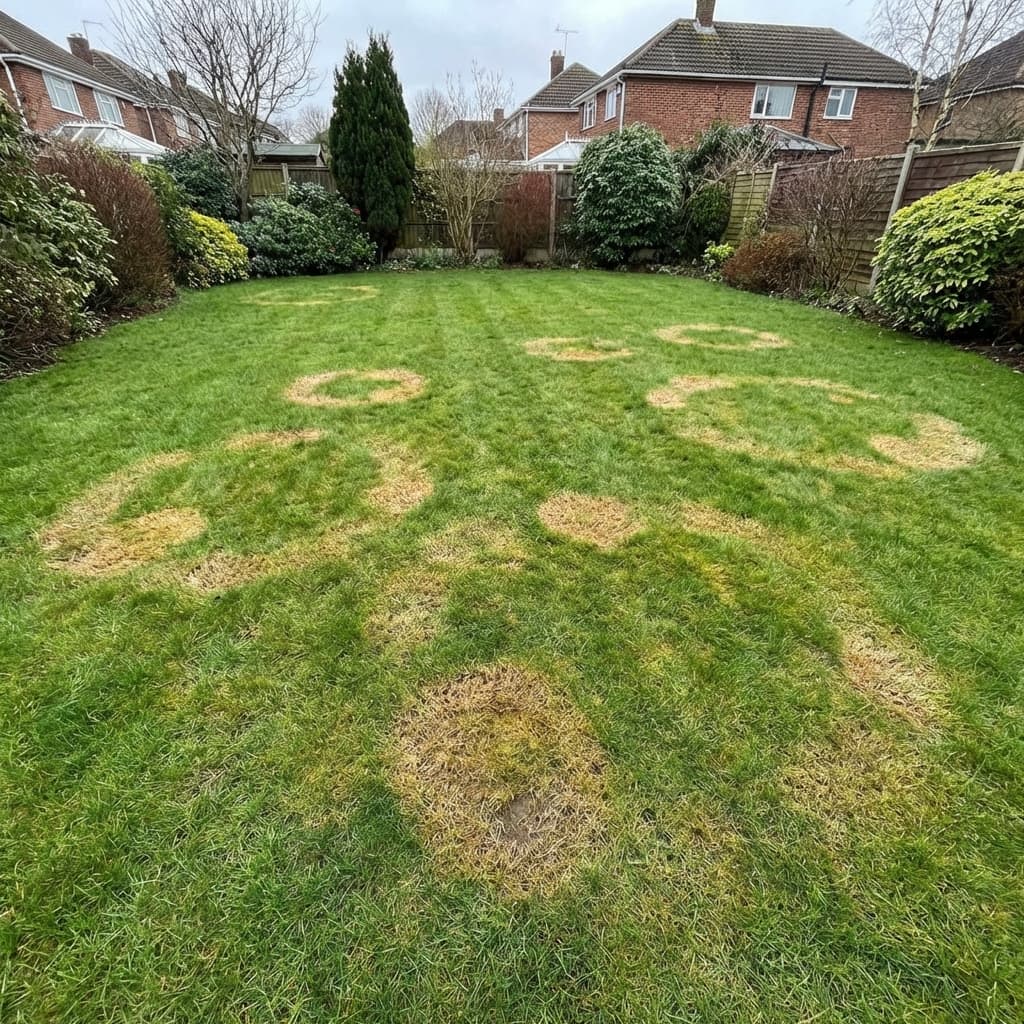
Dollar Spot Fungus in Jacksonville Lawns: Identification and Treatment
Dollar Spot Fungus in Jacksonville Lawns: Identification and Treatment. Review the site, scope and current written quote before deciding.
Let’s talk about your lawn
Ask our AI assistant a lawn question, or send the team a free installation estimate request.