Loading...
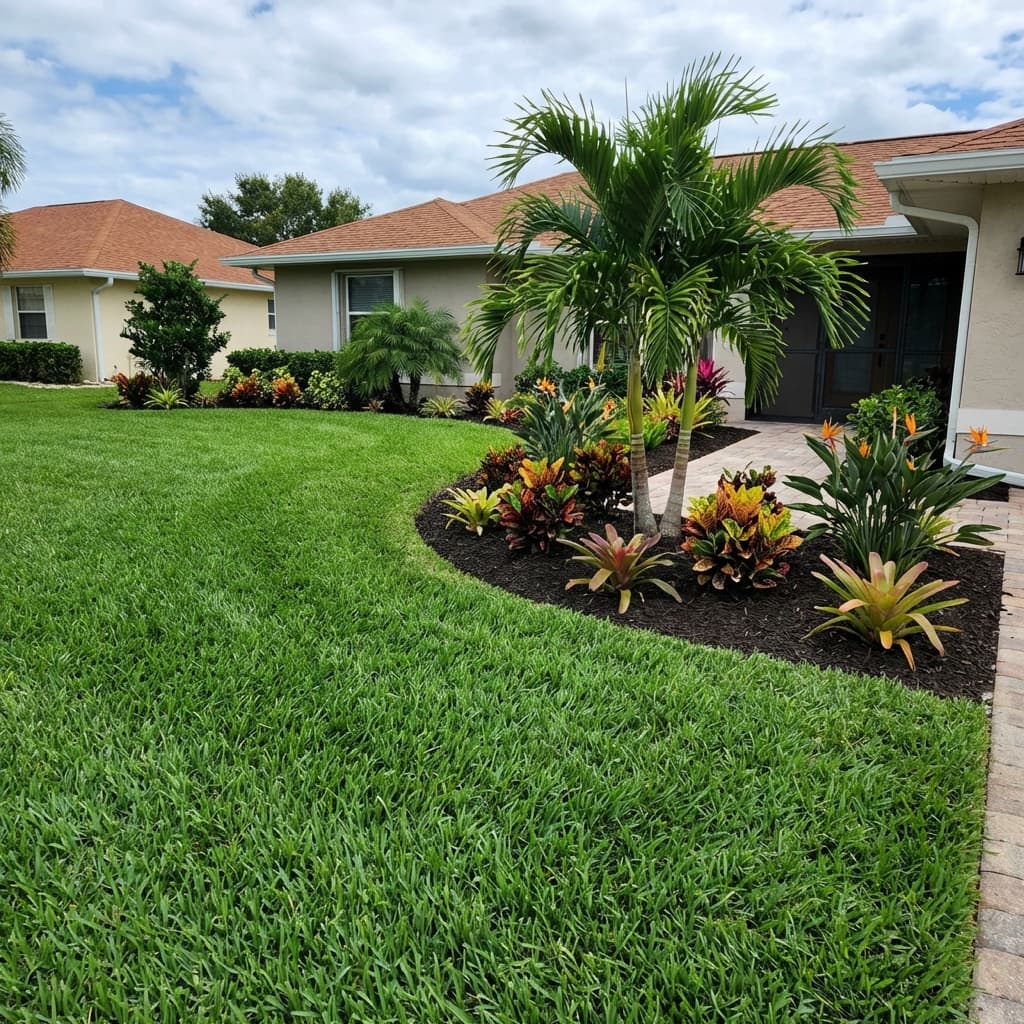
For current costs, compare the exact product or written project scope. See what to include in a sod estimate; this guide does not establish a current price, saving or resale return.
For sod, do not apply fertilizer before planting or as an early establishment shortcut. Follow the reviewed new-sod guidance.
Set irrigation from site conditions and the current rules for your property and water source. For new sod, use the dated care planner; a fixed schedule in an older guide is not permission to water.
If you've spent time researching lawn care online, you've probably seen countless articles about overseeding as a way to thicken your lawn, fill bare spots, and maintain year-round green color. But here's what those generic lawn guides won't tell you: overseeding works very differently in Jacksonville than it does in northern states, and for some of our most popular grass types, traditional overseeding doesn't work at all.
At Jax Sod, we've spent years working with Northeast Florida's unique growing conditions, and we regularly have to explain to homeowners why the overseeding advice they found online doesn't apply to their St. Augustine or Zoysia lawns. The reality is that Jacksonville's warm-season grasses spread primarily through runners (stolons and rhizomes) rather than seed, which fundamentally changes the overseeding equation.
That said, overseeding does have specific applications in Jacksonville lawns—particularly winter overseeding of Bermuda with ryegrass, and certain approaches to thickening Bahia. This guide will walk you through when overseeding makes sense for Jacksonville conditions, provide step-by-step instructions for successful overseeding, and explain your alternatives when overseeding isn't the right solution.
Understanding Warm-Season Grasses and Overseeding
The first thing Jacksonville homeowners need to understand is how warm-season grasses grow and why that affects overseeding success. This isn't just botanical trivia—it's the foundation for making smart lawn care decisions.
How Warm-Season Grasses Spread
The warm-season grasses we grow in Jacksonville—St. Augustine, Bermuda, Zoysia, and Bahia—spread primarily through vegetative growth rather than seed. St. Augustine and Bermuda spread via stolons (above-ground runners), Zoysia spreads through both stolons and rhizomes (underground runners), and Bahia uses rhizomes plus some seed production.
When these grasses are healthy, they naturally fill in bare spots by sending out runners that root at nodes and create new plants. A single healthy Bermuda plant can spread several feet in a single growing season. This vegetative spreading is much more effective than seed germination for filling areas in established lawns.
Why St. Augustine Can't Be Overseeded
Here's a crucial fact that surprises many homeowners: St. Augustine grass, the most popular lawn choice in Jacksonville from Mandarin to Ponte Vedra Beach, isn't available as viable seed. The improved cultivars we plant—Floratam, Palmetto, CitraBlue, ProVista, Seville—don't produce viable seed, and the species doesn't germinate reliably from seed even when it does set seed.
This means if you see bags of "St. Augustine seed" for sale, you're either looking at a scam or a different product entirely. The only way to establish or repair St. Augustine is through sod, plugs, or sprigs. Any company that offers to "overseed your St. Augustine lawn" either doesn't know what they're doing or is being deliberately misleading.
Limited Bermuda and Zoysia Seed Options
While seeded Bermuda and Zoysia varieties do exist, most improved cultivars used in Jacksonville—TifTuf and Celebration Bermuda, Empire and Zeon Zoysia—are proprietary varieties that don't produce seed. Common Bermuda is available as seed, but it has coarser texture and lower quality than improved varieties.
Seeding common Bermuda into an established lawn of improved Bermuda creates a patchwork appearance as the common Bermuda looks and performs differently. Similarly, seeded Zoysia establishes extremely slowly—taking 2-3 years to fill in compared to a single season from sod or plugs.
Winter Overseeding: The Jacksonville Application
The one overseeding application that works well in Jacksonville is winter overseeding of Bermuda lawns with annual ryegrass. This is a common practice on golf courses and sports fields, and some homeowners use it to maintain green color during Bermuda's winter dormancy.
Why Winter Overseed Bermuda
Bermuda grass goes dormant when nighttime temperatures consistently drop below 60°F, typically happening in Jacksonville from mid-November through December. During dormancy, Bermuda turns tan or brown and stops growing until warm weather returns in March or April.
For homeowners who want year-round green lawns, overseeding with annual ryegrass provides temporary winter color. The ryegrass germinates quickly in October's cooler temperatures, grows through winter, then dies back as temperatures warm in April-May, allowing the Bermuda to green up naturally.
Timing Is Critical
The success of winter overseeding depends entirely on timing. In Jacksonville, the optimal window is mid to late October. Plant too early while temperatures are still warm, and the ryegrass struggles to germinate while Bermuda is still actively growing and outcompeting it. Plant too late after Bermuda has fully entered dormancy, and ryegrass establishes slowly without competition.
Specifically, watch for consistent nighttime temperatures in the 60-65°F range. This typically occurs in the second or third week of October across most of Duval, Clay, St. Johns, and Nassau Counties. Coastal areas like Jacksonville Beach and Atlantic Beach may run a week later.
Is Winter Overseeding Worth It?
Before committing to winter overseeding, consider that it's an annual process requiring time and expense each fall, plus it creates a challenging transition period in spring when ryegrass is dying and Bermuda is greening up. Many Jacksonville homeowners decide that brown Bermuda in winter is acceptable given that we have relatively mild winters with only 2-3 months of dormancy.
Winter overseeding makes most sense for:
- Highly visible front lawns where appearance matters year-round
- Properties with events scheduled during winter months
- Homeowners who simply can't stand looking at brown grass
- Areas with heavy winter foot traffic where dormant Bermuda would suffer wear damage
Step-by-Step Winter Overseeding Process
If you've decided winter overseeding makes sense for your Bermuda lawn, follow this process for best results.
Step 1: Scalp the Bermuda (Early October)
About two weeks before overseeding, scalp your Bermuda by gradually reducing mowing height to 0.5-1 inch. This removes leaf canopy that would shade ryegrass seedlings and reduces competition from the Bermuda. Scalping looks drastic—your lawn will appear nearly bare—but it's necessary for successful overseeding.
Bag and remove clippings rather than mulching them. Accumulated clippings create a barrier preventing seed-to-soil contact. After scalping, lightly rake the lawn to remove any remaining debris and dead material.
Step 2: Core Aerate (1-2 Weeks Before Seeding)
Core aerating before overseeding serves multiple purposes: it opens the soil to improve seed-to-soil contact, breaks up any thatch that accumulated during the growing season, and improves water infiltration for better germination.
Aerate when soil moisture is optimal—not bone dry, not saturated. The day after irrigation or light rain is ideal. Make multiple passes in different directions to maximize soil disruption.
Avoid high-nitrogen fertilizers at this stage, as they push leaf growth before roots are established.
Step 4: Seed Selection and Rates
Choose annual ryegrass, not perennial. Annual ryegrass dies reliably when temperatures warm in spring, while perennial ryegrass may persist and compete with Bermuda into summer. Gulf annual ryegrass and Marshall annual ryegrass are common choices that perform well in Florida.
Apply at 10-15 pounds of seed per 1,000 square feet. Heavier rates (toward 15 pounds) create denser coverage but cost more. For a 5,000 square foot lawn, you'll need 50-75 pounds of seed.
Step 5: Seeding Application
Use a broadcast spreader for even distribution. Walk in one direction at half-rate, then make a second pass perpendicular to the first with the remaining half-rate. This ensures uniform coverage without missed strips.
After broadcasting, lightly rake the lawn with a leaf rake to improve seed-to-soil contact. Don't bury the seed—ryegrass germinates best at or near the soil surface.
Step 6: Watering Schedule
This is where most overseeding fails. Ryegrass seed needs consistent moisture to germinate, which means watering multiple times per day for the first 7-10 days.
Water schedule for germination:
Germination typically occurs in 5-7 days in Jacksonville's October temperatures. Once you see green, don't stop watering—seedlings need continued moisture until roots penetrate an inch into the soil.
Step 7: First Mowing
Mow when ryegrass reaches 2.5-3 inches tall, typically 10-14 days after seeding. Set mower height to 2 inches and remove no more than one-third of the leaf blade. As ryegrass fills in, gradually lower mowing height to 1.5 inches for winter maintenance.
Use a sharp mower blade to avoid pulling up seedlings that aren't fully rooted yet.
Spring Transition Management
The challenging part of winter overseeding isn't the fall establishment—it's managing the spring transition when you want ryegrass to die back while Bermuda greens up.
Encouraging Ryegrass Decline
As temperatures warm in April, gradually reduce watering and raise mowing height back to 1.5-2 inches. This stresses the ryegrass (which prefers cool temperatures and moist conditions) while favoring the Bermuda (which thrives in warmth and tolerates drier conditions).
Some homeowners apply low-rate herbicides to suppress ryegrass, but this is risky as it can damage emerging Bermuda. We generally recommend letting nature take its course—as temperatures reach the 80s consistently in late April and May, annual ryegrass dies naturally.
Dealing with Transition Period Appearance
There's usually a 2-3 week period in late April to early May where the lawn looks rough—patchy dying ryegrass mixed with greening Bermuda. This is normal. Resist the urge to overseed bare spots or apply excessive fertilizer trying to green things up faster. The Bermuda will fill in rapidly once temperatures are consistently warm.
Overseeding Bahia for Thickness
Bahia grass is the only common Jacksonville lawn grass that produces viable seed and can be successfully overseeded to increase density. However, Bahia overseeding is less straightforward than northern cool-season grass overseeding.
When Bahia Overseeding Makes Sense
Bahia is typically chosen for its low maintenance requirements and drought tolerance, not for its appearance. It has a coarse texture and open growth habit. Overseeding can somewhat improve density but won't transform Bahia into a fine-textured lawn.
Consider overseeding Bahia when:
- The lawn is thin but the existing Bahia is healthy
- You want to avoid the expense of resodding
- Bare spots resulted from drought stress or traffic but the soil is healthy
- You're willing to wait 8-12 weeks for noticeable improvement
Bahia Overseeding Process
Unlike winter overseeding of Bermuda, you overseed Bahia in late spring to early summer (May-June) when soil temperatures reach 70°F and stay warm.
- Mow existing Bahia short (1.5-2 inches) and remove clippings
- Core aerate or heavily rake to expose soil surface
- Apply Bahia seed (Argentine or Pensacola variety to match existing) at 5-8 pounds per 1,000 square feet
- Rake lightly to improve seed-to-soil contact
- First mowing when grass reaches 3-4 inches, removing no more than one-third
Bahia seed germinates slowly compared to ryegrass, typically taking 14-21 days. Even after germination, growth is slow. You won't see a significantly thicker lawn until 8-12 weeks after seeding.
Alternatives to Overseeding
For many Jacksonville lawns, alternatives to overseeding provide better results with less effort and expense. This is especially true for St. Augustine, improved Bermuda, and Zoysia lawns.
Plugging for St. Augustine
Since St. Augustine can't be overseeded, plugging is the standard method for filling bare spots or increasing density. Plugs are small squares of sod (typically 2x2 or 4x4 inches) installed on 12-inch centers throughout thin areas.
St. Augustine spreads readily from plugs during the growing season (April-September in Jacksonville). A plugged area typically fills in completely within 3-4 months given adequate water and fertilization. This is faster and more reliable than trying to overseed grass types that technically produce seed but establish slowly.
Plugging is another establishment approach to compare with seed or sod. Check suitable cultivars, current availability and care requirements with the supplier.
Sprigging for Large Areas
Sprigging involves planting stolons (runners) at regular intervals. It's more economical than sod for large areas but more work than plugging. Bermuda and Zoysia can be established from sprigs, though it takes most of a growing season to fill in.
Sprigging makes sense for very large areas like commercial properties, sports fields, or rural properties where cost is the primary concern and immediate results aren't necessary. For residential lawns under an acre, the faster results from sod usually justify the higher cost.
Strategic Resodding
Sometimes the best "overseeding" is actually selective resodding of problem areas. If bare spots are caused by underlying issues—poor soil, drainage problems, excessive shade, disease history—spreading seed or plugs over those same conditions just repeats the problem.
We regularly advise homeowners to resod specific trouble areas after addressing the root cause rather than repeatedly trying to establish grass in problematic conditions. Removing 2-3 inches of problem soil, correcting grading or drainage, amending with quality topsoil, then laying fresh sod creates a permanent solution rather than a temporary patch.
Cultural Improvements for Natural Thickening
Often, a thin lawn doesn't need overseeding—it needs better care that allows the existing grass to naturally thicken via runner growth. Before investing in overseeding, plugging, or resodding, ensure you're providing:
- Adequate fertilization (3-5 applications per year for warm-season grasses)
- Proper mowing height (3-4 inches for St. Augustine, 1-2 inches for Bermuda, 1.5-2.5 inches for Zoysia)
- Core aeration every 2-3 years to address compaction
- Proper pH (6.0-7.0 for most grasses) with lime applications if needed
A properly maintained warm-season lawn naturally spreads and fills in bare spots. If yours isn't, the problem is usually environmental or cultural, not lack of seed.
Cost Comparison: Overseeding vs. Alternatives
Making smart decisions about lawn repair requires understanding the true costs of each approach, including both money and time.
Winter Overseeding Costs (Per 1,000 sq ft)
- Annual recurring expense
- Time investment: 4-6 hours initial, 2-3 hours spring transition
Plugging Costs (St. Augustine)
- One-time expense, permanent result
- Time investment: 6-10 hours for 1,000 sq ft
Plugging is labor-intensive but creates lasting improvement without annual repetition.
Resodding Costs
- Immediate results, permanent solution
- Time investment: 8-12 hours for 1,000 sq ft DIY
While resodding has the highest upfront cost, it provides instant results and solves underlying issues when done properly.
Common Overseeding Mistakes
Having helped Jacksonville homeowners with lawn establishment and repair for over three decades, we've seen every possible overseeding mistake. Here are the most common problems and how to avoid them.
Mistake 1: Wrong Season
We regularly see homeowners trying to overseed St. Augustine or Bermuda in spring or summer, having read advice intended for cool-season grasses in northern climates. Overseeding warm-season grasses with warm-season seeds during peak growing season fails because:
- Established grass outcompetes seedlings
- Hot summer temperatures stress germinating seed
Winter overseeding only works because you're planting cool-season grass (ryegrass) during Bermuda dormancy. Trying to overseed active warm-season grass with more warm-season grass doesn't work.
Mistake 2: Inadequate Seed-to-Soil Contact
Spreading seed over a thick canopy of grass or accumulated thatch results in seed sitting on the surface where it dries out, gets eaten by birds, or washes away. Successful overseeding requires that seed contacts bare soil where it can germinate and root.
This is why scalping, raking, and aeration are essential preparation steps, not optional extras.
Mistake 3: Insufficient Watering
Grass seed needs consistent moisture to germinate.
Budget the time for proper watering before starting an overseeding project. If you travel frequently or can't commit to the watering schedule, overseeding isn't the right approach.
Mistake 4: Overseeding Instead of Addressing Problems
Thin, struggling grass is a symptom of underlying problems—poor soil, drainage issues, disease, pest damage, wrong grass type for the conditions. Overseeding over these problems doesn't fix anything. The new grass fails for the same reasons the existing grass is struggling.
Proper diagnosis comes before treatment. If your lawn is thin because of shade, no amount of overseeding will create a thick lawn until you address the shade issue (prune trees, plant shade-tolerant grass, or accept a different landscape design for that area).
Jacksonville's Climate and Overseeding Success
Understanding how Jacksonville's specific climate affects overseeding helps explain why standard overseeding advice often doesn't apply here.
Year-Round Growing Season Benefits
Unlike northern lawns that face short growing seasons, Jacksonville's warm-season grasses grow actively for 7-9 months per year (March through October or November). This extended growing season means our grasses have ample time to spread vegetatively and fill in bare spots naturally.
In northern climates with short summers, overseeding cool-season grasses makes more sense because vegetative spreading is limited. Here, Bermuda can spread several feet in a single season—overseeding is unnecessary when the grass fills in naturally.
Humidity and Disease Pressure
Jacksonville's high humidity (typically 70-90% in morning hours) creates ideal conditions for fungal diseases. The frequent watering required for seed germination during warm months dramatically increases disease risk in established grass surrounding the new seedlings.
This is another reason why plugging or sodding (which require less intensive watering) often produces better results than overseeding in Jacksonville's climate.
Soil Conditions
Our predominantly sandy soils drain quickly, which is good for established grass but challenging for seed germination. Seeds can dry out quickly between waterings. Sandy soil also has limited nutrient-holding capacity, so seedlings need frequent light fertilization.
Conversely, areas with heavier clay subsoils (common in Arlington, parts of Middleburg, and western Clay County) may stay saturated after heavy watering, creating disease risk and soil compaction issues.
Making the Right Choice for Your Jacksonville Lawn
After reading through all the considerations, you may be wondering what's actually right for your specific situation. Here's a decision framework based on grass type and goals.
If You Have St. Augustine:
- Overseeding isn't possible
- Use plugs for filling small to medium bare spots
- Use sod for large areas or when immediate results matter
- Focus on cultural improvements (fertilization, proper mowing, irrigation) to encourage natural spreading
If You Have Bermuda:
- Winter overseeding with ryegrass makes sense only if you want year-round green color and are willing to repeat the process annually
- For thickening summer Bermuda, use sod, sprigs, or simply improve maintenance practices
- Bermuda fills in rapidly when properly maintained—give it a season before investing in overseeding
If You Have Zoysia:
- Overseeding with seed is too slow to be practical
- Plugging works but Zoysia spreads slowly compared to Bermuda or St. Augustine
- Sodding is usually the most effective approach for significant bare areas
- Zoysia's slow growth rate means patience is required regardless of method
If You Have Bahia:
- Overseeding with Bahia seed can increase density but expect slow results over 8-12 weeks
- Best done in late spring to early summer
- Consider whether improving existing Bahia is worthwhile vs. converting to a higher-quality grass type
Conclusion
Overseeding in Jacksonville works differently than the advice you'll find in generic lawn care guides written for northern climates. Our warm-season grasses spread primarily through runners rather than seed, and our most popular grass type—St. Augustine—isn't even available as viable seed.
The key to successful lawn establishment and repair in Northeast Florida is matching the method to your specific grass type, understanding our unique climate challenges, and often choosing alternatives to traditional overseeding. Winter overseeding of Bermuda with annual ryegrass is really the only common application where overseeding makes clear sense, and even then, it's an annual commitment that many homeowners decide isn't worth the effort.
For filling bare spots and increasing density in St. Augustine, Zoysia, and improved Bermuda varieties, plugging or sodding delivers faster, more reliable results than trying to overseed. And often, the best approach isn't adding more grass at all—it's improving the care of existing grass so it naturally thickens through vegetative spreading.
At Jax Sod, we help Jacksonville homeowners choose the right approach for their specific lawn challenges. Whether you need high-quality sod, plugs for repairs, advice on cultural practices, or complete lawn renovation, our local experience means we understand what works in Northeast Florida's unique conditions.
Ready to improve your lawn's density and appearance? We serve all of Duval, Clay, St. Johns, and Nassau Counties with fresh-cut sod and expert installation.
Need Professional Sod Installation?
Jax Sod provides sod installation, sod replacement, and new lawn installation across Jacksonville and Northeast Florida. Free quotes!
Related Articles
5 Signs Your Lawn Needs to Be Replaced (Not Just Repaired)
Is your lawn beyond saving? Learn when it makes more sense to start fresh with new sod instead of fighting a losing battle with repairs.
Arlington Jacksonville Lawn Care
Arlington Jacksonville Lawn Care. Review the site, scope and current written quote before deciding.
August Lawn Care Jacksonville FL: Managing Peak Stress Season
Expert August lawn care tips for Jacksonville's toughest month. Strategies to help your lawn survive extreme heat, humidity, and afternoon storms.
Let’s talk about your lawn
Ask our AI assistant a lawn question, or send the team a free installation estimate request.