Loading...
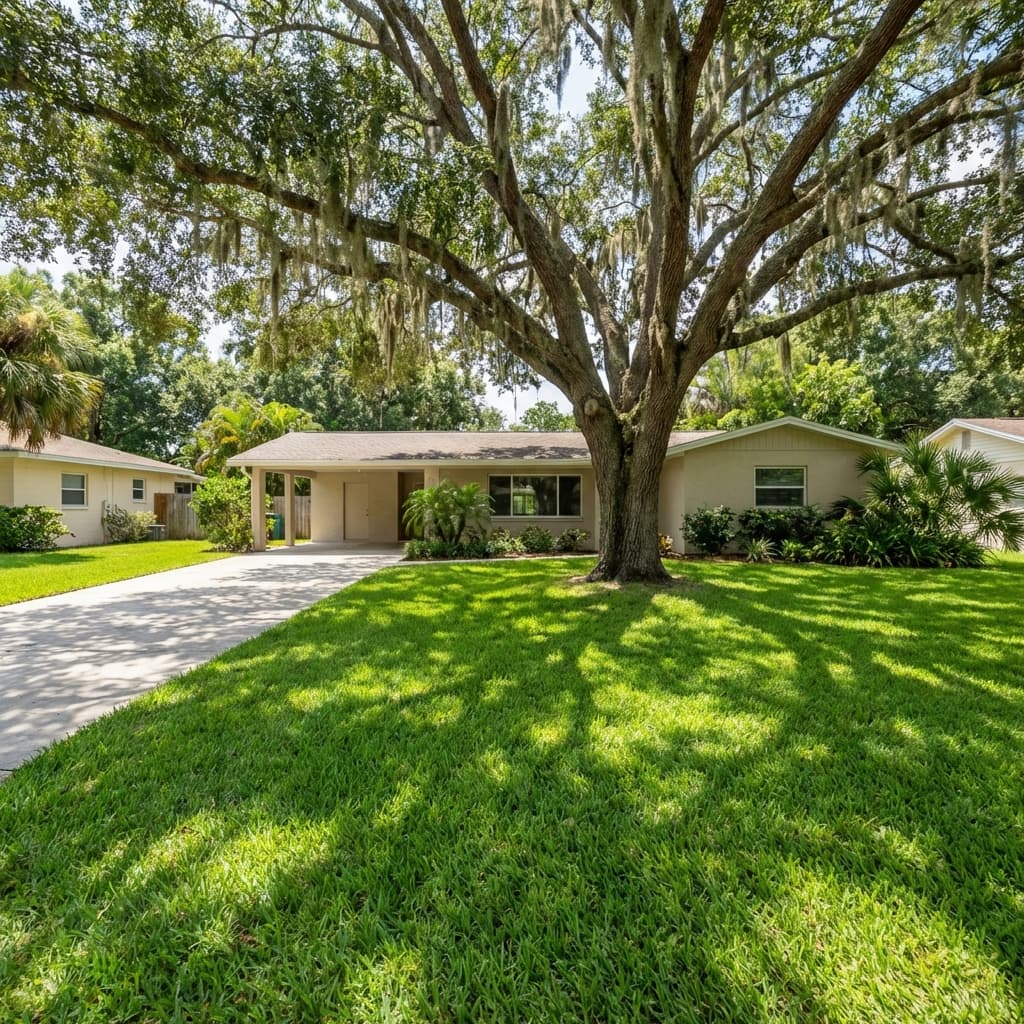
For current costs, compare the exact product or written project scope. See what to include in a sod estimate; this guide does not establish a current price, saving or resale return.
Few pests inspire as much frustration and concern for Jacksonville homeowners as red imported fire ants. These aggressive insects build unsightly mounds throughout lawns, deliver painful stings that can trigger severe allergic reactions, and seem virtually impossible to eliminate permanently. If you've lived in Northeast Florida for any length of time, you've almost certainly had an unpleasant encounter with fire ants while mowing the lawn, working in the garden, or watching children play in the yard.
Red imported fire ants, Solenopsis invicta, arrived in Florida in the 1930s and have since colonized virtually every county in the state, including all of Northeast Florida. Unlike native ant species that are relatively benign, fire ants are highly aggressive, attacking anything that disturbs their mounds. A single colony can contain 200,000-500,000 ants and multiple queens, making eradication of individual colonies difficult and temporary at best.
At Jax Sod, we've spent years helping homeowners across Ponte Vedra, Mandarin, Nocatee, Jacksonville Beach, and throughout Duval, St. Johns, Clay, and Nassau Counties maintain beautiful lawns. Fire ant control is one of the most common concerns we hear about. While complete elimination isn't realistic for most properties, effective management that reduces mound numbers, minimizes stings, and makes your lawn safe and usable is absolutely achievable with the right strategies and consistent effort.
Understanding Red Imported Fire Ants
Red imported fire ants are small, typically one-eighth to one-quarter inch long, and vary in color from reddish-brown to reddish-black. What they lack in size, they make up for in aggression and numbers. Unlike native ants that retreat when disturbed, fire ants swarm out of their mounds in large numbers and attack aggressively.
The characteristic fire ant mound is a dome-shaped pile of loose, fluffy soil with no visible entrance hole on the top. Mounds can reach 18 inches in diameter and 10-12 inches tall, though many are smaller, particularly when young. During hot, dry weather, fire ants often don't build visible mounds at all, instead living beneath objects like landscape timbers, rocks, or thick grass clumps, making them even more difficult to detect and avoid.
Fire ant colonies are highly mobile. If conditions become unfavorable—flooding from heavy rain, disturbance from mowing or foot traffic, or chemical treatment—the colony can relocate to a new location within the same property or to adjacent properties. This is why fire ant control requires area-wide management rather than just treating individual mounds as they appear.
What makes fire ants particularly problematic is their reproductive biology. Mature colonies produce winged reproductive ants that swarm in spring and fall. After mating flights, fertilized queens land and establish new colonies. A single property can be colonized by dozens of new queens annually, creating an ongoing cycle of infestation that requires continuous management.
Identifying Fire Ant Mounds
Not every ant mound in your Jacksonville lawn is a fire ant mound. Several native ant species build mounds that are often confused with fire ants, and proper identification helps you avoid wasting time and money treating non-threatening species.
Fire ant mounds have several distinctive characteristics. The soil is loose and fluffy, almost like coarse flour or sawdust, piled into a dome shape. There's typically no obvious entrance hole on top of the mound—fire ants enter and exit through underground tunnels that surface away from the mound itself.
Disturb the mound gently with a stick or shovel, and fire ants will pour out within seconds, climbing the stick and showing obvious aggression. They'll try to bite and sting anything in contact with the mound. This aggressive swarming behavior is diagnostic—native ants either don't swarm at all or retreat rather than attack.
Look at individual ants carefully. Fire ants have a distinct two-segment petiole, the narrow waist section connecting the thorax and abdomen. The workers vary in size within a single colony, ranging from very small to relatively large, whereas many native ant species have more uniform worker sizes.
Native ant mounds, in contrast, often have a visible entrance hole at the top and less fluffy soil. Native harvester ants create large mounds with cleared areas around them but don't swarm aggressively like fire ants. Native pyramid ants build distinctive crater-shaped mounds with a central entrance. These species may bite if directly threatened but don't display the swarming aggression characteristic of fire ants.
Jacksonville Pro Tip: Fire ant mounds are most visible after rain when colonies rebuild mounds above the softened, moist soil. This is actually an ideal time to treat because the entire colony is active and workers will quickly carry bait into the colony.
Health Risks and Why Control Matters
Fire ant control isn't just about aesthetics or convenience—it's a legitimate health and safety concern, particularly for families with young children, elderly individuals, or anyone with allergies.
Fire ant stings are painful immediately, producing a burning sensation that gives fire ants their name. Within 24 hours, stings develop into characteristic white pustules that itch intensely and can become infected if scratched. Most people experience local reactions affecting only the sting sites, but these reactions are still painful, unsightly, and can interfere with normal activities.
Approximately 0.5-5 percent of the population experiences severe allergic reactions to fire ant stings, ranging from extensive local swelling to potentially life-threatening anaphylaxis. For these individuals, fire ant stings aren't just painful—they're dangerous and require immediate medical attention. Even non-allergic individuals stung multiple times by swarming fire ants can experience systemic reactions from the sheer volume of venom injected.
Young children playing in yards are particularly vulnerable. They're less aware of fire ant mounds and more likely to sit or fall directly onto mounds, resulting in dozens or hundreds of stings. Infants and toddlers who can't communicate what's happening or escape quickly face the highest risk of severe reactions.
Fire ants also damage lawns and landscapes beyond the unsightly mounds. Their tunneling activities can damage plant roots, and large colonies can effectively kill grass in the immediate mound area. Fire ants are attracted to electrical equipment and have been known to damage irrigation controllers, outdoor lighting, and even air conditioning units.
For all these reasons, effective fire ant control in Jacksonville lawns isn't optional—it's a necessary part of maintaining a safe, functional outdoor living space.
The Two-Step Method for Fire Ant Control
The most effective approach to fire ant management, recommended by UF/IFAS Extension and proven effective across Jacksonville and all of Northeast Florida, is the two-step method combining broadcast bait applications with individual mound treatments.
This integrated strategy addresses both existing colonies and newly establishing colonies simultaneously. Broadcast baits reduce overall fire ant populations across your entire property, while individual mound treatments quickly eliminate specific colonies causing immediate problems. Using both approaches together provides better long-term control than either method alone.
Step One: Broadcast Bait Application
Broadcast baits are granular products containing an insecticide mixed with a food attractant, typically soybean oil or other fats that fire ant workers find irresistible. Workers collect the bait and carry it back to the colony, where it's distributed to other workers, larvae, and queens. Over several weeks, the insecticide kills the colony from within.
The most effective broadcast baits for Jacksonville use hydramethylnon, fipronil, or indoxacarb as active ingredients. Popular brands include Amdro, Over-N-Out, Award, and various generic formulations. These products provide season-long control when applied properly.
Apply broadcast baits in spring and fall for best results. For Jacksonville, ideal timing is late March or April and again in September or October. These periods coincide with peak fire ant foraging activity when temperatures are moderate and ants are actively searching for food.
Application technique is critical for success. Apply baits when ground and grass are dry and no rain is forecast for at least 24 hours. Moisture causes baits to mold and become unpalatable before ants can collect them. Use a broadcast spreader to distribute bait evenly across the entire lawn at the rate specified on the label, typically 1-2 pounds per acre or 1-5 pounds per 5,000 square feet depending on formulation.
Do not water in broadcast baits—the whole point is for worker ants to find and collect the dry granules. Watering dissolves the bait and makes it unavailable to ants. Simply broadcast the product and leave it. Within hours, foraging workers will begin collecting bait granules and taking them back to colonies.
Results from broadcast baits appear slowly, taking 3-6 weeks to significantly reduce mound numbers. This delayed action frustrates some homeowners, but it's actually how the product works properly. The insecticides used in baits are slow-acting specifically to allow time for workers to distribute the bait throughout the colony before they die. Fast-acting products would kill foraging workers before they could bring bait back to the colony, defeating the purpose.
Broadcast bait applications are preventive and suppressive rather than curative. They reduce new colony establishment, eliminate small, not-yet-visible colonies, and gradually reduce overall fire ant populations across your property. For existing large mounds causing immediate problems, you need the second step.
Step Two: Individual Mound Treatment
For visible mounds requiring quick elimination, individual mound treatments provide fast control. These are more expensive per mound than broadcast baits but work within 24-48 hours, making them ideal for colonies in high-traffic areas or those posing immediate threats.
Several types of individual mound treatments are available for Jacksonville homeowners. Granular products, such as those containing bifenthrin, lambda-cyhalothrin, or permethrin, are sprinkled over and around the mound, then watered in according to label directions. The insecticide percolates through the mound, killing ants on contact and leaving residual control.
For granular mound treatments, apply 2-5 tablespoons of product per mound, distributing it evenly over the mound and 2-3 feet around the mound's base. Immediately water the product in with at least 1-2 gallons of water per mound. The water moves the insecticide down into the colony tunnels where ants live. Colonies begin dying within hours, and visible activity ceases within 24-48 hours.
Liquid drenches provide even faster control. Mix a concentrated insecticide according to label directions and apply 1-2 gallons per mound, thoroughly saturating the mound and surrounding soil. The liquid floods the colony chambers, contacting and killing ants directly. Drenches work fastest but require mixing and careful application.
Bait-based mound treatments, different from broadcast baits, are concentrated formulations applied directly to individual mounds. These work slower than contact insecticides—typically 1-2 weeks—but are very effective for stubborn colonies. Apply according to label directions, usually sprinkling 3-5 tablespoons around the mound perimeter without disturbing the mound. Workers collect the bait and bring it into the colony.
The key to successful mound treatment is thoroughness. Applying product to just the visible mound often misses much of the colony, which can extend 2-3 feet underground and several feet laterally from the visible mound. Always treat the entire area around the mound as specified on product labels.
Best Products for Jacksonville Fire Ant Control
Jacksonville garden centers and home improvement stores offer dozens of fire ant control products. Knowing which products provide reliable results helps you make informed choices.
Broadcast Baits
Amdro is one of the most widely available and effective broadcast baits, using hydramethylnon as the active ingredient. It works slowly over 3-4 weeks, providing season-long control with proper application. Amdro is available in several formulations, including standard broadcast bait and a fire ant-specific formula.
Extinguish Plus combines two active ingredients—methoprene, an insect growth regulator, and hydramethylnon. The methoprene prevents queens from producing viable eggs, attacking the colony's reproduction while the hydramethylnon kills workers. This combination provides both immediate population reduction and long-term colony suppression.
Come and Get It is a newer broadcast bait using spinosad, an organic active ingredient acceptable for use in organic production. It works more slowly than conventional baits but provides effective control with lower environmental impact.
Generic fire ant baits containing fipronil or indoxacarb are widely available at lower cost than name brands. These provide comparable effectiveness if applied correctly. Check the active ingredient and follow label directions regardless of brand name.
Granular Mound Treatments
Orthene Fire Ant Killer, containing acephate, provides fast knockdown of individual mounds. Apply the granular product, water it in, and the colony dies within 24-48 hours. Orthene is among the faster-acting granular options.
Bifenthrin-based granular products, available under numerous brand names, provide excellent mound control and residual activity. These synthetic pyrethroid insecticides work on contact and leave residual control lasting several weeks.
Lambda-cyhalothrin and permethrin products offer similar performance to bifenthrin at varying price points. All synthetic pyrethroids kill on contact and provide residual control.
Liquid Mound Treatments
Liquid formulations of bifenthrin, permethrin, cyfluthrin, and other pyrethroids provide fast mound elimination. Mix concentrate according to label directions and drench individual mounds thoroughly. These products work within hours and are highly effective for stubborn colonies.
Fipronil-based liquid products, such as Termidor, are extremely effective fire ant killers, though some formulations are restricted to professional use only. Check product labels to ensure the formulation is approved for homeowner use if you're applying it yourself.
Timing Fire Ant Treatments in Jacksonville
Successful fire ant control depends heavily on timing. Treating during optimal periods increases effectiveness while reducing the amount of product needed and lowering costs.
Spring application, typically late March through April, targets colonies as they emerge from winter dormancy and begin rapid expansion. Fire ants are actively foraging, workers readily collect baits, and colonies haven't yet produced the summer's crop of reproductive ants. Treating in spring provides control throughout the spring and summer months when you're using your lawn most.
Fall application, September through October, catches colonies as they prepare for winter and build up food reserves. Like spring, fall temperatures promote active foraging and bait collection. Fall treatments provide control through fall and winter and reduce the number of colonies that survive to reproduce the following spring.
Avoid treating during the hottest summer months, June through August, or the coldest winter periods, December through February. During temperature extremes, fire ants reduce foraging activity and stay deep in their colonies, making baits less effective. They also move mound locations more frequently during these periods, making individual mound treatments less effective as colonies relocate shortly after treatment.
For individual mound treatments, treat any time you see problem mounds, regardless of season. These targeted treatments work even during less-than-optimal seasons, particularly liquid drenches that directly contact ants rather than relying on foraging behavior.
Monitor weather carefully. Avoid treating if rain is forecast within 24 hours for broadcast baits or within 2-3 hours for individual mound treatments. Rain before products have time to work reduces effectiveness significantly.
Jacksonville Pro Tip: Reapply broadcast baits every 4-6 months for continuous control. A spring application in April and a fall application in September or October provides year-round suppression of fire ant populations.
Organic and Low-Impact Control Options
For Jacksonville homeowners preferring organic or reduced-risk approaches, several options provide fire ant control without conventional synthetic insecticides, though effectiveness and speed generally lag behind conventional products.
Spinosad-based baits, such as Come and Get It, are derived from soil bacteria and acceptable for organic production. Spinosad works more slowly than conventional baits but provides good control over 4-6 weeks. Apply as a broadcast bait using the same techniques as conventional baits.
Beneficial nematodes can suppress fire ant populations when applied correctly. These microscopic parasitic worms seek out and infect fire ant larvae and pupae. Mix nematodes with water and drench mounds thoroughly. Results are variable and depend heavily on soil temperature, moisture, and application technique. Reapply monthly during warm months for best results.
Diatomaceous earth, a fine powder made from fossilized algae, kills insects by abrading their exoskeletons and causing dehydration. Dust diatomaceous earth around mounds and in areas of ant activity. It works slowly and loses effectiveness when wet but provides some suppression of foraging activity. Use food-grade diatomaceous earth for safety around children and pets.
Boiling water is the simplest organic control method. Pour 2-3 gallons of boiling water directly into the center of the mound, working quickly to minimize the risk of stings. Boiling water kills ants on contact and can eliminate colonies if you successfully drench the queen chambers. The challenge is that queens often reside 18-24 inches below the surface, deeper than boiling water penetrates effectively. Success rates vary from 20-60 percent depending on colony size and structure.
Orange oil products, containing d-limonene extracted from citrus peels, provide contact killing of fire ants. These products work quickly but have minimal residual activity. They're best used for spot treatments of small mounds or as a supplement to other methods.
Organic approaches generally require more frequent applications, more labor, and accept lower success rates compared to conventional products. They're most appropriate for small, manageable properties where chemical use is a primary concern and some ongoing fire ant presence is acceptable.
Why Home Remedies Don't Work
Despite numerous folk remedies circulating through Jacksonville neighborhoods and online, most home remedies for fire ants are ineffective, wasteful, dangerous, or counterproductive.
Pouring gasoline on fire ant mounds is dangerous, illegal in most situations, harmful to grass and soil, and often ineffective. The gasoline kills ants it contacts but rarely reaches the queen deep in the colony. Meanwhile, you've contaminated soil, created a fire hazard, and killed your grass. Never use gasoline or other petroleum products for fire ant control.
Grits are a persistent myth. The theory is that fire ants eat grits, the grits expand in their stomachs, and they explode. In reality, fire ants don't eat solid food—they consume only liquids. Workers collect food sources, bring them back to the colony, and feed liquids to larvae. The larvae digest food and regurgitate it for adults. Grits simply aren't a food source fire ants will collect or consume.
Club soda, instant rice, cornmeal, and other food items suffer the same problem as grits—fire ants won't consume them in quantities that cause harm, if they collect them at all. These approaches waste time while fire ant colonies continue expanding.
Dish soap mixed with water provides minimal control. While soap solutions can kill individual ants on contact, they don't penetrate deep enough into colonies to reach queens, and they provide no residual control. The colony rebuilds quickly after surface workers are killed.
Simply disturbing mounds by stirring or digging doesn't eliminate colonies—it just forces them to relocate, often to a location nearby. You've wasted effort and likely gotten stung in the process without actually solving the problem.
Protecting Children and Pets
Fire ant control takes on added urgency when you have children or pets using your lawn. Several strategies help protect vulnerable family members while you implement control measures.
Treat high-traffic areas first. Prioritize individual mound treatments in play areas, around swing sets and playgrounds, near entrances and walkways, and in areas where children and pets spend time. These targeted treatments eliminate immediate threats while broadcast baits work on overall population reduction.
Teach children to recognize fire ant mounds and avoid them. Even young children can learn that dome-shaped dirt piles are dangerous and should be reported to parents rather than disturbed. Regular yard inspections with children help them learn identification skills.
Keep pets on leashed walks when fire ant activity is high, particularly in spring and fall. Dogs and cats investigating mounds or lying in grass can be swarmed and severely stung. Watch for signs of distress—sudden yelping, frantic pawing at the face or body, or rolling on the ground—that might indicate fire ant attack.
After applying fire ant control products, follow label directions regarding re-entry intervals for children and pets. Most broadcast baits can be applied with people and pets remaining nearby—the granules aren't attractive or toxic to mammals in the small quantities used. Individual mound treatments, particularly liquid drenches, may require keeping children and pets away from treated areas for several hours until products dry.
If stings occur, remove the victim from the mound area immediately, brush off any ants still on skin or clothing, and wash sting sites with soap and water. Apply cold compresses to reduce pain and swelling. Over-the-counter antihistamines and hydrocortisone cream help reduce itching and inflammation. Watch for signs of severe allergic reactions—difficulty breathing, rapid swelling beyond the sting sites, dizziness, or nausea—and seek immediate medical attention if these occur.
Florida's Ongoing Fire Ant Management
Understanding the broader context of fire ant control in Florida helps set realistic expectations. Fire ants are an established, widespread invasive species that aren't going away. Management, not eradication, is the realistic goal.
The University of Florida Institute of Food and Agricultural Sciences, UF/IFAS Extension, conducts ongoing research into fire ant control methods, products, and strategies. Their recommendations, available through county extension offices and online, provide science-based guidance for homeowners throughout Jacksonville and Northeast Florida.
State and federal agencies have released several biological control agents targeting fire ants in Florida, including phorid flies that parasitize fire ant workers and microsporidian pathogens that weaken colonies. While these biological controls have established in some areas, they provide only partial suppression and haven't eliminated fire ant problems.
Some newer fire ant research focuses on genetic approaches, pheromone disruption, and RNA interference technologies that could provide more effective long-term control. However, these approaches are still in research phases and aren't available for homeowner use.
The reality is that fire ant control in Jacksonville requires ongoing effort. There's no single treatment that eliminates fire ants permanently. Success comes from consistent application of the two-step method, treating twice yearly with broadcast baits and addressing individual mounds as they appear.
Professional Fire Ant Control Services
While many Jacksonville homeowners successfully manage fire ant populations using the two-step method, professional services offer advantages for large properties, severe infestations, or those who prefer to outsource this task.
Professional lawn care companies typically offer fire ant control as part of comprehensive lawn care programs. They apply broadcast baits 2-4 times per year using commercial-grade products and equipment, ensuring proper coverage and timing. Many companies also include individual mound treatments as needed at no additional cost or minimal cost.
Professional applicators have access to restricted-use products not available to homeowners. These professional-use formulations often work faster, last longer, or provide better control than homeowner products. Certified applicators also carry proper licensing and insurance, protecting you from liability.
For properties with extensive fire ant problems, professional consultation can identify contributing factors and develop comprehensive management plans. Issues like poor drainage, disturbed soil from construction, or nearby vacant properties with unmanaged fire ant colonies all influence fire ant pressure on your property.
When you factor in product costs, time, and expertise required for DIY control, professional services are often cost-competitive, particularly for larger properties.
Don't Let Fire Ants Control Your Jacksonville Lawn
Fire ants are a persistent challenge for every Jacksonville homeowner, but they don't have to prevent you from enjoying your outdoor spaces. With consistent application of the two-step method—broadcast baits twice yearly combined with individual mound treatments as needed—you can reduce fire ant populations to manageable levels and minimize the risk of painful stings to your family and pets.
Success with fire ant control comes from understanding that this is an ongoing management process, not a one-time fix. Fire ants will continue attempting to colonize your property, but regular broadcast bait applications create an inhospitable environment that prevents most colonies from establishing. Individual mound treatments quickly eliminate the colonies that do establish, keeping your lawn safe and usable.
The investment in fire ant control products and time pays dividends in safety, usability, and peace of mind. Children can play in the yard, you can work in your garden, and everyone can enjoy Jacksonville's beautiful weather without fear of sudden, painful fire ant attacks.
Ready to take control of fire ants in your Jacksonville lawn or need help renovating areas damaged by fire ant mounds? Our team brings years of experience helping Northeast Florida homeowners maintain beautiful, safe, functional lawns, and we're here to help you win the battle against fire ants.
Need Professional Sod Installation?
Jax Sod provides sod installation, sod replacement, and new lawn installation across Jacksonville and Northeast Florida. Free quotes!
Related Articles
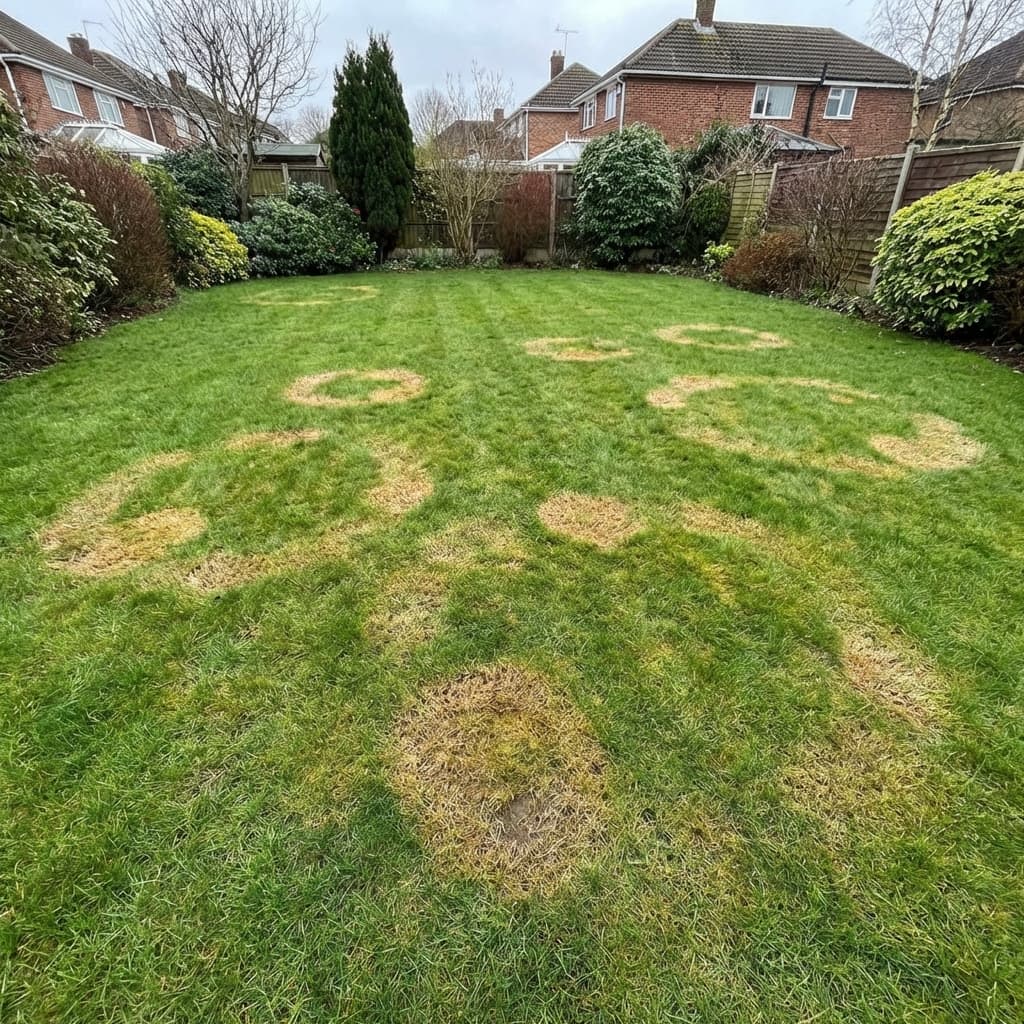
Armyworm Damage in Jacksonville Lawns: Detection and Control
Armyworm damage Jacksonville lawn problems peak August-November. Learn to detect fall armyworms, conduct soap flush tests, and apply effective treatments fast.

Dollar Spot Fungus in Jacksonville Lawns: Identification and Treatment
Dollar Spot Fungus in Jacksonville Lawns: Identification and Treatment. Review the site, scope and current written quote before deciding.

Proper Mowing Height for Jacksonville Lawns
Proper Mowing Height for Jacksonville Lawns. Review the site, scope and current written quote before deciding.
Let’s talk about your lawn
Ask our AI assistant a lawn question, or send the team a free installation estimate request.