37+ Years of Professional Sod Installation(904) 901-1457
Chinch Bugs in Florida Lawns: Identification, Treatment, and Prevention
November 10, 2024
11 min read
Lawn Problems

Chinch Bugs in Florida Lawns: Identification, Treatment, and Prevention

Those dead patches expanding across your St. Augustine lawn probably aren't drought stress. Learn to identify chinch bug damage and stop infestations before they destroy your entire yard.

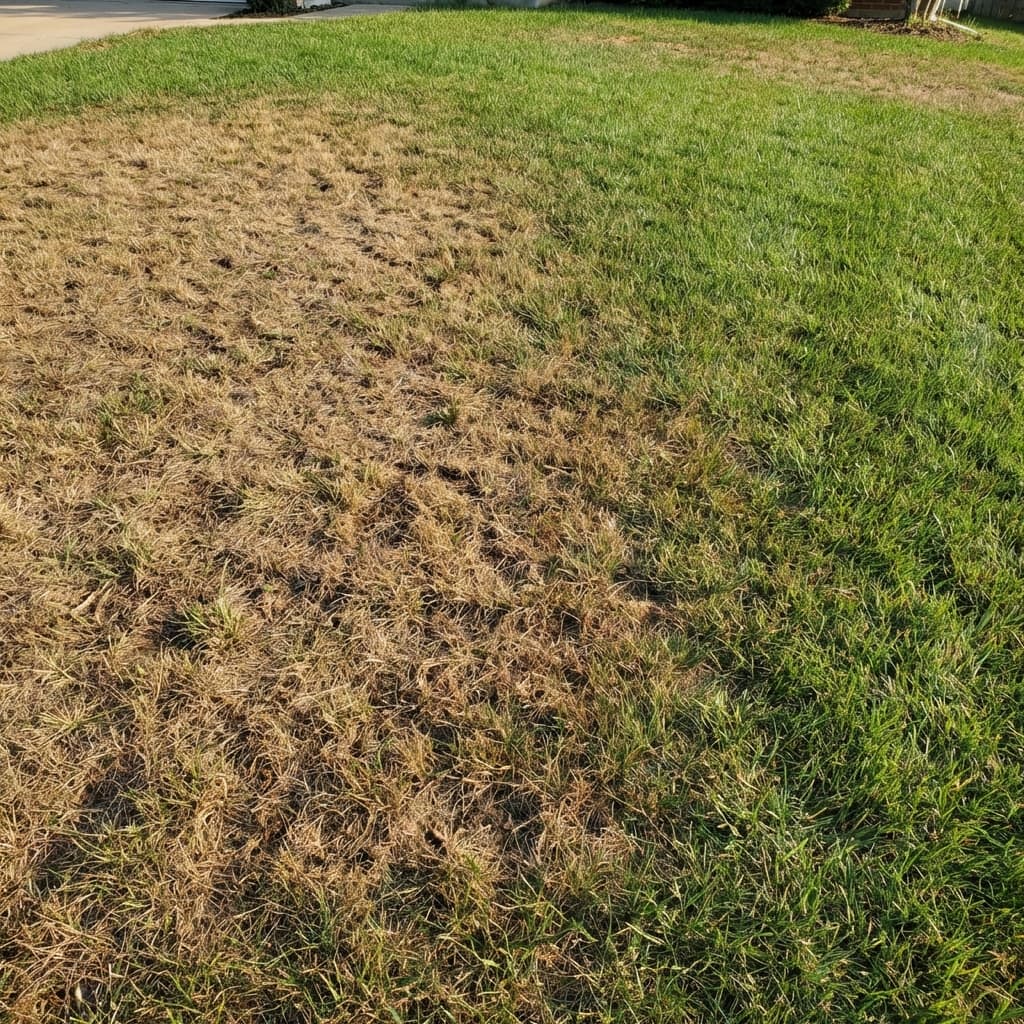
It starts with a patch—a circle of yellowing grass, maybe the size of a dinner plate, somewhere in the sunniest part of your lawn. You assume it's dry and water it more aggressively. The yellow turns brown, the brown turns to dead, and the circle keeps growing. By the time you realize something else is happening, the patch is the size of a car, and you can see your neighbor's lawn through the hole where turf used to be.

This is chinch bug damage, and it's the most destructive lawn pest in Northeast Florida. Every year, these tiny insects destroy millions of dollars worth of St. Augustine grass across our region. The damage is often misdiagnosed as drought stress, fungal disease, or fertilizer burn until it's too late for the affected area to recover.

Understanding chinch bugs—how they attack, how to identify them, and how to stop them—can save your lawn from becoming another casualty.


Meet the Enemy: The Southern Chinch Bug

The southern chinch bug (Blissus insularis) is a tiny insect, less than a quarter inch long as an adult, with a distinctive black body and white wings folded flat across its back. Nymphs (immature chinch bugs) are even smaller and pass through several color stages as they mature—from reddish-orange to dark red to almost black.

Size makes chinch bugs easy to overlook. You won't see individuals from a standing position. Even on hands and knees, you might mistake them for random debris unless you know what you're looking for. But while each individual is tiny, populations can explode into the tens of thousands per square foot in heavily infested areas.

How Chinch Bugs Kill Grass

Chinch bugs are sap-sucking insects. They insert their piercing mouthparts into grass stems and leaves, withdrawing the plant's fluids. But the physical damage from feeding isn't what kills the grass—it's what the bugs inject.

As chinch bugs feed, they secrete a toxin into the plant tissue. This toxin blocks the plant's vascular system, preventing water and nutrients from moving through the grass blade. Even if you water heavily, the plant can't transport that water to its leaves. The blade turns yellow, then straw-colored, then brown as it desiccates from the inside.

This toxin effect is why chinch bug damage looks like drought stress but doesn't respond to irrigation. It's also why damage spreads so characteristically: bugs at the edge of the infestation are feeding on healthy grass while the center is already dead.

🔍 Key ID Clue: If it looks like drought stress but doesn't respond to watering, it's probably chinch bugs. Look for expanding circles of dead grass in sunny areas.


Identifying Chinch Bug Damage

Accurate identification is crucial because the wrong diagnosis leads to the wrong treatment. Spraying fungicide on a chinch bug infestation wastes money and time while the bugs continue destroying grass.

Visual Pattern Recognition

Chinch bug damage follows a distinctive pattern:

Location: Damage almost always begins in the hottest, sunniest, and driest parts of the lawn. South-facing slopes, areas adjacent to concrete driveways or sidewalks (which radiate heat), and sections far from sprinkler heads are typical starting points.

Shape: Initial patches are roughly circular, starting at 1-2 feet across and expanding outward. As populations grow, multiple patches may merge into irregular shapes that can cover entire lawn sections.

Progression: Healthy grass at the margins transitions to yellow, then straw-colored, then dead over a distance of just a few inches. This distinct "ring of decline" around dead areas is a signature of active chinch bug feeding.

Timing: Damage typically appears from late spring through early fall, corresponding with hot weather and active bug reproduction. Peak damage occurs in July through September.

Confirming With the Flotation Test

Visual patterns suggest chinch bugs, but confirmation requires finding the insects themselves. The flotation test is a simple, reliable method:

  1. Cut both ends off a large metal can (a coffee can works well) to create a cylinder.

  2. Push the cylinder 2-3 inches into the soil at the edge of a damaged area—in the yellow zone, not the dead center.

  3. Fill the cylinder with water to the top. Refill as the water soaks in; maintain the pool for 5-10 minutes.

  4. Watch the water surface. Chinch bugs will float up to escape drowning. If you see small bugs (black adults, red nymphs) accumulating on the water, you've confirmed your diagnosis.

A single bug isn't necessarily an infestation—some baseline population is normal. But if you see 15-20+ bugs floating up in a single can test, you have a population that requires treatment.

✅ The Flotation Test: Coffee can + water + 5 minutes = confirmation. If 15+ bugs float up, you have an actionable infestation.


Understanding Why Your Lawn Was Targeted

Chinch bugs can attack any St. Augustine lawn, but certain conditions make infestations more likely and more severe.

Stress Factors

Drought-stressed grass is more vulnerable to chinch bugs. Wilted grass contains concentrated sugars (the plant has less water to dilute its sap), which makes it more nutritious to sap-sucking insects. Stressed grass also has less biological energy available to recover from feeding damage, so the same insect pressure causes more visible harm.

Heat compounds these effects. Both the insects and the stress increase as temperatures rise, which is why mid-summer represents the peak danger period.

Thatch Accumulation

Chinch bugs live in the thatch layer—the spongy zone of dead organic matter between grass blades and soil. Dense thatch provides shelter from predators, insulating material for winter survival, and hiding places for eggs and nymphs.

Lawns with heavy thatch (over 3/4 inch) develop larger chinch bug populations because the habitat favors their reproduction. Conversely, lawns with minimal thatch are more exposed to natural predators like big-eyed bugs and parasitic wasps that keep chinch populations in check.

Previous Infestation History

Chinch bugs don't migrate long distances. If your lawn had them last year, residual populations likely survived in the thatch and will rebuild this year. Sites with repeated infestations often have conditions (exposure, thatch, irrigation deficits) that favor chinch bugs structurally.


Treatment: Eliminating an Active Infestation

Once you've confirmed chinch bugs, treatment becomes time-sensitive. Every day of delay means a larger dead zone and a longer recovery period.

Chemical Control

Insecticides remain the most reliable method for stopping active infestations. Several products are effective:

Bifenthrin (Talstar, Bifen): A synthetic pyrethroid available in liquid and granular formulations. It provides fast knockdown and 30+ days of residual control. This is the most commonly used active ingredient for chinch bug control.

Carbaryl (Sevin): An older chemistry that's still effective. It breaks down faster than bifenthrin (shorter residual) but is widely available and reasonably priced.

Imidacloprid (Merit, Bayer Insect Control): A systemic insecticide absorbed by the grass and lethal to insects that feed on it. It acts more slowly than contact insecticides but provides longer-lasting protection.

For active infestations, many professionals use a combination approach: a contact insecticide (bifenthrin) for immediate knockdown plus a systemic (imidacloprid) for residual protection. This kills the current population and protects against rebound.

Application Tips

Coverage is critical. Chinch bugs hide in thatch, so spray or granular applications must penetrate to the soil surface, not just coat the top of the grass. Use sufficient water volume to drive the product down, and irrigate lightly after granular applications.

Treat beyond visible damage. Bugs at the expanding edge of an infestation are feeding on what still looks like healthy grass. Extend your treatment zone at least 10 feet beyond any visible damage.

Retreat if needed. Check treated areas 7-10 days after application. If you still find active bugs via flotation test, apply a second treatment. Heavy infestations may require multiple rounds.

What About Organic Options?

Organic insecticides like pyrethrin (derived from chrysanthemums) or spinosad (derived from soil bacteria) can kill chinch bugs but have significant limitations: short residual activity, reduced effectiveness in thatch, and higher cost per application. For large or severe infestations, synthetic insecticides are substantially more reliable.


Recovery: Replacing Dead Turf

Chinch bug treatment stops the damage from spreading, but it doesn't resurrect dead grass. Once turf crosses from yellow to straw-brown, the crowns are dead and the grass won't recover. You'll need to repair or replace the affected areas.

Small Patches (Under 3 feet)

Small dead patches may fill in naturally if surrounding grass is healthy. St. Augustine spreads via stolons, and vigorous turf can creep into bare spots over 6-12 weeks during the growing season. Keep the damaged area well-watered and fertilize lightly to encourage stolon extension.

If natural fill-in is too slow, you can transplant plugs from healthy areas of your lawn or purchase flats of sod plugs from a nursery.

Large Damaged Zones

For damage larger than a few feet in diameter, sodding is usually the most practical solution. Waiting for natural fill-in takes months and leaves bare soil exposed to weed colonization.

Before installing new sod on previously infested areas, ensure the treatment has eliminated all active bugs. Laying fresh sod over a surviving chinch population is just feeding the enemy fresh food.


Prevention: Breaking the Cycle

The best approach to chinch bugs is never having an outbreak in the first place. Preventive strategies reduce populations and make your lawn a less hospitable environment.

Reduce Thatch

Thatch management is the single most effective long-term prevention measure. Core aeration (pulling plugs of soil out of the lawn) is the preferred method for St. Augustine, as power raking can damage stolons.

Annual aeration in spring improves soil oxygen, increases water penetration, and exposes the thatch layer to decomposition. Over time, this reduces the chinch bug habitat.

Irrigate Properly

Both underwatering and overwatering create problems. Drought-stressed grass is more vulnerable to damage; oversaturated grass develops fungal issues. Aim for deep, infrequent irrigation—typically 3/4 inch of water two to three times per week in summer.

Improper sprinkler coverage is a common root cause of chinch damage. Check your system: are there hot spots that dry out between waterings? Those spots become infestation epicenters.

Preventive Treatments

In lawns with chinch bug history, preventive insecticide applications in late spring (May-June) can suppress populations before they explode. Systemic products like imidacloprid work well preventively, creating a treated buffer that kills bugs when they begin feeding.


FAQ: Chinch Bug Questions

Q: Do chinch bugs bite humans?

A: No. Chinch bugs have piercing mouthparts designed for plant tissue; they cannot bite people or pets. You can handle them without concern—though why you'd want to is another question.

Q: Where do chinch bugs come from?

A: They're native lawn residents that reproduce continuously during warm months. Populations build from survivors that overwintered in thatch. Heavy infestations may expand from neighboring properties, but most outbreaks originate within the lawn itself.

Q: Why did my neighbor's lawn survive when mine didn't?

A: Subtle differences in irrigation coverage, thatch depth, or even grass variety can determine whether populations stay at manageable levels or explode. Zoysia and Bermuda grass are less attractive to chinch bugs than St. Augustine, so nearby lawns of different species may be naturally protected.

Q: Can I use beneficial nematodes for control?

A: Research has investigated nematode-based biological control, but results in real-world conditions are inconsistent. The nematodes struggle to survive in Florida's hot, dry conditions and often don't penetrate thatch effectively. They're not a reliable replacement for conventional control during active outbreaks.


Vigilance Is the Price of a Healthy Lawn

Chinch bugs are a permanent part of Florida's lawn ecosystem. You will not eradicate them entirely; you can only manage their populations below damaging levels. This requires ongoing awareness: walking your lawn regularly, recognizing the early signs of damage, and acting quickly when problems appear.

The homeowners who lose lawns to chinch bugs are usually those who didn't notice the problem until patches were massive. Catch an infestation early—when it's still the size of a dinner plate—and you can stop it with minimal treatment and minimal damage. Wait until it's car-sized, and you're looking at hundreds of dollars in sod replacement.

⚠️ Act Fast: A dinner-plate-sized patch = $30 in treatment. A car-sized dead zone = $500+ in sod replacement. Speed is everything.

Worried about your lawn? Contact Jax Sod for a pest evaluation. We'll inspect your turf, identify any active problems, and recommend treatments before minor damage becomes major loss.

Ready to Transform Your Lawn?

Stop guessing and start growing. Our team at Jax Sod has 37+ years of experience helping Jacksonville homeowners create the lawn of their dreams.