Loading...
Back to Articles
Common Lawn Pests in Jacksonville, FL — How to Identify and Treat Them
Pest Control November 12, 2025 9 min read
Jacksonville's warm, humid climate grows great lawns — and great lawn pests. The same conditions that make your grass thick and green also keep bugs active almost year-round, which means pest problems can pop up fast and get expensive if you don't catch them early.
From the sandy soils of Neptune Beach to the clay-heavy areas near the St. Johns River, different pests thrive in different parts of Duval County. Whether you've got newly installed sod or an established lawn, knowing what's eating your grass (and how to stop it) can save you a lot of money and frustration.
Why Jacksonville lawns are pest magnets
Our Zone 9a/9b climate is basically a year-round buffet for lawn pests. High humidity, frequent summer rain, and warm temperatures give bugs ideal breeding conditions. Unlike up north where winter freezes wipe out pest populations, our mild winters let most insects keep going with barely a pause.
Coastal areas add another wrinkle — salt air can weaken grass and make it more vulnerable. If you're near the beach or the St. Johns River, you may deal with different pest pressures than someone in Mandarin or Orange Park.
Identification and Damage Patterns
Chinch bugs are among the most destructive lawn pests in Jacksonville, particularly affecting St. Augustine grass, which is the most popular turfgrass in Northeast Florida. These tiny insects, measuring only 1/6 to 1/5 inch long, can cause devastating damage that's often mistaken for drought stress or fungal disease.
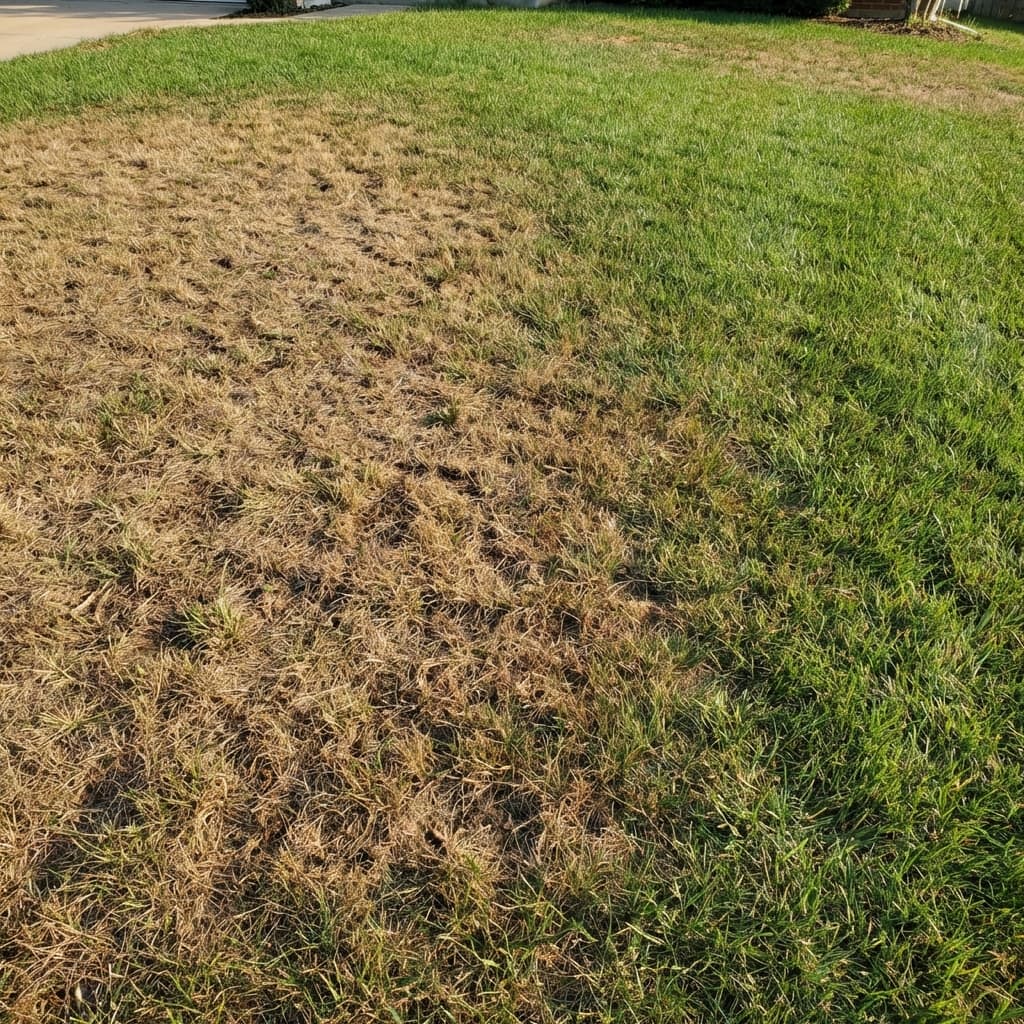
Adult chinch bugs are black with white wings that fold over their backs in an X-pattern. Nymphs start out bright orange-red and gradually darken as they mature. The easiest way to identify chinch bug damage is by the characteristic yellowing and browning pattern they create. Unlike other pests that cause random damage, chinch bugs typically create expanding circular or irregular patches that start small and grow larger over time.
The damage appears as yellowish patches that quickly turn brown and die. These patches often have a distinct border where healthy green grass meets the damaged area. Chinch bugs feed by inserting their needle-like mouthparts into grass blades and sucking out plant juices while simultaneously injecting toxins that cause the grass to wilt and die.
Life Cycle and Active Periods
In Jacksonville's climate, chinch bugs can complete 3-4 generations per year. They're most active during the hottest months, typically from late April through October, with peak activity occurring during June through August when temperatures consistently reach the 80s and 90s.
Adult chinch bugs overwinter in protected areas like mulched beds, tall grass, or debris around the lawn's perimeter. As temperatures warm in spring, they emerge and begin laying eggs in the soil and thatch layer. Each female can lay up to 200 eggs during her lifetime, which explains how populations can explode so quickly.
Treatment Options
Organic Treatments:
- Beneficial nematodes (Steinernema carpocapsae) can be applied to the soil to attack chinch bug nymphs
- Insecticidal soap sprays work on contact but require multiple applications
- Diatomaceous earth can be effective when applied during dry periods
- Encouraging beneficial insects like big-eyed bugs and minute pirate bugs through diverse plantings
Chemical Treatments:
- Bifenthrin-based products provide long-lasting control and prevention
- Imidacloprid applications offer systemic protection for 6-8 weeks
- Pyrethrin-based sprays work quickly but may require more frequent applications
- Granular insecticides work well for large areas and provide extended control
For severe infestations in Jacksonville lawns, professional treatment may be necessary. The key is early detection and treatment before populations explode during the summer heat.
Identification and Damage Signs
Sod webworms are the larval stage of lawn moths that you might notice flying around your yard in the evening. These small, beige or gray moths have a distinctive flight pattern, flying in a zigzag pattern close to the grass surface. While the adult moths don't damage the lawn, their larvae are voracious feeders that can quickly destroy large areas of grass.
The larvae are greenish-brown caterpillars with dark spots and can grow up to 3/4 inch long. They hide in silk-lined tunnels in the thatch during the day and emerge at night to feed on grass blades. Sod webworm damage appears as small brown spots that gradually enlarge and may eventually merge into large irregular dead areas.
One telltale sign of sod webworm activity is finding small green pellets (excrement) on the grass surface, particularly visible in the early morning. You might also notice birds, particularly crows and grackles, actively pecking at your lawn as they hunt for the larvae.
Peak Activity in Northeast Florida
Sod webworms are most active in Jacksonville from late spring through early fall, with peak activity typically occurring in July and August. Unlike some pests that prefer specific grass types, sod webworms will attack all common Jacksonville lawn grasses, including St. Augustine, Zoysia, Bermuda, and Bahia grass.
The moths are attracted to lights, so homes near streetlights or with extensive landscape lighting may experience higher infestations. Areas with thick thatch buildup are particularly susceptible, as the larvae use the thatch for protection during daylight hours.
Treatment Strategies
Organic Approaches:
- Bacillus thuringiensis (Bt) is highly effective against caterpillars and safe for beneficial insects
- Beneficial nematodes can help control larvae in the soil
- Regular dethatching reduces hiding places for larvae
- Encouraging bats and birds that feed on adult moths
Chemical Controls:
- Carbaryl provides quick knockdown of larvae
- Chlorantraniliprole offers excellent control with minimal impact on beneficial insects
- Spinosad-based products are effective and relatively environmentally friendly
- Trichlorfon works well for severe infestations but should be used sparingly
Identification and Damage Assessment
Mole crickets are particularly problematic in Jacksonville due to the sandy soils found throughout much of Northeast Florida. These underground insects create extensive tunnel systems that can damage grass roots and create unsightly raised ridges across your lawn.
Adult mole crickets are 1-2 inches long with powerful front legs adapted for digging. They're brown to grayish-brown in color and have a cylindrical body shape. The most obvious signs of mole cricket activity are the raised tunnel ridges they create as they burrow through the soil searching for food.
Mole cricket damage often appears as irregular dead patches where the insects have severed grass roots while tunneling. Areas near water features, irrigation lines, or naturally moist soil are particularly attractive to these pests. You might also notice small round holes in the soil where the crickets emerge at night.
Seasonal Activity Patterns
In Jacksonville, mole crickets are most active during warm months, with two peak periods: spring (March-May) and late summer/early fall (August-October). Adult crickets emerge from their winter hiding places in spring to mate and lay eggs. The nymphs that hatch continue feeding and growing throughout the summer.
Tawny mole crickets and southern mole crickets are the two species most commonly found in Northeast Florida. Both species can cause significant damage, but southern mole crickets tend to be more destructive to grass roots.
Treatment Methods
Biological Controls:
- Steinernema scapterisci nematodes are specifically effective against mole crickets
- The mole cricket parasitic fly (Ormia depleta) helps control adult populations
- Maintaining proper soil moisture levels can make areas less attractive
Chemical Treatments:
- Fipronil-based products provide excellent long-term control
- Imidacloprid applications work well when timed with nymph emergence
- Bifenthrin treatments can be effective for surface-feeding periods
- Boric acid baits can help reduce populations in localized areas
Identifying Armyworm Infestations
Armyworms get their name from their tendency to move across lawns in groups, consuming everything in their path like a marching army. These caterpillars are usually brown, green, or black with distinctive stripes running lengthwise down their bodies. Fall armyworms are the most common species in Jacksonville and can cause rapid, extensive damage.
Armyworm damage appears as irregular brown patches that seem to appear overnight. Unlike gradual damage from other pests, armyworm feeding can destroy large areas of lawn within just a few days. The caterpillars typically feed during early morning and late evening, hiding in the thatch or soil during the heat of the day.
One diagnostic test for armyworms is to pour a bucket of soapy water over a suspicious area. If armyworms are present, they'll surface within a few minutes. You might also notice increased bird activity in affected areas.
Timing and Conditions
In Northeast Florida, armyworms are most problematic during late summer and fall, typically from August through October. However, warm winters can allow populations to remain active year-round. Periods of high humidity and frequent rain create ideal conditions for population explosions.
Armyworms are attracted to newer grass growth and well-fertilized lawns. They're also more likely to appear in areas with bright outdoor lighting, as the adult moths are drawn to lights when laying eggs.
Treatment Options
Natural Controls:
- Beneficial wasps and parasitic flies help control armyworm populations
- Birds are excellent predators of armyworms
- Encouraging diverse beneficial insect populations through varied plantings
Chemical Controls:
- Spinosad products are effective and have minimal environmental impact
- Bifenthrin provides quick knockdown and residual control
- Carbaryl works well for severe infestations
- Bacillus thuringiensis is organic-approved and highly effective
Grub Identification and Damage
Grubs are the larval stage of various beetle species, including June beetles, Japanese beetles, and masked chafers. These white, C-shaped larvae live in the soil and feed on grass roots, causing irregular brown patches that can be rolled back like a carpet due to the severed root system.
In Jacksonville's sandy soils, grub damage is often more severe because the loose soil structure provides less anchoring for damaged root systems. Affected areas will feel spongy when walked on and may show signs of wildlife damage from armadillos, raccoons, or birds digging for grubs.
Peak grub feeding occurs during late summer and fall as the larvae grow larger and their appetite increases. Spring feeding can also cause significant damage as grubs near maturity before pupating into adult beetles.
Life Cycle Timing
Most grub species in Northeast Florida have a one-year life cycle. Adults emerge in late spring or early summer to mate and lay eggs. The eggs hatch in mid-summer, and the small grubs begin feeding on organic matter and small roots. As they grow, they cause increasingly more damage through fall and spring.
Treatment Strategies
Preventive Measures:
- Beneficial nematodes (Heterorhabditis bacteriophora) can be applied preventively
- Maintaining proper soil moisture helps grass recover from minor grub damage
- Milky spore disease provides long-term Japanese beetle grub control
Curative Treatments:
- Trichlorfon provides quick control of existing grub populations
- Imidacloprid offers both curative and preventive control
- Carbaryl can be effective but may harm beneficial insects
- Merit-based products provide season-long grub prevention
Catch problems early
The single best thing you can do is walk your lawn once a week during the growing season. Look for discoloration, thinning patches, or anything that looks off. Early morning and late evening are the best times to spot pest activity since many bugs are out feeding during cooler hours.
It helps to keep a simple log of what you see and when. Jacksonville's climate is consistent enough that pest problems tend to show up at the same time each year — once you've been through a cycle, you'll know what to watch for.
Good lawn care = fewer pest problems
A well-maintained lawn fights off pests much better than a neglected one:
- Don't over-fertilize. It attracts pests. But don't under-fertilize either — weak grass is an easy target.
- Water deep, water less often. This builds strong root systems and makes the lawn less hospitable to surface-dwelling insects.
- Mow at the right height. Keep St. Augustine at 3-4 inches. Taller grass is healthier grass.
- Manage your thatch. Thick thatch gives pests a place to hide and breed.
When to call a pro
Some infestations are beyond what you can handle with store-bought products — especially when the damage is widespread or you're dealing with multiple pests at once. Professional pest control services have stronger products and can set up treatment programs based on what's actually happening in your yard.
Call a pro when:
- Damage covers more than 30% of your lawn
- You've got multiple pest types at once
- DIY treatments haven't worked
- You've recently installed new sod and can't afford to lose it
The bottom line
Pest management in Jacksonville comes down to three things: know what to look for, catch it early, and treat it correctly. A healthy lawn resists pests better than a neglected one, so keeping up with basic care — mowing, watering, fertilizing — is your best long-term defense.
If pest damage has already done serious harm, sometimes the fastest fix is replacing the damaged sections with fresh sod. Jax Sod carries grass varieties selected for Northeast Florida conditions, and we can help you pick the right type for your yard and sun exposure. Whether you're patching a chinch bug kill zone or starting over after a bad armyworm season, we've seen it all and can point you in the right direction.
Don't let pest problems snowball. A small yellow patch in June becomes a dead yard by August if you ignore it.
Need Professional Sod Installation?
Jax Sod provides sod installation, sod replacement, and new lawn installation across Jacksonville and Northeast Florida. Free quotes!
Related Articles
How to Kill Weeds Without Killing Your Jacksonville Lawn
Learn how to safely eliminate dollarweed, crabgrass, torpedograss, and other common Jacksonville weeds without damaging your St. Augustine, Bermuda, or Zoysia grass. Expert tips from local lawn care professionals.
Lawn Fungus in Jacksonville: Identify the Cause Before Treatment
Brown patches need diagnosis. Learn why moisture and mowing history matter, what fairy-ring treatments can and cannot do, and when to get help.
Moles Are Destroying Your Lawn: How to Identify, Prevent, and Repair the Damage
Those mysterious raised tunnels ruining your beautiful sod? That's mole damage. Learn how to identify mole activity, understand why they chose your yard, and what it takes to repair the destruction.
Let’s talk about your lawn
Ask our AI assistant a lawn question, or send the team a free installation estimate request.