Loading...
For sod, do not apply fertilizer before planting or as an early establishment shortcut. Follow the reviewed new-sod guidance.
Set irrigation from site conditions and the current rules for your property and water source. For new sod, use the dated care planner; a fixed schedule in an older guide is not permission to water.
Florida's rainy season dominates Jacksonville summers, delivering roughly 60 percent of our annual 52 inches of rainfall between June and September. Daily afternoon thunderstorms drench lawns, fill rain gauges with 2-3 inches in single events, and create growing conditions that are simultaneously ideal and challenging for turf grass management.
After years maintaining lawns throughout Northeast Florida, we've learned that rainy season lawn care requires completely different strategies than the dry months. The practices that work in March or October can cause serious problems in July. Irrigation systems that run on automatic schedules waste water and money. Mowing becomes a constant challenge as grass grows at maximum rates. Disease pressure explodes. Weeds thrive in the combination of warmth and moisture.
This comprehensive guide to lawn care during Florida's rainy season addresses every aspect of managing Jacksonville lawns from June through September. Whether you're maintaining St. Augustine in Mandarin, Bermuda in Atlantic Beach, or Zoysia in Nocatee, these strategies help you navigate the wettest, most challenging months of the year while producing the lush growth that makes properly managed rainy season lawns so impressive.
Understanding Jacksonville's June-September Rainfall Pattern
Jacksonville's rainy season follows a predictable pattern driven by subtropical climate dynamics, afternoon heating, and sea breeze convergence that creates the thunderstorms residents can almost set their watches by.
The season typically begins in early June, though the transition from spring dry weather to summer wet weather can be abrupt or gradual. By mid-June, the pattern is usually established: morning sunshine, increasing clouds through midday, and thunderstorm development in early to mid-afternoon. Storms move west to east, often starting inland in Clay County or St. Johns County and progressing toward Duval County and the coast.
Rainfall totals from June through September average 30 inches across the Jacksonville area, though distribution varies. Inland areas like Middleburg, Orange Park, and Fruit Cove often receive more total rainfall than coastal Jacksonville Beach, Atlantic Beach, or Neptune Beach. Individual storm cells can be highly localized—one neighborhood receives 2 inches while an area two miles away stays dry.
The pattern isn't uniform through the four-month season. June typically brings building rainfall as the pattern establishes. July and August deliver the heaviest, most consistent rainfall with storms nearly every afternoon. September transitions back toward drier conditions as the pattern breaks down, though tropical systems occasionally bring heavy rain through September and into October.
Daily storm timing affects lawn care scheduling. In most of Duval County, St. Johns County, and Clay County, storms typically develop between 2pm and 6pm. This makes morning the best time for lawn work, irrigation, and fertilization. By mid-morning, you know whether the day will follow the typical pattern or if a larger weather system will disrupt the usual timing.
Not every day brings rain, even during the peak rainy season. High pressure occasionally stalls over the region, shutting down the thunderstorm pattern for several days. These dry periods within the rainy season can stress lawns accustomed to daily moisture. The unpredictability requires monitoring weather patterns and lawn conditions rather than following rigid schedules.
Jacksonville Pro Tip: Install a rain gauge in your yard to track actual rainfall at your specific location. Neighborhood totals vary significantly during the rainy season, and knowing exactly how much rain your lawn received guides irrigation decisions.
Adjusting Irrigation for Rainy Season
The single most important rainy season adjustment is dramatically reducing or eliminating supplemental irrigation. This saves money, conserves water, and prevents the problems that overwatering causes.
Turn off irrigation systems in most Jacksonville locations from June through September. Most lawns receive adequate moisture from rainfall alone during the rainy season. Running irrigation on automatic schedules during this period wastes water and promotes disease, shallow rooting, and weed growth.
Install and maintain a functioning rain sensor on your irrigation system. These inexpensive devices prevent irrigation when adequate rainfall has occurred. However, rain sensors can fail or need periodic battery replacement. Don't rely solely on the sensor—actively monitor whether your system is running during the rainy season.
Override irrigation manually when needed rather than running on schedules. If an unusual dry period develops within the rainy season, manually operate zones showing stress rather than reactivating the entire automatic schedule. Targeted watering of stressed areas is more efficient than blanket irrigation.
Established lawns in full sun typically need zero supplemental irrigation from June through September in Jacksonville. The daily or near-daily rainfall provides adequate moisture. This is particularly true for drought-tolerant grasses like Bahia and Bermuda but applies to St. Augustine and Zoysia as well during normal rainy seasons.
Shaded areas under trees may need occasional supplemental watering even during the rainy season. Tree canopies intercept significant rainfall before it reaches the turf beneath. Monitor shaded St. Augustine in neighborhoods with mature trees like Riverside, Avondale, or San Marco. These areas might need weekly irrigation even when the rest of your lawn is saturated.
Newly installed sod requires supplemental irrigation regardless of rainfall. The storms might deliver substantial total rainfall but not with the frequency new sod demands.
Check soil moisture before any supplemental watering during rainy season. Use a soil probe, screwdriver, or simply dig with a trowel to assess moisture at 4-6 inch depth. If soil is moist, don't water regardless of how many days since the last rain. Sandy Duval County soils drain quickly, but even these soils retain moisture for several days after heavy rain.
The St. Johns River Water Management District maintains standard watering restrictions year-round: odd addresses water Wednesday and Saturday, even addresses water Thursday and Sunday. During the rainy season, most homeowners should be using zero of their allowed irrigation days because rainfall provides adequate moisture.
Mowing Challenges and Solutions
Rainy season mowing presents challenges that don't exist during drier months. Constant rain, rapid growth, and wet grass create problems ranging from equipment damage to lawn disease.
Grass grows at maximum rates during the rainy season. The combination of warmth, moisture, and long days drives vigorous growth. St. Augustine in good fertility might need mowing twice weekly in July and August. Bermuda in full sun can grow fast enough to require even more frequent cutting. This growth rate means dedicating more time to mowing or hiring services during peak summer months.
Afternoon rains make scheduling difficult. The typical pattern of morning sun and afternoon storms creates a narrow mowing window. Mow early, ideally before 10am, to complete work before storms develop. Waiting until afternoon risks getting caught in rain or trying to mow immediately after storms when grass is soaked.
Wet grass clumps and clogs mowers. Even morning mowing often means cutting grass wet from overnight rain or morning dew. Wet clippings stick to mower decks, clog discharge chutes, and leave unsightly clumps on the lawn. These clumps smother grass beneath if not removed or scattered.
Sharp blades are essential during rainy season. Wet grass is harder to cut cleanly than dry grass, and dull blades create ragged cuts that promote disease. Sharpen mower blades every 8-10 hours of cutting time during the rainy season, potentially monthly for homeowners doing their own mowing.
Clean mower decks after each use during rainy season. Grass clippings left packed under decks between mowing sessions create disease reservoirs and make the next mowing less efficient. Scrape decks clean or use a hose to remove packed material.
Mow frequently enough that you remove no more than one-third of blade height. This rule matters even more during rainy season when rapid growth tempts homeowners to let grass get tall before mowing. Removing more than one-third of blade height stresses grass, leaves excess clippings, and creates opportunities for disease.
Raise cutting height slightly during rainy season if fungal disease is a recurring problem. Additional blade length improves air circulation at the soil surface and reduces humidity in the turf canopy. For St. Augustine, increase from 3.5 inches to 4 inches. For Bermuda, raise from 1.5 to 2 inches.
Jacksonville Pro Tip: If you must mow wet grass, mow at a slower pace and make multiple passes over clumps to break them up and distribute clippings evenly. Raking or blowing clumps back onto the lawn and re-mowing prevents smothering.
Mower maintenance becomes critical. Change oil, clean air filters, and ensure spark plugs are in good condition. The hard work of frequent mowing in difficult conditions stresses equipment, and proper maintenance prevents breakdowns during peak season.
Avoid mowing during or immediately after heavy rain. Saturated soil is easily compacted by mower traffic, and wheel ruts created by mowing very wet lawns can be permanent. If your lawn is so wet that your shoes sink into the soil, postpone mowing until it dries enough to support equipment weight.
Fungal Disease Explosion During Wet Weather
The warm, humid, constantly moist conditions of Jacksonville's rainy season create ideal conditions for fungal diseases that damage turf grass. Vigilant monitoring and quick response prevent small disease spots from becoming major problems.
Brown patch is the most common rainy season disease in Jacksonville, primarily affecting St. Augustine but occasionally appearing on other grasses. The disease creates roughly circular brown patches ranging from a few inches to several feet in diameter. Affected areas have a water-soaked appearance early, then turn brown. Look for a darker brown or purple border around active patches, particularly visible early in the morning.
Gray leaf spot primarily affects St. Augustine during rainy season. The disease appears as small gray or tan spots on individual grass blades. These spots have irregular shapes and may have purple or brown margins. Heavily infected blades turn yellow and die. The disease spreads rapidly during extended wet periods in July and August.
Large patch affects Zoysia during rainy season, creating circular brown patches similar to brown patch in St. Augustine. The patches expand outward from a central point, sometimes with green grass recovering in the center creating a ring appearance. Large patch is most severe during prolonged wet weather.
Dollar spot can affect Bermuda during rainy season, creating small, silver-dollar-sized brown spots throughout the lawn. Individual spots are small but can coalesce into larger affected areas. Dollar spot is typically worse during wet periods following drought stress.
Cultural practices reduce disease pressure without chemicals. Mow frequently to remove infected leaf tissue. Reduce nitrogen if disease is severe—excess nitrogen during disease outbreaks makes problems worse. Improve air circulation by pruning low tree branches or thinning shrubs adjacent to diseased lawn areas. Avoid evening irrigation, which keeps grass wet through the night when fungal diseases are most active.
Preventive fungicide applications protect susceptible lawns during the highest disease pressure periods. St. Augustine lawns in Mandarin, Riverside, Avondale, or other neighborhoods with heavy tree cover and persistent shade might benefit from preventive fungicide treatment in June before disease pressure peaks. Products containing azoxystrobin, propiconazole, or other labeled fungicides applied according to package directions provide 2-4 weeks of protection.
Curative fungicide applications treat active disease outbreaks. If disease appears despite cultural controls, fungicides can stop spread and allow grass to recover. Apply fungicides in early morning when dew is present or immediately after rainfall. Avoid applying before predicted heavy rain that will wash treatments away.
Not all brown patches during rainy season are fungal disease. Chinch bugs, which thrive in hot, sunny areas, also create brown patches that can be confused with disease. Check for the insects at the edge of affected areas—tiny black bugs with white X-markings on their backs. Chinch bug damage and brown patch require different treatments, so correct diagnosis is essential.
Jacksonville Pro Tip: Take photos of disease symptoms and submit them to the UF/IFAS Extension office in Duval County, Clay County, or St. Johns County for free diagnosis. Correct identification ensures you're treating the actual problem rather than guessing.
Weed Surge in Warm, Wet Conditions
Many of Jacksonville's most troublesome lawn weeds thrive during the rainy season. The combination of warmth and consistent moisture creates ideal conditions for summer annual weeds that can overwhelm stressed turf.
Crabgrass is the dominant summer annual weed in Jacksonville lawns. This grass weed germinates in late spring when soil temperatures reach 65-70°F and grows vigorously through the rainy season. Crabgrass spreads by seed and prostrate stems, quickly filling bare areas and thin turf. Individual plants can produce thousands of seeds by September, creating next year's infestation.
Doveweed thrives in constantly moist conditions during rainy season. This low-growing weed with small green leaves and tiny white flowers spreads rapidly in wet areas. Doveweed is particularly problematic in shaded, poorly drained areas of St. Augustine lawns where it can dominate during wet summers.
Goosegrass appears in compacted areas, driveways, walkways, and other high-stress zones. This summer annual forms distinctive rosettes with silver-white centers. Goosegrass tolerates close mowing and foot traffic better than desirable turf grasses, allowing it to persist in areas where lawn grass struggles.
Spurge species, including prostrate spurge and spotted spurge, spread rapidly during rainy season. These low-growing weeds with small leaves and milky sap produce seeds prolifically and can cover large areas quickly. Spurge is particularly common in thin, weak turf that doesn't compete effectively.
Sedges, including purple nutsedge and yellow nutsedge, thrive in wet areas during the rainy season. These grass-like plants are actually in a different family than true grasses and require different control methods. Sedges grow faster than surrounding turf, creating distinctive tufts that stand above the lawn immediately after mowing.
Pre-emergent herbicides applied in mid-February prevent most summer annual weeds. This single application, timed before soil temperatures trigger weed seed germination, prevents crabgrass, goosegrass, and many other summer weeds. However, by June when the rainy season begins, the pre-emergent window has passed and weeds that germinate are already growing.
Post-emergent herbicides treat active weed growth during rainy season. Selective herbicides kill broadleaf weeds without harming grass. Products containing 2,4-D, dicamba, MCPP, or similar ingredients control spurge, doveweed, and many other broadleaf weeds. Application timing matters—treat weeds when they're young and actively growing for best control.
Herbicides for grass weeds like crabgrass have limited options in St. Augustine lawns. Most grass weed herbicides damage St. Augustine. For crabgrass in St. Augustine, products containing MSM A or fenoxaprop work but require careful application. Bermuda and Zoysia lawns have more treatment options since these grasses tolerate herbicides that damage St. Augustine.
Hand removal works for small weed populations or where herbicides aren't desired. The soft, moist soil during rainy season makes hand pulling easy. Remove entire plants, including roots, to prevent regrowth. This is practical for small areas but unrealistic for large lawns with heavy infestations.
The best weed control is a healthy, dense turf that prevents weed establishment. Proper fertilization, correct mowing height, and adequate moisture create grass density that outcompetes weeds. Addressing the thin, weak turf that allows weed invasion often requires fall sod installation or renovation to establish competitive grass coverage.
Fertilization Adjustments for Heavy Rainfall
Jacksonville's rainy season requires adjusted fertilization strategies that account for nutrient leaching from heavy rainfall and the increased growth that high nitrogen promotes.
Use slow-release nitrogen formulations during rainy season. Quick-release nitrogen can leach through sandy Jacksonville soils with heavy rainfall, wasting fertilizer, polluting groundwater, and providing no benefit to your lawn. Slow-release products deliver nitrogen gradually, reducing leaching losses and providing more consistent nutrition.
This waters in the fertilizer naturally and reduces the need for supplemental irrigation to activate nutrients. Monitor weather forecasts and fertilize 1-2 days before predicted storms.
Split major applications into smaller, more frequent doses. Rather than applying 1 pound of nitrogen in a single application, apply 0.5 pounds twice over the same period. This reduces leaching potential and provides more consistent nutrition.
St. Augustine benefits from a June application but be cautious about timing. June fertilization supports vigorous growth heading into the rainy season but can increase chinch bug and disease problems if applied too late. Early June application is safer than late June. Some Jacksonville lawn care professionals skip late May/June fertilization entirely and wait until August for the summer application.
Bermuda and Zoysia can handle more aggressive rainy season fertilization than St. Augustine. These grasses have fewer disease issues than St. Augustine and respond well to summer feeding that supports dense growth and rapid recovery from stress or damage. June and August applications work well for Bermuda and Zoysia in Jacksonville.
Bahia requires minimal fertilization year-round and particularly during the rainy season. One or two applications per year is sufficient for Bahia. If you fertilize Bahia during the rainy season, use the lowest recommended rates to avoid excessive growth that requires more frequent mowing.
Avoid fertilizing immediately before extended wet periods. If forecasts show a week or more of heavy rain, postpone fertilization until weather patterns become more typical. The risk of leaching increases with extended rain that saturates soil and creates runoff conditions.
Iron applications provide green color without the growth surge from nitrogen. If your lawn needs visual improvement during the rainy season but you're concerned about promoting excessive growth or disease, iron sulfate or chelated iron products add deep green color without increasing mowing frequency or disease risk.
Jacksonville Pro Tip: If you fertilized in late spring and the rainy season has been particularly heavy, you may be able to skip the summer application entirely. Evaluate lawn color and growth rate—if grass is deep green and growing vigorously, defer fertilization until September.
Fertilizer runoff into St. Johns River, tributaries, and storm drains contributes to algae blooms and water quality problems. Responsible fertilization during the rainy season includes using appropriate products, applying at correct rates, and timing applications to minimize runoff potential.
Managing Erosion in Heavy Rain
Heavy rainy season storms can cause erosion problems in Jacksonville lawns, particularly on slopes, areas with poor grass coverage, or locations where water concentrates.
Identify erosion-prone areas before the rainy season if possible. Slopes, swales, drainage ways, and areas where downspouts discharge are high-risk locations. Addressing these areas in spring prevents problems once heavy rains arrive.
Establish solid turf coverage in vulnerable areas. Bare soil erodes far more readily than grass-covered soil. If erosion-prone areas have thin or absent turf, install sod in these locations in fall or early spring before the rainy season. Sod provides immediate erosion control that seeding cannot match.
Redirect downspouts away from vulnerable areas. Concentrated discharge from roof downspouts creates erosion channels in lawns. Extend downspouts to discharge into beds, onto hardscapes, or into areas where water can spread naturally rather than channeling.
Install erosion control fabric or matting in severely eroded areas. These products protect soil while grass establishes. They're particularly useful on slopes where sod installation is difficult or where erosion is severe enough that even sod might shift before rooting.
Grade severe problem areas to reduce slope or redirect water flow. Sometimes the only permanent solution to erosion is reshaping the area. This might mean reducing slope angles, creating terraces, or installing drainage structures that move water in controlled ways.
Plant beds or groundcovers in areas where grass cannot establish or where erosion is chronic. Mulched beds with appropriate plants often handle drainage issues better than lawn. Converting problem areas from lawn to bed eliminates the erosion issue while often improving appearance.
Sod damaged by erosion during the rainy season is difficult to repair until fall. If erosion creates bare areas, these areas typically remain bare through summer because sod installation during peak rainy season faces higher disease pressure and establishment challenges. Plan major erosion repairs for fall when installation conditions improve.
Mosquito Control in Standing Water
Heavy rainy season rainfall creates standing water that breeds mosquitoes, making lawn areas less usable and contributing to disease transmission risk.
Eliminate standing water whenever possible. Mosquitoes breed in any water that remains stagnant for 3-4 days. Empty containers, correct drainage problems, and fill low spots that collect water after each rain.
Improve drainage in areas that consistently hold water. French drains, surface grading corrections, or installing drainage pipes move water away from lawn areas. Better drainage benefits both grass health and mosquito control.
Mosquito dunks containing Bacillus thuringiensis israelensis (Bti) kill mosquito larvae in standing water that cannot be eliminated. These products are safe for beneficial insects, wildlife, and pets but deadly to mosquito larvae. Place dunks in retention ponds, drainage swales, decorative ponds, or any water feature where mosquitoes might breed.
Mosquito fish in ponds and water features provide biological control. These small fish eat mosquito larvae and can substantially reduce populations in water features. Many Jacksonville-area mosquito control districts provide free mosquito fish to residents with appropriate water bodies.
Maintain clean gutters to prevent standing water. Clogged gutters fill with water after rains, creating perfect mosquito breeding sites. Clean gutters before the rainy season begins and check periodically through summer.
Time outdoor activities for periods of lower mosquito activity. Mosquitoes are most active dawn and dusk. Midday activities during the rainy season coincide with lowest mosquito numbers and take advantage of the morning window before afternoon storms.
Personal mosquito protection includes repellents containing DEET, picaridin, or oil of lemon eucalyptus. Apply according to label directions when doing lawn work or spending time outdoors during the rainy season.
Jacksonville's mosquito control districts conduct area-wide control efforts, including larvicide treatments and adult mosquito spraying. However, individual property owners must also take action to eliminate breeding sites and protect themselves.
Lightning Safety During Lawn Work
Jacksonville ranks among the lightning capitals of the United States, with most strikes occurring during rainy season afternoon thunderstorms. Lightning safety is critical for anyone doing lawn work during summer months.
Monitor weather before starting lawn work. Check radar and forecasts to understand whether the day will follow typical afternoon storm patterns or if earlier or more severe weather is predicted. Plan to complete mowing and other outdoor work well before typical storm development time.
Stop all outdoor activity when thunder is heard or lightning is seen. If you can hear thunder, you're close enough to be struck by lightning. Immediately cease lawn work and move indoors. Don't wait to finish the section you're working on or complete one more pass with the mower.
The 30-30 rule provides guidance. If time between seeing lightning and hearing thunder is 30 seconds or less, seek shelter immediately. Wait 30 minutes after the last thunder before resuming outdoor activities. Many people make the mistake of going back outside as soon as rain stops, but lightning can strike from storms several miles away.
Seek substantial shelter, not minimal cover. Go inside a building or vehicle with a solid roof, not a shed, pavilion, or under trees. These provide minimal protection and can actually increase danger by attracting strikes.
Avoid being the tallest object. Lightning seeks the highest point for strikes. Standing in an open lawn during storms makes you the tallest object. Never seek shelter under isolated trees, which attract lightning strikes.
Avoid contact with metal while outdoors. Don't hold metal tools, touch fences, or stand near metal equipment during storms. Lightning follows the path of least resistance, and metal conducts electricity readily.
If caught outdoors with no shelter available, crouch low to the ground on the balls of your feet with feet together, minimizing contact with ground. Do not lie flat—this increases ground contact and risk from ground current.
Jacksonville Pro Tip: Install a weather alert radio in your garage or outdoor work area. These provide advance warning of approaching severe weather, giving you time to safely conclude outdoor work and seek shelter.
Lawn equipment operators face additional risks. Riding mowers put operators in exposed positions, and the mowers themselves may attract lightning. At the first sign of approaching storms, return mowers to storage and seek shelter.
Drainage Issues Revealed by Heavy Rain
The rainy season reveals drainage problems that aren't apparent during drier months. Identifying and addressing these issues prevents both short-term standing water and long-term grass health problems.
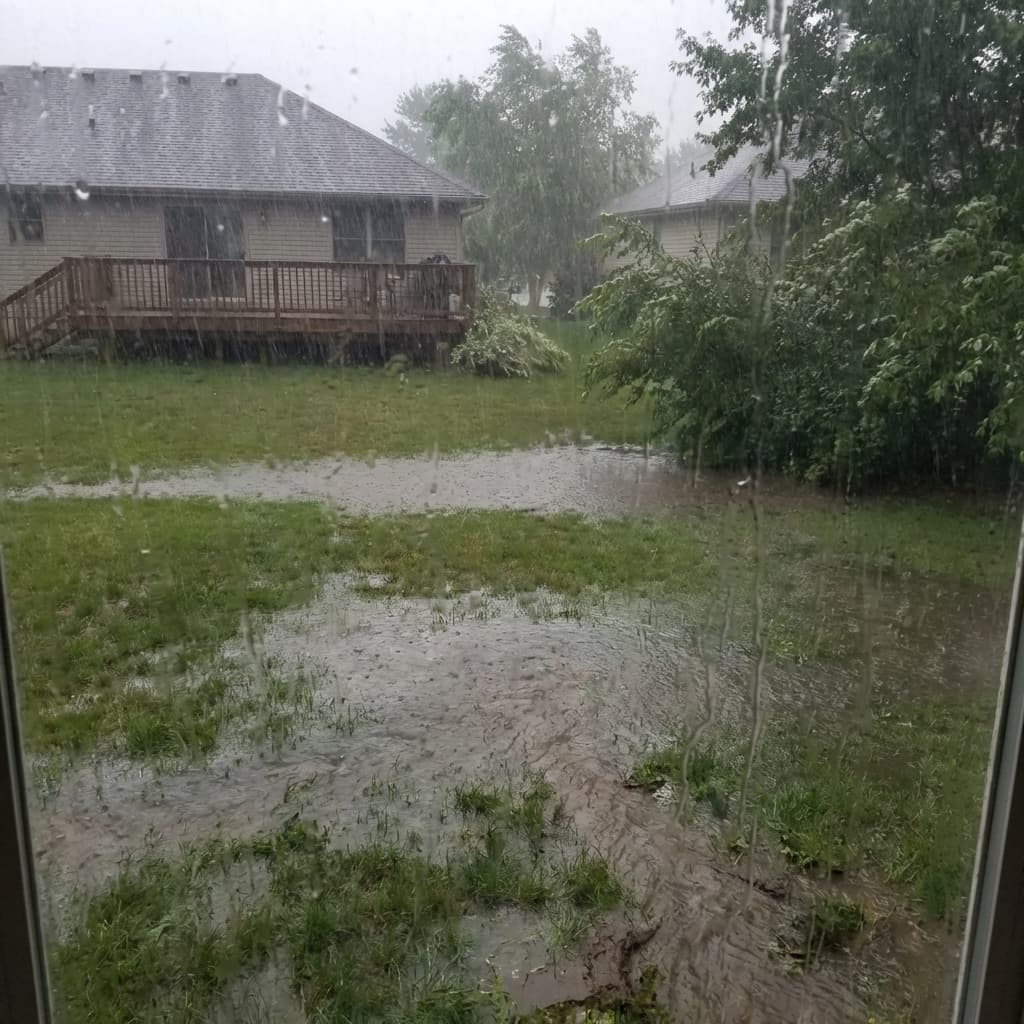
Standing water after rains indicates poor drainage. Water that remains in lawn areas more than 24 hours after rain events reveals drainage problems. These areas need intervention to prevent ongoing issues.
Low spots that collect water can be filled and regraded. Small depressions often can be corrected by adding soil, compacting it, and installing sod over the filled area. This works for minor depressions but not for larger drainage problems.
Swales and drainage ways need proper grading. These linear features are designed to move water but only work if graded correctly. Water should flow steadily through swales without ponding. If ponding occurs, regrade to establish proper flow.
French drains solve many residential drainage problems. These subsurface drains collect water and move it to appropriate discharge points. A French drain consists of a trench filled with gravel and perforated pipe that collects and conveys water. Properly designed and installed French drains eliminate standing water in areas where surface grading cannot solve the problem.
Catch basins and drain pipes move water from collection points to discharge areas. These are particularly useful for collecting water from low spots, at the base of slopes, or where multiple drainage ways converge.
Some drainage problems require professional assessment and design. If your property has significant grading issues, multiple problem areas, or drainage that affects neighboring properties, consult with a drainage contractor or landscape architect. Improper drainage solutions can worsen problems or create issues for neighbors.
Chronic drainage problems often make lawn establishment impossible. In areas with very poor drainage that cannot be economically corrected, consider converting to rain gardens, bog gardens, or other landscape features designed for wet conditions. Fighting chronic drainage problems with repeated sod installation rarely succeeds.
Clay County areas often have more drainage challenges than sandy Duval County locations. The clay-based soils common in Clay County drain more slowly than sand, making proper grading even more critical. What would be acceptable drainage in Duval might create standing water problems in Clay.
The Benefits of Rainy Season Growth
While rainy season lawn care presents challenges, the same weather that creates those challenges also drives the lush growth that makes properly managed Jacksonville lawns so impressive.
Lawns grow at maximum rates during the rainy season. The combination of warmth, moisture, and long days pushes vigorous growth that creates the dense, lush turf that is the goal of lawn care. St. Augustine fills in bare areas, Bermuda spreads aggressively, and Zoysia develops into thick carpets.
This growth helps lawns recover from spring stress. Damage from spring cold, chinch bugs, or disease often lingers into early summer. The vigorous rainy season growth helps lawns recover by producing new tillers, rhizomes, and stolons that fill damaged areas.
Rainy season establishment provides advantages despite the challenges. While fall is optimal for sod installation, summer installation takes advantage of this rapid growth period. Sod installed in June or July that's managed properly to avoid disease roots quickly and spreads vigorously, often filling minor gaps and establishing dense coverage by September.
The free water saves money. Even with irrigation systems turned off, lawns receive adequate moisture through the rainy season. The water bill savings over four months can be substantial, particularly for large lots in neighborhoods like Mandarin, Nocatee, or Fruit Cove.
Drought hardening happens between rain events. The periodic dry spells within the rainy season, while sometimes stressful, encourage deeper rooting as grass searches for moisture. Lawns that experience these moderate stress cycles between rains develop more extensive root systems than lawns receiving consistent irrigation that never challenges roots to extend deeper.
The ecosystem benefits of rainy season growth extend beyond your lawn. The lush vegetation absorbs carbon dioxide, produces oxygen, filters water as it infiltrates, and moderates air temperature. A healthy lawn during rainy season performs valuable ecosystem services.
Preparing Lawn Equipment for Rainy Season
The demanding conditions of rainy season mowing require properly maintained equipment to avoid breakdowns during peak use periods.
Service mowers before the rainy season begins. Change oil, replace air filters, and ensure spark plugs are in good condition. This preventive maintenance in May prevents problems in July when mowers are working hardest.
Sharpen blades and plan for more frequent sharpening during rainy season. Budget for monthly blade sharpening or purchase a backup blade that can be swapped in while one is at the sharpening service.
Clean mower decks thoroughly after every use. The wet grass clippings of rainy season mowing pack into mower decks, creating weight that burdens engines and material that harbors disease spores and promotes rust. Use a hose, pressure washer, or scraper to clean decks immediately after mowing.
Check tire pressure on riding mowers. The wet, soft soil conditions during rainy season make proper tire pressure critical for avoiding ruts and compaction damage. Underinflated tires sink into soft ground, creating damage that overinflated or properly inflated tires avoid.
Ensure safety equipment functions properly. Blade engagement, operator presence controls, and other safety features are critical. Never disable or bypass safety equipment, especially during the challenging mowing conditions of rainy season.
Store gasoline properly. Fuel doesn't store well through Jacksonville's hot, humid summers. Use fresh fuel and consider fuel stabilizers for equipment that sits more than a few weeks between uses. Ethanol-free fuel provides better storage stability and reduces carburetor problems.
Have backup equipment available if possible. For homeowners managing large properties, having a backup mower available when primary equipment is down for service prevents letting grass get too tall during the peak growing season. Even a simple push mower can handle small areas when the riding mower is in the shop.
Conclusion
Lawn care during Florida's rainy season requires adapting every aspect of management to the unique conditions that define Jacksonville's summer. From adjusting irrigation to managing disease pressure, from dealing with constant mowing demands to controlling weed surges, success requires understanding how the season's defining characteristic—abundant rainfall—affects every lawn care decision.
The challenges are real. Fungal diseases explode in warm, wet conditions. Weeds thrive. Mowing becomes a constant battle against rapid growth and wet grass. Lightning safety demands attention. Drainage problems reveal themselves. Yet these same conditions drive the lush, vigorous growth that makes Jacksonville lawns beautiful when properly managed.
At Jax Sod, our experience installing and maintaining lawns throughout Northeast Florida have taught us that rainy season management separates adequate lawns from exceptional ones. The practices that work during drier months must be adjusted or abandoned entirely during June through September. Irrigation systems should be off. Fertilization must account for leaching potential. Mowing requires sharp blades and frequent attention. Disease monitoring becomes critical.
The reward for managing these challenges properly is a lawn that enters fall in peak condition, with deep roots, dense coverage, and the resilience to handle winter cold and spring stress. Lawns that receive proper rainy season care outperform neglected lawns throughout the entire year.
For areas where poor drainage, erosion, or other rainy season problems repeatedly damage turf, fall renovation with proper grading and new sod installation provides permanent solutions. The rainy season reveals problem areas, and fall is the time to correct them.
If your lawn struggles during Jacksonville's rainy season with disease, drainage problems, or simply never looks as good as your neighbors' lawns despite your efforts, the issue might be grass selection, drainage, or underlying soil problems that professional assessment can identify.
Ready to improve your lawn's performance through Jacksonville's challenging rainy season?
Need Professional Sod Installation?
Jax Sod provides sod installation, sod replacement, and new lawn installation across Jacksonville and Northeast Florida. Free quotes!
Related Articles
August Lawn Care Jacksonville FL: Managing Peak Stress Season
Expert August lawn care tips for Jacksonville's toughest month. Strategies to help your lawn survive extreme heat, humidity, and afternoon storms.
Installing Sod During Jacksonville's Rainy Season
Installing Sod During Jacksonville's Rainy Season. Review the site, scope and current written quote before deciding.
March Lawn Care Jacksonville FL: Spring Green-Up Season
Complete guide to March lawn care in Jacksonville. Learn when to fertilize, how to handle spring weeds, and get your lawn thriving in Zone 9a/9b.
Let’s talk about your lawn
Ask our AI assistant a lawn question, or send the team a free installation estimate request.