Loading...
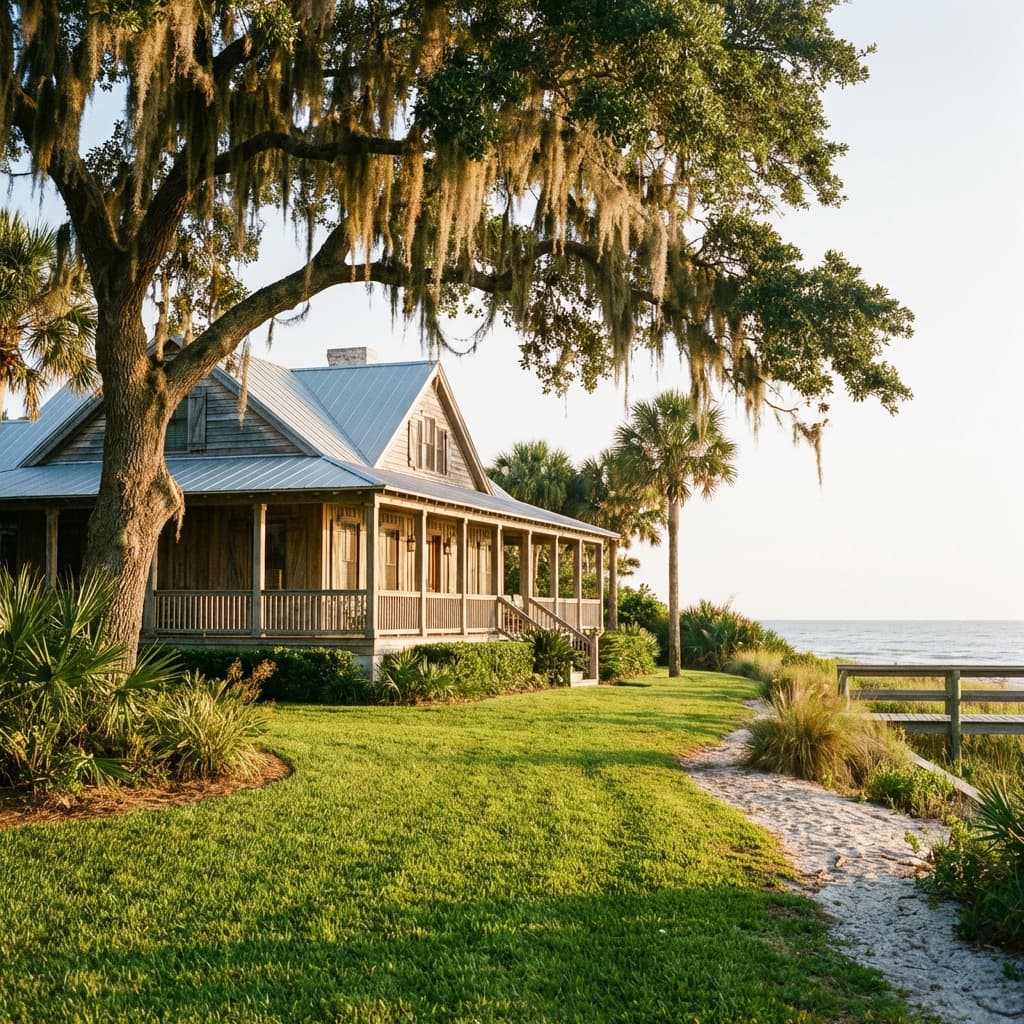
For current costs, compare the exact product or written project scope. See what to include in a sod estimate; this guide does not establish a current price, saving or resale return.
For sod, do not apply fertilizer before planting or as an early establishment shortcut. Follow the reviewed new-sod guidance.
Set irrigation from site conditions and the current rules for your property and water source. For new sod, use the dated care planner; a fixed schedule in an older guide is not permission to water.
Jacksonville summers are not for the faint of heart—or the faint of lawn. From June through September, we face daily temperatures in the low-90s, heat indices regularly exceeding 105°F, humidity so thick you could swim through it, and an unpredictable mix of torrential afternoon thunderstorms and week-long dry spells. Your lawn is under constant stress, and small mistakes in summer care turn into major problems fast.
Through years serving Northeast Florida, we've seen what works and what fails when it comes to keeping lawns alive through Jacksonville's brutal summers. We've watched St. Augustine lawns thrive despite the heat, and we've watched identical lawns two doors down turn brown and patchy. The difference isn't luck—it's strategy.
This guide covers everything you need to survive summer in Duval, Clay, St. Johns, and Nassau counties: how to water efficiently under SJRWMD restrictions, when to mow and how high, how to prevent chinch bugs and fungal disease, and whether you're insane for wanting to install new sod in July (spoiler: yes, but we'll tell you how if you insist).
Summer lawn care in Jacksonville is about one thing: reducing stress. Stress from heat. Stress from pests. Stress from drought. Stress from disease. Everything you do should minimize stress and help grass survive until the relief of October arrives.
Understanding Jacksonville's Summer Climate Challenge
Let's establish exactly what we're dealing with. Jacksonville's summer isn't just hot—it's relentlessly, oppressively hot and humid for four solid months.
Temperature: Average daily highs June-September range from 90-93°F. Actual temperatures often exceed that. We'll see stretches of 95°F+ days, and the temperature rarely drops below 75°F even at night. Your grass never gets a break.
Humidity: Average relative humidity sits between 75-85% during summer months. Morning dew is heavy. Afternoon thunderstorms add moisture. Everything stays damp, which grass likes—until fungus decides it likes those conditions too.
Rainfall: June through September accounts for roughly 60% of Jacksonville's annual 52 inches of rainfall. That sounds great until you realize it arrives in unpredictable bursts. We'll get 3 inches in an afternoon, then nothing for 10 days. Or we'll get daily 20-minute downpours for two weeks straight. Consistency is rare.
Solar intensity: We're at 30°N latitude with minimal cloud cover between storms. UV index regularly hits 10-11 (extreme). That sun intensity stresses grass, especially if it's mowed too short and roots are exposed.
Soil temperature: Surface soil temps can exceed 100°F in full sun on Jacksonville's sandy soil. Root zones are hot. Grass is constantly trying to cool itself through evapotranspiration, which increases water demand.
The combination of heat, humidity, and variable rainfall creates the perfect environment for pest and disease pressure. Chinch bugs thrive. Brown patch fungus thrives. Gray leaf spot thrives. Your grass is just trying to survive.
Watering Restrictions and Efficient Irrigation
Jacksonville's water management is governed by the St. Johns River Water Management District (SJRWMD), which sets mandatory restrictions designed to balance lawn needs with water conservation. Understanding and working within these restrictions is non-negotiable.
SJRWMD standard restrictions (year-round):
- Odd-numbered addresses: Wednesdays and Saturdays only
- Even-numbered addresses: Thursdays and Sundays only
- Hand watering and micro-irrigation: Allowed any day, any time (for flower beds, vegetables, new plantings)
Drought restrictions: During severe drought, SJRWMD may implement Phase 2 restrictions (one day per week) or Phase 3 (irrigation prohibited). These are rare but have happened. Check sjrwmd.com for current status.
Enforcement: Violations can result in warnings, fines, or shut-off in extreme cases. Most enforcement is complaint-driven (your neighbor reports you), but JEA and local utilities do monitor high-use accounts.
How much to water in Jacksonville summers:
Your lawn needs roughly 1-1.5 inches of water per week during summer, including rainfall. On our standard two-day-per-week watering schedule, that's 0.5-0.75 inches per irrigation event.
How to measure: Place empty tuna cans or shallow containers around your yard while irrigating. When they contain 0.5-0.75 inches of water, you've applied enough. Time how long that takes—that's your zone run time.
For most Jacksonville systems:
- Rotary sprinklers: 30-45 minutes per zone
- Spray heads: 15-20 minutes per zone
- Adjust for rainfall: If we got 1 inch of rain this week, skip one irrigation cycle
Deep and infrequent beats shallow and frequent:
Two deep waterings per week encourage roots to grow downward seeking moisture. Deep roots = drought tolerance.
Best time to water: Early morning, ideally 4am-8am. Grass blades dry quickly as sun rises, reducing fungal disease risk. Evening watering (after 6pm) is second-best but leaves grass damp overnight, which invites brown patch and gray leaf spot.
Signs you're watering too much:
- Grass is always wet/spongy when you walk on it
- Fungal disease appears (circular brown patches, irregular yellowing)
- Excessive weeds (particularly dollarweed in wet areas)
- Grass blades are soft, lush, dark green (sounds good but indicates weak cell walls)
Signs you're watering too little:
- Grass doesn't spring back when you walk on it (footprints remain visible)
- Grass blades fold or roll lengthwise (conserving moisture)
- Color shifts from green to blue-gray to brown
- Grass enters drought dormancy (browns out, stops growing)
Smart irrigation technology:
If you're serious about water efficiency, upgrade your controller. Modern smart controllers adjust watering based on actual weather conditions, soil moisture, and plant needs.
Options: Skips irrigation when rainfall detected. Required by code in many FL jurisdictions. Adjust watering based on evapotranspiration rates (how much water grass loses). Brands: Rain Bird ET Manager, Hunter Solar Sync. Connect to weather data, adjust automatically, control via phone app. Brands: Rachio, RainMachine, Hunter Hydrawise.
The payback period is typically 1-2 years through lower water bills.
Mowing Higher to Shade Roots
Mowing height is your single most effective tool for reducing summer heat stress. Taller grass shades the soil, keeps root zones cooler, reduces evaporation, and allows grass to photosynthesize more efficiently.
Summer height recommendations (June-September):
| Grass Type | Standard Height | Summer Height |
|---|---|---|
| St. Augustine | 3.5-4 inches | 4-4.5 inches |
| Bermuda | 1-1.5 inches | 1.5-2 inches |
| Zoysia | 1.5-2 inches | 2-2.5 inches |
| Bahia | 3-4 inches | 4 inches |
That extra half-inch makes a measurable difference. Studies by UF/IFAS show that St. Augustine mowed at 4 inches has 30% better drought tolerance than the same variety mowed at 3 inches. The taller grass shades soil, reducing surface temperature by 10-15°F on hot days.
How to adjust your mower: Most mowers have height settings labeled 1-7 or similar. Raise one notch from your spring setting. For St. Augustine, you're likely going from setting 5 to setting 6. For Bermuda, from setting 2 to setting 3.
Don't go too tall: There's a point of diminishing returns. St. Augustine above 5 inches gets floppy and creates excessive thatch. Bermuda above 2 inches loses its density and invites weeds. Stick to the recommended ranges.
Maintain the one-third rule: Even in summer heat, never remove more than one-third of the blade height in a single mowing. If you let St. Augustine grow to 6 inches and then cut it back to 4 inches, you'll shock the grass just when it's already heat-stressed. Mow frequently enough to maintain consistent height.
Blade sharpness matters more in summer: Dull blades shred grass tips, creating moisture loss and disease entry points. In Jacksonville's humid summer conditions, those torn blade tips become brown patch infection sites within days. Sharpen your blade every 3-4 mowings (every 3-4 weeks for most homeowners).
Mowing frequency in summer:
Growth actually slows slightly in peak summer heat compared to the spring surge, but you're still mowing regularly:
- St. Augustine: Every 7-10 days (slows in extreme heat, surges after rain)
- Bermuda: Every 4-5 days (consistent summer growth)
- Zoysia: Every 7-10 days
- Bahia: Every 10-14 days (plus whenever seed stalks appear)
After a heavy rain (2+ inches), expect growth to accelerate. You might need to mow mid-week even if you normally mow weekends. That's fine—just follow the one-third rule.
Time of day to mow: Avoid mowing in peak heat (noon-4pm). It's brutal on you, and cutting grass in 95°F heat stresses it. Early morning after dew dries (8-10am) or evening (after 6pm) is better. Some homeowners mow at 7am on Saturday before it gets hot—your neighbors might hate you, but your lawn will appreciate it.
Jacksonville Pro Tip: If you're choosing between mowing too short or too tall in summer, err on the side of too tall. A 5-inch St. Augustine lawn looks a bit shaggy but stays green. A 2.5-inch St. Augustine lawn looks scalped and turns brown within a week.
Summer Fertilization Strategy
Fertilization in summer is a delicate balance. Grass needs nutrients to handle stress, but too much nitrogen during peak heat creates problems.
The problem with heavy summer fertilization:
- Nitrogen drives blade growth, which increases water demand (grass has more leaf tissue to support)
- Lush, fast-growing grass is more susceptible to disease, particularly brown patch and gray leaf spot
- Excess nitrogen can burn grass when temperatures exceed 90°F
- Nutrient runoff during heavy summer rains pollutes waterways
The problem with no summer fertilization:
- Grass depletes nutrient reserves trying to survive heat stress
- Color fades (nitrogen deficiency shows as pale, yellowing grass)
- Weak grass is less able to fight off pests and disease
- Recovery in fall is slower
Our recommended approach:
Light, infrequent applications during summer. Instead of the 1 pound of nitrogen per 1,000 square feet you might apply in spring, apply 0.5 pounds in summer. Use slow-release formulas exclusively.
Typical summer fertilization schedule:
- Early June: Light application (0.5 lb N per 1,000 sq ft) if grass needs it
- Late July or early August: Second light application if color is fading
- Skip: Mid-July through mid-August (peak heat period)
What to apply: Slow-release fertilizer with lower nitrogen ratio than spring formulas. Look for 3-1-2 ratios (example: 15-5-10) or even 2-1-2 ratios. Avoid high-nitrogen "green-up" formulas—save those for spring and fall.
Special case—Bermuda: Bermuda is more heat-tolerant and can handle slightly heavier summer feeding than St. Augustine. If you maintain Bermuda at sports-field quality, you can apply up to 1 pound of nitrogen per month through summer. But for typical residential Bermuda lawns, follow the light-application approach.
Special case—Bahia: Bahia needs minimal fertilization year-round. One application in spring, one in fall, and nothing in summer is perfectly fine for most Bahia lawns.
Iron supplements: If your grass is pale but you don't want to apply nitrogen in peak heat, consider an iron supplement. Iron (ferrous sulfate) greens up grass quickly without stimulating growth. Apply at labeled rates (typically 2-4 ounces per 1,000 sq ft). Results appear within 3-5 days.
Watering after fertilization: Always water in fertilizer within 24 hours of application. This dissolves granules, moves nutrients into the root zone, and prevents potential burning. With summer's afternoon thunderstorms, nature often handles this for you—but don't count on it. If no rain is forecast, irrigate.
Pest Management: Chinch Bugs Peak Season
Summer is prime time for lawn pests in Jacksonville, particularly chinch bugs—the most destructive pest affecting St. Augustine grass in Florida.
Chinch Bugs
Identification: Tiny insects (1/8 inch) with black bodies and white wings marked with black triangles. Nymphs (immature stages) are smaller, reddish with a white band across the back. They feed by sucking plant juices from grass blades, injecting toxins that yellow and eventually kill the grass.
Damage appearance:
- Irregular yellow-to-brown patches, typically in sunny areas
- Damage starts near driveways, sidewalks, or south-facing areas (heat amplifiers)
- Spreads outward in a pattern; grass at the edge of the patch is yellowing while grass in the center is dead
- Does NOT respond to irrigation (this distinguishes chinch bug damage from drought stress)
Where to find them: Part the grass at the edge of a damaged area (where green meets yellow). Look down at the soil and thatch layer. Chinch bugs are fast-moving and will try to escape. You might see dozens to hundreds in a small area.
When they're active: Populations peak June through August. A single generation takes 30-40 days in summer heat, so you can have multiple generations overlapping. By late summer, populations can be enormous.
Treatment:
Chemical control: Apply insecticides containing bifenthrin, lambda-cyhalothrin, or carbaryl. Examples: Talstar, Ortho Bug-B-Gon, Sevin. Follow label instructions carefully. Most products require watering in (but not immediately—read the label). Expect to see results within 3-5 days. Severe infestations may require a second application 2-3 weeks later.
Application method: Use a hose-end sprayer or backpack sprayer for liquid formulas, or a broadcast spreader for granular products. Treat the damaged area plus a 10-foot buffer around it (chinch bugs are moving outward from the damage you see).
Timing: Treat in late afternoon or evening. Chinch bugs are most active in heat, and you'll get better contact with them when they're feeding. Plus, you won't be applying pesticides in 95°F sun (safer for you and the grass).
After treatment: Damaged grass won't recover (it's dead). But treatment stops the spread. Once chinch bugs are controlled, new grass will fill in from surrounding healthy areas—or you can patch with sod plugs for faster recovery (contact us for small patches).
Prevention: Unfortunately, chinch bug prevention is difficult. They're endemic to Jacksonville. Floratam’s early chinch-bug resistance has largely been lost; do not select it on a promise of current pest resistance. See UF/IFAS cultivar guidance. If you have chronic chinch bug problems year after year, consider replacing with a resistant variety or switching to Zoysia or Bermuda (which aren't affected by chinch bugs).
Sod Webworms
What they are: Larvae (caterpillars) of lawn moths. The moths are small, beige, and fly up in a zigzag pattern when you walk through the lawn at dusk—that's your first clue.
Damage: Irregular brown patches. Grass blades look chewed (because they are). Close inspection reveals small green pellets (frass/droppings). Pull apart the grass and you'll find green or brown caterpillars up to 3/4 inch long.
Treatment: Spinosad (organic option, brand name Captain Jack's Deadbug Brew), Bt (Bacillus thuringiensis), or bifenthrin. Apply in late afternoon, don't water in immediately (let the product sit on the foliage where webworms feed).
Mole Crickets
Where they're found: Bahia lawns and sandy soils, especially in southern Duval County and St. Johns County.
Damage: Tunneling creates raised trails and loosens roots. Grass browns and dies in irregular patterns. Tunnels also attract moles (the mammal), which dig up lawns hunting for the crickets.
Treatment: Apply imidacloprid or fipronil-based products in June. Or use beneficial nematodes (Steinernema scapterisci)—an organic option that's highly effective for mole crickets. Available from online suppliers; apply during evening irrigation in June-July.
Grubs
What they are: White, C-shaped larvae of various beetles (May/June beetles, Japanese beetles, etc.). Feed on grass roots.
Damage: Grass pulls up easily (roots are eaten). Irregular brown patches. Often attracting birds, armadillos, or raccoons that dig up the lawn looking for grubs.
Treatment: Imidacloprid or clothianidin applied in June or July. Or beneficial nematodes. Grubs are deeper in the soil than surface pests, so proper irrigation after treatment is important to move the product down to where grubs feed.
Fire Ants
Not a grass pest: Fire ants don't damage lawns, but their mounds are unsightly and the ants are aggressive. Summer is when colonies are largest and most active.
Treatment: Bait products (Amdro, Advion) work well for yard-wide control. Apply in morning or evening when ants are foraging. For individual mounds, drench products (acephate, spinosad) kill the colony quickly. Boiling water works but can damage grass.
Important: If you're applying insecticides for chinch bugs or other pests, check the label—many broad-spectrum products also control fire ants as a side benefit.
Fungal Disease Prevention and Treatment
Jacksonville's summer humidity creates ideal conditions for fungal diseases. Warm temperatures plus moisture plus dense grass canopy equals fungus paradise.
Brown Patch (Rhizoctonia solani)
Most common disease in Jacksonville St. Augustine lawns. Appears as circular brown patches ranging from a few inches to several feet in diameter. Often has a "smoke ring" appearance—a gray, water-soaked ring at the edge of the patch where the fungus is actively spreading.
Conditions: Thrives when nighttime temps stay above 68°F and humidity is high. Peak activity July-August. Worse after extended wet periods or over-irrigation.
Prevention:
- Don't over-fertilize in summer (excess nitrogen makes grass lush and susceptible)
- Water early morning, not evening (grass dries quickly, reducing fungus-friendly conditions)
- Improve air circulation (prune overhanging shrubs, thin tree canopies)
- Avoid walking on wet grass (you spread spores on your shoes)
- Mow at proper height with sharp blade (reduces stress and entry points)
Treatment: Fungicides containing azoxystrobin (Heritage), propiconazole (Banner Maxx), or myclobutanil (Eagle). Apply at first sign of disease. Two applications 14 days apart are typically needed.
After treatment: Damaged grass will recover slowly. Brown patch doesn't kill the roots (usually), so grass greens back up over 2-3 weeks once the fungus is controlled.
Gray Leaf Spot (Pyricularia grisea)
Primarily affects St. Augustine. Appears as small, oval lesions on grass blades—gray centers with dark brown margins. Heavy infections cause blades to turn yellow and then brown, giving the lawn a scorched appearance.
Conditions: Worse during extended wet periods (like a week of daily thunderstorms). Nitrogen-heavy fertilization makes it worse.
Prevention: Similar to brown patch—reduce nitrogen, improve drainage, water early morning, increase mowing height slightly.
Treatment: Same fungicides as brown patch. Azoxystrobin (Heritage) is particularly effective for gray leaf spot. Two applications 14-21 days apart.
Take-All Root Rot (Gaeumannomyces graminis)
Serious disease that's less common than brown patch but more difficult to control. Affects roots, causing gradual decline. Grass yellows, thins, and eventually dies in irregular patches. Roots are short, dark, and rotted.
Conditions: Worse in high-pH soils (above 7.0), poorly drained areas, and over-watered lawns. Can be triggered by excessive fertilization or soil disturbance.
Treatment: No effective fungicides for homeowner use. Management involves improving drainage, reducing irrigation, applying sulfur to lower soil pH (if needed), and avoiding stress. Severely affected areas may need to be removed and replanted.
General fungus prevention strategy:
Most fungal diseases in Jacksonville are opportunistic—they attack stressed grass. Keep grass healthy through proper mowing, irrigation, and fertilization, and you'll have far fewer disease problems. Once disease appears, treatment is expensive and results are mixed. Prevention is everything.
Jacksonville Pro Tip: If you see circular brown patches in your St. Augustine lawn in July or August, assume brown patch until proven otherwise. It's the most common summer disease in Northeast Florida by far.
Rain Season Adjustments
Jacksonville's summer rain pattern is unique. From June through September, afternoon thunderstorms are nearly daily—except when they're not. You'll have periods of daily downpours, periods of nothing for two weeks, and everything in between.
How to adjust irrigation:
During daily rain periods (common June and August):
- Turn off automatic irrigation
- Monitor grass for moisture stress (unlikely during daily rain)
- Resume irrigation when rain pattern breaks
During dry spells (common July):
- Stick to your SJRWMD watering days
- Deep watering becomes critical (0.75-1 inch per event)
- Watch for drought stress signs (footprints remaining, leaf folding)
After heavy rain (2+ inches in a day):
- Expect growth surge in 3-5 days
- Plan to mow mid-week even if you normally mow weekends
- Watch for fungal disease symptoms in following days
- Skip next scheduled irrigation (soil is saturated)
Smart controller benefits: This is where smart controllers really shine. They automatically adjust for rainfall, saving you the hassle of manually turning the system on and off.
Hurricane season: June 1 through November 30. Jacksonville isn't as hurricane-prone as South Florida, but we get impacts from systems passing nearby—heavy rain, wind, storm surge in coastal areas.
Pre-storm prep:
- Mow the lawn (don't want to be mowing during recovery)
- Secure lawn furniture, decorations, anything that could become a projectile
- Clear gutters and drains
- Turn off irrigation system (you'll get plenty of water from the storm)
Post-storm:
- Remove debris before mowing (branches, palm fronds, etc.)
- Check for flooding/standing water; improve drainage if needed
- Restart irrigation system once weather normalizes
- Watch for disease in following weeks (saturated soil and damaged grass invite fungus)
Dealing with Drought Stress
Even with our 52 inches of annual rainfall, Jacksonville lawns face drought stress during summer dry spells. A week without rain plus 93°F heat equals stressed grass, especially in sandy soil that doesn't hold moisture well.
Drought stress symptoms:
- Grass turns blue-gray before turning brown
- Blades fold or roll lengthwise (conserving moisture)
- Footprints remain visible (grass doesn't spring back)
- Growth slows or stops
Response:
If irrigation is available: Water deeply (1 inch) on your scheduled days. Focus on getting water into the root zone, not just wetting the surface. Run zones long enough to achieve penetration (30-45 minutes for rotary sprinklers).
If under severe water restrictions: Prioritize high-value areas (front yard, areas visible from street). Accept that back corners or side yards might go dormant.
Drought dormancy: Warm-season grasses (St. Augustine, Bermuda, Zoysia, Bahia) can survive extended drought by going dormant—turning brown and shutting down growth. This is a survival mechanism, not death. Once irrigation or rainfall resumes, grass greens back up in 7-14 days.
How long can grass survive dormancy? Most Jacksonville grasses can handle 3-4 weeks of dormancy without permanent damage. Beyond that, you start losing grass. If we're in a severe drought (rare, but has happened), apply 0.5 inches of water every 2-3 weeks to keep grass alive even if you can't maintain full greenness.
Recovery after drought: Once moisture resumes, grass needs time to regenerate roots and blades. Light fertilization (0.5 lb nitrogen per 1,000 sq ft) helps recovery. Don't mow until grass is actively growing again.
Heat Stress Recognition and Response
Drought stress and heat stress are related but different. Drought stress is lack of water. Heat stress is physiological damage from extreme temperatures even if moisture is adequate.
Heat stress symptoms:
- Grass wilts in afternoon heat but recovers overnight
- Yellowing or bronzing despite adequate irrigation
- Slow growth despite proper fertilization
- Increased susceptibility to disease and pests
Response:
Raise mowing height: Even if you already raised it for summer, consider going another half-inch during extreme heat waves (when "feels like" temps exceed 110°F for days on end).
Avoid additional stress: Don't fertilize during heat waves. Don't apply herbicides when temps exceed 90°F. Don't walk on stressed grass more than necessary.
Ensure deep watering: Shallow, frequent watering makes heat stress worse by encouraging shallow roots. Deep watering (1 inch to wet the top 6 inches of soil) is critical.
Provide temporary shade: In some high-value areas (near patios, around trees), you can reduce heat stress by providing afternoon shade—retractable awnings, shade cloth, or simply accepting that grass won't thrive under those conditions and mulching instead.
Reality check: Some summers, Jacksonville grass just looks rough. 2011 was brutal. 2019 was tough. 2022 had extended periods of 95°F+ heat. During those summers, even well-maintained lawns look stressed. Your goal isn't perfection; it's survival. October will come, and grass will recover.
Summer Weed Management
Summer heat limits your weed control options. Most post-emergent herbicides can't be applied when temperatures exceed 85-90°F without risking grass damage. And summer weeds are tough, established, and growing vigorously.
Strategy: Spot-treat early morning or late evening when temps are below 85°F. Use lower application rates than you would in spring. Accept that some weeds will stick around until fall when conditions improve for control.
Common summer weeds in Jacksonville:
Spurge: Mat-forming, thrives in hot, dry areas. Small red-centered leaves. Post-emergent herbicides with 2,4-D or dicamba, applied in morning when temps are cooler.
Crabgrass: If pre-emergent failed in spring, you're dealing with established crabgrass now. Post-emergent options include quinclorac (Drive XLR8). But honestly, it's tough to kill mature crabgrass in summer heat without stressing your grass. Sometimes you just live with it until fall.
Dollarweed: Round leaves, thrives in wet areas and thin turf. Atrazine (St. Augustine only) or products containing 2,4-D and dicamba. Improve drainage to prevent recurrence.
Sedges (nutsedge): Triangular stems, bright green, grows faster than grass. Requires sedge-specific herbicides (Sedgehammer, Dismiss). Not affected by typical broadleaf herbicides.
Best advice for summer weed control: Don't stress about it. Most summer weed control efforts damage grass as much as they damage weeds. Focus on maintaining healthy grass, which naturally outcompetes weeds. Plan a serious weed control push in fall (October-November) when conditions are better.
Installing Sod in Summer: Why NOT To (Or How To If You Must)
Let's be clear: summer is the absolute worst time to install new sod in Jacksonville. If you can possibly wait until October or November, wait. But sometimes you can't wait—maybe you're under HOA pressure, maybe you're selling the house, maybe you just can't stand looking at bare dirt anymore.
Why summer sod installation is risky:
- Extreme heat stresses new sod before roots establish
- Difficult to keep sod wet enough without violating SJRWMD restrictions (you can hand-water new plantings, but that's labor-intensive for a full lawn)
- Disease pressure (new sod is vulnerable; brown patch loves stressed, newly installed grass)
- Installation crew works in brutal conditions (expensive, slow, dangerous)
- Higher failure rate (10-20% sod loss isn't uncommon with summer installation)
If you absolutely must install sod in summer:
Grass selection: Choose heat-tolerant varieties. For St. Augustine, Palmetto is more heat/drought tolerant than Floratam. For Bermuda, TifTuf and Celebration handle heat well. Zoysia (Empire, Zeon) is also fairly heat-tolerant.
Timing: Early summer (early June) is better than mid-summer (July-August). If you're planning summer installation, do it as soon as possible.
Soil prep is critical: Jacksonville's sandy soil dries fast. Amend with organic matter (compost, peat) to improve moisture retention. Ensure grading is perfect—no low spots where water pools, no high spots that dry out.
Installation day: Install early morning (starting at dawn if possible). Get sod on the ground and watered before heat of the day. Sod sitting on a pallet in 95°F heat for hours is dying sod.
This is a huge time commitment. Plan to be home or hire someone to water. Let the sod dry slightly between waterings (soggy 24/7 invites fungus), but don't let it get bone-dry.
First mow: Wait until roots have knitted into the soil (pull up a corner of sod—if it resists, roots are establishing). First mow should be at maximum height (4.5 inches for St. Augustine). Gradually lower to standard height over 2-3 mowings.
Realistic expectations: Even with perfect care, summer-installed sod will struggle. Some yellowing, some brown patches, and some losses are normal. Plan on 10-15% overordering to account for replacement pieces.
Summer Lawn Care Checklist
Here's your condensed summer action plan:
June:
- Raise mowing height by 0.5 inches
- Light fertilization if grass needs it (0.5 lb N per 1,000 sq ft)
- Scout for chinch bugs, sod webworms, other pests
- Apply insecticide if pest populations are damaging
- Adjust irrigation for increased water needs (1-1.5 inches per week)
- Monitor for early brown patch symptoms
July:
- Maintain higher mowing height
- Mow in morning or evening, not midday heat
- Skip fertilization during peak heat (mid-July to mid-August)
- Continue pest monitoring
- Watch for fungal disease, especially after extended wet periods
August:
- Continue July practices
- Peak month for chinch bugs and brown patch—be vigilant
- Consider light fertilization late in month if color is fading
- Begin planning fall lawn projects (renovation, installation)
- Sharpen mower blade (you're putting heavy hours on it)
September:
- Maintain summer mowing height through early month
- Return to standard height mid-to-late month as temps cool
- Fall fertilization (late September or early October)
- Begin fall weed control
- Continue pest monitoring (chinch bugs active until October)
- Prepare for pleasant fall maintenance season
All summer long:
- Water deeply and infrequently (1-1.5 inches per week)
- Respect SJRWMD restrictions (your watering days only)
- Monitor grass for stress symptoms
- Keep mower blade sharp
- Don't panic when grass looks rough—it's summer in Jacksonville
Conclusion: Survival Is Success
Jacksonville summer lawn care isn't about achieving perfection. It's about getting grass through four brutal months so it can recover in fall and thrive in spring. Your grass will look stressed. It might develop a few brown patches. Chinch bugs might cause some damage. That's normal.
Success in summer is:
- Grass that stays mostly green despite the heat
- Pests and diseases caught early and controlled before they spread
- Efficient water use that keeps grass alive without waste
- Minimal stress from improper mowing, fertilization, or other practices
- Grass that bounces back quickly when October arrives
The homeowners who struggle in summer are the ones who try to maintain spring-level perfection. They over-fertilize, over-water, mow too short, and stress about every imperfection. The homeowners who succeed accept that summer is a survival season and focus on the basics: water, mow high, control pests, minimize stress.
Follow this guide, stay vigilant for problems, and don't be afraid to let your lawn coast through the hottest weeks. By Labor Day, the worst is behind you. By October, you'll be enjoying the best lawn weather Jacksonville has to offer.
Ready to start next summer with a healthy, professionally installed lawn that's built to handle Jacksonville's heat? We deliver and install premium sod across Duval, Clay, St. Johns, and Nassau counties, and we'll set you up with the right grass for Northeast Florida's demanding climate.
Need Professional Sod Installation?
Jax Sod provides sod installation, sod replacement, and new lawn installation across Jacksonville and Northeast Florida. Free quotes!
Related Articles
June Lawn Care Jacksonville FL: Surviving Peak Summer Heat
Essential June lawn care strategies for Jacksonville's brutal heat and humidity. Keep your lawn healthy through Zone 9a/9b summer stress.
Summer Drought Lawn Survival Tips for Jacksonville
Expert tips for summer drought lawn survival in Jacksonville. Learn watering strategies, grass selection, and maintenance during dry periods.
World Golf Village Lawn Care: Expert Tips for St. Johns County Yards
Professional lawn care advice for World Golf Village homeowners. Learn the best practices for maintaining healthy grass in Northeast Florida's unique climate.
Let’s talk about your lawn
Ask our AI assistant a lawn question, or send the team a free installation estimate request.