Loading...
Set irrigation from site conditions and the current rules for your property and water source. For new sod, use the dated care planner; a fixed schedule in an older guide is not permission to water.
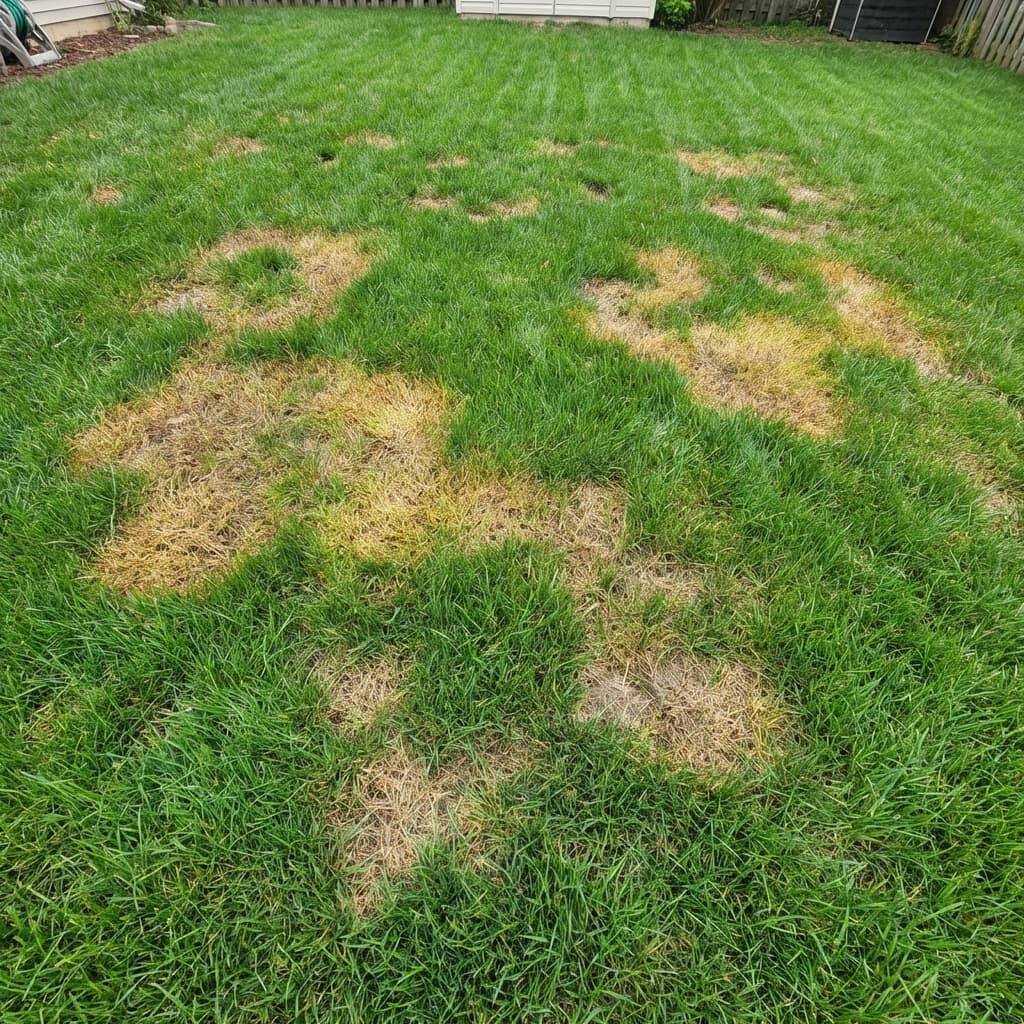
You pushed the mower a bit too low, hit an uneven spot, or tried to knock down overgrown grass in one cut. Now you've got brown patches where you scalped the lawn down to the soil. I see this constantly in Jacksonville, especially in spring when homeowners get eager to clean up their lawns after winter or in subdivisions like Argyle and Bartram where the terrain isn't perfectly level.
Scalping looks terrible and stresses your grass, but it's usually not fatal. St. Augustine, the most common grass in Jacksonville lawns, is remarkably resilient. With proper care, scalped areas typically recover within 2-4 weeks during the growing season.
What Lawn Scalping Actually Is
Scalping happens when you cut grass so short that you remove most or all of the green leaf material, exposing stems, thatch, or soil. Unlike a regular mowing that removes the top third of grass blades, scalping cuts into the crown—the growing point of the grass plant.
For St. Augustine grass, which should be maintained at 3.5-4 inches, anything cut below 2 inches risks scalping. The lower you go, the more damage you cause.
Why Scalping Damages Grass
Grass produces energy through photosynthesis in its leaf blades. When you scalp it, you remove the food factory. The plant must use stored energy reserves to grow new leaves before it can start producing food again. This stresses the grass and slows growth.
Scalped areas also expose soil to direct sunlight, which can dry out the root zone and heat the ground excessively. In Jacksonville's summer sun, exposed soil temperatures can reach 120-140°F, which damages shallow roots.
Finally, removing the protective grass canopy creates opportunities for weeds. Weed seeds lying dormant in soil suddenly get the light and space they need to germinate.
Common Causes of Scalping in Jacksonville Lawns
Understanding why it happens helps you prevent it next time.
Uneven Terrain
Many Jacksonville properties have subtle grade changes that aren't obvious when walking but become apparent when mowing. Swales for drainage, settling over time, or poor initial grading create high and low spots.
When your mower deck is set for the high spots, it scalps the low areas. This is particularly common in newer developments like Nocatee and Durbin Crossing where grading work is recent and soil settling is ongoing.
Mowing Too Infrequently
Miss a few weeks during Jacksonville's peak growing season (May-August) and your grass can grow 3-4 inches. Trying to cut it back to proper height in one mowing violates the "never remove more than one-third" rule and often results in scalping.
Even if your mower height is technically correct, cutting 4 inches off a 7-inch tall lawn means you're cutting into older, woody growth near the crown.
Mowing When Grass is Too Dry
When St. Augustine is drought-stressed, it doesn't stand upright properly. The blades lie flatter, and the mower cuts lower than intended. I see this frequently during dry spells when irrigation systems aren't keeping up or water restrictions are in effect.
Incorrect Mower Height Settings
Sometimes it's simply setting the mower too low. New homeowners unfamiliar with St. Augustine often set mowers at the 2-2.5 inch height they used for cool-season grasses up north. That's scalping height for St. Augustine.
Mower decks can also get knocked out of adjustment by hitting obstacles, loading and unloading, or general wear. Check your actual cutting height, don't just trust the settings.
Rough Mowing Technique
Mowing too fast, especially on uneven ground, causes the mower deck to bounce and scalp high spots. Turning too sharply can twist the deck and cut lower on one side. Zero-turn mowers, popular in Jacksonville for their efficiency, are particularly prone to causing scalping during aggressive turns.
Spring Cleanup Eagerness
After winter, many homeowners want to "clean up" their lawn by cutting it shorter. This impulse is understandable but usually results in scalping. St. Augustine goes partially dormant in winter and loses some thickness. Cutting it aggressively in February or March removes the minimal green growth the plant has and delays spring green-up.
How to Repair Scalped Areas
The good news: most scalping damage repairs itself if you give the grass what it needs.
Step 1: Assess the Damage
Look closely at the scalped areas. Can you see any green at all in the grass plants, or is it completely brown? If there's still some green showing, even at the base, the grass is alive and will recover.
If the area is completely brown—no green visible anywhere—the damage is more severe but still often recoverable. St. Augustine can regenerate from stolons (above-ground runners) growing in from surrounding healthy grass.
Step 2: Water Properly
Scalped grass needs consistent moisture to recover. Water the damaged area deeply but avoid creating soggy conditions.
This keeps stress low while new leaf growth emerges.
After the first week, transition to every 2-3 days with deeper watering (1 inch per session). The goal is to keep roots moist without overwatering, which can encourage disease in stressed grass.
In Jacksonville's summer heat, early morning watering (4-7 AM) is essential. Midday watering wastes water to evaporation, and evening watering leaves grass wet overnight, inviting fungal problems.
Step 3: Hold Off on Fertilizer Initially
Your instinct might be to fertilize to speed recovery, but resist this urge initially. Fertilizer pushes top growth, which a scalped plant can't support well since it lacks leaf surface for photosynthesis.
Wait 10-14 days after scalping before applying fertilizer. By then, new leaf growth should be emerging. Use a balanced, slow-release fertilizer at half the normal rate for the first application. Too much nitrogen on stressed grass can cause more harm than good.
After the initial light feeding, resume normal fertilization once the area looks mostly recovered.
Step 4: Raise Your Mowing Height
Don't mow the recovering area until it's grown back substantially. Let the grass reach 5-6 inches before mowing, then cut it back to 4 inches. This gives the plant maximum leaf surface to recover energy production.
For the rest of your lawn, immediately raise your mower deck to 3.5-4 inches to avoid repeating the problem.
Step 5: Limit Traffic
Keep people and pets off scalped areas while they recover. Foot traffic compacts soil and breaks fragile new growth. In high-traffic areas like play zones or paths to side gates, consider temporarily redirecting traffic or placing stepping stones.
Step 6: Monitor for Weeds and Disease
Stressed grass is vulnerable. Check scalped areas every few days for weed seedlings or signs of fungal disease (circular brown patches, fuzzy growth, unusual patterns).
Hand-pull any weeds immediately—they're easier to control when small. If you see disease symptoms, you may need a fungicide, but often proper watering and patience are enough.
Step 7: Overseed or Patch if Necessary
Most scalping recovers on its own in Jacksonville's warm growing season. But if after 4-6 weeks you still have bare spots that aren't filling in, you may need to patch.
For St. Augustine, sodding is more reliable than seeding (St. Augustine seed is difficult and expensive). Cut small pieces of sod from an inconspicuous area of your yard or purchase a few square feet from a local supplier. Fit the sod into the bare spot, water it in well, and keep it moist until established.
For bare spots smaller than 1-2 square feet, surrounding grass will usually spread via stolons and fill the gap without intervention. Just be patient.
Prevention: Avoiding Scalping in the Future
Prevention is far easier than repair.
Correct Mowing Height
Set your mower to 3.5-4 inches for St. Augustine grass. Check the actual cutting height, not just the setting number. Mower manufacturers' height indicators are often inaccurate.
To check: Park on level pavement, measure from the pavement to the blade's lowest cutting point. Adjust until you get the height you want.
Fix Uneven Terrain
For minor irregularities, topdressing can help. After aerating, spread a 1/4 to 1/2 inch layer of sand or sandy loam over low spots. Do this annually, and over time you'll build up low areas to match surrounding grade.
For major unevenness, you may need proper grading. This involves stripping the sod, regrading the soil, and re-sodding. It's a bigger project but solves the problem permanently.
In swales and drainage areas that must remain low, consider accepting that grass is difficult and switching to decorative rock or other non-turf landscaping.
Mow Frequently During Peak Season
Never remove more than one-third of the grass height in a single mowing. During Jacksonville's peak growing season (May through September), this might mean mowing twice a week.
If you let grass get ahead of you, bring it back down gradually. Mow off one-third, wait 3-4 days, mow off another third. It takes longer but prevents scalping damage.
Slow Down
Mowing slower gives your mower time to react to terrain changes and prevents the deck from bouncing. On uneven ground, cut your mowing speed in half.
Maintain Your Mower
Keep mower blades sharp. Dull blades tear grass instead of cutting it cleanly, and they make the mower work harder, which can affect cutting height consistency.
Check deck level periodically. Front-to-back pitch should be level or slightly lower in front (about 1/8 inch). Side-to-side should be perfectly level. Adjust according to your mower's manual.
Proper tire pressure matters too. Uneven tire pressure causes uneven cutting height. Check pressure monthly and keep all tires inflated to manufacturer specs.
Use the Right Mower for Your Terrain
Zero-turn mowers are efficient but require skill on uneven terrain. If your property has significant grade changes or uneven areas, a traditional riding mower or walk-behind may be safer.
For very uneven properties, a rotary mower with a floating deck adjusts better to terrain than a fixed-deck mower.
Sandy Soil and Settling
Our sandy soil drains well but settles over time, especially after heavy rain. Low spots develop gradually. Walk your property twice a year and note areas holding water or appearing lower than surrounding grade. Address these before they become scalping hazards.
Summer Growth Rates
May through August, St. Augustine grows aggressively in Jacksonville. Weekly mowing may not be enough. Don't let vacation or schedule conflicts result in overgrown grass that you'll scalp trying to catch up.
Consider hiring a service for those times you can't keep up, or ask a neighbor to mow while you're away.
Spring Temptation
Resist the urge to scalp intentionally in spring to "clean up" the lawn or remove winter-damaged blades. This old practice made sense for some cool-season grasses but is harmful for St. Augustine. Let the grass green up naturally, mow at proper height, and you'll get better results.
Brown Patch vs. Scalping
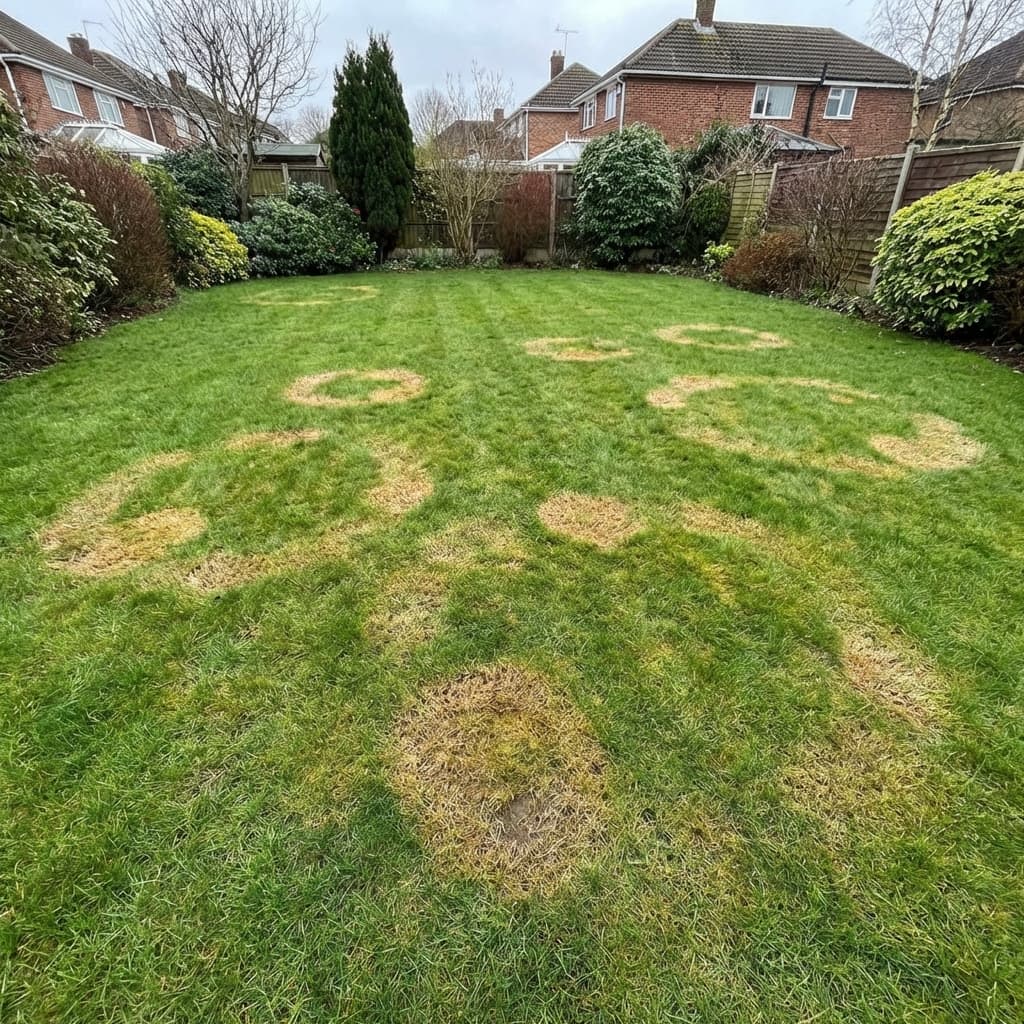
Both create brown areas, but brown patch disease is circular with defined edges, often with a distinctive "smoke ring" appearance. Scalping usually follows mowing patterns or terrain features.
If you're unsure whether brown areas are from scalping or disease, look for patterns. Scalping follows mower paths and appears immediately after mowing. Disease spreads gradually and doesn't correlate with mowing.
When Damage is Severe
Occasionally, scalping is severe enough that grass doesn't recover well on its own. Signs include:
- No regrowth after 6 weeks during growing season
- Large bare areas (over 10 square feet) with no stolons spreading in
- Secondary problems like erosion or severe weed infestation
In these cases, sodding is your best option. Remove dead grass and any weeds, prepare the soil properly (grade level, add compost if needed), and install new sod. Follow proper establishment procedures, and you'll have the area looking good again within a month.
The Bottom Line
Scalping happens to everyone eventually. Jacksonville's terrain, rapid summer grass growth, and St. Augustine's need for higher mowing all contribute to the risk. The key is catching it early, providing good care during recovery, and adjusting your practices to prevent repeats.
Most scalped areas recover completely within 2-4 weeks if you keep them watered and give them time. Raise your mower, slow down, and pay attention to your lawn's uneven spots. With proper technique, you can avoid scalping damage and maintain the healthy, green lawn Jacksonville's climate makes possible.
Need Professional Sod Installation?
Jax Sod provides sod installation, sod replacement, and new lawn installation across Jacksonville and Northeast Florida. Free quotes!
Related Articles
Moles Are Destroying Your Lawn: How to Identify, Prevent, and Repair the Damage
Those mysterious raised tunnels ruining your beautiful sod? That's mole damage. Learn how to identify mole activity, understand why they chose your yard, and what it takes to repair the destruction.
5 Signs Your Lawn Needs to Be Replaced (Not Just Repaired)
Is your lawn beyond saving? Learn when it makes more sense to start fresh with new sod instead of fighting a losing battle with repairs.
Arlington Jacksonville Lawn Care
Arlington Jacksonville Lawn Care. Review the site, scope and current written quote before deciding.
Let’s talk about your lawn
Ask our AI assistant a lawn question, or send the team a free installation estimate request.