(904) 901-1457
Best Grass for Shade in Jacksonville, FL
Back to Articles

Best Grass for Shade in Jacksonville, FL

Grass Types January 27, 2026 18 min read

Best Grass for Shade in Jacksonville, FL

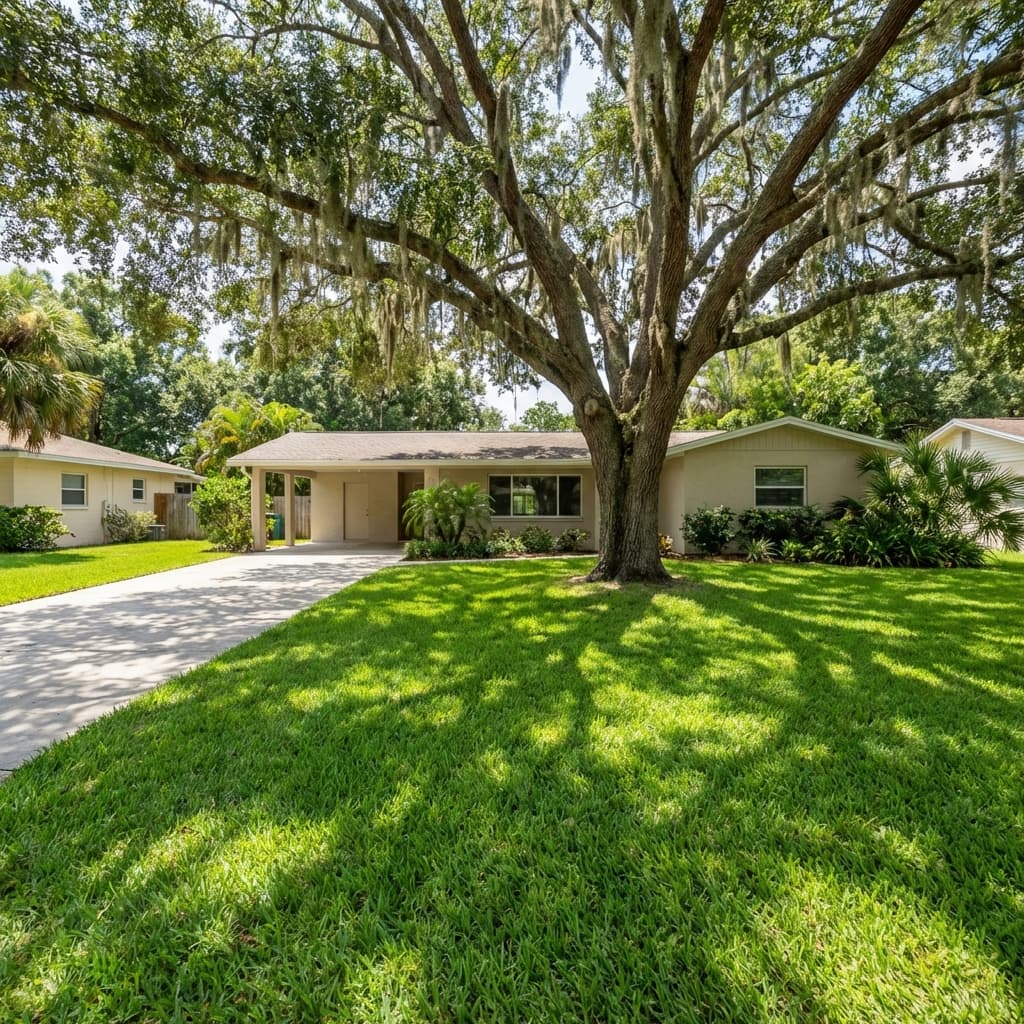
Shaded lawns are one of Jacksonville's most common landscaping challenges. Our area's beloved live oaks, towering magnolias, and dense pine canopies create beautiful tree-lined streets throughout neighborhoods like Riverside, Avondale, San Marco, and Mandarin. But those same trees that provide cooling shade and Southern charm also make growing healthy grass remarkably difficult. After 37+ years installing sod across Northeast Florida, we've learned that success in shaded areas requires both the right grass selection and realistic expectations about what's actually possible under limited light.

The reality is that all turfgrasses prefer full sun. Grass evolved in open prairies and savannas, not forest floors. When we ask grass to grow under tree canopies, we're pushing plants to survive in conditions far from their natural habitat. Some varieties adapt better than others, but none truly thrive in deep shade the way they flourish in full sun. Understanding this fundamental limitation helps homeowners make informed decisions about grass selection, alternative ground covers, and when to abandon turfgrass entirely for shade-appropriate landscaping.

In this guide, we'll rank every grass option available in Jacksonville by shade tolerance, explain why shade creates such challenges in our specific climate, and provide practical strategies for improving both light availability and lawn performance in shaded areas. We'll also cover alternative ground covers that often outperform grass in deeply shaded locations.

Why Shade Is So Challenging in Jacksonville

Shade creates multiple simultaneous stresses for grass growing in Northeast Florida. The most obvious problem is insufficient sunlight for photosynthesis. Grass needs light energy to produce carbohydrates that fuel growth, root development, and stress recovery. When shade reduces available light below a grass type's tolerance threshold, plants weaken progressively until they thin out or die completely.

But shade does more than just reduce light. It also creates the perfect environment for fungal diseases that plague Jacksonville lawns. Shaded areas stay wet longer after rain or irrigation because reduced air movement and cooler temperatures slow evaporation. This extended moisture period provides ideal conditions for brown patch, gray leaf spot, and other fungal problems that target stressed grass. In Jacksonville's humid climate, where dew forms most nights and summer thunderstorms occur almost daily, shaded lawn areas often remain damp 12-16 hours per day.

Competition from tree roots adds another layer of difficulty. Mature oaks and pines extend root systems far beyond their canopy drip lines, often covering entire yards. These roots absorb water and nutrients faster than grass roots can access them, essentially starving the lawn even when you fertilize and water properly. The most aggressive tree roots grow in the top 12 inches of soil—exactly where grass roots need to establish.

Jacksonville's sandy soil compounds the problem. Sand drains quickly and holds few nutrients, which normally benefits lawn health by preventing waterlogged conditions. But in shaded areas competing with tree roots, rapid drainage means you must water and fertilize more frequently to support grass. This creates a difficult balance: water enough to sustain grass without keeping soil so constantly wet that fungal diseases explode.

Finally, our year-round growing season means shaded grass never gets a dormant recovery period. In northern climates, cool-season grasses go dormant under winter snow, allowing them to recover from summer shade stress. Jacksonville's mild winters keep grass actively growing, so stress from inadequate light accumulates throughout the year without natural recovery periods.

Shade Tolerance Rankings for Jacksonville Grasses

Not all grass types handle shade equally. Here's how every variety commonly available in Northeast Florida performs under limited light conditions.

St. Augustine Grass: Jacksonville's Shade Champion

St. Augustine is Northeast Florida's most shade-tolerant turfgrass by a significant margin. While it prefers 6-8 hours of direct sun daily, it can survive on as little as 4 hours of filtered sunlight. In comparison, Bermuda and Bahia fail completely with less than 6-8 hours of direct sun.

Among St. Augustine varieties, Palmetto leads in shade tolerance. It was specifically bred for improved performance in lower light conditions and has demonstrated better density and color retention than older varieties like Floratam when grown under tree canopies. Palmetto maintains acceptable coverage with 4-5 hours of filtered sunlight, making it suitable for areas under high-canopy oaks where light filters through leaves but never creates solid sunny patches.

CitraBlue is another excellent shade performer, developed by the University of Florida specifically for challenging Florida conditions. It combines good shade tolerance with better cold hardiness than some St. Augustine varieties, which matters in northern Jacksonville areas and Clay County where occasional hard freezes occur.

Seville St. Augustine offers the finest texture among shade-tolerant varieties and handles moderate shade well (5-6 hours of sun). However, its finer blades make it slightly more susceptible to chinch bug damage, which targets stressed St. Augustine aggressively in shaded areas where grass is already weakened.

St. Augustine's shade tolerance comes with trade-offs. It's more susceptible to disease in damp shaded conditions than Bermuda or Zoysia. It requires more water than drought-tolerant varieties. And it produces thatch buildup faster in shade (where slower growth reduces natural decomposition), requiring periodic dethatching to maintain health.

For most Jacksonville homeowners dealing with shaded yards, St. Augustine represents the best—and often only—viable turfgrass option.

Zoysia Grass: Moderate Shade Tolerance

Zoysia occupies the middle ground for shade performance. It requires more light than St. Augustine but tolerates significantly more shade than Bermuda. Most Zoysia varieties need 4-6 hours of direct sunlight, though they perform best with 6-7 hours.

Empire Zoysia handles partial shade better than other warm-season grasses except St. Augustine. It maintains decent density under high oak canopies in established neighborhoods like Mandarin, San Marco, and Fruit Cove. Empire's medium-fine texture and attractive dark green color make it popular for front yards where curb appeal matters even in partially shaded conditions.

Zeon Zoysia offers similar shade tolerance with an even finer texture that some homeowners prefer for aesthetic reasons. However, Zeon's finer blades make individual plants slightly less vigorous, so it recovers from stress somewhat slower than Empire.

The advantage of Zoysia over St. Augustine in shaded applications is disease resistance. Zoysia rarely suffers from the fungal problems that plague stressed St. Augustine in damp shaded environments. It also produces less thatch and requires less maintenance overall.

The disadvantage is that Zoysia still needs more light than St. Augustine provides. In areas with less than 5 hours of direct sun, Zoysia will slowly thin over multiple years even with perfect care. And Zoysia costs significantly more than St. Augustine ($0.55-$0.85 per square foot versus $0.35-$0.50), making it a substantial investment for marginal shade situations.

Use Zoysia in partially shaded areas that receive morning sun or dappled light throughout the day. Avoid it in heavily shaded sections under dense canopy where St. Augustine is the better choice.

Bermuda Grass: Sun Required

Bermuda grass is Jacksonville's most popular choice for full-sun lawns, but it fails completely in shade. Bermuda requires 6-8 hours of direct sunlight daily to maintain density and vigor. With less light, it thins rapidly, becomes susceptible to diseases, and eventually dies out entirely.

You'll sometimes see sparse Bermuda struggling under trees in Jacksonville yards. Invariably, these are remnants from sunnier times before trees matured, or volunteers that seeded into previously open areas. Thin, weak Bermuda in shade creates more problems than it solves, providing entry points for weeds while looking perpetually struggling.

Don't waste money installing Bermuda in any location that doesn't receive at least 6 hours of direct sun. For areas that currently receive adequate sun but may become shaded as young trees mature, consider this timeline when making long-term grass selection decisions.

The only exception is Celebration Bermuda, which shows marginally better shade tolerance than other Bermuda varieties. It can survive (but not thrive) with 5-6 hours of sun in some situations. However, it still performs far worse in partial shade than either St. Augustine or Zoysia, making it an unreliable choice for anything other than full-sun areas.

Bahia Grass: No Shade Tolerance

Bahia grass requires full sun and tolerates shade even worse than Bermuda. This coarse-textured, low-maintenance grass works well for large acreage, roadsides, and utility areas in full sun, but it's completely unsuitable for shaded residential lawns.

If you have Bahia in shaded areas, it will thin to the point of total failure within 1-2 years. Replace it with appropriate shade-tolerant grass or alternative ground covers.

Centipede Grass: Limited Availability and Shade Tolerance

Centipede grass grows successfully in parts of Northeast Florida and shows moderate shade tolerance (5-6 hours of sun required). However, it performs poorly on Jacksonville's sandy, slightly acidic soils without significant amendment, and it's rarely available as sod from local suppliers.

For the small percentage of Jacksonville properties with heavier soil in western Duval County or Clay County, Centipede might work in partially shaded areas. But St. Augustine or Zoysia are better choices for most situations given their wider availability, better performance on local soils, and established track record in the region.

Minimum Sunlight Requirements by Grass Type

Here's a practical reference table showing how much sunlight each grass type needs to maintain acceptable density in Jacksonville conditions:

| Grass Type | Minimum Sun (Hours/Day) | Optimal Sun (Hours/Day) | Shade Tolerance Rating | |------------|------------------------|------------------------|----------------------| | Palmetto St. Augustine | 4 hours filtered | 6-8 hours direct | Excellent | | CitraBlue St. Augustine | 4-5 hours filtered | 6-8 hours direct | Excellent | | Seville St. Augustine | 5 hours filtered | 6-8 hours direct | Very Good | | Floratam St. Augustine | 6 hours direct | 8+ hours direct | Good | | Empire Zoysia | 4-5 hours direct | 6-7 hours direct | Good | | Zeon Zoysia | 5 hours direct | 6-7 hours direct | Moderate | | Celebration Bermuda | 5-6 hours direct | 8+ hours direct | Poor | | TifTuf Bermuda | 6-8 hours direct | 8+ hours direct | Very Poor | | Bahia | 8+ hours direct | 8+ hours direct | None |

Note that "filtered" sunlight refers to light that passes through tree canopies, while "direct" means unobstructed sun. One hour of direct sun provides roughly twice the usable energy as one hour of filtered sunlight for photosynthesis purposes.

Understanding Tree Root Competition

Even with adequate light, grass growing under trees faces intense competition from root systems that extract water and nutrients faster than grass can access them. This is particularly problematic with Jacksonville's common landscape trees.

Live Oak Root Systems

Live oaks, iconic throughout Northeast Florida, produce extensive shallow root systems that extend 2-3 times beyond the canopy drip line. The most active feeder roots concentrate in the top 6-12 inches of soil—exactly where grass roots need to establish. A mature live oak can absorb hundreds of gallons of water daily during summer, leaving little moisture for grass even after irrigation.

Grass growing under live oaks faces a double challenge: reduced light from dense canopies plus aggressive root competition. This combination makes establishing and maintaining turf difficult even with shade-tolerant St. Augustine varieties.

Magnolia Root Behavior

Southern magnolias produce even more aggressive surface root systems than oaks. Their thick, ropy roots often grow partially exposed, creating additional obstacles for mowing. Magnolia leaves decompose slowly and create acidic conditions as they break down, though this is less problematic on Jacksonville's already-acidic soils than it would be elsewhere.

The dense, low-hanging canopies of magnolias create some of the darkest shade conditions in residential landscapes. Grass rarely survives directly under mature magnolias; alternative ground covers or mulched beds are usually more practical solutions.

Pine Tree Challenges

Longleaf, slash, and loblolly pines common in Jacksonville drop acidic needles that mat together and smother grass. While pine canopies allow more filtered light than dense hardwoods, the needle accumulation and root competition still make grass establishment difficult.

Regular removal of pine needles helps, but this creates additional maintenance work. Many homeowners find that mulched beds extending 6-10 feet from pine trunks work better than struggling with grass in these areas.

Strategies for Improving Light Availability

Before investing in shade-tolerant grass, consider whether you can improve light conditions through selective tree management. Even modest improvements in available sunlight can dramatically improve lawn performance.

Selective Pruning and Crown Thinning

Professional arborists can thin tree canopies by selectively removing branches to increase light penetration without harming tree health or aesthetics. Crown thinning removes 15-25% of interior branches, allowing more dappled sunlight to reach the ground while maintaining the tree's overall shape and size.

For live oaks, magnolias, and other hardwoods, crown thinning performed by certified arborists can increase ground-level light by 30-50%. This often converts areas from "deep shade" (where no grass survives) to "partial shade" (where Palmetto St. Augustine or Empire Zoysia thrive).

Timing matters for pruning in Jacksonville. Prune oaks only during June-February to avoid oak wilt disease, which spreads through fresh wounds during spring beetle activity. Prune magnolias after flowering (late spring/early summer) to avoid removing next year's flower buds.

Raising Lower Branches

Removing lower tree branches improves air circulation and allows more lateral light to reach shaded lawn areas. This "raising the canopy" approach is particularly effective for properties with multiple trees where light filters between trunks at various angles throughout the day.

In neighborhoods like Riverside, San Marco, and Avondale with historic tree-lined streets, raising canopies on multiple properties creates a corridor effect that improves light for entire blocks. Coordinate with neighbors for best results.

Strategic Tree Removal

Sometimes the best solution is removing specific trees that create disproportionate shade problems. This is a difficult decision emotionally and financially, but it's worth considering when a single poorly placed tree prevents grass from growing across significant yard areas.

When evaluating removal candidates, consider tree health, placement relative to structures, and overall landscape value. A struggling Bradford pear or overgrown volunteer tree might be worth removing to improve conditions for everything else. A majestic 100-year-old live oak deserves landscape design that works around its shade rather than removal.

Reflective Surfaces and Landscape Design

Light-colored hardscape, fences, and structures reflect additional light into shaded areas. White or light gray pavers, pale stucco walls, and light-painted fences can increase available light by 10-20% through reflection. This won't convert deep shade to full sun, but it can provide enough boost to keep struggling grass from failing completely.

Position reflective elements on the south and west sides of shaded areas where they'll bounce afternoon light into spaces that receive morning shade.

Ground Cover Alternatives for Deep Shade

When shade becomes too dense for even St. Augustine to survive, alternative ground covers often provide better results than struggling with dying grass. These shade-loving plants evolved for forest floor conditions and actually prefer limited light.

Mondo Grass (Ophiopogon japonicus)

Mondo grass is Jacksonville's most popular grass alternative for deep shade. This grasslike evergreen perennial grows in dense clumps with dark green, fine-textured foliage. It handles the deep shade under magnolias, oaks, and pines where turfgrass fails.

Mondo grass grows 4-8 inches tall and requires minimal maintenance once established. It tolerates foot traffic better than most ornamentals (though not as well as turfgrass), making it suitable for lightly used areas. The dark green color contrasts beautifully with tree bark and works well in formal landscapes throughout San Marco, Riverside, and Avondale.

Space mondo grass plants 6-8 inches apart when installing. They'll fill in within 6-12 months in favorable conditions. Mow or trim annually in late winter (February) to remove winter-damaged foliage and encourage fresh spring growth. Fertilize lightly in spring and fall with balanced slow-release fertilizer.

Cost runs $0.75-$1.50 per plant depending on container size, making it more expensive than sod initially but lower maintenance long-term.

Asiatic Jasmine (Trachelospermum asiaticum)

Asiatic jasmine is a vigorous, spreading vine that creates a dense evergreen ground cover 4-6 inches tall. It handles moderate to heavy shade, tolerates Jacksonville's summer heat, and requires minimal care once established. The glossy green leaves create a polished appearance suitable for both residential and commercial landscapes.

Asiatic jasmine spreads aggressively, covering ground at 2-4 feet per year in favorable conditions. This makes it excellent for large areas under tree groves but potentially problematic if it escapes into landscape beds or neighboring properties. Install physical barriers (edging, concrete borders) to contain spread.

Plant plugs 12-18 inches apart in spring for coverage within one growing season. Water regularly during establishment (first 8-12 weeks), then reduce to supplemental watering during extended dry periods. Mow once or twice yearly with a rotary mower set at 4-6 inches to maintain uniform height and density.

Asiatic jasmine tolerates more foot traffic than mondo grass but less than turfgrass. Use it in areas that receive occasional walking but not daily, heavy use.

Liriope (Liriope muscari)

Liriope, also called lilyturf, grows in fountain-like clumps 12-18 inches tall with grasslike foliage and late-summer purple flower spikes. It's one of the most shade-tolerant ground covers available, thriving under even dense magnolia or oak canopies.

Several cultivars suit Jacksonville landscapes:

  • 'Big Blue': Larger plants with deep blue flowers, spaced 12-15 inches apart
  • 'Evergreen Giant': Larger, coarser foliage suitable for mass plantings
  • 'Silvery Sunproof': Variegated foliage that tolerates more sun than solid green varieties

Liriope works well along shaded fence lines, under trees, and in areas too dark for mondo grass or asiatic jasmine. It requires almost no maintenance beyond annual trimming in late winter to remove damaged foliage.

Plant liriope in spring, spacing according to variety. Water during establishment, then leave it alone except during extreme drought. Fertilize lightly in spring if desired, but most liriope thrives without supplemental feeding on Jacksonville soils.

Ferns: Native Options for Natural Landscapes

Several fern species native to Northeast Florida create beautiful ground covers in shaded areas, particularly for naturalized or woodland-style landscapes.

Autumn fern (Dryopteris erythrosora) grows 18-24 inches tall with fronds that emerge copper-red in spring and mature to glossy green. It handles Jacksonville's climate well and tolerates moderate foot traffic better than most ferns.

Southern shield fern (Thelypteris kunthii) is native to Florida and thrives in consistently moist shade. It spreads slowly to form colonies in damp, shaded areas where other plants struggle.

Holly fern (Cyrtomium falcatum) offers glossy, dark green fronds and exceptional shade tolerance. It's more drought-tolerant once established than most ferns, making it suitable for areas under trees where root competition reduces moisture availability.

Space ferns according to variety, typically 18-24 inches apart. Amend Jacksonville's sandy soil with compost or aged pine bark to improve moisture retention—ferns require more consistent moisture than turfgrass. Mulch around plants to conserve moisture and suppress weeds.

Mulched Bed Alternatives

For the darkest shade or areas with impossible root competition, abandoning ground covers entirely in favor of mulched beds often provides the best results.

Choosing Mulch for Jacksonville Shade

Pine straw is Northeast Florida's most common mulch, abundant and inexpensive. It breaks down within 4-6 months, requiring regular refreshment, but it's ideal for acid-loving plants and complements natural woodland aesthetics. Pine straw works particularly well under pine trees where it mimics natural forest floor conditions.

Hardwood mulch lasts longer than pine straw (8-12 months) and provides a more formal appearance suitable for front yards and street-facing areas in neighborhoods like Ponte Vedra, Nocatee, and Town Center. Choose natural brown or dark brown rather than dyed red mulches that can look artificial in shade gardens.

Leaf mold created from composted oak leaves is free if you have mature oaks and patience to let leaves decompose. It's nutrient-rich and perfect for woodland gardens, though it breaks down quickly (3-4 months) and needs regular replenishment.

Apply 2-3 inches of mulch over landscape fabric or directly on bare soil. Edge beds cleanly to separate them visually from surrounding lawn areas. Refresh mulch 1-2 times yearly to maintain depth and appearance.

Incorporating Shade Plants in Mulched Beds

Rather than solid mulch, create interest with shade-loving shrubs, perennials, and groundcovers:

  • Azaleas and camellias provide seasonal flowers and year-round structure
  • Hostas offer dramatic foliage (though they struggle in Jacksonville's summer heat; use with caution)
  • Coral bells (Heuchera) provide colorful foliage in partial shade
  • Cast iron plant (Aspidistra elatior) is nearly indestructible in deep shade
  • Native ginger (Asarum) creates low spreading ground cover in moist shade

Space plants according to mature size, filling gaps with mulch. This creates a finished landscape that looks intentional rather than defeated by shade.

Maintenance Tips for Shade Lawns

Grass growing in shade requires different maintenance approaches than full-sun lawns. Adjust your care practices to account for limited light and increased disease pressure.

Mow Higher

Raise your mowing height 0.5-1 inch higher for shaded grass compared to full-sun areas. This provides more leaf surface area for photosynthesis, helping plants produce energy despite limited light. For Palmetto St. Augustine in shade, mow at 4-4.5 inches instead of the typical 3.5-4 inches used in full sun.

Higher mowing also shades soil, reducing weed seed germination—important because thin shaded grass provides opportunities for weeds to establish.

Reduce Fertilization

Shaded grass grows more slowly than full-sun grass and requires less nitrogen. Over-fertilizing grass in shade promotes excessive soft growth that's more susceptible to fungal diseases and doesn't address the real problem (inadequate light).

Cut nitrogen applications by 30-50% in shaded areas compared to full sun. For example, if you normally apply 1 pound of nitrogen per 1,000 square feet in full sun, reduce to 0.5-0.7 pounds in shade. Focus applications in spring and early fall when grass is actively growing rather than during summer stress periods.

Water Carefully

Shaded areas stay wet longer after rain or irrigation, creating ideal conditions for fungal diseases. Water less frequently in shade than in sun, and always water early morning (4-8 AM) to allow foliage to dry before evening.

Monitor soil moisture before watering. If the top inch of soil feels moist, delay irrigation even if full-sun areas need water. Separate irrigation zones for shaded and sunny areas allow you to customize watering schedules.

Improve Air Circulation

Anything that increases air movement helps shaded grass dry faster and reduces disease pressure. Prune lower tree branches as discussed earlier. Remove obstacles that block wind flow. Consider strategic fence adjustments or gate openings that channel breezes through problem areas.

For persistent disease issues in shaded areas, oscillating fans can improve air circulation during humid summer nights when dew forms and disease spreads.

Manage Leaf Litter

Leaves, pine needles, and tree debris smother grass by blocking light and trapping moisture. In shaded areas, this debris causes more damage than in sunny lawns because grass is already struggling for light. Remove accumulations weekly during fall and after storms rather than allowing them to mat together.

Mulching mowers chop leaves fine enough to filter through grass canopy without smothering, but this only works for light leaf fall. Heavy accumulations require removal.

Setting Realistic Expectations

The most important aspect of managing shaded lawns is accepting what's possible. Even Palmetto St. Augustine in optimal shade conditions won't achieve the density and vigor of the same grass growing in full sun. Expect some visible thinning, lighter green color, and slower recovery from damage in shaded areas.

Perfect lawns require full sun. Good lawns are possible in partial shade with appropriate grass selection and care. Acceptable lawns can sometimes be maintained in heavy shade. But deep shade under dense canopies will never support vigorous turfgrass no matter what variety you choose or how perfectly you maintain it.

Many of Jacksonville's most attractive properties successfully combine turfgrass in sunny areas with alternative ground covers or mulched beds in shade. This creates varied, interesting landscapes that work with site conditions rather than fighting them. Front yards might feature Palmetto St. Augustine in areas receiving 5-6 hours of sun, transitioning to mondo grass under the oak canopy near the street, with mulched beds around tree trunks where shade is darkest.

This layered approach looks intentional and professional while solving practical problems. It's far more satisfying than struggling to maintain struggling grass that looks perpetually thin and stressed.

Conclusion

Shade is Jacksonville's most challenging lawn condition, but it's not insurmountable with appropriate grass selection and realistic expectations. Palmetto St. Augustine offers the best performance for most shaded situations, surviving on as little as 4 hours of filtered sunlight when properly maintained. CitraBlue provides similar shade tolerance with improved cold hardiness for northern areas. Empire Zoysia works well in partial shade situations where 5-6 hours of direct sun are available.

For areas too shaded even for St. Augustine, ground covers like mondo grass, asiatic jasmine, and liriope provide attractive alternatives that actually prefer limited light. And for the darkest locations under dense magnolias or oak groves, professionally designed mulched beds with shade-loving plants create finished landscapes that look intentional rather than defeated.

Success in shade requires matching plant selection to actual light availability, managing tree root competition through appropriate maintenance, and accepting that shaded grass will never match the perfection of full-sun lawns. With these adjusted expectations and appropriate variety selection, you can create attractive landscapes even in Jacksonville's shadiest yards.

Ready to install shade-tolerant grass or explore alternative ground covers for your shaded yard? Contact Jax Sod today at (904) 901-1457 or visit jaxsod.com for a free estimate. We'll assess your property's specific light conditions and recommend solutions that will actually thrive in your landscape.

Need Professional Sod Installation?

Jax Sod connects you with expert installers across Jacksonville and Northeast Florida. Over 40 Years of experience. Free quotes!

Ready to Transform Your Lawn?

Get a free, no-obligation quote from Jacksonville's trusted sod experts. With over 40 years of experience, we'll connect you with the right installers for a perfect lawn.