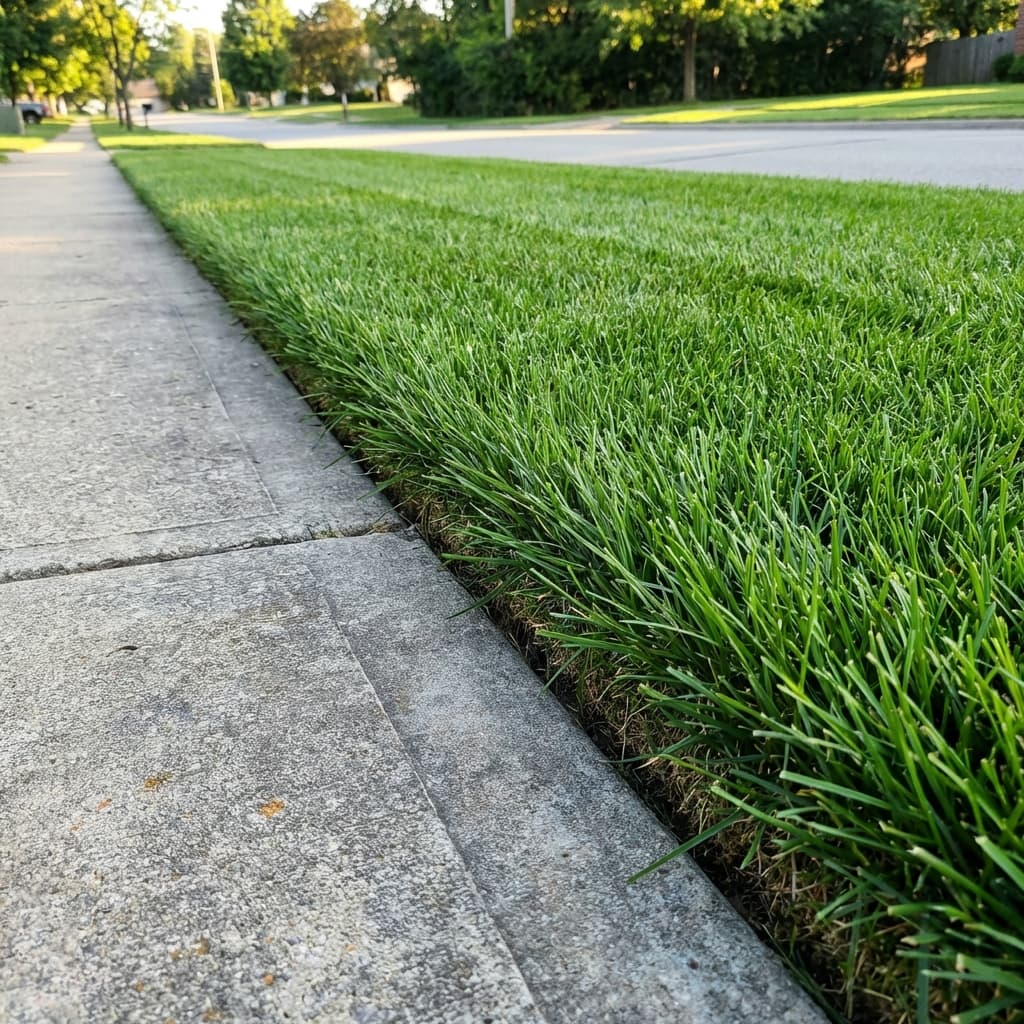
You've just closed on a beautiful new home in one of Jacksonville's growing master-planned communities—World Golf Village, Nocatee, eTown, or RiverTown. The house is pristine, the appliances gleam, and the lawn looks picture-perfect: lush green sod stretching from the front walk to the mailbox. You take photos for social media and imagine summer barbecues on that emerald carpet.
Six months later, the dream has soured. The grass on the side yards has thinned to dirt. The seams between the sod pieces have opened into weed-filled gaps. Brown patches appear and spread despite your careful watering. The identical homes on your street show the same symptoms, spreading like a neighborhood disease.
Welcome to what we call the "Builder Grade Special"—a predictable failure pattern that affects thousands of new construction homes across Northeast Florida every year. It's not your fault, and it's not bad luck. It's the inevitable result of how builder landscaping is installed.
Understanding the Builder's Priorities
To understand why builder sod fails, you need to understand builder incentives. A production homebuilder's business model is built on speed, efficiency, and cost control. They're constructing dozens or hundreds of homes simultaneously, on tight schedules with thin margins. Every day a home sits completed but unsold costs them money in carrying costs and financing.
The landscaping package is installed in the final days before closing, often by a subcontractor who bid the lowest price and is paid per yard, not per hour. This subcontractor has minimal incentive for quality because they move to the next subdivision before problems become apparent. They know the builder won't be calling them back—by the time the grass fails, the home warranty department is fielding the complaints, not the landscape crew.
This system produces predictable corners being cut.
The Three Deadly Sins of Builder Sod Installation
Sin #1: The Rubble Foundation
Proper sod installation begins with meticulous soil preparation. The ground should be cleared of debris, tilled to break compaction, graded for proper drainage, and smoothed to create a flat planting surface. This prep work takes time and adds labor cost—two things builder subcontractors are measured against.
What actually happens on most new construction sites is far simpler. The construction crew finishes framing, roofing, and siding. Debris piles up around the foundation: chunks of broken concrete, discarded lumber, drywall scraps, foam insulation, even food wrappers and soda cans. Before the landscapers arrive, a skid-steer does a quick scrape across the yard, pushing the obvious debris into piles but leaving behind everything smaller than a softball.
The landscapers arrive and lay sod directly over this construction graveyard. Sometimes we've pulled up failing sod and found two-by-four ends, stucco bucket lids, and concrete chunks six inches beneath the surface.
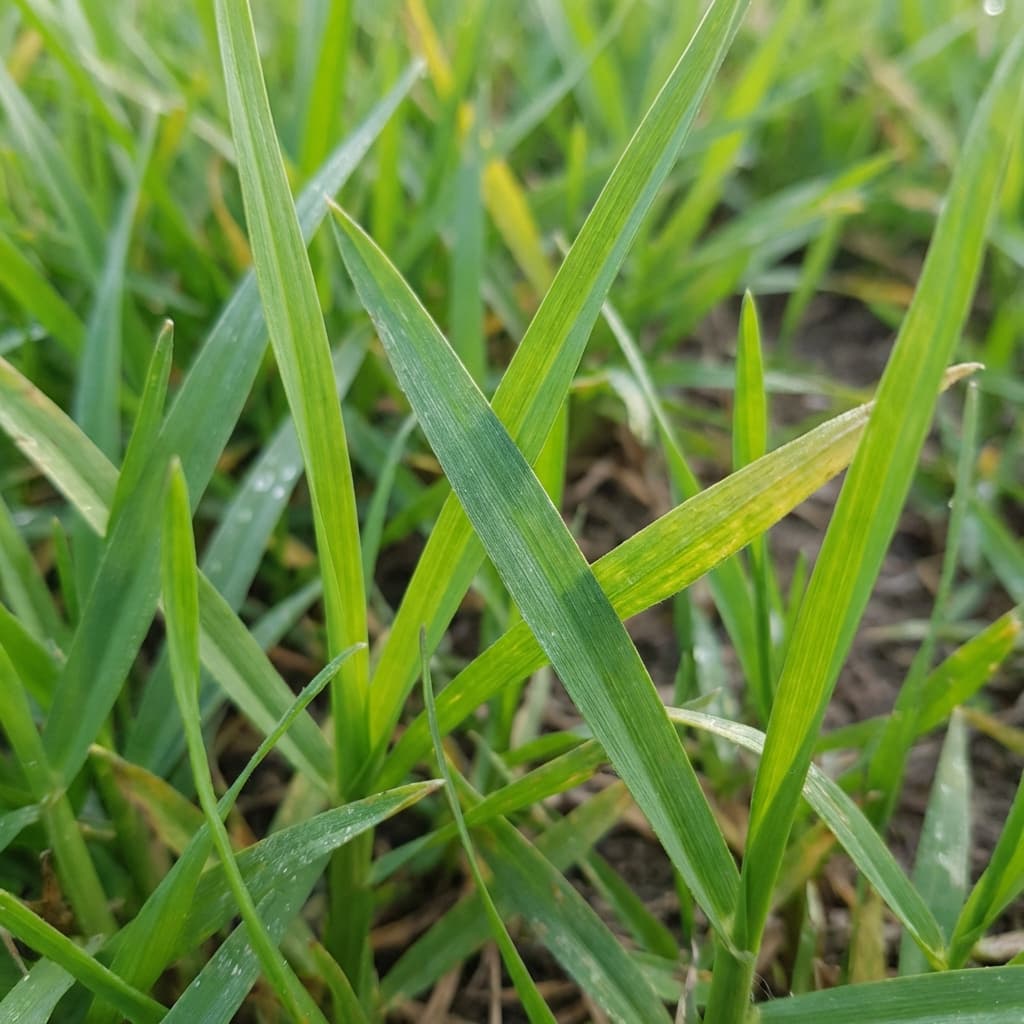
Here's what happens next: The grass looks fine for the first few weeks. It's living on the inch of soil attached to the sod from the farm, and that soil has enough moisture and nutrients to sustain the grass temporarily. But when the roots extend downward and hit hardpan clay, compressed sand, or a buried piece of concrete, they stop. They cannot penetrate. The grass, no longer able to draw water and nutrients from deeper soil, begins to decline.
The symptoms appear gradually: thinning in certain areas, increased stress during dry periods, lack of recovery after mowing. The homeowner blames their watering schedule or suspects a pest problem. The real issue is structural—there's no foundation for the grass to root into.
Sin #2: Wrong Grass for the Conditions
New construction neighborhoods in Jacksonville share a common design pattern: two-story homes on relatively narrow lots with minimal side setbacks. This creates "alley" spaces between houses that receive only two or three hours of direct sunlight per day—and often less in winter when the sun angle is low.
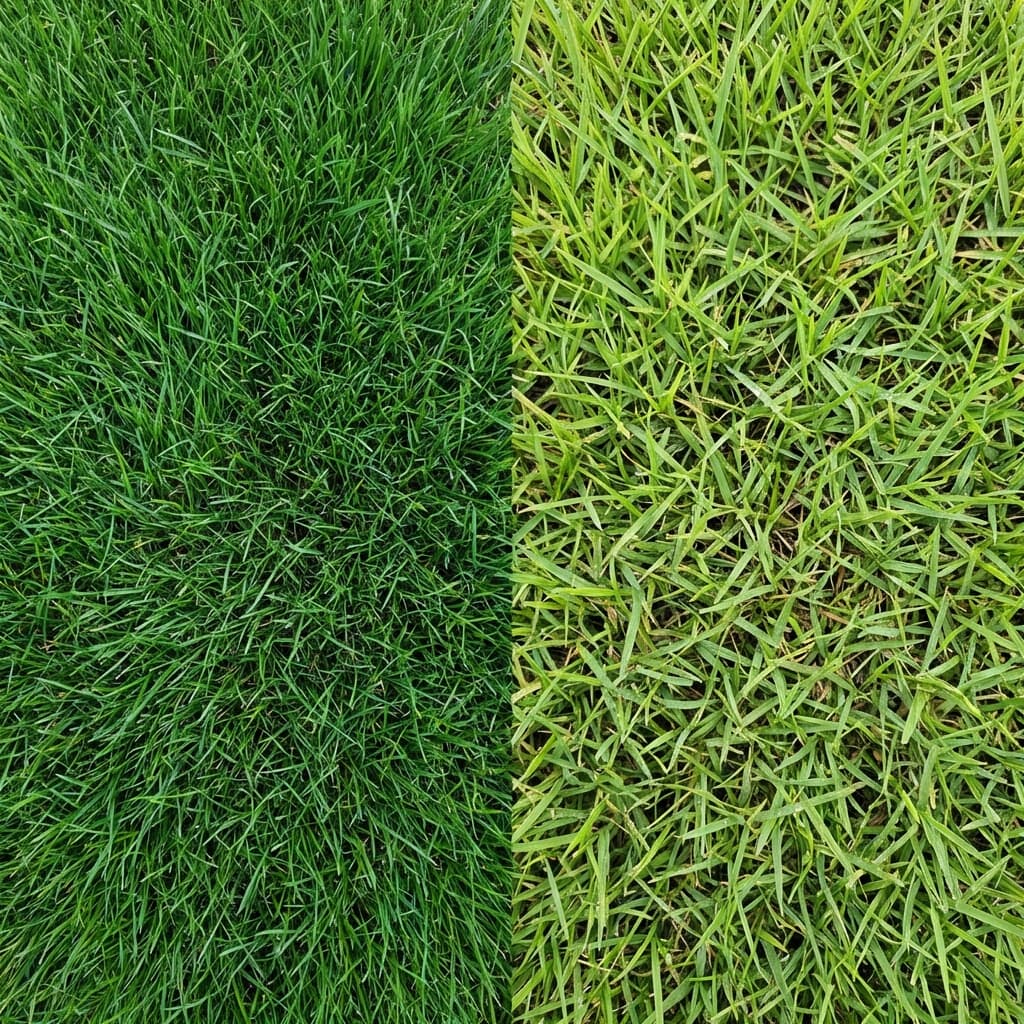
Production builders almost universally install Floratam St. Augustine grass, regardless of site conditions. Floratam is the cheapest St. Augustine variety and grows aggressively, which makes it look full and healthy at closing. It's also the most sun-demanding St. Augustine cultivar, requiring six to eight hours of direct sunlight to maintain density and color.
Plant Floratam in a shady side yard, and the outcome is predetermined. The grass will thin progressively through the first year, struggling to gather enough energy to maintain itself. By year two, you'll have more dirt and dollarweed than grass. By year three, the side yards are essentially bare.
🚩 Red Flag #1: Floratam planted in side-yard alleys with 2-3 hours of sun. This grass needs 6-8 hours. The failure is inevitable.
The frustrating part is that shade-tolerant alternatives exist. Palmetto St. Augustine thrives on four to five hours of sun. ProVista and Seville handle even shadier conditions. But these varieties cost more per pallet, and the builder's landscaper isn't being paid to recommend the right grass for each microclimate. They're being paid to cover dirt.
Sin #3: The Gap Installation
Professional sod installation follows a simple principle: seams should be tight, with pieces butted firmly against each other like bricks in a wall. The goal is a continuous surface with no exposed soil between pieces.
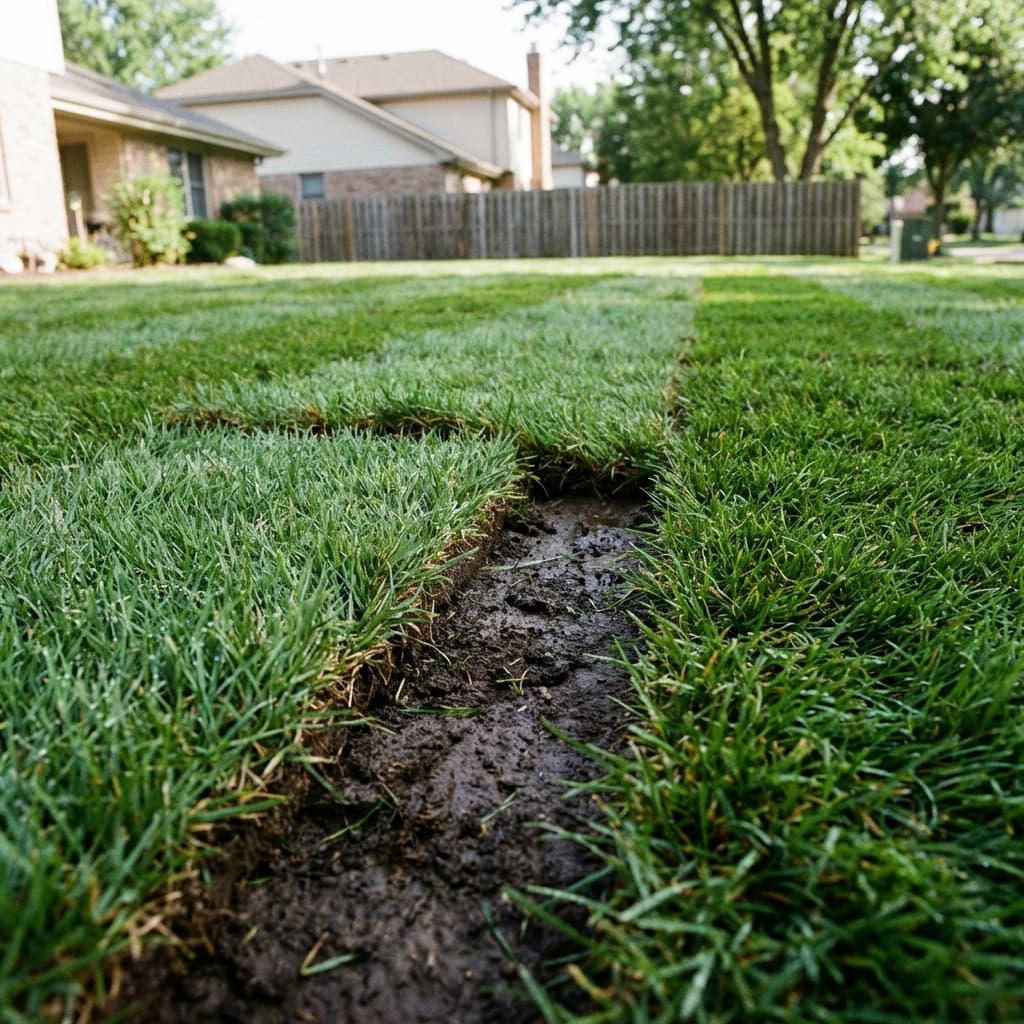
High-volume builder crews, racing to complete multiple lots per day, often leave gaps. Sometimes it's obvious—half-inch spaces visible between every piece. Sometimes it's subtle—pieces that look tight initially but shrink as they dry, opening gaps over the next few days.
These gaps are weed highways. Every crack exposes bare soil, and bare soil in Florida sprouts weeds with remarkable speed. Dollarweed, crabgrass, chamberbitter, and spurge take root in the margins within weeks of installation. By the time the homeowner notices the problem, the weeds have established root systems and begun expanding.
Closing gaps after installation is difficult. You can fill them with topsoil, but by then the seams don't match—some pieces have grown while others haven't. The patched areas look like zipper scars through the lawn.
Protecting Yourself: Before Closing
If you haven't closed yet, you have leverage. Builders want to close; they have schedules and financing costs. Use that leverage to negotiate better landscaping outcomes.
Option 1: The Landscape Credit
The smartest move is to request a landscape credit instead of the builder's standard package. Ask the builder to deduct the cost of their landscaping from your closing price (typically $1,500-3,000) and let you hire your own installer.
This approach gives you control over quality at every stage:
- Proper soil preparation: Your installer will remove debris, till the soil, and grade for drainage.
- Correct grass selection: Shade-tolerant varieties go in shady areas; sun-loving varieties go in sunny areas.
- Quality installation: Tight seams, immediate watering, proper rolling.
- Accountability: Your installer knows you're watching and you're their customer, not the builder.
Not all builders agree to landscape credits, but many will negotiate, especially if you're far enough along in the contract that walking away would cost them money.
💡 Best Move: Request a landscape credit ($1,500-3,000) and hire your own installer. Control quality at every stage.
Option 2: The Enhanced Inspection
If a landscape credit isn't possible, conduct a thorough landscape inspection at your final walkthrough. Most buyers focus on the house—checking that appliances work and scratches are repaired—while barely glancing at the yard. Flip that priority.
Check these items before closing:
-
Lift a corner: Find an edge piece and pull up gently. Is there black, crumbly soil underneath, or hard clay and rocks? If you see construction debris or grey hardpan, document it with photos.
-
Check the seams: Walk the entire yard looking for gaps between sod pieces. Mark any you find with landscape flags so the builder can address them.
-
Verify the grade: Stand at the low point of the yard and look toward the foundation. Water should flow away from the house, not toward it. Sod installed too high relative to the driveway or sidewalk can dam water and cause pooling.
-
Test the irrigation: Turn on every zone and verify coverage. Walk the yard while sprinklers run, looking for dry spots, overlapping heads (which can create puddles), and corners that receive nothing.
Document any issues in writing and require the builder to correct them before closing—or at minimum, secure a written commitment to address them during the warranty period.
Rescue Operations: After Closing
If you already own the home and the grass is failing, the worst thing you can do is wait. We see homeowners spend two years hoping the lawn will "come back" with more water or fertilizer. It won't. The problems are structural, not nutritional.
Assessing the Damage
Walk your property and honestly evaluate what you have. What percentage of the lawn is thick, healthy grass? What percentage is thin, struggling, or bare?
If the healthy grass covers more than 70% of the total area, targeted repair might be cost-effective. You can cut out the failed sections, improve the soil in those spots, and install new sod matched to the conditions (shade-tolerant varieties in shade, etc.).
If healthy grass covers less than 50%, you've crossed the replacement threshold. Patchwork repair will create a quilt of mismatched textures and colors, and the underlying soil problems will continue causing failures in spots you didn't fix.
The Full Renovation Process
When we renovate a failed builder lawn, the process includes everything that should have happened initially:
-
Complete sod removal: We use sod cutters to strip the existing grass and the top inch of soil, removing all the accumulated thatch and weed root systems.
-
Debris clearing: We rake out rocks, concrete chunks, and buried construction trash. On bad sites, we've filled multiple wheelbarrows with debris.
-
Soil amendment: We add topsoil or compost to sandy areas lacking organic matter. We apply starter fertilizer to provide phosphorus for root development.
-
Precision grading: We correct drainage issues and create a smooth, level surface. Low spots that hold water get filled; high spots that scalp during mowing get shaved.
-
Site-matched installation: Shade-tolerant grass goes in shade; sun-loving grass goes in sun. The right variety in the right location dramatically improves long-term success.
FAQ: New Construction Lawn Questions
Q: Can I hold the builder responsible for failed sod?
A: If you're within the warranty period (typically one year for landscaping), yes—document the failure with photos and submit a warranty claim. However, builders often respond with minimal repairs: a few replacement pieces laid over the same bad soil. Push for proper soil preparation if you want lasting results, or negotiate financial compensation and hire your own contractor.
Q: Should I install gutters before sodding?
A: Absolutely. Without gutters, rainwater cascades off your roof and hits the ground with concentrated force, digging trenches along the drip line. These erosion channels destroy sod and create perpetual bare spots. Install gutters with downspout extensions that direct water away from the foundation and lawn.
Q: How long should I wait after construction before planting?
A: There's no mandatory waiting period, but be aware that the ground continues to settle for 6-12 months after construction. Buried backfill around the foundation compresses, organic debris decomposes, and low spots appear. If you plant immediately, you may need to top-dress (add sand or soil) a year later to correct the settling. Some homeowners prefer to wait and get it right once.
Q: The side yard is too shady for grass. What are my alternatives?
A: If you have dense shade with less than three hours of sun, even shade-tolerant grass will struggle. Consider hardscape (pavers, stepping stones), mulch beds with shade-tolerant shrubs, or groundcovers like Asiatic Jasmine or Mondo Grass that handle low light better than turf.
The Bottom Line
Builder sod fails for predictable, systemic reasons—not because you did something wrong as a homeowner. Understanding those reasons empowers you to either prevent the problem (landscape credits, enhanced inspections) or address it efficiently (proper renovation instead of endless failed repairs).
A healthy lawn in Jacksonville is absolutely achievable. It just requires the right grass in the right place on properly prepared soil. Rarely does builder landscaping meet that standard.
⚠️ The Pattern: Builder grass looks perfect at closing. Six months later, side yards are bare. This isn't bad luck—it's predictable shortcuts.
Dealing with a failing builder lawn? Contact Jax Sod for an honest evaluation. We'll tell you whether repair makes sense or whether a clean renovation is the smarter investment.