(904) 901-1457
Lawn Fungus Treatment Guide for Jacksonville, FL
Back to Articles

Lawn Fungus Treatment Guide for Jacksonville, FL

Lawn Care January 27, 2026 17 min read

Lawn Fungus Treatment Guide for Jacksonville, FL

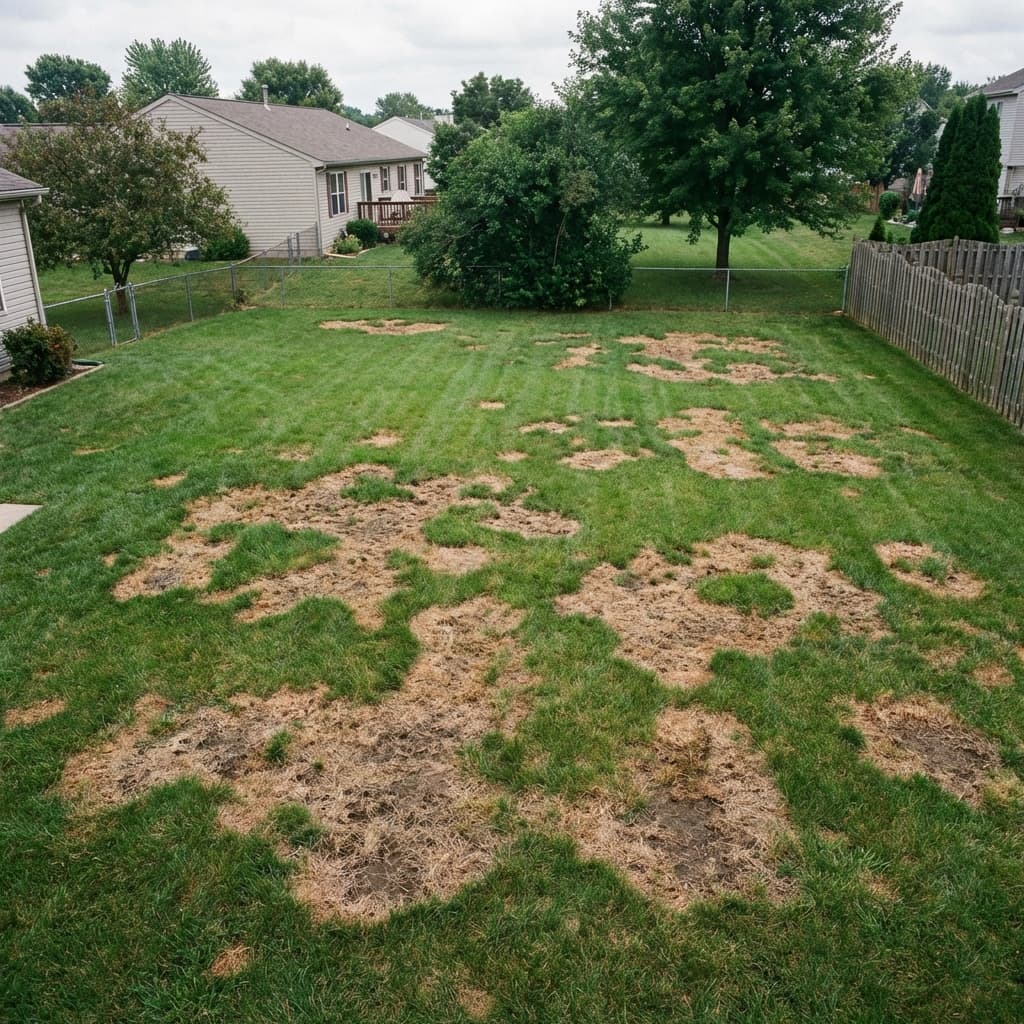
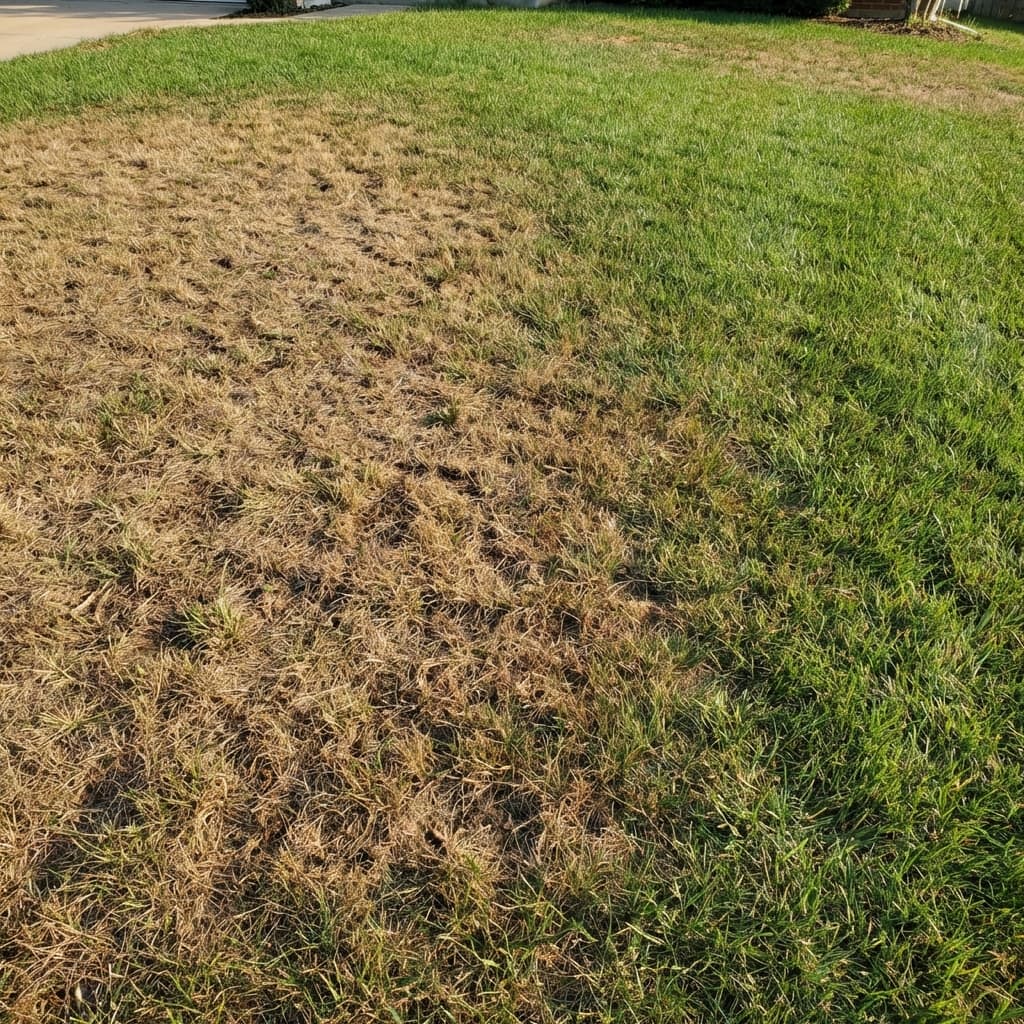
If you wake up one morning to find circular brown patches, irregular dead spots, or suspicious discoloration spreading across your Jacksonville lawn, you've likely encountered the reality that makes our region one of the most challenging in the country for lawn disease management: Jacksonville is a fungus hotspot.

The combination of factors that makes Jacksonville such a great place to live—warm temperatures, proximity to water, lush vegetation—also creates perfect conditions for turfgrass diseases. Our average annual humidity of 75-80%, summer temperatures consistently in the 90s, 52 inches of annual rainfall concentrated in intense summer storms, and warm overnight temperatures that prevent dew from drying create what plant pathologists call "ideal disease pressure."

At Jax Sod, we've treated fungal disease on Jacksonville lawns for 37+ years, from Ponte Vedra Beach to Orange Park and everywhere in between. We've seen homeowners lose thousands of dollars worth of sod to preventable disease, and we've helped others maintain beautiful lawns through proactive management. The difference comes down to three things: early identification, appropriate treatment, and cultural practices that reduce disease risk.

This guide will walk you through identifying the most common lawn diseases in Jacksonville, explain treatment protocols for each, and provide the prevention strategies that keep fungus from becoming a recurring nightmare.

Why Jacksonville Is a Fungus Hotspot

Before diving into specific diseases and treatments, it's worth understanding why Jacksonville lawns face such intense disease pressure. This isn't just interesting background—it affects every decision you make about lawn care.

The Humidity Factor

Jacksonville's proximity to the Atlantic Ocean and St. Johns River creates consistently high humidity levels. During summer months, morning humidity regularly reaches 85-95%, and even afternoon humidity rarely drops below 60-70%. Fungal spores require moisture to germinate and infect grass plants, and our humidity provides that moisture through heavy dew that forms nightly and doesn't fully evaporate until late morning.

Many fungal diseases require just 10-12 hours of leaf wetness to establish infection. In Jacksonville, during summer months, grass blades stay wet from evening dew until mid-morning sun—easily 10-14 hours of ideal infection conditions, night after night.

Temperature Patterns

Our warm overnight temperatures compound the problem. Northern climates see daily temperature swings of 30-40 degrees, with cool nights that stop fungal growth. Jacksonville summer nights rarely drop below 75°F, and many diseases thrive at temperatures between 70-90°F. Essentially, our climate provides 24/7 favorable conditions for fungal growth during peak disease season.

The worst periods are typically July through September, when temperatures, humidity, and rainfall all peak simultaneously. This is when we see explosive disease spread that can destroy entire lawns within 7-10 days if left untreated.

Rainfall Distribution

Jacksonville's 52 inches of annual rainfall would be manageable if it arrived as gentle, regular precipitation. Instead, we receive intense thunderstorms that dump 1-3 inches in an hour, saturate soils, extend leaf wetness periods, and create splash dispersal of fungal spores from infected areas to healthy turf.

Heavy rain followed by sunny, humid days creates what pathologists call "perfect disease weather"—extended moisture plus warm temperatures. And we get this pattern repeatedly from June through September.

Grass Type Susceptibility

The most popular lawn grass in Jacksonville—St. Augustine—is also among the most disease-susceptible warm-season grasses. Gray leaf spot, brown patch, and take-all root rot all affect St. Augustine, with gray leaf spot being particularly devastating to new sod installations during summer months.

This doesn't mean St. Augustine is a bad choice for Jacksonville—it's still the best option for shade tolerance and salt tolerance—but it does mean disease management is part of the St. Augustine ownership agreement.

Common Jacksonville Lawn Diseases

Let's break down the diseases you're most likely to encounter in Northeast Florida, with detailed descriptions that help you identify what you're seeing in your yard.

Brown Patch

What It Looks Like:

Brown patch creates roughly circular patches of brown, dead grass ranging from 6 inches to several feet in diameter. The patches typically have a darker brown or purple-gray border called a "smoke ring" that's most visible early morning when dew is present. Within the patch, grass blades pull away easily from the soil with a wet, rotted appearance at the base.

Individual leaf blades show tan lesions with darker borders. The disease typically appears in irregular patterns across the lawn rather than concentrated in one area.

Grasses Affected:

Brown patch affects all common Jacksonville grasses but is most severe on St. Augustine and Zoysia. Bermuda and Bahia can develop brown patch but usually recover more readily.

Conditions:

Brown patch thrives when nighttime temperatures stay above 68°F combined with high humidity and extended leaf wetness. In Jacksonville, we typically see it in spring (April-May) and fall (September-October) during warm, wet periods. Excessive nitrogen fertilization and thick thatch increase susceptibility.

Why It Happens in Jacksonville:

Our mild winters mean brown patch fungus survives year-round in thatch and soil. When conditions become favorable in spring or fall, the disease explodes rapidly. Neighborhoods with heavy tree cover and poor air circulation—like parts of San Marco, Riverside, and Avondale—see more severe brown patch due to extended leaf wetness.

Gray Leaf Spot

What It Looks Like:

Gray leaf spot creates small, oval to elongated lesions on leaf blades. The spots are initially small and gray-green, then develop into larger lesions with brown to tan centers and dark purple-brown borders. Severely infected leaves turn yellow, then brown, and may appear scorched.

Unlike brown patch, which creates distinct circular patterns, gray leaf spot causes irregular thinning and an overall decline in lawn appearance. Severely affected lawns can look almost completely brown within a week of infection.

Grasses Affected:

Gray leaf spot is St. Augustine grass's most serious disease in Jacksonville. It rarely affects other grass types. Among St. Augustine cultivars, Floratam is most susceptible, while Palmetto and Seville show better resistance.

Conditions:

Gray leaf spot peaks during hot, humid, rainy periods—typically July through September in Jacksonville. New sod is extremely vulnerable during the first 4-8 weeks after installation. Excessive nitrogen fertilization, especially on new sod, dramatically increases disease severity.

Why It Happens in Jacksonville:

July and August bring the perfect combination of factors for gray leaf spot: daytime temperatures in the 90s, nighttime temperatures in the mid-70s, frequent afternoon thunderstorms, and high humidity. Installing new St. Augustine sod during these months virtually guarantees gray leaf spot unless preventive fungicide is applied.

Dollar Spot

What It Looks Like:

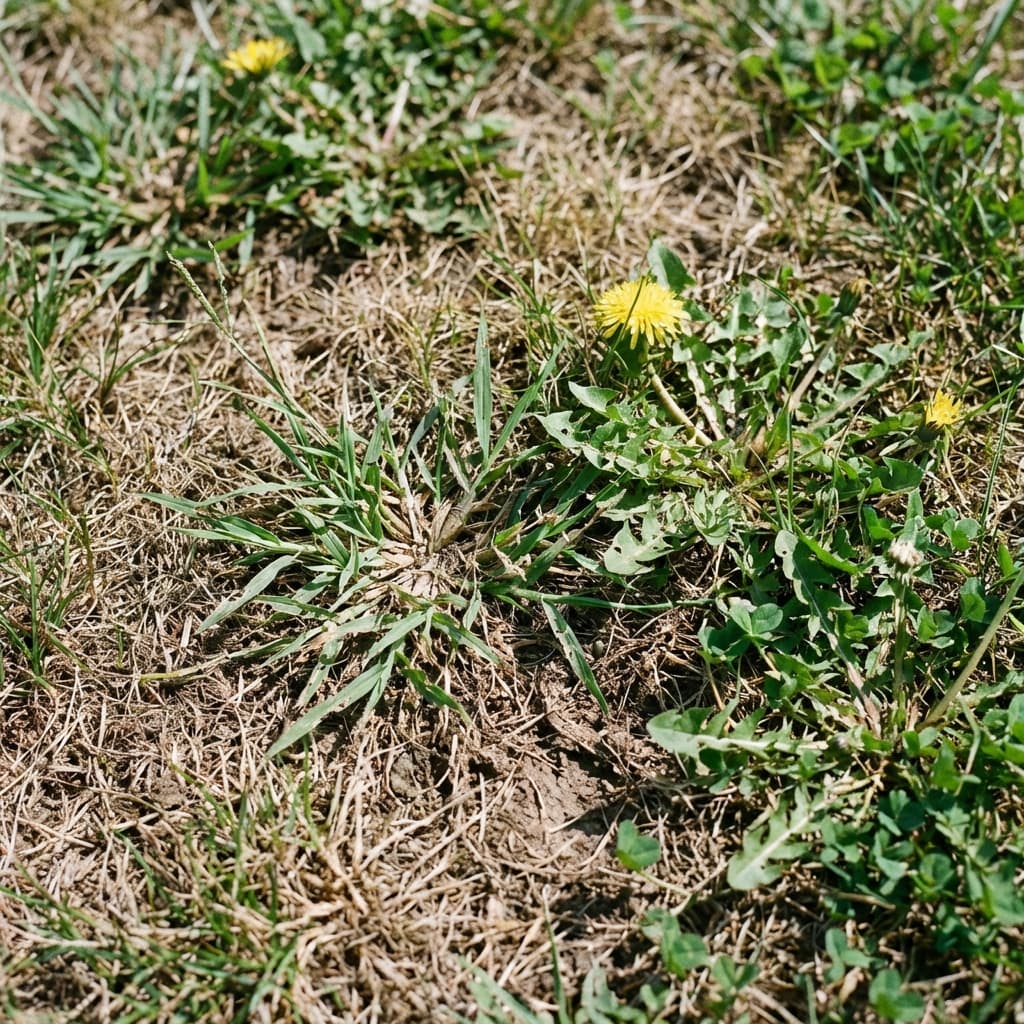
Dollar spot creates small, roughly circular tan or straw-colored spots 2-6 inches in diameter, about the size of a silver dollar (hence the name). Individual spots may merge to create larger irregular dead areas. Affected grass blades show tan lesions with reddish-brown borders, typically in an hourglass shape across the blade.

Early morning, you may see cottony white fungal mycelium on affected areas when dew is present. This disappears as the day warms and dew evaporates.

Grasses Affected:

Dollar spot primarily affects Bermuda and Zoysia in Jacksonville. St. Augustine and Bahia rarely develop dollar spot. Among Bermuda varieties, common Bermuda is more susceptible than improved cultivars like TifTuf or Celebration.

Conditions:

Dollar spot develops when temperatures are between 60-85°F with heavy dew and moderate humidity. In Jacksonville, we see it during spring (April-May) and fall (September-October) transitions. Low nitrogen levels increase susceptibility—dollar spot often appears in lawns that haven't been fertilized in several months.

Why It Happens in Jacksonville:

Our extended spring and fall seasons create prolonged periods of dollar spot-favorable temperatures. Heavy dew formation, common throughout Northeast Florida due to our proximity to water bodies, provides the moisture dollar spot requires.

Take-All Root Rot

What It Looks Like:

Take-all root rot causes irregular patches of yellowing grass that gradually thin and die. Unlike diseases that affect leaves, take-all attacks roots, turning them dark brown to black and rotted. Affected grass pulls up easily because the root system has been destroyed.

The disease creates irregular, spreading patches rather than defined circles. Affected areas often appear drought-stressed even with adequate irrigation because damaged roots can't absorb water.

Grasses Affected:

Take-all root rot primarily affects St. Augustine grass in Jacksonville. It's particularly severe in areas with alkaline soil (pH above 7.0), which is common in coastal neighborhoods from Jacksonville Beach to Ponte Vedra Beach where shell-based soils raise pH.

Conditions:

Take-all develops during warm, wet conditions, typically April through October in Jacksonville. High soil pH (above 7.0), excessive thatch, poor drainage, and over-watering increase severity. Once established, the disease is extremely difficult to eliminate.

Why It Happens in Jacksonville:

Many Jacksonville neighborhoods, particularly coastal areas, have naturally high soil pH. Additionally, our frequent irrigation and rainfall can keep soils constantly moist, favoring root disease development. Poor drainage in clay-heavy soils compounds the problem.

Fairy Ring

What It Looks Like:

Fairy ring appears as circular or arc-shaped patterns of dark green grass, sometimes with mushrooms appearing along the ring. In severe cases, the grass within the ring may thin or die. Rings can be several inches to many feet in diameter and expand outward over time.

There are actually three types of fairy ring, but the most common in Jacksonville shows as dark green rings where the fungus releases nitrogen as it decomposes organic matter in the soil.

Grasses Affected:

Fairy ring can affect all grass types in Jacksonville but is most noticeable in Bermuda and Zoysia lawns. It often appears in areas where trees have been removed or in lawns with significant organic debris buried in the soil.

Conditions:

Fairy ring fungi live on decaying organic matter in soil. They appear at any time during the growing season and persist year after year, slowly expanding. Drought stress can make symptoms more visible.

Why It Happens in Jacksonville:

New home construction in developments like Nocatee, Julington Creek, and areas of St. Johns County often involves clearing trees and burying stumps or construction debris. Fairy ring fungi colonize this organic matter, creating the characteristic rings.

Jacksonville Lawn Fungus Treatment Protocols

Identifying the disease is only half the battle. Effective treatment requires matching the right fungicide to the specific pathogen while addressing cultural factors that allowed the disease to develop.

Fungicide Active Ingredients and Applications

Different fungal diseases respond to different active ingredients. Using the wrong fungicide wastes money and allows the disease to continue spreading.

For Brown Patch:

Effective active ingredients include propiconazole (Heritage), azoxystrobin (several brands), or myclobutanil. Apply at first sign of disease and repeat every 14-21 days if conditions remain favorable. Brown patch fungicides work both preventively and curatively if applied early in disease development.

In Jacksonville, we often recommend a preventive application in April (spring brown patch season) and another in September (fall season) for lawns with a history of brown patch.

For Gray Leaf Spot:

Azoxystrobin is the most effective active ingredient for gray leaf spot. Products like Heritage and Scotts DiseaseEx contain azoxystrobin. Apply at first symptom appearance and repeat every 14 days during favorable conditions (July-September in Jacksonville).

For new St. Augustine sod installed during summer, we strongly recommend a preventive azoxystrobin application at installation, then every 14 days for the first 6 weeks. This small investment prevents devastating disease that can destroy newly installed sod.

For Dollar Spot:

Dollar spot often responds to nitrogen fertilization alone, as the disease primarily affects nitrogen-deficient turf. If chemical control is needed, use propiconazole or myclobutanil. Apply when symptoms first appear and repeat every 14-28 days as needed.

In many cases, applying 0.5-1 pound of nitrogen per 1,000 square feet eliminates dollar spot without fungicide. This is why dollar spot often appears in spring or fall—times when homeowners haven't fertilized recently.

For Take-All Root Rot:

Take-all is notoriously difficult to treat. Azoxystrobin shows some efficacy but won't eliminate established infections. Focus on cultural controls: acidify soil with sulfur to lower pH to 6.0-6.5, improve drainage, reduce irrigation frequency, remove thatch, and apply manganese sulfate (helps grass resist infection).

Multiple fungicide applications over months may be necessary, combined with aggressive cultural management. Severe cases may require complete lawn replacement with soil amendments to address pH and drainage.

For Fairy Ring:

There's no effective fungicide for fairy ring. Treatment focuses on masking symptoms: frequent fertilization to green up the entire lawn (making the dark green ring less noticeable), aeration to break up the hydrophobic layer that fairy ring creates in soil, and consistent irrigation.

In severe cases where grass dies within the ring, excavating soil 12-18 inches deep and 2 feet beyond the visible ring, then replacing with fresh soil and sod, is the only permanent solution.

Application Methods and Safety

Fungicides come as granular or liquid formulations. Liquid formulations generally work better because they provide immediate contact with fungal mycelium on leaf blades and penetrate into the grass canopy more effectively.

Application Best Practices:

Apply fungicides in early morning or evening when temperatures are below 85°F and wind is minimal. Water lightly after application (unless label specifies not to) to move the product into the canopy. Always follow label rates—more is not better and can damage turf.

Wear protective equipment (gloves, long sleeves, closed shoes) when mixing and applying. Keep pets and children off treated areas until spray dries completely.

Resistance Management:

Fungal pathogens can develop resistance to fungicides used repeatedly. Rotate between fungicides with different active ingredients (propiconazole one application, azoxystrobin the next) to reduce resistance development. Never use the same fungicide active ingredient more than 2-3 times per season.

Cultural Disease Prevention

Fungicides treat symptoms, but cultural practices address the underlying conditions that allow disease to develop. In Jacksonville's challenging climate, cultural prevention is absolutely essential—you can't fungicide your way to a healthy lawn if cultural conditions favor disease.

Irrigation Management

Watering practices have more impact on fungal disease than any other single factor. Jacksonville homeowners face a balancing act: provide enough water for grass health but avoid excessive moisture that promotes disease.

Timing Matters Most:

Water early morning (4am-8am) so grass blades dry quickly as the day warms. Never water in evening or at night—this extends the period grass blades stay wet, dramatically increasing disease risk. Many Jacksonville homeowners run irrigation at 10pm or midnight for convenience, but this is the worst possible time for disease prevention.

Frequency and Depth:

Water deeply and infrequently rather than shallow and often. Apply 0.5-0.75 inches twice per week (respecting SJRWMD restrictions: odd addresses Wednesday/Saturday, even addresses Thursday/Sunday). This encourages deep root growth and allows soil surface to dry between waterings, limiting fungal spore germination.

Check soil moisture before irrigating. If rainfall provided adequate moisture, skip irrigation cycles. Most fungal disease problems we see result from over-watering, not under-watering.

Fertilization Practices

Both excess and deficient nitrogen increase disease susceptibility, just to different diseases. Brown patch and gray leaf spot are promoted by excessive nitrogen, particularly on new growth. Dollar spot is promoted by nitrogen deficiency.

Jacksonville Fertilization Schedule:

Apply 3-4 pounds of nitrogen per 1,000 square feet annually for St. Augustine, split into 4-5 applications:

  • March: 0.75 lb N (spring greenup)
  • May: 0.75 lb N (summer growth)
  • July: 0.5 lb N (reduced rate during disease season)
  • September: 0.75 lb N (fall recovery)
  • Optional November: 0.5 lb N (winter hardening)

Use slow-release nitrogen sources (sulfur-coated urea, polymer-coated urea) that provide steady nutrition without the excessive leaf growth that quick-release fertilizers promote.

Avoid These Mistakes:

Don't fertilize new sod during summer with high-nitrogen fertilizer—this practically guarantees gray leaf spot. Don't apply fertilizer right before heavy rain is forecast—much will wash away and what remains creates excess nitrogen. Don't apply excessive rates trying to green up the lawn quickly—fast green-up means fast disease development.

Mowing Practices

Proper mowing reduces disease pressure by improving air circulation through the canopy and removing infected leaf tissue before spores can spread.

Height Matters:

Mow St. Augustine at 3.5-4 inches, Bermuda at 1-2 inches, Zoysia at 1.5-2.5 inches, and Bahia at 3-4 inches. Mowing too short stresses grass and removes the leaf area needed for photosynthesis. Mowing too tall creates thick canopy with poor air circulation—ideal for fungal disease.

Frequency and Blade Sharpness:

Mow frequently enough that you remove no more than one-third of leaf blade height per cutting. During peak growing season (May-September) this typically means weekly mowing. Use sharp mower blades—dull blades shred leaf tips, creating entry points for disease.

Disease Spreading Concerns:

Mowing when grass is wet spreads disease by transferring infected clippings from diseased areas to healthy areas. Wait until grass blades and soil surface are dry. If disease is present, mow affected areas last, then wash mower deck and blades with a 10% bleach solution to kill spores before mowing again.

Thatch Management

Thatch is the layer of dead grass stems, roots, and organic matter that accumulates between the soil surface and living grass. A thin thatch layer (less than half-inch) is beneficial, but thick thatch (over 1 inch) holds moisture against grass crowns, reduces air circulation, and harbors disease organisms.

St. Augustine naturally produces more thatch than other grasses. Check thatch depth annually by digging a small plug and measuring the brown layer between soil and green grass. If thatch exceeds 0.75 inches, consider dethatching or power raking in May or September when grass is actively growing and can recover quickly.

Organic and Reduced-Chemical Approaches

While fungicides provide the most effective disease control, some Jacksonville homeowners prefer organic or reduced-chemical approaches. These methods work best as preventive strategies rather than curative treatments for active disease.

Biological Fungicides

Products containing beneficial microorganisms (Bacillus subtilis, Trichoderma species) can suppress disease when applied preventively. They work by colonizing leaf surfaces and outcompeting pathogenic fungi for space and nutrients.

Biological fungicides are most effective when applied before disease appears and reapplied every 7-14 days during favorable disease conditions. They generally provide 50-70% control compared to chemical fungicides—good enough for mild disease pressure but insufficient during Jacksonville's peak disease months.

Compost Tea and Biostimulants

Compost tea and biostimulant products claim to improve plant health and disease resistance through beneficial microbes and plant hormones. While they may provide some benefit, scientific research shows inconsistent results. They're best viewed as supplements to good cultural practices, not replacements for fungicides when disease is active.

Cultural Control as Primary Strategy

For homeowners committed to avoiding chemical fungicides, success requires excellent cultural practices: perfect irrigation timing and frequency, precise fertilization, appropriate mowing height and frequency, annual thatch management, and immediate attention to drainage problems.

This approach requires more time, attention, and knowledge than chemical control, and will still likely result in some disease damage during peak pressure periods. However, a well-maintained lawn with good cultural practices needs far less fungicide than a poorly maintained lawn.

When to Call a Professional

Some lawn disease situations are beyond DIY management. Consider calling a professional lawn care service or consulting with UF/IFAS Extension when:

You Can't Identify the Problem:

Proper treatment requires accurate diagnosis. If you're unsure what disease you're seeing, the UF/IFAS Extension office in Duval County provides disease identification services. Submit photos or bring samples for analysis.

Disease Keeps Recurring:

If you treat disease successfully but it returns within weeks, you're dealing with underlying conditions that need professional assessment. This might be drainage problems, soil issues, irrigation system problems, or wrong grass type for your conditions.

Large Areas Are Affected:

Treating an entire lawn (5,000+ square feet) with liquid fungicide requires equipment most homeowners don't have. Professional lawn care services have commercial sprayers that cover large areas efficiently and apply products uniformly.

You're Not Comfortable with Fungicides:

Fungicides require careful handling, proper mixing, and precise application. If you're not confident in your ability to apply them safely and effectively, hiring a professional is both safer and more effective.

Seasonal Fungus Calendar for Jacksonville

Understanding when specific diseases are likely helps you watch for early symptoms and apply preventive treatments if needed.

| Month | Primary Disease Risk | Secondary Concerns | Action Items | |-------|---------------------|-------------------|--------------| | January-February | Minimal (grass dormant/slow) | Take-all in poorly drained areas | Monitor only | | March | Brown patch begins | Take-all becomes active | Watch for symptoms, consider preventive for brown patch history | | April-May | Brown patch peak, dollar spot begins | Gray leaf spot on new sod | Treat brown patch at first sign, preventive azoxystrobin on new sod | | June | Gray leaf spot begins | Brown patch declines, take-all active | Avoid summer sod installation without fungicide protection | | July-August | Gray leaf spot peak | Take-all peak, brown patch absent | Preventive azoxystrobin on new sod every 14 days, manage take-all culturally | | September | Brown patch returns, dollar spot | Gray leaf spot declines | Resume brown patch monitoring and treatment | | October-November | Brown patch continues, dollar spot active | Various fungi as weather cools | Treat as needed, reduce as grass slows growth | | December | Minimal (grass dormant) | Take-all in warm periods | Monitor only |

Jacksonville-Specific Disease Management

Different areas of Jacksonville face different disease challenges based on microclimates, soil types, and proximity to water.

Coastal Areas (Beaches, Ponte Vedra):

Salt spray reduces some disease pressure but alkaline soils promote take-all root rot. Focus on soil acidification and drainage. Gray leaf spot is moderate due to better air circulation from ocean breezes.

Urban Core (San Marco, Riverside, Avondale):

Heavy tree canopy extends leaf wetness periods and reduces air circulation. Brown patch is severe in these neighborhoods. Focus on improving air circulation through selective tree pruning and excellent irrigation timing.

Clay County (Orange Park, Fleming Island, Middleburg):

Heavy clay soils hold moisture and increase root disease risk. Focus on improving drainage, reducing irrigation frequency, and core aeration to address compaction.

New Developments (Nocatee, Julington Creek, Town Center):

Construction debris and poorly amended soils create stress that increases disease susceptibility. Focus on soil improvement and patient establishment rather than pushing growth with excessive fertilization.

Lawn Recovery After Disease

Treating the disease stops further damage, but recovery requires additional steps to restore lawn appearance and health.

Remove Dead Grass:

After disease is controlled, rake out completely dead areas. Grass that still has green at the base may recover, but fully brown grass is dead and won't regenerate.

Repair Bare Spots:

Fill bare areas with sod (for St. Augustine) or sod/plugs (for Bermuda and Zoysia). Wait at least 2 weeks after final fungicide application before installing new sod to avoid damaging the new grass.

Light Fertilization:

Apply half-rate nitrogen 2-3 weeks after disease is controlled to encourage recovery growth. Full-rate nitrogen too soon can trigger disease recurrence.

Normal Maintenance:

Resume regular mowing, irrigation, and care. Most grass types recover from disease damage within 4-8 weeks if the disease is fully controlled and cultural conditions improve.

Conclusion

Living with Jacksonville's fungus-friendly climate requires accepting that some disease pressure is inevitable. The combination of heat, humidity, and rainfall that makes our region so green also makes it challenging to maintain disease-free lawns, particularly during July through September peak pressure.

Success comes not from eliminating all disease—an impossible goal in our climate—but from early detection, rapid appropriate treatment, and excellent cultural practices that minimize disease severity and frequency. A lawn that develops minor dollar spot in October and recovers within two weeks after treatment is a success story. A lawn that develops gray leaf spot in August and loses half its grass before treatment begins is a failure that requires both curative treatment and examination of what allowed such severe disease development.

The most important takeaway is that disease management starts before disease appears. Proper irrigation timing, appropriate fertilization, correct mowing height, good drainage, and careful observation are your first line of defense. Fungicides are the second line—effective when needed, but not a substitute for good cultural practices.

At Jax Sod, we help Jacksonville homeowners navigate lawn disease challenges with fresh sod installations, disease-resistant grass variety selection, and cultural practice recommendations based on 37+ years of local experience. Whether you need to replace disease-damaged sod, want advice on preventing recurring problems, or need high-quality St. Augustine, Bermuda, or Zoysia for repairs, we understand Northeast Florida's unique challenges.

Ready to win the battle against lawn fungus? Contact Jax Sod today at (904) 901-1457 or visit jaxsod.com for a free estimate. We serve all of Northeast Florida with fresh-cut sod and expert advice.

Need Professional Sod Installation?

Jax Sod connects you with expert installers across Jacksonville and Northeast Florida. Over 40 Years of experience. Free quotes!

Ready to Transform Your Lawn?

Get a free, no-obligation quote from Jacksonville's trusted sod experts. With over 40 years of experience, we'll connect you with the right installers for a perfect lawn.