Loading...
Back to Articles
Landscape Lighting Cost Jacksonville: Design, Installation & What to Expect
Outdoor Lighting January 27, 2026 12 min read
For current costs, compare the exact product or written project scope. See what to include in a sod estimate; this guide does not establish a current price, saving or resale return.
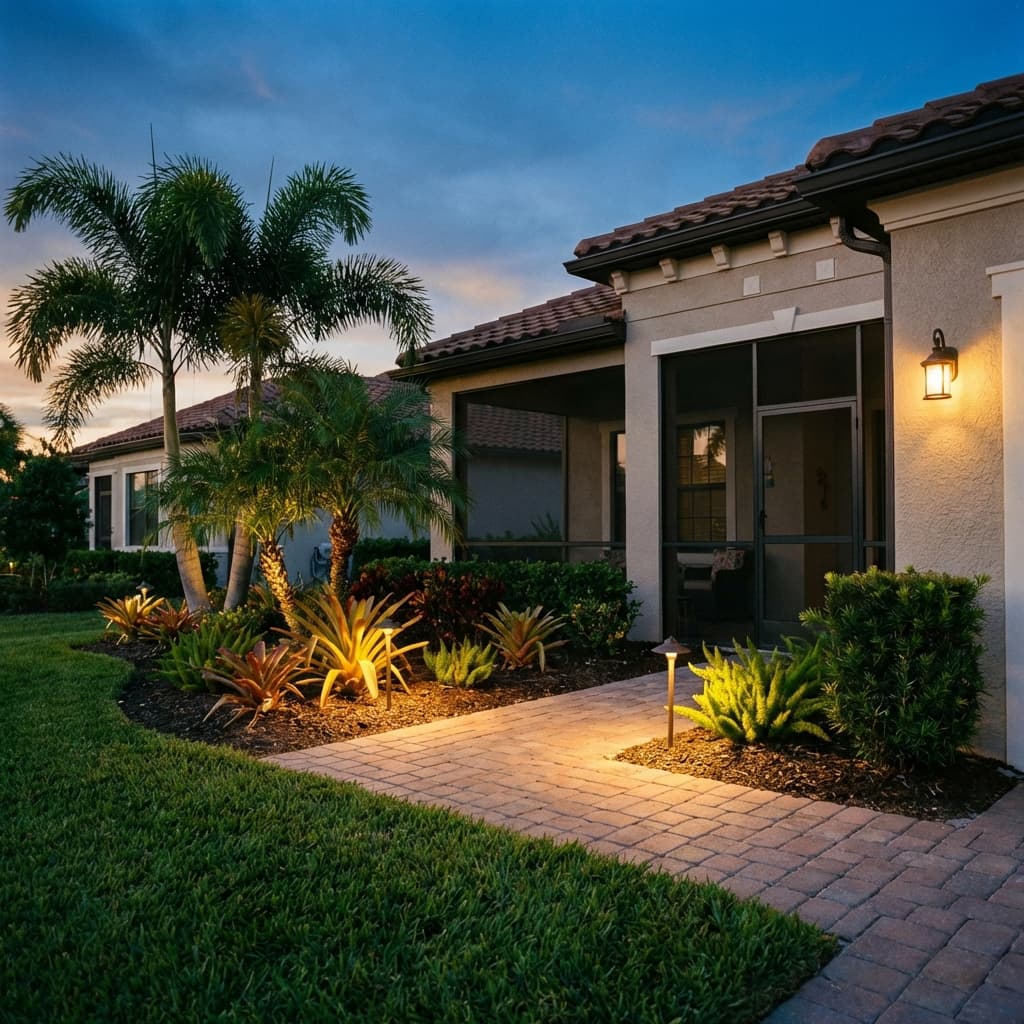
Drive through Ponte Vedra or Nocatee at night and you'll notice the homes that really stand out—not because they're larger or more expensive, but because they have thoughtfully designed landscape lighting. Uplighting on palm trees, path lights leading to the entrance, subtle accent lighting on architectural features. It transforms a property from ordinary to exceptional after sunset.
If you've been thinking about adding landscape lighting to your Jacksonville home, you're probably wondering what this investment involves. After designing and installing dozens of lighting systems across Northeast Florida, I can tell you that the options range from simple DIY solar stakes to sophisticated low-voltage systems with smart controls. Let me walk you through what affects costs and how to approach this project.
Why Landscape Lighting Makes Sense in Jacksonville
We have an outdoor lifestyle here in Northeast Florida. Mild winters mean we use our yards year-round, and even summer evenings (once the sun goes down and the temperature drops from unbearable to merely warm) are prime time for outdoor entertaining.
Landscape lighting serves multiple purposes:
Safety and Security – Well-lit pathways prevent trips and falls. Illuminated properties deter intruders. Motion-activated lights near entries and garages add protection.
Curb Appeal – Your home doesn't go dark at sunset. Architectural features, mature trees, and landscaping remain visible and attractive at night.
Extended Use – That patio or outdoor kitchen becomes usable after dark. You can actually see what you're grilling.
Property Value – Professional landscape lighting is a selling point. It's relatively affordable compared to other improvements but makes a significant visual impact.
In areas like San Marco and Riverside with mature trees and beautiful architecture, landscape lighting really showcases those features at night.
Types of Landscape Lighting Systems
The first decision you'll make determines everything else: what type of system do you want?
Low-Voltage (12V) Systems
This is the professional standard and what most landscape lighting companies install. A transformer reduces your home's 120V electrical current to safe 12V, which runs through buried cables to individual light fixtures.
Advantages:
- Safe to work with—no risk of serious shock
- Energy efficient with LED bulbs
- Flexible design—add fixtures easily
- Professional appearance
- Long lifespan with quality components
Considerations:
- Requires installation—either professional or skilled DIY
- Upfront costs higher than solar
- Needs transformer location with outdoor power outlet
This is what I recommend for most Jacksonville homes. The results look professional, last years, and provide reliable illumination.
Line Voltage (120V) Systems
Standard household voltage running directly to fixtures. This is what you'd use for floodlights on a garage or bright security lighting.
Advantages:
- Very bright output
- Reliable power
- Good for security applications
Considerations:
- Requires licensed electrician for installation
- Higher energy costs
- Less flexibility for landscape applications
- Overkill for most decorative lighting
Most landscape applications don't need 120V systems. We typically reserve this for specific security or task lighting needs.
Solar Lighting
Individual fixtures with small solar panels that charge during the day and illuminate at night. You see these at big box stores—just stake them into the ground.
Advantages:
- Inexpensive upfront
- No wiring required
- Easy DIY installation
- Zero energy costs
Considerations:
- Inconsistent performance—cloudy days mean dimmer lights
- Shorter lifespan (typically 2-3 years)
- Limited light output
- Can look cheap if not chosen carefully
- Not suitable for serious landscape lighting
Solar works for temporary situations or very casual applications. For a quality permanent installation, low-voltage systems are worth the investment.
What Affects Landscape Lighting Costs in Jacksonville
Multiple factors influence total project costs:
Property Size and Scope
Lighting the walkway to your front door is a completely different project than illuminating your entire yard, pool area, and multiple outdoor living spaces.
A typical quarter-acre Jacksonville lot with basic landscaping might need 12-20 fixtures for a comprehensive design. Larger properties in Julington Creek or Fleming Island with mature landscaping, long driveways, and extensive outdoor spaces might need 40-60+ fixtures.
More fixtures mean more equipment, more wire, and more installation time.
Fixture Quality and Type
Landscape lighting fixtures range from cheap plastic solar stakes to premium cast-brass fixtures with lifetime warranties.
Budget fixtures – Often brass-plated plastic or thin aluminum. Work okay initially but corrode quickly in Jacksonville's humid, salty air (especially near the beaches). Typically need replacement within 3-5 years.
Mid-range fixtures – Cast aluminum, powder-coated finishes, better quality components. Good balance of cost and durability. Should last 10-15 years with minimal issues.
Premium fixtures – Cast brass or copper, superior engineering, often with lifetime warranties. These are expensive upfront but can last 20+ years and look better over time as brass and copper develop patinas.
In Jacksonville's climate, I lean toward mid-range or premium fixtures. The humidity and salt air are tough on cheap materials. Replacing corroded fixtures every few years costs more in the long run.
Types of Fixtures Needed
Different applications require different fixtures:
Path lights – Illuminate walkways and driveways. Usually 12-18 inches tall, spaced 6-8 feet apart.
Spotlights/uplights – Accent trees, architectural features, walls. Adjustable heads let you aim the light precisely.
Wash lights – Wider beam spread for lighting larger areas like walls or hedges.
Deck and step lights – Small fixtures mounted into steps, posts, or under deck railings.
Well lights – In-ground fixtures that sit flush with the landscape. Great for uplighting trees or large features.
Hardscape lights – Mounted in retaining walls, pillars, or other masonry features.
A well-designed system uses multiple fixture types for different effects.
Complexity of Installation
How difficult is it to run wiring to each fixture location?
Properties with established landscaping require careful trenching to avoid damaging plant roots. Sandy Jacksonville soil is easier to dig than clay, but we still need to avoid irrigation lines, tree roots, and underground utilities.
Long wire runs (from transformer to fixtures) require larger gauge wire to prevent voltage drop. Complex layouts with fixtures in multiple zones might need multiple transformers or a larger transformer with multiple circuits.
Access issues matter too. Can we drive equipment to work areas, or do we need to carry everything through side gates?
Transformer and Controller
The transformer is the heart of your system. Basic mechanical timers work fine, but smart controllers offer much more functionality:
Basic timers – Turn lights on and off at set times. You manually adjust for seasonal changes in sunset times.
Astronomical timers – Automatically adjust on/off times based on local sunrise/sunset throughout the year. Much more convenient.
Smart controllers – WiFi-connected systems you control from your phone. Set schedules, create zones that operate independently, integrate with home automation. These add significantly to costs but provide maximum flexibility.
The transformer size depends on total wattage needed. A small system might need a 150-watt transformer; larger systems might require 300-600+ watts or multiple transformers.
Professional Design
Do you want a professional lighting designer to create a plan, or will you DIY the design?
Professional designers understand lighting techniques like uplighting, downlighting, shadowing, and grazing. They know how to highlight your property's best features and minimize flaws.
Some companies include design in their installation pricing; others charge separately. For complex properties or if you want exceptional results, professional design is worth the investment.
Installation Labor
This is a significant portion of overall costs. Professional installation includes:
- Site consultation and design
- Trenching and wire burial (typically 6-12 inches deep)
- Fixture installation and aiming
- Transformer mounting and connection
- Testing and adjustment
- Cleanup and landscape restoration
Installation time varies with project complexity. A simple 10-fixture path lighting system might take a crew one day. A comprehensive 50-fixture whole-property system could take 2-3 days.
DIY vs. Professional Installation
Landscape lighting is more DIY-friendly than many landscape projects, especially with low-voltage systems.
DIY Installation
If you're reasonably handy and have time, DIY installation can save substantially on labor costs. You'll purchase fixtures and components, then do the installation yourself.
What you'll need:
- Basic tools (shovel, wire strippers, screwdrivers)
- Trenching tool or flat spade for burying wire
- Voltage meter for testing
- Time and patience
Low-voltage systems are safe to work with. The biggest challenges are:
- Creating a good design layout
- Properly sizing wire and transformer
- Trenching without damaging existing landscaping
- Achieving professional-looking results with fixture placement and aiming
Big box stores sell complete kits with transformer, fixtures, and wire. These work okay for simple applications but use budget-quality components.
For better results, purchase components individually from landscape lighting suppliers—better quality fixtures, professional-grade wire and connectors.
Professional Installation
Hiring professionals costs more but delivers better results. Experienced installers know:
- How to design for maximum visual impact
- Proper wire sizing and voltage calculations
- Installation techniques that last
- Local building codes and permitting (if required)
Professional installations typically include warranties on both equipment and labor. If something stops working, they fix it.
For most Jacksonville homeowners wanting a comprehensive lighting system, professional installation makes sense. The results are significantly better, and you avoid spending weekends digging trenches.
Front Entry and Walkway Lighting
This is the most common starting point. Path lights illuminate the walkway from driveway to front door, with accent lighting on the house facade, landscaping, or entry features.
A typical front yard installation might include:
- 6-10 path lights along walkway
- 2-4 uplights on trees or entry plantings
- 1-2 downlights from eaves if you have architectural features
This creates a welcoming entry and improves safety.
Tree Uplighting
Jacksonville's mature trees—live oaks, magnolias, palms—look spectacular with uplighting. Fixtures placed at the base shine upward, highlighting the trunk and canopy structure.
This is especially effective on trees with interesting bark texture or dramatic branching. Properties in Riverside and Avondale with massive live oaks can create stunning nighttime landscapes.
Figure 1-3 fixtures per tree depending on size and desired effect.
Outdoor Living Spaces
Patios, decks, outdoor kitchens, and pool areas need functional and ambient lighting.
Combination of:
- Overhead lighting for task areas (grilling, serving)
- Accent lighting on surrounding landscape
- Step lights for safety on decks and stairs
- Path lighting to/from the house
The goal is enough light for activities while maintaining ambiance. Nobody wants to feel like they're in a spotlight.
Security and Motion Lighting
While not purely decorative, security lighting is practical for Jacksonville homes.
Motion-activated lights near entries, garage doors, and dark side yards deter intruders and light your way when arriving home after dark.
These can be integrated into your landscape lighting system or separate line-voltage fixtures.
Pool and Water Feature Lighting
Pool lighting is typically built into the pool itself (line-voltage underwater lights), but landscape lighting around the pool area creates ambiance and highlights landscaping.
Water features like fountains or pond waterfalls look amazing lit at night. Underwater lights or spotlights aimed at moving water create beautiful effects.
Jacksonville's outdoor lifestyle means pools get used year-round, making good lighting especially valuable.
Hurricane-Resistant Installation
Tropical storms and hurricanes mean fixtures need secure installation. Cheap stakes that push into the ground will blow away or get damaged.
Use fixtures with solid mounting systems. Bury wire deep enough that storm water runoff won't expose it.
Salt Air Corrosion
If you're near the beaches—Atlantic Beach, Neptune Beach, Jacksonville Beach—salt air accelerates corrosion on metal fixtures.
Choose corrosion-resistant materials (stainless steel, brass, copper, powder-coated aluminum) and expect to maintain fixtures regularly. Cheap fixtures won't last in coastal environments.
Humidity and Moisture
Jacksonville's humidity is tough on electrical connections. Use high-quality waterproof connectors and ensure transformer locations are protected from standing water.
Transformers mounted under eaves or in garages last longer than those exposed to weather.
Wildlife and Pest Issues
Outdoor wiring can attract rodents and insects. Use properly rated wire and keep connections sealed.
Fire ants love to nest around landscape lighting—the slight warmth from transformers and fixtures attracts them. Stay vigilant and treat ant mounds quickly.
Power Outages
Storm season means power outages. Consider whether you want battery backup for security lighting. Most decorative landscape lighting doesn't need backup, but motion security lights might.
Energy Efficiency and LED Technology
LED fixtures have revolutionized landscape lighting. Compared to old halogen bulbs:
- Much longer lifespan – 30,000+ hours vs. 2,000 hours for halogen
- Less heat – Safer and more comfortable around plants
- Better light quality – More natural color rendering
Virtually all new installations should use LED. The upfront cost is slightly higher, but the energy savings and bulb longevity make LEDs the obvious choice.
For Jacksonville's hot climate, the reduced heat output is particularly beneficial. Halogen fixtures get hot enough to burn plants and create fire risks.
Maintenance and Longevity
Quality landscape lighting systems require minimal maintenance but aren't maintenance-free.
Annual Tasks
- Clean fixture lenses (dirt and pollen accumulate)
- Check for damaged or misaligned fixtures
- Trim plants that have grown to block fixtures
- Test all fixtures and replace any non-functioning LEDs
- Inspect wire connections for corrosion
Long-Term Considerations
Even quality systems need occasional upgrades:
- Transformer replacement after 15-20 years
- Fixture replacement if damaged by lawn equipment or storms
- Wire replacement if damaged by digging or landscape changes
- Bulb/LED replacement (much less frequent with LEDs)
With quality components and regular maintenance, a professional landscape lighting system should last 15-20+ years.
Research Local Companies
Jacksonville has numerous landscape lighting specialists. Look for:
- Companies specializing in lighting (not general landscapers who dabble)
- Good online reviews and local reputation
- Professional websites with portfolio photos
- Warranty information clearly stated
Schedule On-Site Consultations
Reputable companies offer free consultations. A designer visits your property, discusses your goals, points out features worth highlighting, and explains options.
This is educational even if you decide to DIY. You'll learn what professionals recommend for your specific property.
Compare Detailed Quotes
Get 3-5 quotes including:
- Specific fixture counts, types, and quality levels
- Transformer specifications
- Wire gauge and burial depth
- Design approach and layout
- Warranty terms
- Installation timeline
Don't just compare bottom-line numbers. A cheap quote using budget fixtures might cost more long-term than a higher quote with quality components.
Ask About Warranties
Fixtures should have manufacturer warranties (1 year minimum, lifetime for premium brands). Installation labor should have at least a 1-year warranty.
Clarify what happens if something stops working six months or two years after installation.
Phased Installation Approach
If budget is a concern, consider phasing the project:
Phase 1 – Front entry and walkway. This provides immediate curb appeal and safety benefits.
Phase 2 – Backyard living areas. Light your patio or deck for extended evening use.
Phase 3 – Accent and decorative lighting. Tree uplighting, architectural highlighting, water features.
Install the wiring infrastructure for the entire system initially, even if you're not placing all fixtures immediately. It's much easier to run wire during initial trenching than to dig everything up again later.
This lets you spread costs over time while working toward a complete system.
Smart Home Integration
Modern landscape lighting can integrate with home automation systems:
- Voice control – "Alexa, turn on backyard lights"
- Scenes and schedules – Different lighting patterns for entertaining vs. everyday
- Integration with other systems – Lights come on automatically when you arrive home
- Remote access – Control lights from anywhere via smartphone
Smart integration adds cost but provides convenience and flexibility, especially for tech-savvy homeowners in newer developments like Nocatee or Southside.
My Bottom-Line Recommendation
For most Jacksonville homeowners, invest in a professionally designed and installed low-voltage LED system using mid-range or premium quality fixtures. The upfront cost is higher than DIY solar stakes, but the results are dramatically better and the system will last 15-20+ years with minimal maintenance.
Start with front entry lighting if budget is limited—this provides maximum impact for the investment. Phase additional lighting over time as budget allows.
Choose fixtures appropriate for Jacksonville's climate. Near the beaches, invest in corrosion-resistant materials. Everywhere in Jacksonville, our humidity demands quality weatherproofing.
Get multiple quotes from specialized landscape lighting companies. Don't choose based solely on price—fixture quality, warranty, and installation expertise matter significantly.
If you're DIY-inclined and have a relatively simple project in mind (basic path lighting, for example), it's feasible to do it yourself with quality components from specialty suppliers. But for comprehensive whole-property lighting with multiple zones and effects, professional installation delivers much better results.
Landscape lighting transforms how you experience your property after dark. In Jacksonville where we live outdoors year-round, that transformation is worth the investment. Your home doesn't have to disappear at sunset—with thoughtful lighting design, it can look even better at night than during the day.
Need Professional Sod Installation?
Jax Sod provides sod installation, sod replacement, and new lawn installation across Jacksonville and Northeast Florida. Free quotes!
Related Articles
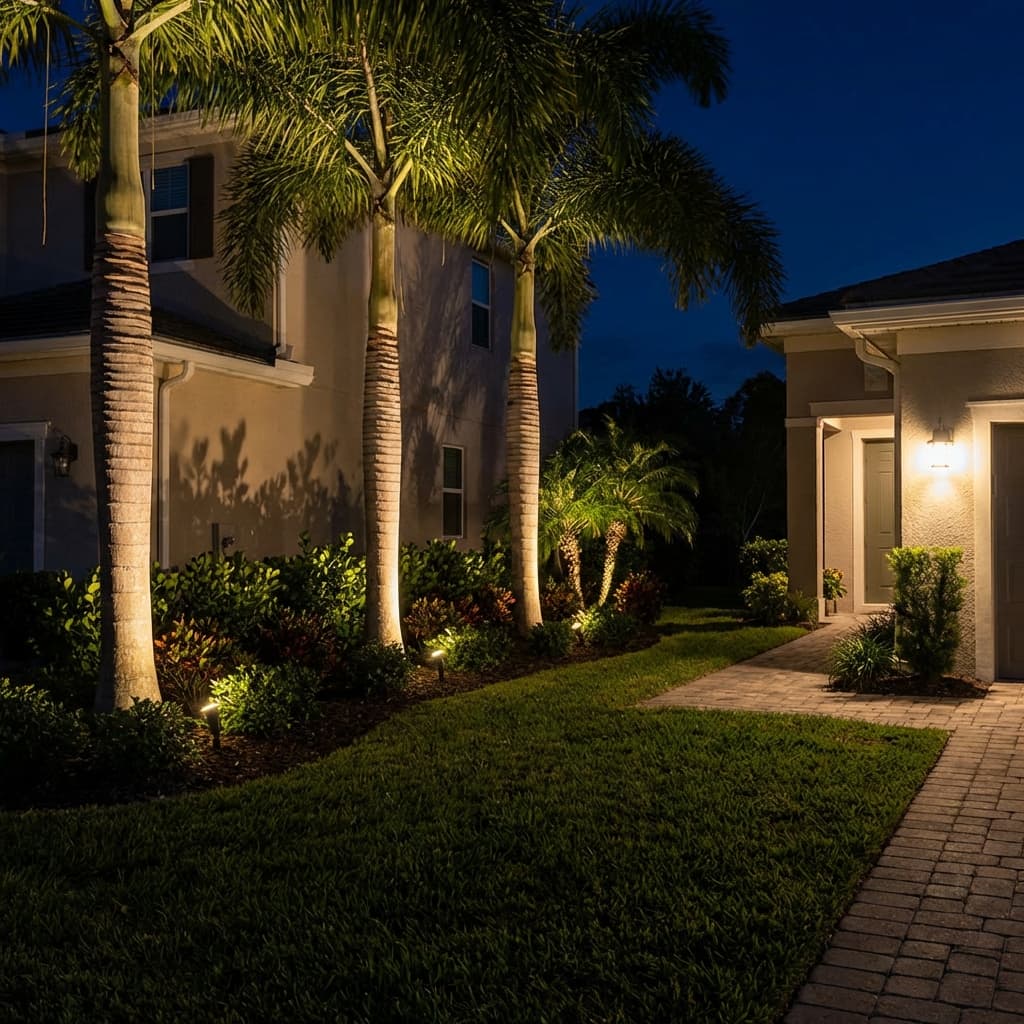
Best Outdoor Lighting Ideas for Jacksonville Landscapes
Best Outdoor Lighting Ideas for Jacksonville Landscapes. Review the site, scope and current written quote before deciding.
Fence Installation Cost Jacksonville: Materials, Styles & What Impacts Pricing
Complete guide to fence installation costs in Jacksonville, FL. Learn about wood, vinyl, aluminum options, permit requirements, and choosing the right fence for your property.
Mulch Delivery Cost Jacksonville FL: What to Expect and How to Save
Understanding mulch delivery costs in Jacksonville, FL. Learn about pricing factors, bulk vs bagged options, and tips for getting the best value on your landscaping mulch.
Let’s talk about your lawn
Ask our AI assistant a lawn question, or send the team a free installation estimate request.