Loading...
Back to Articles
Top 5 Shade Trees for Jacksonville Yards (And How to Plant Them)
Trees & Shrubs October 25, 2024 3 min read
For current costs, compare the exact product or written project scope. See what to include in a sod estimate; this guide does not establish a current price, saving or resale return.
Set irrigation from site conditions and the current rules for your property and water source. For new sod, use the dated care planner; a fixed schedule in an older guide is not permission to water.
The Value of Canopy
In Florida, shade isn't a luxury--it's a necessity.
But not all trees are created equal. In Jacksonville's unique climate (USDA Zone 9a/9b), we need trees that can handle intense summer heat, occasional frost, and hurricane-force winds. Here are the top 5 proven performers for Northeast Florida.
1. Live Oak (Quercus virginiana)
The Icon. Nothing says "The South" like a Live Oak draped in Spanish Moss. It is the backbone of the urban forest in Jacksonville.
- Pros: Incredibly wind-resistant (adapted to hurricanes). Long-lived (centuries). Evergreen (keeps leaves year-round).
- Cons: Slow growing. Massive root system requires space.
- Best For: Large backyards or front yards set back from the street. Do not plant within 20 feet of a foundation.
2. Drake Elm (Ulmus parvifolia 'Drake')
The Fast Grower. If you don't want to wait 20 years for shade, the Drake Elm is your answer. It is semi-evergreen (briefly drops leaves in spring) and has beautiful peeling bark.
- Pros: Fast growth rate. Beautiful weeping canopy shape. Tolerates sandy, poor soil well.
- Cons: Can have surface roots if watered shallowly. Brittle wood if not pruned correctly.
- Best For: Quick shade near patios or walkways (roots are generally less destructive than Oaks).
3. Red Maple (Acer rubrum)
The Color Splash. Florida is generally green and brown, but the Red Maple offers a rare pop of true autumnal color. The 'Florida Flame' variety is adapted specifically for our heat.
- Pros: Stunning red foliage in fall/winter. Excellent for low-lying areas that hold water.
- Cons: Deciduous (you will have leaves to rake). Requires consistent moisture; struggles in dry, sugar-sand dunes.
- Best For: Swales, retention pond banks, or irrigated lawns.
4. Southern Magnolia (Magnolia grandiflora)
The Elegant Giant. Famous for its massive, fragrant white flowers and glossy dark green leaves. The 'Little Gem' or 'DD Blanchard' varieties are tighter and better for residential lots than the wild type.
- Pros: Beautiful structural shape. Heavenly scent in late spring. Dense foliage acts as a privacy screen and windbreak.
- Cons: It drops leaves and seed pods year-round (messy). Dense shade makes it hard to grow grass underneath.
- Best For: Privacy screening or a standalone specimen tree in a mulch bed (not in the middle of the lawn).
5. River Birch (Betula nigra)
The Texture King. With its peeling, paper-like bark and multi-trunk form, the River Birch adds vertical interest to any landscape.
- Pros: Fast growing. Unique visual texture. Loves wet feet (great for drainage issues).
- Cons: Short-lived compared to Oaks (30-40 years). Drops small sticks.
- Best For: Clusters of 3 in a landscape island.
How to Plant Them (So They Don't Die)
The #1 reason trees die in the first year is being planted too deep. The "root flare" (where the trunk widens at the base) must be visible above the soil line.
- Dig Wide, Not Deep: Dig the hole 2x as wide as the root ball, but no deeper. The tree should sit on undisturbed soil.
- No Soil Amendments: Backfill with the native dirt you dug out. If you put rich potting soil in the hole, the roots will never leave that "luxury apartment" to enter the sandy reality of your yard.
- Mulch Correctly: Create a "donut" of mulch, not a "volcano." Keep mulch 3 inches away from the trunk to prevent rot.
A tree is a lifetime investment. If you need help selecting or planting the right tree for your sod project, ask the Jax Sod team during your consultation. We often install trees and sod in the same phase to ensure seamless irrigation coverage.
Need Professional Sod Installation?
Jax Sod provides sod installation, sod replacement, and new lawn installation across Jacksonville and Northeast Florida. Free quotes!
Related Articles
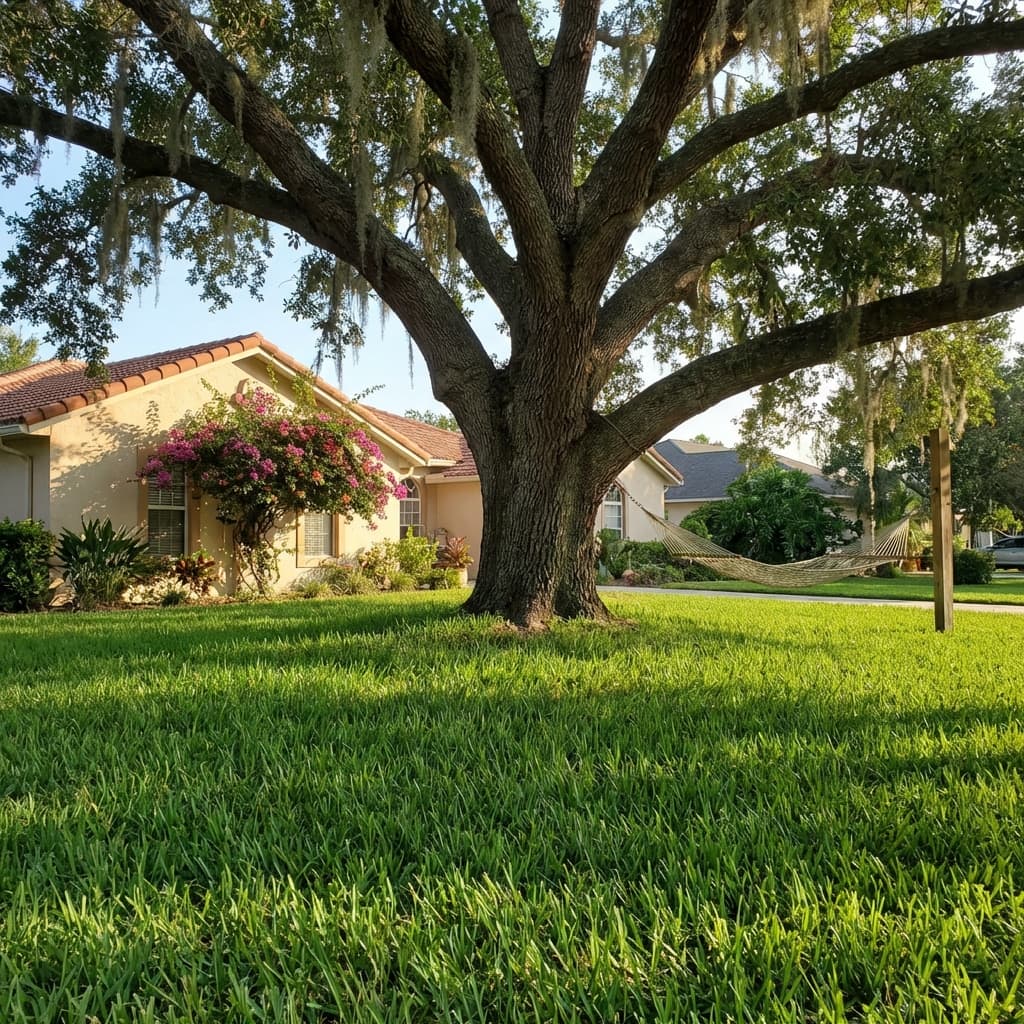
Tree Selection Guide for Jacksonville, FL — Best Shade Trees for Your Yard
Tree Selection Guide for Jacksonville, FL — Best Shade Trees for Your Yard. Review the site, scope and current written quote before deciding.
Fruit Trees Jacksonville FL: Complete Growing Guide for Zone 9a/9b
Expert guide to growing fruit trees in Jacksonville, FL. Learn which citrus, stone fruits, figs, and tropical trees thrive in our Zone 9a/9b climate with sandy soil and humidity.
Ornamental Trees Jacksonville FL: Best Choices for Zone 9a/9b
Expert guide to ornamental trees for Jacksonville landscapes. Learn which flowering, shade, and specimen trees thrive in our sandy soil, humidity, and Zone 9a/9b climate.
Let’s talk about your lawn
Ask our AI assistant a lawn question, or send the team a free installation estimate request.