Loading...
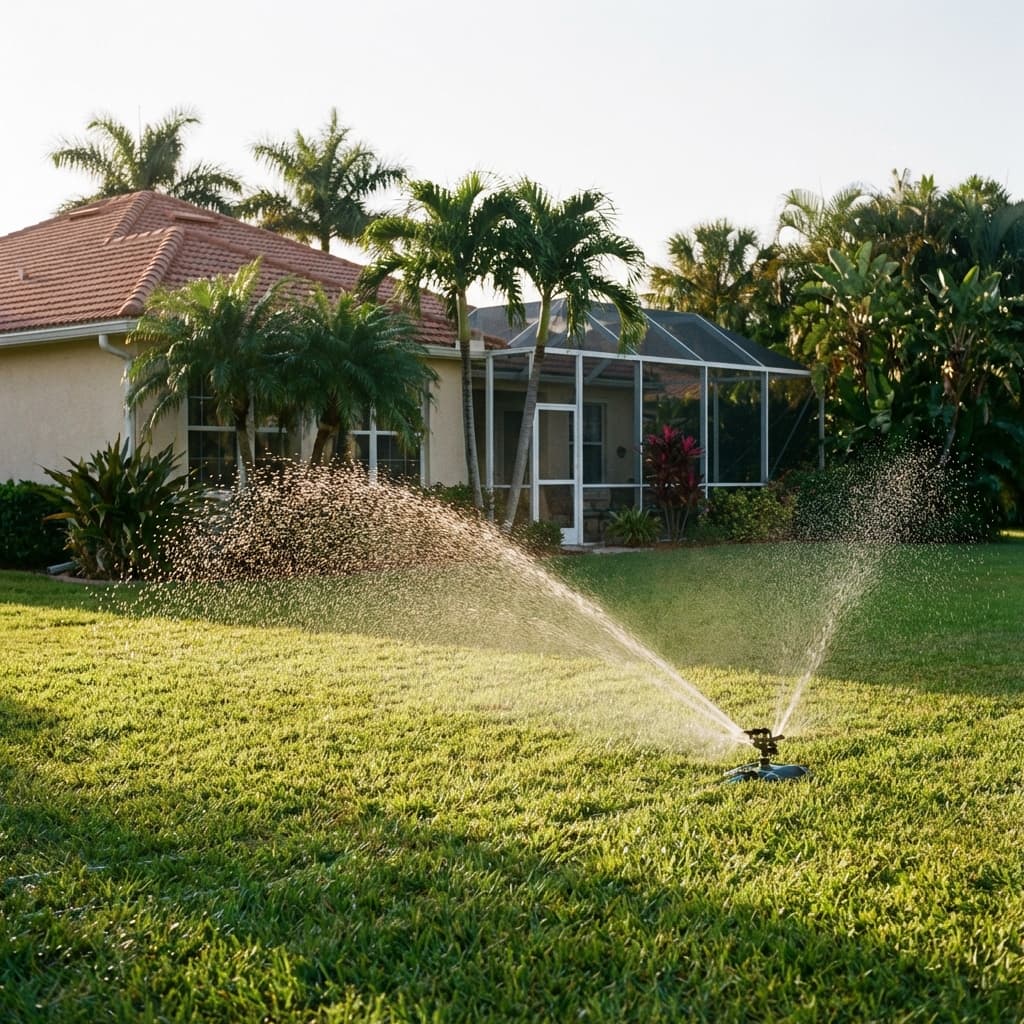
You walk outside and see a geyser shooting six feet in the air where your sprinkler head should be rotating. Or you notice a dry patch of lawn because one head isn't popping up anymore. Or maybe you've got a sprinkler spraying sideways, watering the driveway instead of the grass.
Broken sprinkler heads are one of the most common irrigation problems in Jacksonville. Between lawn mowers running over them, tree roots pushing them up, and just general wear from running year-round, they take a beating. The good news is that most sprinkler head repairs are straightforward DIY projects that take 15-30 minutes and don't require special tools.
I've replaced hundreds of sprinkler heads in Jacksonville landscapes, and I can tell you that the hardest part is usually identifying exactly which replacement part you need. Once you've got that figured out, the actual repair is simple.
Here's how to diagnose the problem and fix it yourself.
Common Sprinkler Head Problems
Before you can fix anything, you need to know what's actually broken. Here are the issues I see most often:
Broken Riser
The riser is the vertical pipe that connects the sprinkler head to the underground lateral line. When someone drives over a head or the lawn mower catches it, the riser usually snaps off below ground level.
How to identify it: Water shoots straight up from the ground instead of from the sprinkler head. You might see the broken head lying in the grass, or it might be completely gone.
Clogged Nozzle
Sand, dirt, and debris get into the water supply and clog the tiny openings in the nozzle. This is especially common in Jacksonville because of our sandy soil.
How to identify it: The sprinkler head pops up but doesn't spray, or it sprays in an irregular pattern. Sometimes you'll see a weak, sputtering spray instead of a solid stream.
Stuck Pop-Up
The spring mechanism that makes the head pop up fails, or debris gets into the body and prevents movement.
How to identify it: The head stays flush with the ground when the zone runs. You might see water pooling around it, or nothing happens at all.
Cracked Body
The plastic body cracks from freeze damage (rare but possible in Jacksonville during hard freezes), impact, or age.
How to identify it: Water leaks from the side of the head instead of spraying from the nozzle. The spray pattern is distorted or the head doesn't hold pressure.
Damaged Seal
The rubber seal at the base of the head deteriorates and water leaks around it.
How to identify it: Water bubbles up around the base of the sprinkler head while the zone is running.
Tools and Materials You'll Need
For most repairs, you need minimal equipment:
- Shovel or trowel for digging
- Screwdriver (flathead and Phillips)
- Pliers
- Replacement sprinkler head or parts (we'll cover this)
- Teflon tape
- PVC primer and cement (if replacing riser pipe)
- Shop vacuum or wet/dry vac (helpful for clearing holes)
For identifying parts, bring the old sprinkler head to the store with you. Different manufacturers use different thread sizes and nozzle types, and matching the existing equipment makes installation easier.
Step 1: Turn Off the Water
This seems obvious, but you'd be surprised how many people try to work on live irrigation systems.
Turn off the zone at the controller, or shut off the main irrigation valve if you're not sure which zone controls the broken head. Run the zone briefly to relieve pressure in the lines.
Step 2: Dig Out the Sprinkler Head
Use a trowel or small shovel to carefully dig around the head. You need to expose the riser and enough of the lateral line to work comfortably—usually a hole about 8-10 inches in diameter and 6-8 inches deep.
Be careful not to damage other pipes or wires. In Jacksonville, irrigation lines are typically 6-12 inches below the surface, but this varies.
Set the dirt aside on a tarp or in a bucket. You'll use it to backfill after the repair.
Step 3: Remove the Old Head
For a simple head replacement where the riser is intact, unscrew the head counterclockwise. Most heads thread directly onto the riser pipe.
If the riser is broken, you'll need to cut it below the break and install a new section. Use PVC cutters or a hacksaw to make a clean, square cut.
Step 4: Clean the Riser
Debris and dirt accumulate inside the riser pipe. Use a shop vacuum to suck out any sand, roots, or sediment. This prevents clogging your new head immediately.
If you're working with a funny pipe (flexible riser), check that it's not kinked or damaged. Replace it if necessary.
Step 5: Install the Replacement
For a new riser:
- Apply PVC primer to the outside of the pipe and inside of the fitting
- Apply PVC cement to both surfaces
- Push the fitting onto the pipe with a quarter turn
- Hold for 30 seconds
- Let it cure for at least 5 minutes before pressurizing
For threading a head onto existing riser:
- Wrap Teflon tape clockwise around the threads (3-4 wraps)
- Thread the head onto the riser by hand
- Tighten with pliers if necessary, but don't overtighten—you can crack the body
Make sure the head is level with or slightly above the final soil grade. If it's too low, it won't pop up properly. If it's too high, mowers will hit it.
Step 6: Adjust the Spray Pattern
Most modern sprinkler heads have adjustable patterns. Rotor heads typically have a screw on top that controls the arc (the sweep angle). Spray heads often have different nozzles for different patterns and radii.
For rotors:
- Turn on the zone
- Use a flathead screwdriver to adjust the arc screw (usually on top)
- Some models have left and right stops that you set manually
For spray heads:
- Make sure you've installed the correct nozzle for the coverage area
- Nozzles are color-coded by radius and pattern (quarter circle, half circle, full circle)
Adjust the head so it's watering grass, not sidewalks or driveways.
Step 7: Test and Backfill
Run the zone for a full cycle and watch the repaired head. Check for:
- Proper pop-up action
- Even spray pattern
- No leaks around the base or riser
- Correct coverage of the intended area
If everything looks good, backfill the hole with the dirt you removed. Tamp it down gently to avoid settling, but don't compact it so hard that you crack the new head.
Replace any sod or grass you removed.
Choosing the Right Replacement Head
This is where most DIY repairs go wrong. Jacksonville irrigation systems use a variety of sprinkler heads, and they're not always interchangeable.
Rotor Heads vs. Spray Heads
Rotor heads rotate and shoot a stream of water. They cover larger areas (15-50 feet radius) and are used in open lawn areas. Common brands: Hunter, Rain Bird, Toro.
Spray heads have fixed nozzles and spray in a fan pattern. They cover smaller areas (4-15 feet radius) and are used near buildings, in planting beds, or in small lawn sections.
You can't swap a rotor for a spray head without reconfiguring the entire zone. Match what was there.
Thread Size
Most residential sprinkler heads have 1/2-inch NPT (National Pipe Thread) or 3/4-inch NPT threads. Some specialty heads use different sizes.
Bring the old head with you to confirm thread compatibility.
Nozzle Types
Spray heads come with specific nozzles:
- Quarter-circle (90 degrees)
- Half-circle (180 degrees)
- Full-circle (360 degrees)
- Strip patterns for narrow areas
Rotor heads have adjustable arcs, but you still need to match the throw radius to your zone design.
Installing the wrong nozzle creates dry or overwatered spots.
Sandy Soil
Sand gets everywhere in Jacksonville irrigation systems. It clogs nozzles, accumulates in valve boxes, and works its way into fittings.
When replacing a head, always flush the line first. Turn on the zone briefly without the head installed and let water run out. This pushes debris out of the riser.
Consider installing filter screens in heads that repeatedly clog. These catch sediment before it reaches the nozzle.
Tree Roots
Roots from live oaks, magnolias, and other trees push sprinkler heads up and crack risers. If you're constantly repairing the same head, roots are probably the culprit.
Options:
- Move the head to a different location away from roots
- Install a swing joint (flexible riser) that can move with root growth
- Use root barrier fabric around the riser
Lawn Maintenance Damage
Mowers and string trimmers are the number one cause of broken heads. If you're repairing the same heads repeatedly after mowing, they're not installed at the right height.
Sprinkler heads should be flush with the soil surface—not sticking up. Use risers of the correct height and make sure the installer (even if that's you) sets them properly.
Swing joints help absorb impact from mowers and allow the head to move slightly rather than snapping off.
Hard Water Deposits
Jacksonville water is relatively soft compared to other areas, but mineral deposits still accumulate on nozzles over time. This restricts flow and distorts spray patterns.
Clean nozzles periodically by removing them and soaking in vinegar for 30 minutes. Use a toothbrush to scrub off deposits.
For severely clogged nozzles, replacement is easier than cleaning.
When to Call a Professional
Most sprinkler head repairs are DIY-friendly, but some situations warrant professional help:
Underground line breaks: If you've got water bubbling up between heads or a wet area that won't dry, you've probably got a broken lateral line. This requires excavation and PVC repair.
Electrical issues: If multiple heads on a zone aren't working, the problem might be the valve or wiring, not the heads themselves.
Pressure problems: If heads don't pop up fully or spray patterns are weak across the entire zone, you might have pressure regulator issues or a partially closed valve.
System redesign: If you're constantly repairing the same heads because coverage is inadequate, the zone might need redesign with different head spacing or types.
Preventive Maintenance
Avoid future repairs by maintaining your system:
Spring check: Before the growing season, run each zone and inspect every head. Replace worn nozzles and adjust coverage.
Monthly inspection: Walk the property while zones run. Look for broken heads, clogged nozzles, and poor coverage.
Winterization: Jacksonville doesn't require full blowouts like northern climates, but if a hard freeze is forecast, insulate above-ground components.
Valve box maintenance: Keep valve boxes clear of debris. Ants and dirt daubers love to build in them, which can prevent valves from operating properly.
Controller batteries: If you have a battery backup on your controller, replace it every 2-3 years.
Parts Sources in Jacksonville
You can find sprinkler parts at:
- Ewing Irrigation (professional supply, open to public)
- Local hardware stores (limited selection)
- Home Depot/Lowe's (basic residential parts)
- Horizon Irrigation (professional supply)
Bring your old part for matching. Take photos of the entire sprinkler head, the nozzle, and any identifying marks or numbers.
The Bottom Line
Most sprinkler head repairs in Jacksonville are simple projects you can handle yourself. The key is correctly diagnosing the problem and choosing the right replacement parts.
Take your time during the repair. Rushing leads to overtightened fittings, cracked heads, and leaks that you'll just have to fix again.
If you're repairing the same head repeatedly, something else is going on—roots, poor design, or equipment that's not suited to the location. Address the underlying cause rather than just replacing the head over and over.
Your irrigation system is an investment in your landscape. Keeping it maintained prevents bigger problems and keeps your lawn looking good year-round.
Need Professional Sod Installation?
Jax Sod provides sod installation, sod replacement, and new lawn installation across Jacksonville and Northeast Florida. Free quotes!
Related Articles
How to Install a Sprinkler System in Jacksonville
Complete guide to installing an irrigation system in Jacksonville, FL. Learn about zone design, sandy soil considerations, and water-efficient setup for your lawn.
Smart Sprinkler Controller Setup Jacksonville
Smart Sprinkler Controller Setup Jacksonville. Review the site, scope and current written quote before deciding.
Sprinkler System Winterization Jacksonville
Sprinkler System Winterization Jacksonville. Review the site, scope and current written quote before deciding.
Let’s talk about your lawn
Ask our AI assistant a lawn question, or send the team a free installation estimate request.